
Die Grundlagen der Papiersackabmessungen verstehen
When packing your new products, the choice of the right paper bag sizes is very crucial. The best size is the one that will fit your items in a perfect and safe way. In addition, it assists in reducing wastage and transportation costs. You must be aware of the basics of paper bag sizes in order to make a good choice.
The sizes of paper bags are typically calculated based on three measurements: width, height, and gusset. The width of the bag is measured when it is flat. The bag is measured in height, starting at the bottom of the bag to the top. The collapsible fold on the sides of the bag is called Gusset. It assists the bag to stand and hold more things. By understanding these dimensions, you will be in a position to select the right sizes of your products.
Wie misst man die Größe einer Papiertüte?
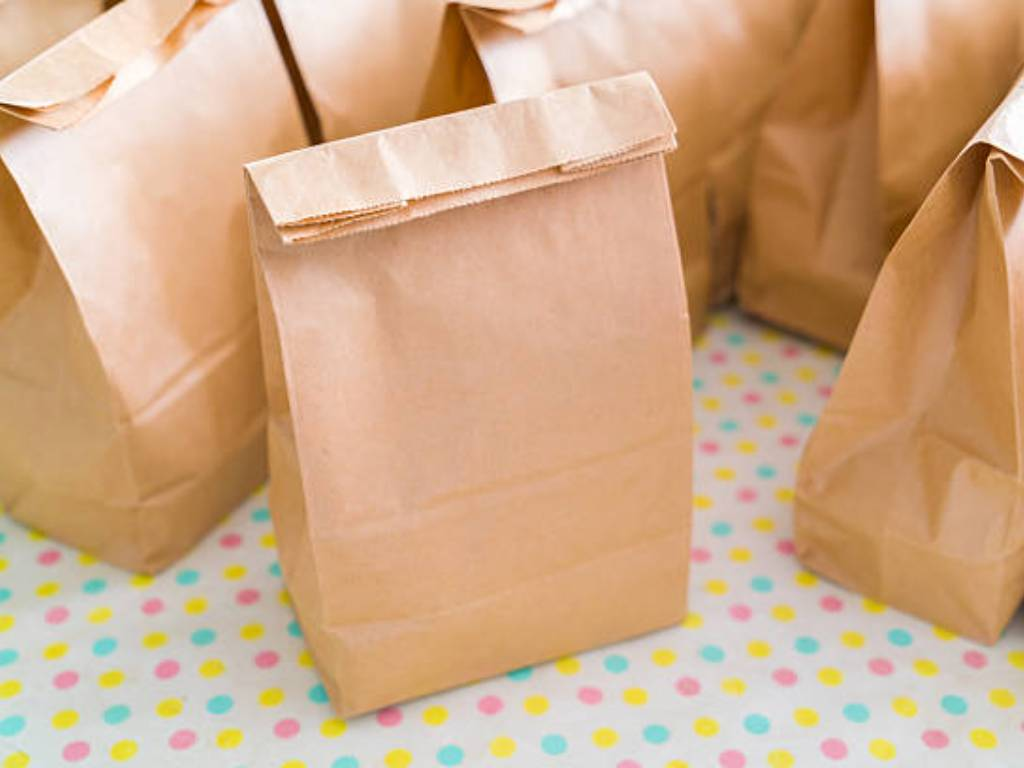
Measuring paper bags is easy and only needs a few simple tools. To start, you’ll need a ruler or measuring tape, a flat surface, and the paper bag you want to measure. First, lay the bag flat on your surface and smooth out any wrinkles or folds.
Next, measure the width of the bag. Place your ruler or tape across the top, from one side to the other. Write down this measurement in inches or centimeters. After that, to find the height of the bag, measure from the bottom to the top. Again, write down the measurement. Although these external dimensions are significant, you are also to measure the Effective Loading Depth by opening the bag completely. This will give you the real usable height after the bottom is expanded which is the real space you have to use.
Lastly, to gauge the gusset, fold the bag flat. Next, measure the bottom crease to the bag side. The side width of the bag when it is puffed up to its full capacity also helps to get the best sense of volume. These simple steps will enable you to measure the size of any paper bag correctly. Professionally, it is advisable to select a bag with a 1-3cm clearance space that is bigger than your product. This additional space eliminates the possibility of the paper over-stretching or tearing and makes packing much easier.
The Volume Formula: Selecting a Bag by Its Capacity
Linear measurements such as height and width do not always tell the whole story, particularly when you are loading oddly shaped objects such as a variety of hardware or loose baked goods. In order to determine the difference between a flat bag and a filled bag, you are supposed to calculate the capacity in liters. This measure gives a far better idea of the three-dimensional space that your goods can occupy.
To calculate the volume of a bag in liters using inch measurements, use the following standard calculation:

The constant 61 is the approximate number of cubic inches of one liter. This equation assists you in moving out of the two-dimensional perspective to a volume-based perspective so that your packaging is deep enough to accommodate your particular product.
Measurement of your product is the most effective method of making sure that it fits perfectly. In case you have a kit or a set of items, put them together the way they would be packed and measure the total cubic inches (Length $\times$ Width $\times$ Height). Division of that total by 61 gives the absolute minimum liter capacity of your bag. This reverse-engineering approach will remove the possibility of ordering bags that appear large on paper but cannot be closed after the product is placed inside.
To make you visualize these numbers prior to you placing an order, the following is how the standard liter capacities are translated to the daily products:
- 1-2 Liters (Small): Perfect with dense, compact products. The range offers a tight, high-quality fit to an iPhone retail box or a luxury jewelry gift case.
- 5-10 Liters (Medium): This is the all-purpose mid-range option. It can easily fit a regular 750ml wine bottle with a diameter large enough to pad it, or two well-folded T-shirts.
- 15-20 Liters (Large): These bags are designed to be bulk and stable, and can easily fit a typical family-sized takeout order, 3-4 stacked containers, or a medium-sized shoebox.
Typical Paper Bag Sizes: Small to XL
The packaging industry is standardized so that you are not buying a bag, but a tool that will help you in your logistics. The first step in balancing the material costs and the practical needs of your product and customer is to choose the right size category.
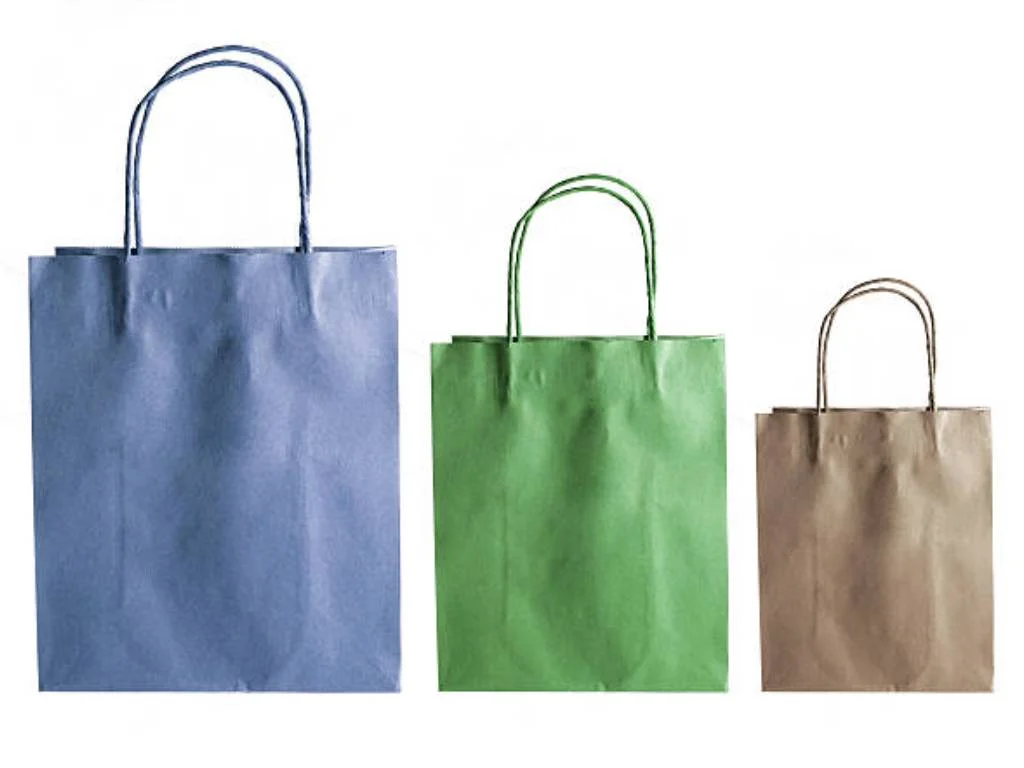
Kleine Papiertütengrößen
Small sizes of paper bags are suitable when dealing with lightweight products or single-serving products, and they provide a small and professional appearance. The bags are commonly used in wrapping gifts at boutiques, party favors or small retail items such as pharmacy products and cosmetics. The bag must be tight enough to contain the product but not tight to a point that it will stretch the paper seams. Common small sizes include:
- 5″ x 7″ x 3.5″ (12.7cm × 17.8cm × 8.9cm)
- 6″ x 9″ x 4″ (15.2cm × 22.9cm × 10.2cm)
- 7″ x 10″ x 5″ (17.8cm × 25.4cm × 12.7cm)
Mittlere Papiertütengrößen
The size of a typical paper bag is adaptable to accommodate a broad variety of products, including clothes and accessories, office supplies, and food products. These are the all-purpose workhorses that are popular with restaurants, markets, and retail stores. They offer a lot of space to be branded and at the same time they are comfortable to be carried by customers over extended durations. Common medium sizes include:
- 8″ x 11″ x 6″ (20.3cm × 27.9cm × 15.2cm)
- 10″ x 13″ x 7″ (25.4cm × 33cm × 17.8cm)
- 12″ x 15″ x 8″ (30.5cm × 38.1cm × 20.3cm)
Große Papiertütengrößen
The large paper bag sizes are specifically made to accommodate bulky or heavy products that need more structural support like winter clothing, bedding or a combination of several products. They are common in the department stores and e-commerce fulfillment centers where durability is the most important factor. These bags tend to have a heavier paper (greater GSM) to avoid falling when full. Common large sizes include:
- 14″ x 18″ x 9″ (35.6cm × 45.7cm × 22.9cm)
- 16″ x 20″ x 10″ (40.6cm × 50.8cm × 25.4cm)
- 18″ x 24″ x 12″ (45.7cm × 61cm × 30.5cm)
Extra Large Paper Bag Sizes
Extra-large bags are dedicated bags to the most challenging retail and industrial requirements. They are mostly used when it comes to bulk catering deliveries, large electronics, or heavy winter coats. Due to the excessive weight they bear, such bags are usually strengthened with cardboard inserts and high-tensile handles to make them safe during transportation. Popular extra-large sizes are:
- 20″ x 28″ x 14″ (50.8cm × 71.1cm × 35.6cm)
- 24″ x 30″ x 15″ (61cm × 76.2cm × 38.1cm)
To assist you in making a comparison of these options at a glance and choosing the ideal one that fits your particular application, the table below outlines the dimensions and load capacities of each standard size category.
| Size Category | Abmessungen (Zoll) | Abmessungen (cm) | Ideal für | Load Capacity (No Handle) | Load Capacity (Handle) |
| Klein | 5 × 7 × 3.5 | 12.7 × 17.8 × 8.9 | Jewelry, Cosmetics | 1.0kg | 2.0kg |
| 6 × 9 × 4 | 15.2 × 22.9 × 10.2 | Gifts, Skincare | 1.5kg | 2.5kg | |
| 7 × 10 × 5 | 17.8 × 25.4 × 12.7 | Pharmacy, Snacks | 2.0kg | 3.0kg | |
| Mittel | 8 × 11 × 6 | 20.3 × 27.9 × 15.2 | T-shirts, Bakery | 3.0kg | 4.5kg |
| 10 × 13 × 7 | 25.4 × 33.0 × 17.8 | Books, Accessories | 3.5kg | 5.0kg | |
| 12 × 15 × 8 | 30.5 × 38.1 × 20.3 | Standard Groceries | 4.0kg | 6.0kg | |
| Groß | 14 × 18 × 9 | 35.6 × 45.7 × 22.9 | Shoeboxes, Apparel | 5.5kg | 7.5kg |
| 16 × 20 × 10 | 40.6 × 50.8 × 25.4 | Winter Wear, Bedding | 6.5kg | 8.5kg | |
| 18 × 24 × 12 | 45.7 × 61.0 × 30.5 | Bulk Retail, Toys | 7.5kg | 10.0kg | |
| Extra groß | 20 × 28 × 14 | 50.8 × 71.1 × 35.6 | Catering, Large Coats | 8.5kg | 12.0kg |
| 24 × 30 × 15 | 61.0 × 76.2 × 38.1 | Electronics, Bulk Orders | 10.0kg | 15.0kg |
Popular Paper Bag Sizes by Industry
The choice of paper bag specifications enables businesses to maximize the packaging cost and at the same time make sure that the structural integrity of the bag is in perfect harmony with the physical properties of the product.
Food Service and Bakery
The main demands in this industry are grease resistance, breathability, and food safety. These bags normally use grease-proof coatings or breathable kraft paper to contain the steam of hot foods or the oils of fried foods. They have larger gussets so that food containers can be transported in a perfectly horizontal position.
- Small (12 x 18 x 7 cm): Designed specifically to sell individual items, including artisanal cookies, one donut, or small pastries. These bags tend to be handle-less and the contents can be easily sealed by a quick and easy fold-over seal.
- Medium (25 x 30 x 14 cm): This is the size of fast-food restaurants, and it can easily fit a full burger combo (burger, fries, and a snack). The bottom construction is strengthened to avoid saturation of oil.
- Large (30 × 40 × 18 cm): Perfect to order in bulk or to feed a family. The extra-wide base can hold various stacked containers, which are stable and do not spill during delivery.
Retail and Apparel

Retail bags are portable advertisements of a brand, and they need to be both high-resolution and have a high handle strength. The weights of these bags are usually heavier paper weights of between $120$ to $200$ gsm and have twisted or cotton rope handles that give them a high-end feel and carrying comfort on long shopping excursions.
- Small (18 x 25 x 8 cm): Ideal to display lightweight boutique products such as cosmetics, silk scarves or delicate lingerie, offering a compact and elegant display.
- Medium (28 x 35 x 12 cm): This bag is commonly referred to as the universal size in fashion, and it can easily fit two folded T-shirts, a pair of jeans, or a standard-sized shoebox of flats or sneakers.
- Large (42 x 50 x 15 cm): This is used to store large or heavy objects like winter coats, boots, or bedding. These bags are usually reinforced at the top folds to avoid tearing of the handles when they are under high tension.
Gift and Luxury
Luxury packaging is concerned with the unboxing experience and a premium tactile touch. These bags are made of high-gsm paper which is usually laminated with matte, gloss, or soft-touch lamination so that the bag can have crisp, sharp lines even when it is carrying heavy, dense gift boxes.
- Jewelry-Sized (12 × 15 × 6 cm): Made to fit ring, bracelet, or watch boxes. The narrow size makes the gift box stay in the middle and not to shake in the bag.
- Standard Gift (22 x 30 x 10 cm): The most popular option when it comes to perfume sets, hardcover books, or luxury candles. The gusset width makes the bag flat and classy even when it is carrying a three dimensional box.
- Extra-Large Luxury (40 × 45 × 12 cm): Perfect when you are putting together gift hampers or gift sets. These are usually accompanied by silk ribbon handles to add more occasion to it.
To assist you in making comparisons between the particular standards and load capacities of the various sectors at a glance, the following table summarizes the data of industry-typical sizes.
| Industry Sector | Size Category | Abmessungen (Zoll) | Abmessungen (cm) | Ideal Product Matching | Load (No Handle) | Load (Handle) |
| Bäckerei | Klein | 4.7 × 7 × 2.8 | 12 × 18 × 7 | Donuts, Single Pastries | 1.0kg | K.A. |
| Fast Food | Mittel | 10 × 12 × 5.5 | 25 × 30 × 14 | Burger Combos, Fried Chicken | 3.0kg | 4.5kg |
| Lieferung von Lebensmitteln | Groß | 12 × 16 × 7 | 30 × 40 × 18 | 3-4 Stacked Containers | 5.0kg | 7.5kg |
| Cosmetics | Klein | 7 × 10 × 3 | 18 × 25 × 8 | Makeup, Scarves, Perfume | 1.5kg | 3.0kg |
| Retail Apparel | Mittel | 11 × 14 × 4.7 | 28 × 35 × 12 | T-shirts, Jeans, Shoeboxes | 4.0kg | 6.0kg |
| Heavy Apparel | Groß | 16 × 20 × 6 | 42 × 50 × 15 | Winter Coats, Tall Boots | 7.0kg | 10.0kg |
| Jewelry | Micro | 4.7 × 6 × 2.4 | 12 × 15 × 6 | Ring Boxes, Watches | 1.0kg | 2.5kg |
| Premium Gift | Standard | 8.7 × 12 × 4 | 22 × 30 × 10 | Perfume Sets, Art Books | 3.5kg | 5.0kg |
Will It Break? Knowledge of Weight Capacity and GSM
The most important technical factor of durability is the relationship between the bag size and the paper weight. The tensile muscle of the paper is GSM (Grams per Square Meter), which gives the paper the strength to withstand tearing when it is subjected to the force of gravity. The larger the size of a bag, the greater the leverage the items inside have on the bottom and the points of attachment of the handle.
In the case of XL bags, we would suggest at least 120 GSM, but ideally 150 GSM, so that even 100 percent of recycled materials can retain their integrity. In the absence of this density, the fibers in the recycled paper can tear apart under tension, resulting in disastrous failure in transit. When your product is more than 5kg, a reinforced bottom, which is basically a second layer of heavy-duty paperboard glued to the bottom, is not an option anymore, it is a necessity. This reinforcement does not concentrate the weight on the center seam but spreads the weight over the whole base.
GSM Disruptive Testing Data Table
The table below shows the critical breaking force in Newtons (N) at the point of attachment of the handle.
| Paper Weight | Max Load (Static) | Breaking Point (Handle) | Recommended Use |
| 100 GSM | 4kg | 120N | Lightweight retail, standard takeaway |
| 120 GSM | 7kg | 185N | Grocery, heavier apparel, wine bottles |
| 150 GSM | 12kg | 260N | Luxury electronics, bulk catering |
Types of Paper Bags
The true loading capacity of a paper bag is not just the height and width of the bag, but the structural design and the material used. In order to make it easier to choose, we divide bags into categories according to their Bottom Architecture (that influences volume) and Material Properties (that influences durability).

Bag Architecture Classification
The bottom design of the bag determines the depth of the bag in three dimensions and the ability to use the internal volume.
- SOS Bag (Self-Opening Satchel): The volume leader, the square bottom of the bag forms a true cubic space with a 100 percent utilization rate. It is a standalone product, and it is the most effective option in high-speed retail and food service.
- Flat Bottom Bag: This is a hybrid bag that offers moderate side support. It has superior shelf stability to flat bags but with smaller gussets, which are suited to high-quality coffee or flour where a full shelf look is required.
- Pinch Bottom Bag: This is the best bag to use when dealing with flat objects such as books or posters. Since the bottom is closed by pinching instead of squaring, its usable volume is usually 30-40 percent smaller than an SOS bag of the same size on the outside.
Material Properties Classification
The choice of appropriate material gives you the “tensile muscle” to secure your products and also to represent your brand.
- Kraft and Waxed Paper: Traditional Kraft provides the highest tear resistance to heavy goods. In the case of bakeries and delis, Waxed Paper provides a waterproof coating that prevents grease to destroy the integrity of the bag.
- White and Colored Paper: This is used in high-end retail where branding is the most important. White paper is the best to maintain the color, and colored options are used to distinguish your brand in the use of gifts in the boutique.
- Sustainable Alternatives: Bagasse (sugarcane fiber) and Recycled Kraft are the most popular environmentally-friendly options in 2026. They offer the same structural strength as wood pulp but with much lower carbon footprint and complete compostability.
The type of paper bag that suits your business depends on various factors such as the nature of your products, your brand name and the target audience. By using the information on the various kinds of paper bags, you will be able to make a wise choice that will satisfy your customers and help in the satisfaction of your customers.
Faktoren, die bei der Auswahl von Papiertütengrößen zu berücksichtigen sind
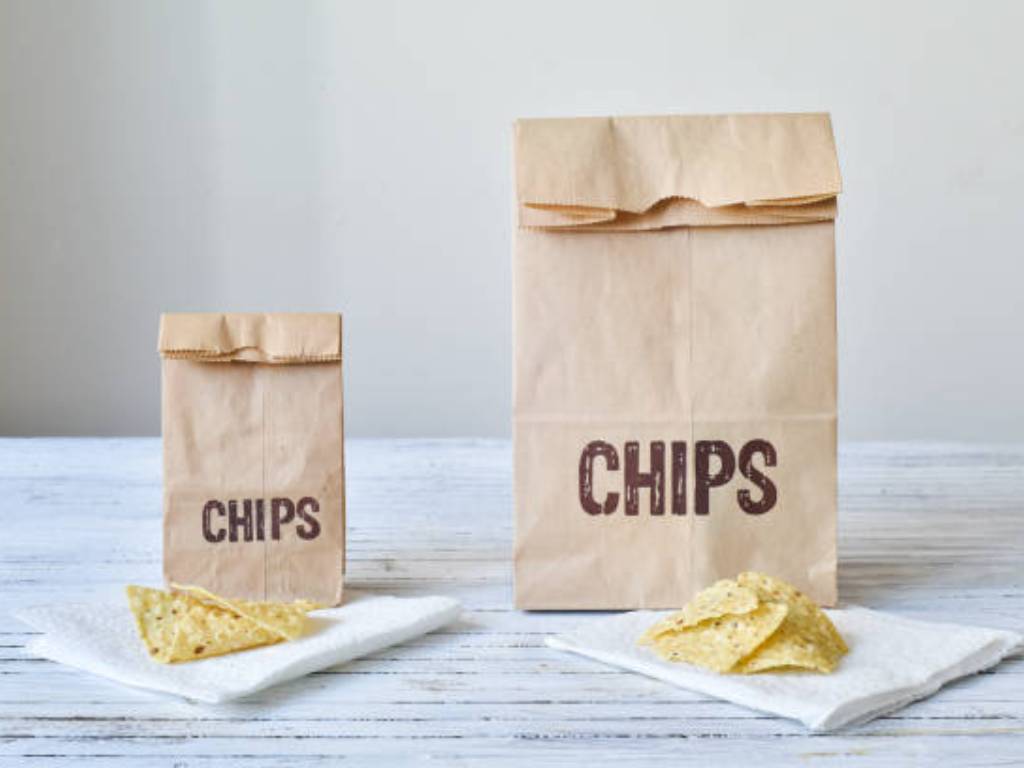
Die Wahl der richtigen Papiertütengröße ist für Sie entscheidend, um sicherzustellen, dass Ihre Produkte angemessen geschützt und optimal präsentiert werden. Sie werden jedoch feststellen, dass es mehr als nur die Abmessungen Ihrer Produkte zu berücksichtigen gibt. undefined
Produkt Abmessungen
- Messen Sie die Länge, Breite und Höhe Ihrer Produkte genau aus.
- Denken Sie an die Form Ihrer Produkte und wählen Sie eine Tasche, die sie richtig hält.
- Achten Sie darauf, dass die Produkte ausreichend Platz haben und weder zu eng noch zu locker sitzen.
- Wenn Ihr Angebot mehrere Produkte umfasst, berücksichtigen Sie die Abmessungen des größten Artikels oder die Gesamtgröße.
Produkt Gewicht
- Ermitteln Sie das Flächengewicht Ihrer Produkte, einschließlich des beigefügten Verpackungsmaterials.
- Wählen Sie eine Papiertüte, die das Gesamtgewicht tragen kann, ohne zu reißen oder zu brechen.
- Bei schweren Gegenständen können Sie verstärkte Papiertüten oder solche mit höherer Grammatur verwenden.
- Bedenken Sie, dass auch das Gewicht der Produkte eine Rolle bei den Versandkosten spielt.
Verpackungsmaterialien
- Entscheiden Sie, ob Sie zusätzliches Verpackungsmaterial, wie Seidenpapier, Luftpolsterfolie oder Füllmaterial, benötigen.
- Berücksichtigen Sie den zusätzlichen Platzbedarf für diese Komponenten, wenn Sie die Größe Ihrer Papiertüte festlegen.
- Achten Sie darauf, dass die Tasche alle Produkte und das Verpackungsmaterial problemlos aufnehmen kann.
Markenidentität
- Denken Sie bei der Auswahl von Größe und Art der Papiertüten an das Erscheinungsbild und die Werte Ihrer Marke und Ihres Logos.
- Wählen Sie Taschen, die mit der Farbpalette und dem Stil Ihrer Marke übereinstimmen.
- Wenn Nachhaltigkeit ein wichtiger Aspekt für Ihre Marke ist, sollten Sie Kraftpapiertaschen aus umweltfreundlichen Materialien in Betracht ziehen.
- Wählen Sie hochwertige und langlebige Taschen, die das Qualitätsbewusstsein Ihrer Marke und die Zufriedenheit Ihrer Kunden am besten zum Ausdruck bringen.
Verwendungszweck
- Überlegen Sie, wie und unter welchen Umständen Papiertüten verwendet werden.
- Wenn die Taschen für Einkäufe in Geschäften bestimmt sind, sollten Sie Größen wählen, die die Kunden bequem tragen können.
- Wählen Sie für den Versand Größen, die die Versandetiketten aufnehmen können und die Produkte während des Transports schützen.
- Wenn die Tüten für Geschenkverpackungen verwendet werden, sollten Sie auf Größen achten, die gut aussehen und leicht zu verpacken sind.
Kosten-Wirksamkeit
- Beurteilen Sie die Kosten verschiedener Papiertütengrößen und -typen.
- Berücksichtigen Sie die Anzahl der von Ihnen benötigten Artikel und eventuelle Mengenrabatte.
- Finden Sie ein Gleichgewicht zwischen dem Preis und der Qualität und Haltbarkeit der Taschen, um das beste Angebot für Ihr Geld zu erhalten.
- Note that the correct and optimal size can be chosen to prevent wastage and reduce the packaging costs. As an example, selecting a bag with a number 12 instead of 20 with 10,000 units would result in a 20 percent higher pallet density, and would not pay to ship air. Eliminating 1 inch of redundancy can save a large chain of stores between 50,000 and 150,000 a year in logistics and storage.
Wenn Sie die oben genannten Faktoren gewissenhaft berücksichtigen, können Sie Papiertütengrößen wählen, die perfekt zu Ihrer Markenidentität, Ihrem Verwendungszweck und Ihren finanziellen Möglichkeiten passen. Wenn Sie Ihre Zeit in die richtige Wahl investieren, sichern Sie Ihr Produkt, erhöhen die Zufriedenheit Ihrer Kunden und haben die beste Verpackungsstrategie.
Finden Sie einen vertrauenswürdigen Großhändler für Papiertüten - YOON

Choosing the ideal size is just one half of the battle, you must have a manufacturing partner that can provide that accuracy at scale. YOON was established in 2000 and has more than 25 years of experience in the industry to your packaging strategy. Being a reliable supplier to such international brands as Burger King, Tim Hortons, and ILLY, we combine the flexibility of a medium-sized manufacturer with the enormous reliability of 16-billion-unit annual capacity.
We have a wide product range, such as kraft, white, and colored paper bags, which come in a huge range of standard and custom sizes depending on your unique brand image. In order to make your selected dimensions work under pressure, we use the modern side-seam sealing and the materials of the world-class provided by the ISO-certified suppliers such as Stora Enso and Sun Paper. Hourly quality inspections and premium certifications (BRC, FDA, FSC, and LFGB) ensure that all PE and environmentally friendly PLA-lined products are 100 percent leak-proof.
Get a real competitive edge with delivery times of 3-6 weeks- always 7 days ahead of the industry average. Supported by 24/7 professional advice and 1-year warranty of quality, YOON guarantees that your bags of the right size will be delivered in time and will work.
Schlussfolgerung
The appropriate size of paper bags to your products is extremely significant when you want to provide your customers with a wonderful experience and demonstrate that your brand is devoted to quality. By learning the dimensions of a basic paper bag, correctly measuring your products, and taking into account such factors as the weight of the product and the material of the packaging, you will be able to make a reasonable choice of the size and type of brown paper bags that will be most appropriate in your business.
You should not forget to use the paper bag size charts as a guide and ensure that you select a good supplier such as YOON. This will ensure that you get the best type of bags in a variety of kraft paper bag sizes. Your business will be on the right path to success with the right paper bags and the desire to satisfy the customers.
Häufig gestellte Fragen (FAQ)
1. Wie bestimme ich die richtige Größe der Tragetasche für meine Produkte?
Das Richtige finden Abmessungen der Tragetaschemüssen Sie drei wichtige Maße berücksichtigen: Breite, Höhe und Zwickel (die Tiefe der Tasche). Messen Sie zunächst die Länge, Breite und Höhe Ihres Produkts. Die Breite und Höhe der Tasche sollten etwas größer sein als Ihr Produkt, und der Zwickel sollte die Tiefe Ihres Produkts aufnehmen, um einen passgenauen, aber nicht zu engen Sitz zu gewährleisten. Eine mittelgroße Einkaufstasche (z. B. 26 x 32 x 12 cm) ist ideal für ein gefaltetes Hemd, während für sperrige Artikel wie Jacken eine größere Tasche erforderlich ist.
2. Was sollte ich über die verschiedenen Größen von Säcken wissen, die für verschiedene Branchen erhältlich sind?
Die verschiedenen Größen der Säcke sind oft auf ihre spezifische Verwendung zugeschnitten. Neben den allgemeinen Kategorien "klein", "mittel" und "groß" gibt es auch spezielle Abmessungen. Lebensmittelbeutel sind beispielsweise für einzelne Mahlzeiten ausgelegt (z. B. 25 x 22 x 12 cm zum Mitnehmen), während Weinbeutel hoch und schmal sind, um eine Flasche sicher zu verpacken (z. B. 10 x 35 x 9 cm). Taschen für den Einzelhandel und Geschenktaschen haben ebenfalls ihre eigenen Maße, die für Produkte wie Kosmetika, Bücher oder Kleidung bestimmt sind. Am besten orientieren Sie sich an einer detaillierten Größentabelle wie der obigen, in der die Produkttypen den empfohlenen Taschenabmessungen zugeordnet sind.
3. Wie viel Gewicht kann eine Papiertüte tragen? Die Antwort auf wie viel Gewicht eine Papiertüte trägt hängt stark von der Größe, der Papierstärke (Grammatur oder gsm) und der Konstruktion der Griffe ab. Eine kleine, einfache Tasche ohne Griffe kann nur etwa 1 kg (2,2 lbs) tragen. Eine große Einkaufstasche aus strapazierfähigem Kraftpapier mit verstärkten, gedrehten Papier- oder Baumwollgriffen kann dagegen oft 8 bis 12 kg tragen. Wählen Sie für schwerere Gegenstände immer eine Tasche mit einer höheren Grammatur und starken, verstärkten Griffen, um ein Einreißen zu verhindern.






 English
  German
  Spanish
  Italian
  Dutch
Dutch  French