

Conceptos básicos sobre las dimensiones de las bolsas de papel
A la hora de embalar sus nuevos productos, la elección del tamaño adecuado de la bolsa de papel es muy importante. El mejor tamaño es el que se ajustará a sus artículos de forma perfecta y segura. Además, ayuda a reducir el desperdicio y los costes de transporte. Debe conocer los aspectos básicos de los tamaños de las bolsas de papel para hacer una buena elección.
Los tamaños de las bolsas de papel suelen calcularse a partir de tres medidas: anchura, altura y fuelle. La anchura de la bolsa se mide cuando está plana. La altura de la bolsa se mide desde la parte inferior de la bolsa hasta la parte superior. El pliegue plegable de los laterales de la bolsa se denomina fuelle. Ayuda a la bolsa a mantenerse en pie y a contener más cosas. Si conoce estas dimensiones, podrá elegir el tamaño adecuado para sus productos.
¿Cómo medir el tamaño de una bolsa de papel?
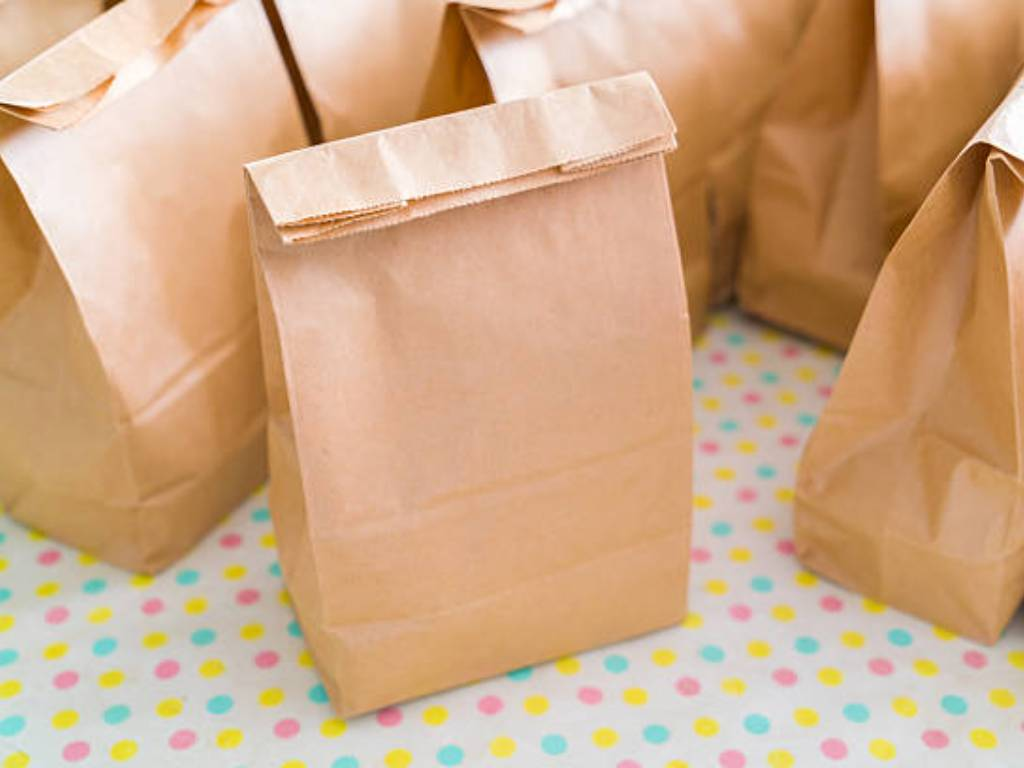
Medir bolsas de papel es fácil y sólo requiere unas sencillas herramientas. Para empezar, necesitarás una regla o cinta métrica, una superficie plana y la bolsa de papel que quieras medir. En primer lugar, coloca la bolsa en posición horizontal sobre la superficie y alisa las arrugas y pliegues.
A continuación, mide la anchura de la bolsa. Coloca la regla o cinta adhesiva en la parte superior, de un lado a otro. Anota esta medida en pulgadas o centímetros. A continuación, para determinar la altura de la bolsa, mide de abajo arriba. De nuevo, anota la medida. Aunque estas dimensiones externas son significativas, también debe medir la profundidad de carga efectiva abriendo la bolsa por completo. Esto te dará la altura útil real una vez expandido el fondo, que es el espacio real que tienes que utilizar.
Por último, para medir el fuelle, doble la bolsa. A continuación, mide desde el pliegue inferior hasta el lateral de la bolsa. La anchura lateral de la bolsa cuando está hinchada al máximo también ayuda a obtener la mejor sensación de volumen. Estos sencillos pasos le permitirán medir correctamente el tamaño de cualquier bolsa de papel. Profesionalmente, es aconsejable seleccionar una bolsa con un espacio libre de 1-3 cm mayor que el de su producto. Este espacio adicional elimina la posibilidad de que el papel se estire demasiado o se rompa y facilita mucho el embalaje.
La fórmula del volumen: Seleccionar una bolsa por su capacidad
Las medidas lineales, como la altura y la anchura, no siempre cuentan toda la historia, sobre todo cuando se cargan objetos de formas extrañas, como diversos artículos de ferretería o productos de panadería a granel. Para determinar la diferencia entre una bolsa plana y una llena, hay que calcular la capacidad en litros. Esta medida da una idea mucho mejor del espacio tridimensional que puede ocupar su mercancía.
Para calcular el volumen de una bolsa en litros utilizando medidas en pulgadas, utiliza el siguiente cálculo estándar:

La constante 61 es el número aproximado de pulgadas cúbicas de un litro. Esta ecuación le ayuda a salir de la perspectiva bidimensional para pasar a una perspectiva basada en el volumen, de modo que su envase tenga la profundidad suficiente para alojar su producto concreto.
Medir su producto es el método más eficaz para asegurarse de que encaja perfectamente. En caso de que tenga un kit o un conjunto de artículos, júntelos de la forma en que irían empaquetados y mida el total de pulgadas cúbicas (Longitud $\times$ Anchura $\times$ Altura). Si divides ese total por 61, obtendrás la capacidad mínima absoluta en litros de tu bolsa. Este enfoque de ingeniería inversa eliminará la posibilidad de pedir bolsas que parezcan grandes sobre el papel pero que no puedan cerrarse una vez colocado el producto en su interior.
Para que pueda visualizar estas cifras antes de realizar un pedido, a continuación le mostramos cómo se traducen las capacidades de litros estándar a los productos diarios:
- 1-2 Litros (Pequeño): Perfecto con productos densos y compactos. La gama ofrece un ajuste ceñido y de alta calidad a una caja de venta de iPhone o a un estuche de regalo de joyería de lujo.
- 5-10 Litros (Mediana): Esta es la opción polivalente de gama media. En ella cabe fácilmente una botella de vino normal de 750 ml con un diámetro lo suficientemente grande como para acolcharla, o dos camisetas bien dobladas.
- 15-20 litros (grande): Estas bolsas están diseñadas para ser estables y a granel, y caben fácilmente en un pedido de comida para llevar del tamaño típico de una familia, 3-4 envases apilados o una caja de zapatos de tamaño mediano.
Tamaños típicos de bolsas de papel: De pequeño a XL
La industria del envasado está estandarizada, de modo que usted no está comprando una bolsa, sino una herramienta que le ayudará en su logística. El primer paso para equilibrar los costes de material y las necesidades prácticas de su producto y su cliente es elegir la categoría de tamaño adecuada.
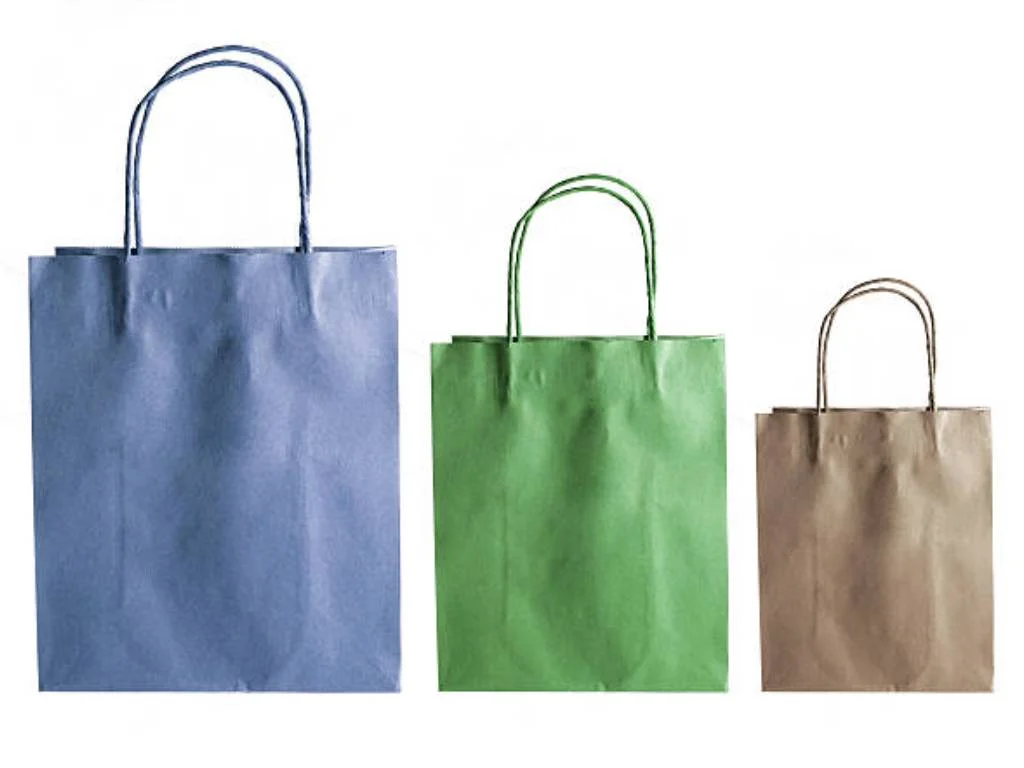
Tamaños de bolsas de papel pequeñas
Las bolsas de papel de tamaño pequeño son adecuadas cuando se trata de productos ligeros o de una sola porción, y proporcionan un aspecto pequeño y profesional. Las bolsas se utilizan habitualmente para envolver regalos en boutiques, recuerdos de fiestas o pequeños artículos de venta al por menor, como productos de farmacia y cosméticos. La bolsa debe ser lo bastante ajustada para contener el producto, pero no tanto como para estirar las costuras del papel. Los tamaños pequeños más comunes son:
- 5″ x 7″ x 3,5″ (12,7 cm × 17,8 cm × 8,9 cm)
- 6″ x 9″ x 4″ (15,2 cm × 22,9 cm × 10,2 cm)
- 7″ x 10″ x 5″ (17,8 cm × 25,4 cm × 12,7 cm)
Tamaños medianos de bolsas de papel
El tamaño de una bolsa de papel típica es adaptable para dar cabida a una amplia variedad de productos, como ropa y accesorios, material de oficina y productos alimentarios. Son los caballos de batalla polivalentes que gozan de popularidad en restaurantes, mercados y tiendas minoristas. Ofrecen mucho espacio para la marca y, al mismo tiempo, son cómodos de llevar por los clientes durante largos periodos de tiempo. Los tamaños medianos más comunes son:
- 8″ x 11″ x 6″ (20,3 cm × 27,9 cm × 15,2 cm)
- 10″ x 13″ x 7″ (25,4 cm × 33 cm × 17,8 cm)
- 12″ x 15″ x 8″ (30,5 cm × 38,1 cm × 20,3 cm)
Tamaños grandes de bolsas de papel
Los tamaños grandes de bolsas de papel se fabrican específicamente para acomodar productos voluminosos o pesados que necesitan más soporte estructural, como ropa de invierno, ropa de cama o una combinación de varios productos. Son habituales en grandes almacenes y centros de distribución de comercio electrónico, donde la durabilidad es el factor más importante. Estas bolsas suelen tener un papel más pesado (mayor GSM) para evitar que se caigan cuando están llenas. Los tamaños grandes más comunes son:
- 14″ x 18″ x 9″ (35,6 cm × 45,7 cm × 22,9 cm)
- 16″ x 20″ x 10″ (40,6 cm × 50,8 cm × 25,4 cm)
- 18″ x 24″ x 12″ (45,7cm × 61cm × 30,5cm)
Tamaños de bolsas de papel extragrandes
Las bolsas extragrandes son bolsas dedicadas a los requisitos más exigentes del comercio minorista y la industria. Se utilizan sobre todo cuando se trata de entregas de catering a granel, aparatos electrónicos de gran tamaño o pesados abrigos de invierno. Debido al peso excesivo que soportan, estas bolsas suelen reforzarse con inserciones de cartón y asas de alta resistencia para que sean seguras durante el transporte. Los tamaños extragrandes más populares son:
- 20″ x 28″ x 14″ (50,8 cm × 71,1 cm × 35,6 cm)
- 24″ x 30″ x 15″ (61 cm × 76,2 cm × 38,1 cm)
Para ayudarle a comparar estas opciones de un vistazo y a elegir la que mejor se adapte a su aplicación concreta, la tabla siguiente resume las dimensiones y capacidades de carga de cada categoría de tamaño estándar.
| Tamaño Categoría | Dimensiones (pulgadas) | Dimensiones (cm) | Ideal para | Capacidad de carga (sin asa) | Capacidad de carga (asa) |
| Pequeño | 5 × 7 × 3.5 | 12.7 × 17.8 × 8.9 | Joyería, Cosmética | 1.0kg | 2.0kg |
| 6 × 9 × 4 | 15.2 × 22.9 × 10.2 | Regalos, Cuidado de la piel | 1,5 kg | 2,5 kg | |
| 7 × 10 × 5 | 17.8 × 25.4 × 12.7 | Farmacia, Snacks | 2.0kg | 3.0kg | |
| Medio | 8 × 11 × 6 | 20.3 × 27.9 × 15.2 | Camisetas, Panadería | 3.0kg | 4,5 kg |
| 10 × 13 × 7 | 25.4 × 33.0 × 17.8 | Libros, accesorios | 3,5 kg | 5.0kg | |
| 12 × 15 × 8 | 30.5 × 38.1 × 20.3 | Comestibles estándar | 4.0kg | 6.0kg | |
| Grande | 14 × 18 × 9 | 35.6 × 45.7 × 22.9 | Cajas de zapatos, Ropa | 5,5 kg | 7,5 kg |
| 16 × 20 × 10 | 40.6 × 50.8 × 25.4 | Ropa de invierno, ropa de cama | 6,5 kg | 8,5 kg | |
| 18 × 24 × 12 | 45.7 × 61.0 × 30.5 | Venta al por mayor, Juguetes | 7,5 kg | 10.0kg | |
| Extra grande | 20 × 28 × 14 | 50.8 × 71.1 × 35.6 | Catering, abrigos grandes | 8,5 kg | 12.0kg |
| 24 × 30 × 15 | 61.0 × 76.2 × 38.1 | Electrónica, Pedidos a granel | 10.0kg | 15.0kg |
Tamaños populares de bolsas de papel por industria
La elección de las especificaciones de la bolsa de papel permite a las empresas maximizar el coste del envasado y, al mismo tiempo, asegurarse de que la integridad estructural de la bolsa está en perfecta armonía con las propiedades físicas del producto.
Alimentación y panadería
Las principales exigencias de esta industria son la resistencia a la grasa, la transpirabilidad y la seguridad alimentaria. Estas bolsas suelen utilizar revestimientos antigrasa o papel kraft transpirable para contener el vapor de los alimentos calientes o los aceites de los fritos. Tienen fuelles más grandes para que los envases de alimentos puedan transportarse en posición perfectamente horizontal. De hecho, una bolsa de fondo plano de tamaño perfecto es uno de los elementos más esenciales ideas para envasar comida rápida para evitar derrames de envases durante la entrega.
- Pequeño (12 x 18 x 7 cm): Diseñadas específicamente para vender artículos individuales, como galletas artesanales, un donut o pequeños pasteles. Estas bolsas suelen carecer de asa y el contenido puede cerrarse fácilmente mediante un cierre abatible rápido y sencillo.
- Mediana (25 x 30 x 14 cm): Tiene el tamaño de los restaurantes de comida rápida, y en ella cabe fácilmente un combo de hamburguesa completo (hamburguesa, patatas fritas y un bocadillo). La construcción del fondo está reforzada para evitar la saturación de aceite.
- Grande (30 × 40 × 18 cm): Perfecto para hacer pedidos a granel o para alimentar a una familia. La base extraancha puede alojar varios recipientes apilados, que son estables y no se derraman durante el reparto.
Venta al por menor y prendas de vestir
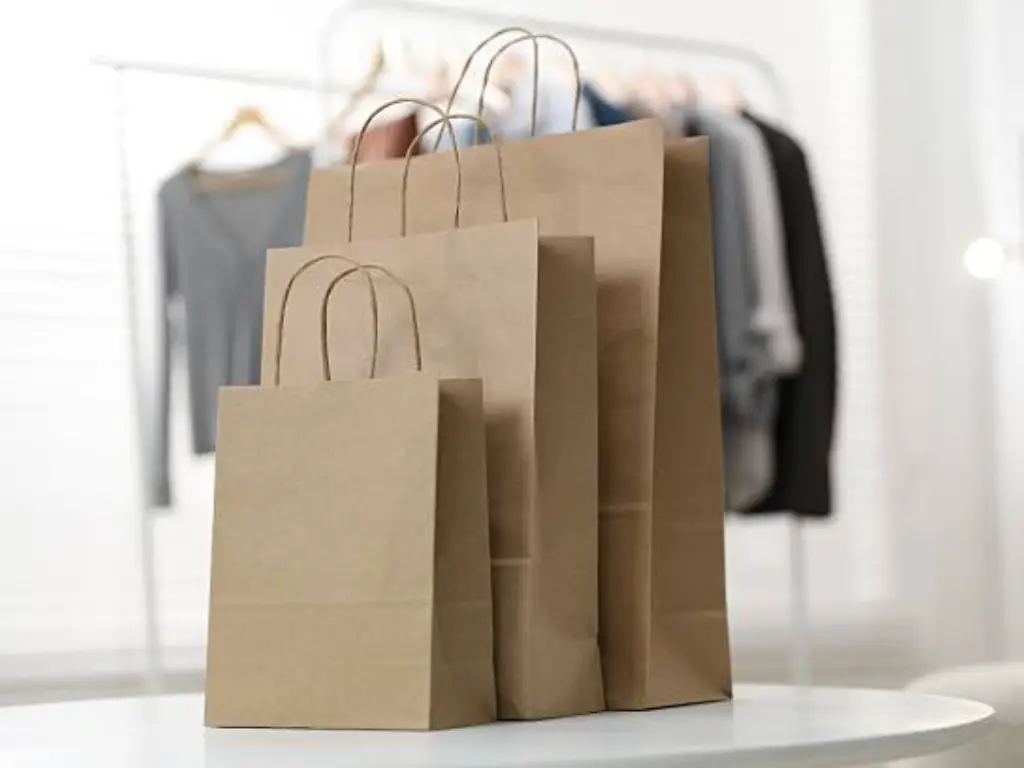
Las bolsas para minoristas son anuncios portátiles de una marca, por lo que deben ser de alta resolución y tener una gran resistencia de asa. El gramaje de estas bolsas suele ser de papel de entre $120$ y $200$ g/m² y tienen asas de cuerda retorcida o de algodón que les confieren un tacto de alta gama y comodidad de transporte en las largas excursiones de compras.
- Pequeño (18 x 25 x 8 cm): Ideal para exponer productos de boutique ligeros, como cosméticos, pañuelos de seda o lencería delicada, ofreciendo una exposición compacta y elegante.
- Mediana (28 x 35 x 12 cm): Esta bolsa se conoce comúnmente como la talla universal de la moda, y en ella caben fácilmente dos camisetas dobladas, un par de vaqueros o una caja de zapatos planos o zapatillas de tamaño estándar.
- Grande (42 x 50 x 15 cm): Se utiliza para guardar objetos grandes o pesados, como abrigos de invierno, botas o ropa de cama. Estas bolsas suelen estar reforzadas en los pliegues superiores para evitar el desgarro de las asas cuando están sometidas a mucha tensión.
Regalos y lujo
Los envases de lujo se preocupan por la experiencia de desembalar y por un tacto de primera calidad. Estas bolsas se fabrican con papel de alto gramaje que suele laminarse en mate, brillante o suave al tacto para que la bolsa pueda tener líneas nítidas y definidas incluso cuando lleva cajas de regalo pesadas y densas.
- Tamaño joya (12 × 15 × 6 cm): Hecho para adaptarse a cajas de anillos, pulseras o relojes. El tamaño estrecho hace que la caja de regalo permanezca en el centro y no se agite en la bolsa.
- Regalo estándar (22 x 30 x 10 cm): La opción más popular cuando se trata de juegos de perfumes, libros de tapa dura o velas de lujo. La anchura del fuelle hace que la bolsa sea plana y tenga clase incluso cuando lleva una caja tridimensional.
- Lujo extragrande (40 × 45 × 12 cm): Perfectos para cestas o lotes de regalo. Suelen ir acompañados de asas de cinta de seda para darle un toque especial.
Para ayudarle a comparar de un vistazo las normas particulares y las capacidades de carga de los distintos sectores, la siguiente tabla resume los datos de los tamaños típicos de la industria.
| Sector industrial | Tamaño Categoría | Dimensiones (pulgadas) | Dimensiones (cm) | Combinación ideal de productos | Carga (sin asa) | Carga (asa) |
| Panadería | Pequeño | 4.7 × 7 × 2.8 | 12 × 18 × 7 | Donuts, bollería individual | 1.0kg | N/A |
| Comida rápida | Medio | 10 × 12 × 5.5 | 25 × 30 × 14 | Combos de hamburguesa, Pollo frito | 3.0kg | 4,5 kg |
| Entrega de alimentos | Grande | 12 × 16 × 7 | 30 × 40 × 18 | 3-4 Contenedores apilados | 5.0kg | 7,5 kg |
| Cosméticos | Pequeño | 7 × 10 × 3 | 18 × 25 × 8 | Maquillaje, Bufandas, Perfume | 1,5 kg | 3.0kg |
| Ropa al por menor | Medio | 11 × 14 × 4.7 | 28 × 35 × 12 | Camisetas, vaqueros, cajas de zapatos | 4.0kg | 6.0kg |
| Ropa pesada | Grande | 16 × 20 × 6 | 42 × 50 × 15 | Abrigos de invierno, Botas altas | 7.0kg | 10.0kg |
| Joyería | Micro | 4.7 × 6 × 2.4 | 12 × 15 × 6 | Cajas para anillos, relojes | 1.0kg | 2,5 kg |
| Regalo Premium | Estándar | 8.7 × 12 × 4 | 22 × 30 × 10 | Estuches de perfume, libros de arte | 3,5 kg | 5.0kg |
¿Se romperá? Conocimiento de la capacidad de carga y GSM
El factor técnico más importante de la durabilidad es la relación entre el tamaño de la bolsa y el gramaje del papel. El músculo de tracción del papel es GSM (gramos por metro cuadrado), que da al papel la resistencia necesaria para soportar el desgarro cuando se somete a la fuerza de la gravedad. Cuanto mayor es el tamaño de una bolsa, mayor es la fuerza de palanca que ejercen los objetos de su interior sobre el fondo y los puntos de enganche del asa.
En el caso de las bolsas XL, sugeriríamos al menos 120 GSM, pero idealmente 150 GSM, para que incluso el 100% de los materiales reciclados puedan conservar su integridad. Líder fabricantes de bolsas de papel kraft dan prioridad a esta densidad de fibras para garantizar que las bolsas no se rompan por la tensión, evitando fallos desastrosos durante el tránsito de los clientes. Cuando su producto pesa más de 5 kg, un fondo reforzado, que es básicamente una segunda capa de cartón resistente pegada al fondo, ya no es una opción, es una necesidad. Este refuerzo no concentra el peso en la costura central, sino que lo reparte por toda la base.
Tabla de datos de las pruebas de perturbación GSM
La tabla siguiente muestra la fuerza crítica de rotura en Newtons (N) en el punto de fijación de la empuñadura.
| Gramaje del papel | Carga máxima (estática) | Punto de ruptura (mango) | Uso recomendado |
| 100 GSM | 4 kg | 120N | Comercio ligero, comida estándar para llevar |
| 120 GSM | 7 kg | 185N | Comestibles, ropa más pesada, botellas de vino |
| 150 GSM | 12 kg | 260N | Electrónica de lujo, restauración a granel |
Tipos de bolsas de papel
La verdadera capacidad de carga de una bolsa de papel no depende sólo de su altura y anchura, sino también del diseño estructural y del material utilizado. Para facilitar la elección, dividimos las bolsas en categorías según su Arquitectura de Fondo (que influye en el volumen) y Propiedades del Material (que influye en la durabilidad).
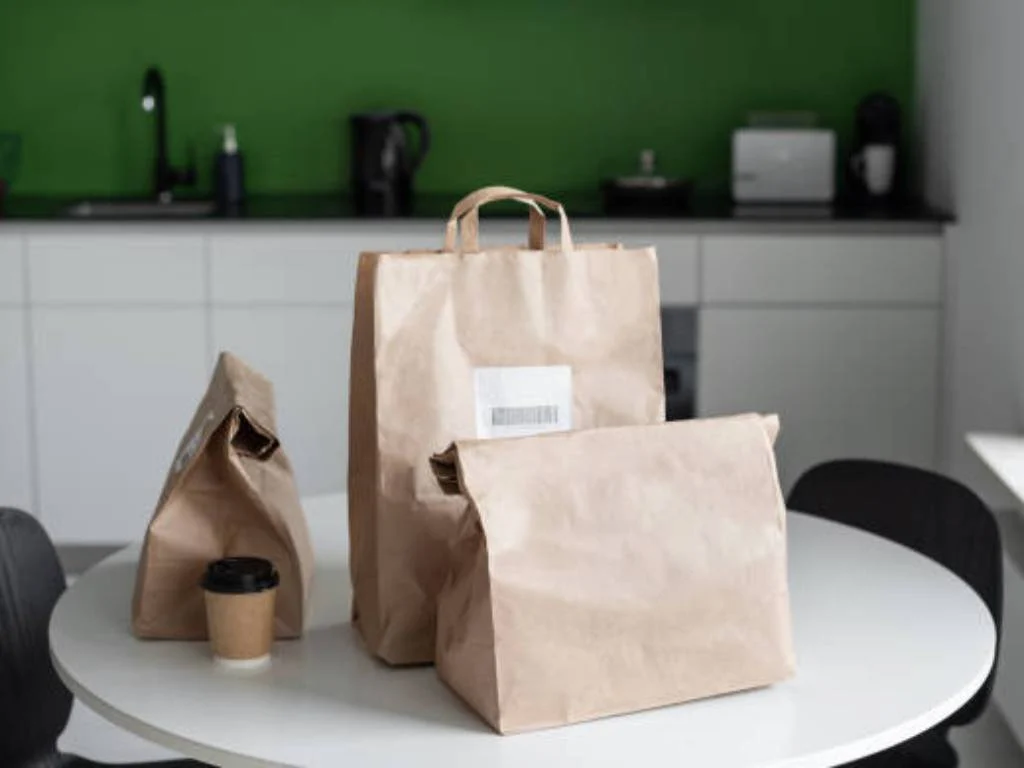
Clasificación de la arquitectura de bolsas
El diseño del fondo de la bolsa determina la profundidad de la bolsa en tres dimensiones y la capacidad de utilizar el volumen interno.
- Bolsa SOS (Self-Opening Satchel): Líder en volumen, el fondo cuadrado de la bolsa forma un verdadero espacio cúbico con un índice de utilización del 100%. Se trata de un producto independiente, y es la opción más eficaz en el comercio minorista de alta velocidad y el servicio de comidas.
- Bolsa de fondo plano: Se trata de una bolsa híbrida que ofrece un soporte lateral moderado. Tiene una estabilidad en estantería superior a la de las bolsas planas, pero con fuelles más pequeños, que resultan adecuados para el café o la harina de alta calidad cuando se requiere un aspecto de estantería completa.
- Bolsa de fondo cuadrado: Es la mejor bolsa para objetos planos, como libros o carteles. Como el fondo se cierra pellizcando en vez de cuadrando, su volumen útil suele ser un 30-40% menor que el de una bolsa SOS del mismo tamaño por fuera.
Propiedades de los materiales Clasificación
La elección del material adecuado le proporciona el "músculo de tracción" para asegurar sus productos y también para representar su marca.
- Papel kraft y encerado: El Kraft tradicional ofrece la mayor resistencia al desgarro para productos pesados. En el caso de panaderías y charcuterías, el papel encerado proporciona un revestimiento impermeable que impide que la grasa destruya la integridad de la bolsa.
- Papel blanco y de color: Se utiliza en el comercio minorista de gama alta, donde la marca es lo más importante. El papel blanco es el mejor para mantener el color, y las opciones de color se utilizan para distinguir su marca en el uso de regalos en la boutique.
- Alternativas sostenibles: El bagazo (fibra de caña de azúcar) y el kraft reciclado son las opciones ecológicas más populares en 2026. Ofrecen la misma resistencia estructural que la pasta de madera, pero con una huella de carbono mucho menor y una compostabilidad total.
El tipo de bolsa de papel que conviene a su empresa depende de varios factores, como la naturaleza de sus productos, su marca y el público al que se dirige. Si utiliza la información sobre los distintos tipos de bolsas de papel, podrá hacer una elección acertada que satisfaga a sus clientes y contribuya a la satisfacción de estos.
Factores a tener en cuenta al elegir el tamaño de las bolsas de papel
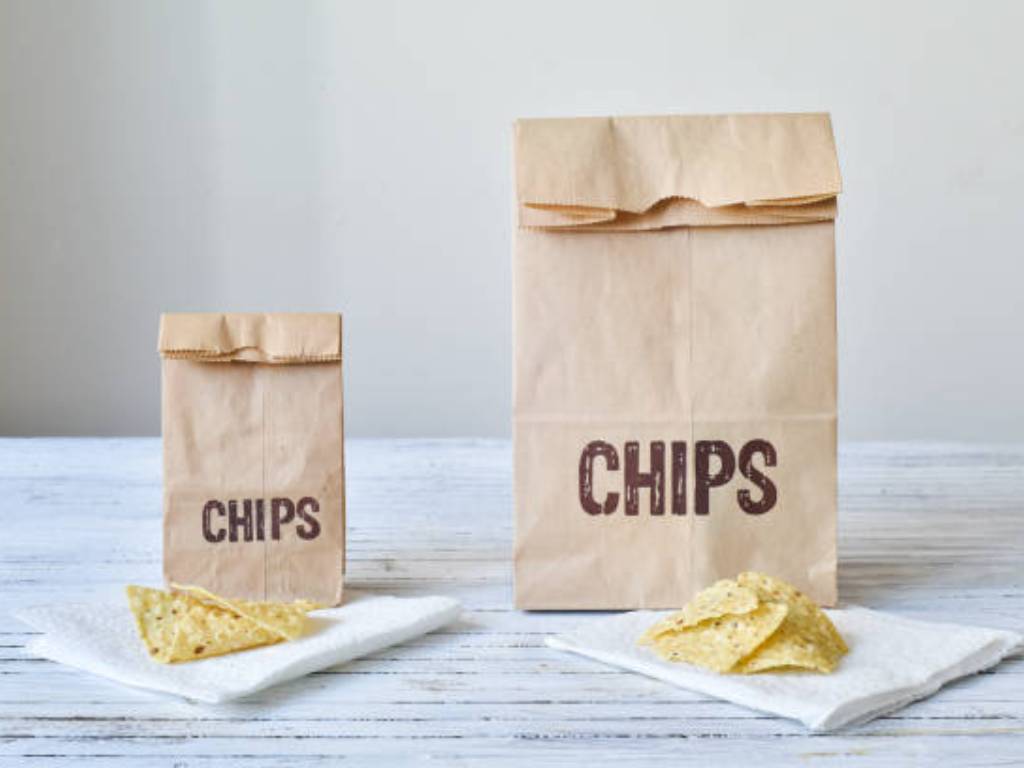
Elegir el tamaño adecuado de la bolsa de papel es vital para asegurarse de que sus productos están debidamente protegidos y se presentan de la mejor manera posible. Sin embargo, tendrá que tener en cuenta algo más que las dimensiones de sus productos. undefined
Dimensiones del producto
- Mida con precisión la longitud, anchura y altura de sus productos.
- Piense en la forma de sus productos y elija una bolsa que los sujete correctamente.
- Asegúrate de que hay espacio suficiente para colocar los productos sin que queden ni demasiado apretados ni demasiado sueltos.
- Si hay varios productos en su oferta, considere las dimensiones del artículo más grande o el tamaño total combinado.
Peso del producto
- Evalúe el peso base de sus productos, incluido cualquier material de embalaje añadido.
- Elija una bolsa de papel capaz de soportar el peso total sin rasgarse ni romperse.
- En el caso de artículos pesados, puede utilizar bolsas de papel reforzadas o de mayor gramaje.
- Tenga en cuenta que el peso de los productos también influirá en los gastos de envío.
Materiales de envasado
- Decida si necesita incluir los materiales de embalaje adicionales, como papel de seda, plástico de burbujas o rellenos.
- Tenga en cuenta el espacio adicional necesario para estos componentes a la hora de decidir el tamaño de su bolsa de papel.
- Asegúrese de que la bolsa pueda contener todos los productos y el material de embalaje sin problemas.
Identidad de marca
- Piense en el aspecto y los valores de la marca y el logotipo a la hora de elegir el tamaño y el tipo de bolsas de papel.
- Elija bolsas que sean coherentes con la paleta de colores y el estilo de su marca.
- Si la sostenibilidad es un aspecto importante de su marca, considere las bolsas de papel kraft fabricadas con materiales ecológicos.
- Seleccione las bolsas duraderas y de primera calidad que mejor reflejen la preocupación de su marca por la calidad y la satisfacción del cliente.
Uso previsto
- Piense en cómo se utilizarán las bolsas de papel y en qué circunstancias.
- Si las bolsas son para compras en la tienda, opte por tamaños que los compradores puedan llevar cómodamente.
- Para el envío, seleccione tamaños que puedan acomodar las etiquetas de envío y salvaguardar los productos durante el tránsito.
- Si las bolsas se utilizan para envolver regalos, considere los tamaños que ofrezcan un aspecto agradable y sean fáciles de envolver.
Relación coste-eficacia
- Evalúa el coste de los distintos tamaños y tipos de bolsas de papel.
- Tenga en cuenta el número de artículos que necesita y los posibles descuentos por volumen.
- Busca un equilibrio entre el precio y la calidad y durabilidad de las bolsas para conseguir la mejor relación calidad-precio.
- Tenga en cuenta que se puede elegir el tamaño correcto y óptimo para evitar el desperdicio y reducir los costes de envasado. Por ejemplo, seleccionar una bolsa con un número 12 en lugar de 20 con 10.000 unidades supondría una densidad de palés un 20% mayor, y no pagaría el envío aéreo. Eliminar una pulgada de redundancia puede ahorrar a una gran cadena de tiendas entre 50.000 y 150.000 al año en logística y almacenamiento.
Si examina concienzudamente los factores mencionados, podrá elegir los tamaños de bolsa de papel que mejor se adapten a la identidad de su marca, al uso previsto y a lo que está dispuesto a gastar. Invertir su tiempo en hacer la elección correcta asegurará su producto, aumentará la satisfacción de sus clientes y le ayudará a tener la mejor estrategia de envasado.
Encuentre un mayorista de bolsas de papel de confianza - YOON

Elegir el tamaño ideal es sólo la mitad de la batalla, debe contar con un socio fabricante que pueda proporcionarle esa precisión a escala. YOON se fundó en 2000 y pone más de 25 años de experiencia en el sector al servicio de su estrategia de envasado. Como proveedor fiable de marcas internacionales como Burger King, Tim Hortons e ILLY, combinamos la flexibilidad de un fabricante de tamaño medio con la enorme fiabilidad de una capacidad anual de 16.000 millones de unidades.
Disponemos de una amplia gama de productos, como bolsas de papel kraft, blanco y de colores, que se presentan en una enorme variedad de tamaños estándar y personalizados en función de su imagen de marca única. Para que sus dimensiones seleccionadas funcionen bajo presión, utilizamos el moderno sellado de costura lateral y los materiales de primera clase suministrados por los proveedores con certificación ISO, como Stora Enso y Sun Paper. Las inspecciones de calidad cada hora y las certificaciones de primera calidad (BRC, FDA, FSC y LFGB) garantizan que todos los productos forrados de PE y PLA respetuosos con el medio ambiente son 100% a prueba de fugas.
Consiga una verdadera ventaja competitiva con plazos de entrega de 3 a 6 semanas, siempre 7 días por delante de la media del sector. Con el apoyo de asesoramiento profesional 24/7 y 1 año de garantía de calidad, YOON garantiza que sus bolsas del tamaño adecuado se entregarán a tiempo y funcionarán.
Conclusión
El tamaño adecuado de las bolsas de papel a sus productos es sumamente significativo cuando desea ofrecer a sus clientes una experiencia maravillosa y demostrar que su marca está consagrada a la calidad. Si conoce las dimensiones de una bolsa de papel básica, mide correctamente sus productos y tiene en cuenta factores como el peso del producto y el material del envase, podrá elegir razonablemente el tamaño y el tipo de bolsas de papel marrón más adecuados para su negocio.
No debe olvidar utilizar las tablas de tamaños de bolsas de papel como guía y asegurarse de seleccionar un buen proveedor como YOON. Así se asegurará de obtener el mejor tipo de bolsas en una variedad de tamaños de bolsas de papel kraft. Su negocio estará en el camino correcto hacia el éxito con las bolsas de papel adecuadas y el deseo de satisfacer a los clientes.
Preguntas más frecuentes (FAQ)
1. ¿Cómo puedo determinar las dimensiones correctas de la bolsa de transporte para mis productos?
Para encontrar el dimensiones de la bolsaEn el caso de las bolsas, hay que tener en cuenta tres medidas clave: Anchura, Altura y Fuelle (la profundidad de la bolsa). En primer lugar, mida la longitud, la anchura y la altura de su producto. La anchura y la altura de la bolsa deben ser ligeramente superiores a las de su producto, y el fuelle debe adaptarse a la profundidad de su producto para garantizar un ajuste ceñido pero no excesivo. Por ejemplo, una bolsa mediana (26 x 32 x 12 cm) es ideal para una camisa doblada, mientras que se necesita una bolsa más grande para artículos más voluminosos, como chaquetas.
2. ¿Qué debo saber sobre los distintos tamaños de bolsas disponibles para diversas industrias?
Los distintos tamaños de bolsas suelen adaptarse a su uso específico. Más allá de las categorías generales "pequeña", "mediana" y "grande", encontrará dimensiones especializadas. Por ejemplo, las bolsas para alimentos tienen el tamaño adecuado para una sola comida (por ejemplo, 25 x 22 x 12 cm para llevar), mientras que las bolsas para vino son altas y estrechas para que quepa bien una botella (por ejemplo, 10 x 35 x 9 cm). Las bolsas para minoristas y regalos también tienen sus propias dimensiones comunes diseñadas para productos como cosméticos, libros o ropa. Lo mejor es consultar una tabla de tamaños detallada, como la anterior, que relacione los tipos de productos con las dimensiones recomendadas para las bolsas.
3. ¿Cuánto peso puede soportar una bolsa de papel? La respuesta a cuánto pesa una bolsa de papel depende en gran medida de su tamaño, del grosor del papel (gramaje o g/m²) y de la construcción del asa. Una bolsa pequeña y sencilla sin asas sólo puede soportar alrededor de 1 kg. Sin embargo, una bolsa de la compra grande hecha de papel kraft resistente con asas reforzadas de papel trenzado o algodón suele soportar entre 8 kg y 12 kg (unas 18-26 libras). Para los artículos más pesados, elija siempre una bolsa de mayor gramaje y con asas fuertes y reforzadas para evitar que se rompa.




 English
  German
  Spanish
  Italian
  Dutch
Dutch  French
  Portuguese
  Russian
  Arabic
  Korean