

Cómo evitar que se derrita el helado: por qué el vaso es más importante que la nevera portátil
Pocas cosas arruinan un momento veraniego más rápido que ver cómo una bola de helado se derrite hasta convertirse en un charco antes de que nadie haya tenido tiempo de terminársela. La solución instintiva siempre es externa: coger una nevera portátil, meter más hielo, buscar sombra. Pero la realidad de la ingeniería va en contra de ese instinto: la variable que más influye en la rapidez con la que se derrite el helado no es el entorno que rodea al recipiente. Es el propio recipiente.
Esta guía sirve de puente entre los consejos para el consumidor y la ciencia del envasado, y explica por qué se derrite el helado, qué diseños de envases ralentizan el proceso desde el punto de vista físico y en qué hay que fijarse a la hora de elegir envases diseñados para ganar unos minutos extra.
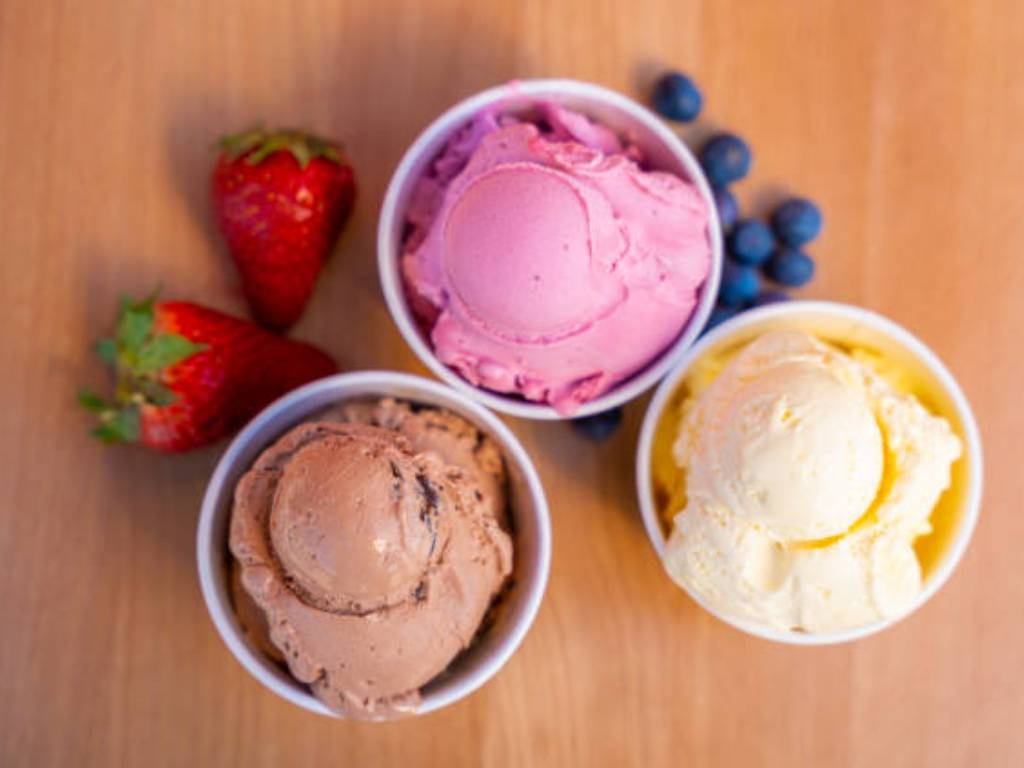
01 La ciencia que explica por qué se derrite el helado
El helado no es un simple bloque congelado. A nivel microestructural, se trata de un sistema trifásico: cristales de hielo suspendidos en una solución azucarada concentrada, estabilizados por una red de glóbulos de grasa parcialmente fusionados, con burbujas de aire dispersas por toda la masa. El helado de alta gama suele contener entre un 25 % y un 50 % de aire por volumen (lo que se conoce como «overrun»); los productos económicos pueden superar el 100 %, y más aire significa un derretimiento más rápido, ya que el aire es una masa térmica deficiente: se calienta rápidamente y acelera el colapso de los cristales de hielo.
El calor penetra en el helado a través de tres vías simultáneamente: conducción (contacto directo con una mano caliente o con la encimera), convección (el aire ambiente que circula alrededor del vaso) y radiación (la luz solar o el calor radiante de superficies cercanas). De estas, la convección es la principal amenaza en la mayoría de los casos reales: el aire en reposo a 30 °C puede transferir suficiente energía como para que comience a derretirse visiblemente la superficie en 90 segundos.
El margen de temperatura crítica es muy reducido. El helado se conserva a -18 °C (0 °F), pero la recristalización de los cristales de hielo —el proceso que produce esa textura arenosa y recongelada— comienza alrededor de los -12 °C. El deshielo visible aparece entre -5 °C y 0 °C. Cada grado que se consiga mantener el producto por debajo de ese umbral alarga su vida útil. La pregunta no es «¿cómo evito el deshielo por completo?», sino «¿cómo ralentizo la transferencia de calor lo suficiente como para ganar el tiempo que necesito?».
02 Tu contenedor es tu primera línea de defensa
La mayoría de la gente recurre a métodos de refrigeración externos —bolsas de hielo, neveras portátiles, hielo seco— antes de pensar en el recipiente que está, literalmente, en contacto con el helado. Sin embargo, desde el punto de vista térmico, ese recipiente es la primera barrera entre el producto y el calor ambiental. Si cambias el recipiente, cambias la velocidad de derretimiento. A continuación te explicamos por qué.
Cómo funciona el aislamiento en el ámbito de la copa
Cada material tiene un valor de conductividad térmica, que indica la facilidad con la que transmite el calor. Cuanto menor sea el valor, mejor será el aislamiento. A temperatura y presión normales (25 °C), el cartón utilizado en los vasos para alimentos tiene una conductividad térmica de aproximadamente 0,05 W/(m·K) (Thermtest, 2021). El aire en reposo —es decir, el aire atrapado en un espacio— tiene una conductividad térmica de 0,026 W/(m·K), aproximadamente 481 veces menor. Esta es la razón física por la que funcionan los vasos de doble pared: la capa aislante no es el papel, sino el espacio de aire en reposo que hay entre las dos capas de papel.
La relación es sencilla. Un vaso de papel de pared simple tiene una sola capa de papel, con un grosor aproximado de entre 0,3 y 0,5 mm, dependiendo del gramaje del cartón (normalmente entre 250 y 350 g/m²). El calor la atraviesa en segundos. Un vaso de doble pared añade un espacio de aire de entre 0,5 y 1,5 mm entre las dos capas de papel, y dado que el aire en reposo conduce el calor con la mitad de eficiencia que el cartón, la estructura combinada ofrece aproximadamente entre 2 y 3 veces la resistencia térmica de una pared simple. Un vaso de pared ondulada va más allá: la capa exterior corrugada crea múltiples cavidades de aire discretas en lugar de un único espacio, lo que produce la conductividad térmica efectiva más baja de todas las estructuras de vasos desechables.
Traducción: un vaso de pared simple es como una camiseta. Un vaso de doble pared es como un plumífero. La diferencia no es insignificante, sino que es abismal.
Objetos cotidianos que ya tienes y que te ayudan
Si se trata de resolver un problema puntual —como llevar helado desde la tienda o servirlo en una fiesta—, puedes aplicar estos principios con lo que tengas a mano. Un vaso de acero inoxidable de doble pared previamente enfriado imita el diseño con aislamiento al vacío de un termo, lo que elimina prácticamente la transferencia de calor por conducción a través de las paredes (aunque la parte superior abierta sigue siendo vulnerable a la convección). Un vaso de espuma (poliestireno expandido o EPS) obtiene su rendimiento aislante del mismo mecanismo que un vaso de papel ondulado —aire atrapado en una matriz sólida—, y el EPS contiene aproximadamente un 90 % de aire por volumen. Un vaso de papel grueso combinado con una funda corrugada crea un sistema de doble pared improvisado: la funda añade una cámara de aire y una capa extra de fibra de celulosa, creando de forma eficaz una barrera térmica de dos etapas sobre la marcha.
Estas soluciones para el consumidor funcionan entre 30 y 90 minutos. Pero todas comparten una limitación: son adaptaciones. El envase nunca se diseñó, en un principio, para el helado. Si eres una marca de helados, una cadena de comida rápida o una heladería —es decir, alguien cuyo negocio depende de esos minutos extra—, la conversación pasa de «¿qué puedo añadir al envase?» a «¿cómo debería ser el envase?».
03 Métodos populares de bricolaje: lo que funciona y lo que no
Si has buscado cómo evitar que se derrita el helado, habrás visto la misma lista por todas partes. Los métodos te resultarán familiares. Su eficacia real, ordenada de menos a más útil:
- ❌ Envuelto en una toalla o en papel de periódico. Una toalla da la sensación de aislar porque es gruesa, pero las fibras del tejido son malas barreras térmicas: crean canales de aire que, en realidad, aceleran el intercambio de calor por convección una vez que la toalla alcanza la temperatura ambiente. Envolverse en una toalla te da quizá cinco minutos más. La sensación de bienestar psicológico supera el efecto físico.
- ⚠️ Bolsas de hielo en una bolsa normal. Las bolsas de hielo funcionan... durante unos 30-45 minutos. Después de eso, las propias bolsas se calientan, y una bolsa de gel a temperatura ambiente presionada contra el envase de helado se convierte en una fuente de calor, no en un disipador. La falta de aislamiento de la bolsa hace que el calor ambiental ataque por todos los lados a la vez. Esto está bien para un trayecto corto hasta casa, pero es insuficiente para cualquier distancia mayor.
- ✅ Nevera portátil preenfriada con bolsas de hielo. El paso de enfriamiento previo es el factor decisivo que la mayoría de la gente se salta. Una nevera portátil que empieza a temperatura ambiente pierde sus primeros 20-30 minutos absorbiendo el calor del entorno antes de empezar a proteger el contenido. Enfría la nevera portátil durante una hora antes de usarla, coloca el helado en el fondo (el aire frío desciende), rodéalo con bolsas de hielo por todos los lados y tendrás un margen fiable de 2 a 4 horas.
- ✅️✅️ Hielo seco en un recipiente térmico. El hielo seco se sublima a -78,5 °C, lo que permite mantener temperaturas bajo cero durante 6-12 horas. Es la solución de referencia para el transporte de larga distancia. Las desventajas prácticas: hay que utilizar guantes para manipularlo y el contenedor debe estar ventilado (CO2 (la acumulación de gases en una caja cerrada es peligrosa), y resulta excesivo para cualquier cosa que dure menos de dos horas.
Fíjate en lo que todos estos métodos tienen en común: tratan el contenedor como un recipiente neutro y añaden capas a su alrededor. La pregunta desde el punto de vista de la ingeniería —¿y si el propio contenedor fuera la capa aislante?— brilla por su ausencia en el debate sobre el bricolaje. Y ahí es precisamente donde reside el mayor potencial.
04 Cómo la ingeniería de los vasos de papel frena el derretimiento
Un vaso de helado de papel no es simplemente «papel doblado en forma de cilindro». Se trata de un sistema térmico diseñado que consta de tres capas de ingeniería interdependientes: la estructura de la pared, el revestimiento interior y el sellado de la tapa. Cada una de ellas contribuye —o, por el contrario, dificulta— que el contenido se mantenga congelado durante más tiempo.
Pared doble y pared ondulada: la ventaja del espacio de aire
El mecanismo de aislamiento fundamental en un vaso de papel es la capa de aire estático. Un vaso de pared simple ofrece una sola barrera de papel —con un grosor total de aproximadamente 0,3-0,5 mm— y una resistencia térmica mínima. Un vaso de doble pared separa dos capas de papel con un espacio de aire de 0,5-1,5 mm, y dado que la conductividad térmica del aire en reposo (0,026 W/(m·K)) es aproximadamente la mitad de la del cartón (0,05 W/(m·K)), la estructura combinada ofrece una resistencia térmica entre 2 y 3 veces superior a la de una pared simple.
Un vaso con pared ondulada lleva esto aún más lejos. La capa exterior ondulada no es solo una textura estética, sino que crea un patrón de cavidades de aire separadas, en lugar de un espacio continuo, lo que reduce aún más las corrientes convectivas dentro de la pared. En pruebas estandarizadas con líquido a 95 °C, los vasos de papel de doble pared mantuvieron temperaturas en la pared exterior aproximadamente entre 24 y 27 °C más bajas que los vasos de pared simple durante un periodo de prueba de 30 minutos, lo que supone una mejora de ~60% en el rendimiento del aislamiento (Pruebas térmicas de YRPak, 2025). En el caso de productos fríos como el helado, se aplica el mismo principio físico a la inversa: el calor ambiental tarda entre dos y tres veces más en atravesar la pared del vaso.
Lo que esto significa en la práctica: si se llena un vaso de pared simple y otro de doble pared con helado, y se colocan ambos en un ambiente a 30 °C, el vaso de doble pared retrasa el derretimiento visible de la superficie entre 40 y 60 minutos más. La ciencia no es complicada: se trata simplemente de física, algo que la mayoría de la gente nunca relaciona con el problema de que se derrita el helado.
Forro de PLA frente a PE: algo más que una opción ecológica
Todos los vasos de papel necesitan un recubrimiento interior para evitar que el líquido empape las fibras del papel. Las dos opciones principales son el polietileno (PE) y el ácido poliláctico (PLA).
El PE ha sido el estándar del sector durante décadas. Se aplica en una capa de tan solo 0,012-0,02 mm de espesor, se funde a 105-115 °C y proporciona una impermeabilización fiable a bajo coste. Sin embargo, su contribución al aislamiento térmico es insignificante: con ese espesor, la resistencia térmica del revestimiento es prácticamente inapreciable.
El PLA, derivado del almidón de maíz o de la caña de azúcar, se comercializa ampliamente como la alternativa «ecológica». Sin embargo, merece la pena prestar atención a sus propiedades térmicas, independientemente de su carácter sostenible. El PLA se funde a 150-160 °C —aproximadamente entre 40 y 50 °C más que el PE— y su temperatura de deflexión térmica (HDT) se sitúa en torno a los 50-60 °C, frente a los 40-50 °C del PE. En entornos con altas temperaturas (un muelle de carga en julio, la parte trasera de una furgoneta de reparto), la mayor estabilidad térmica del PLA hace que el revestimiento interior sea menos propenso a ablandarse y comprometer la integridad estructural del vaso. Una pared de vaso que se mantiene rígida conserva su cámara de aire; una pared que se ablanda colapsa esa cámara y acelera la transferencia de calor.
Para que quede claro: la función principal del recubrimiento es evitar fugas, no aislar. Los recubrimientos contribuyen en menos de un 51 % a la resistencia térmica total de un envase. Pero a la hora de elegir entre PE y PLA para aplicaciones de helados, el mayor límite térmico del PLA ofrece una ventaja secundaria significativa, y su origen vegetal encaja con el posicionamiento de sostenibilidad en el que las marcas de helados confían cada vez más.
La tapa es más importante de lo que crees
El elemento más subestimado de la termodinámica del envase del helado es la tapa. Un envase abierto pierde frío a través de un ciclo continuo de convección: el aire frío y denso desciende fuera del envase; el aire ambiente cálido entra rápidamente para sustituirlo; la superficie del helado absorbe este calor; y el ciclo se repite. Este ciclo de convección puede suponer una parte significativa de la ganancia total de calor, especialmente en presencia de aire en movimiento (cerca de un ventilador, en un vehículo con el aire acondicionado en marcha).
Una tapa hermética rompe este ciclo. Las pruebas demuestran sistemáticamente que una tapa que se ajusta bien reduce el intercambio de calor por convección en la abertura del vaso en un 60-80 % aproximadamente, en comparación con un vaso abierto. Las tapas abovedadas —el diseño elevado y redondeado habitual en los vasos de café helado— ofrecen una ventaja adicional: el espacio libre adicional captura la condensación y evita que gotee sobre la superficie del helado, conservando tanto la textura como el atractivo visual. En el caso concreto del helado, una tapa plana puede crear un microambiente en el que el condensado se acumula y se vuelve a congelar formando una capa helada en la superficie del producto. Una tapa abovedada elimina este problema al mantener el condensado en suspensión.
La tapa no es un accesorio. Es la tercera pata del trípode térmico.
Estos tres elementos no existen de forma aislada, y ahí radica la clave: la estructura de doble pared, el revestimiento de PLA y la tapa abovedada sellada forman un sistema, no una mera lista de características. Cuando los tres están presentes en un solo vaso —una pared con cámara de aire que aísla y frena la transferencia de calor por conducción, un revestimiento vegetal térmicamente estable que mantiene la integridad estructural y una tapa abovedada que suprime el ciclo de convección—, el efecto combinado sobre la velocidad de derretimiento es significativo y medible. Los fabricantes que llevan a cabo un ciclo completo de producción interna, en el que la impresión flexográfica y offset CMYK/PMS, pasando por el troquelado hasta el conformado automatizado, se realizan bajo un mismo techo, pueden diseñar estos tres elementos para que funcionen conjuntamente en la fase de diseño, en lugar de incorporarlos posteriormente. Uno de estos fabricantes, YoonPak, fabrica vasos de papel de doble pared y con pared ondulada, con revestimiento de PLA o PE, en tamaños que van desde los 120 ml hasta los 600 ml, con un sellado a prueba de fugas en la costura lateral y trazabilidad del control de calidad por horas; lo que significa que el aislamiento no es fruto de la casualidad, sino que está integrado en el vaso desde su fase de diseño. Si está comprando vasos para helado al por mayor, la pregunta correcta no es «¿tiene este vaso una cámara de aire?», sino «¿se diseñó la cámara de aire en el vaso o simplemente surgió por casualidad?».
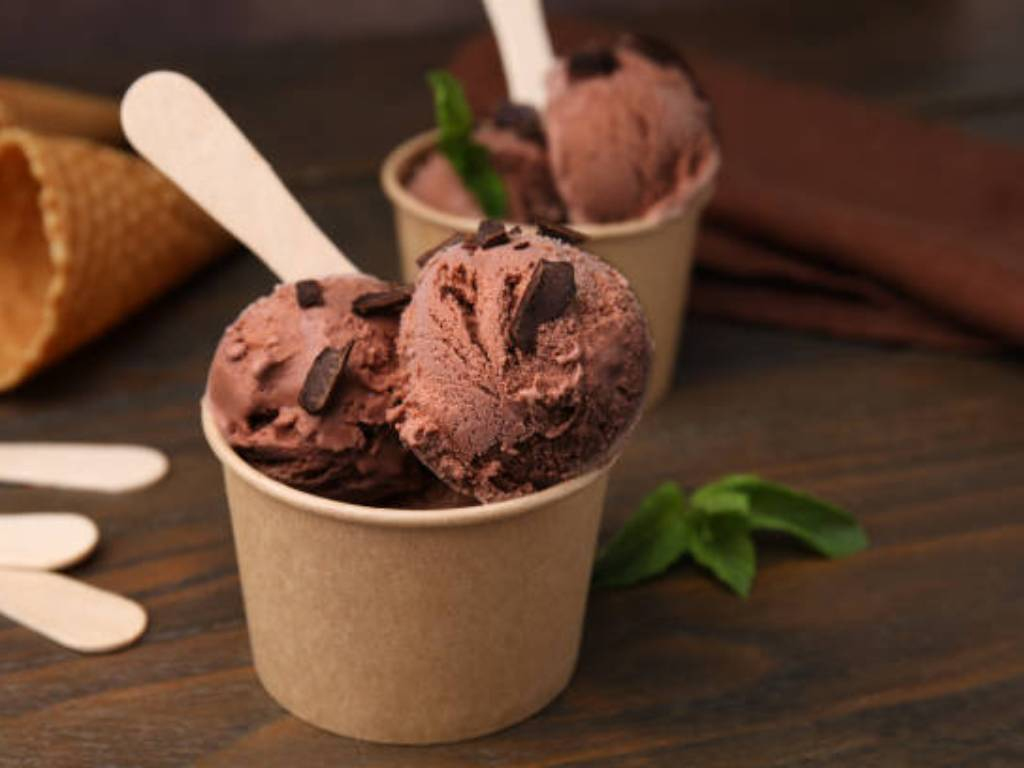
05 Duelo de materiales: papel, plástico y espuma para los helados
A la hora de elegir un envase, la decisión no se basa en qué material es «el mejor» en abstracto. Se trata de determinar qué material ofrece el mejor rendimiento en las cuatro dimensiones que importan para el servicio de helados: aislamiento térmico, resistencia a las fugas, capacidad de impresión de la marca y respeto al medio ambiente. No hay una única opción que destaque en todas las categorías.
Rendimiento térmico por tipo de material
| Tipo de contenedor | Aislamiento | Resistencia a las fugas | Impresión de marca | Sostenibilidad | Coste de producción | Lo mejor para |
|---|---|---|---|---|---|---|
| Vaso de papel de una sola capa | ★★ | ★★★ | ★★★★★ | ★★★★ | $ | Atención en tienda, tiempos de espera reducidos (<15 min) |
| Vaso de papel de doble pared / ondulado | ★★★★ | ★★★ | ★★★★★ | ★★★★ | $$ | Comida para llevar, entrega a domicilio, eventos al aire libre (30-90 min) |
| Vaso de espuma de poliestireno expandido | ★★★★★ | ★★★ | ★ | ★ | $$ | Máximo aislamiento, baja prioridad de la marca |
| Vaso de plástico de PET/PP | ★★ | ★★★★★ | ★★★ | ★★ | $ | Bebidas heladas, batidos (la estanqueidad es lo más importante) |
El vaso de papel de doble pared ocupa un interesante punto medio. No alcanza el nivel de aislamiento de la espuma de poliestireno expandido (EPS) —ningún producto desechable lo hace—, pero es la única opción que ofrece un buen rendimiento térmico. y Impresión CMYK/PMS en toda la superficie para la imagen de marca. Para las marcas de helados y las cadenas de comida rápida, el vaso es un anuncio andante; la imprudibilidad de la espuma, prácticamente nula, elimina ese valor. Y a medida que se endurecen las normativas sobre los plásticos de un solo uso, la ventaja de la sostenibilidad del papel frente al poliestireno expandido (EPS) y el PET se convierte en un factor a tener en cuenta en la contratación, y no solo en un argumento de marketing.
Cómo elegir en función de tu situación de servicio
Servicio de recogida en tienda (espera breve, prioridad para la marca). Tu cliente se terminará el helado en unos 10-15 minutos. El aislamiento es secundario: lo que importa es lo bien que queda tu logotipo en el vaso. Un vaso de papel de pared simple con impresión personalizada en toda la superficie maximiza el impacto de la marca en cada ración. Añade una funda para servilletas para mayor comodidad y ya está.
Entrega a domicilio y para llevar (entre 30 y 60 minutos de transporte). Este es el escenario que acaba con las marcas: el cliente abre la bolsa y se encuentra con la sopa. Un vaso de papel de doble pared o con paredes onduladas, junto con una tapa abovedada sellada, proporciona el aislamiento térmico necesario para el transporte de última milla. El aislamiento de la cámara de aire mantiene el calor ambiental fuera; la tapa detiene el ciclo de convección. Si los tiempos de entrega superan habitualmente los 45 minutos, enfríe previamente los vasos antes de llenarlos: el envasado en frío amplía la ventana térmica al absorber la carga térmica inicial en las paredes del vaso en lugar de en el producto.
Eventos al aire libre y mercadillos de verano (calor intenso, larga duración). Combina un vaso ondulado de doble pared con un enfriamiento previo y, para prolongar el tiempo de servicio, una nevera portátil o una bolsa isotérmica en el punto de venta. Ningún vaso desechable, por muy bien diseñado que esté, mantendrá el helado congelado indefinidamente bajo el sol directo a 35 °C. Sin embargo, combinar un vaso diseñado específicamente con unas normas básicas de cadena de frío puede convertir un riesgo de derretimiento de 10 minutos en un margen de servicio de 60 minutos.
06 Qué preguntar a tu proveedor de embalajes
Si está adquiriendo envases al por mayor —para una marca de helados, una cadena o una cocina industrial—, la conversación con su proveedor de envases debería ir más allá de «qué tamaños tiene y cuánto cuesta el millar». Las siguientes cinco preguntas se corresponden directamente con los principios de ingeniería mencionados anteriormente. Un proveedor que pueda responder a las cinco con datos, y no con simples garantías, es un proveedor que entiende el envasado térmico como una disciplina de ingeniería.
1. ¿Cuál es la estructura de la pared —simple, doble o ondulada— y cuáles son las especificaciones del espacio de aire? «Está aislado» no es una respuesta válida. Pregunta por la medida del espacio en milímetros y el gramaje del cartón en g/m². Un vaso de doble pared con un espacio de 0,5 mm es un producto distinto a uno con un espacio de 1,5 mm, y la diferencia en el rendimiento térmico es apreciable.
2. ¿Revestimiento de PE o PLA? ¿Pueden facilitar una certificación de aptitud para el contacto con alimentos (FDA / LFGB)? El material del revestimiento influye tanto en la estabilidad térmica como en el cumplimiento de la normativa de tu mercado de destino. Si exportas a la UE, el cumplimiento de la normativa LFGB es imprescindible. Si la sostenibilidad forma parte de la identidad de tu marca, el origen vegetal del PLA y su mayor resistencia térmica justifican su ligero sobreprecio.
3. ¿Qué tipos de tapas ofrecen y cuál es la tolerancia de sellado? Una tapa que no queda bien ajustada permite la convección, y la convección es el acelerador silencioso del derretimiento. Pregunta específicamente por las opciones de tapas abovedadas; el espacio libre es más importante en el caso del helado que en el de las bebidas calientes.
4. ¿Qué procesos de impresión utilizáis: flexografía u offset? ¿Ofrecéis compatibilidad con CMYK y la correspondencia de colores Pantone? ¿Cuál es la cantidad mínima de pedido para la impresión personalizada? La impresión flexográfica es ideal para tiradas más grandes con diseños sencillos. La impresión offset ofrece una mayor resolución y una mejor fidelidad cromática para diseños de marca complejos. Si estás probando un nuevo mercado o una nueva línea de sabores, infórmate sobre las opciones con un pedido mínimo reducido que te permiten validar el producto antes de comprometerte con un volumen de producción.
5. ¿Qué certificaciones tiene la fábrica: ISO 9001, BRC, FSC? ¿Ha realizado la fábrica alguna prueba de rendimiento térmico en sus vasos? Un fabricante que cuenta con las certificaciones de cadena de custodia BRC (Norma Global de Seguridad Alimentaria) y FSC (Consejo de Administración Forestal) ha sido auditado por organismos independientes tanto en materia de seguridad alimentaria como de abastecimiento responsable de materiales. Cualquier fabricante que se tome en serio el rendimiento térmico debería poder compartir datos de pruebas —y no afirmaciones de marketing— que demuestren el diferencial de temperatura que alcanzan los diseños de sus vasos.
Para las marcas de helados y los operadores del sector de la restauración que estén evaluando proveedores de vasos, merece la pena hablar con un fabricante que cumpla todos y cada uno de estos requisitos: diseño de doble pared verificado, revestimiento de PLA con documentación de la FDA y la LFGB, compatibilidad con tapas abovedadas selladas, impresión flexográfica y offset CMYK/PMS con cantidades mínimas de pedido asequibles y un conjunto completo de certificaciones BRC/ISO/FSC— merece la pena que se le tenga en cuenta. YoonPak, un fabricante de envases de papel con sede en Wuhan y 24 años de experiencia en el sector, ofrece asistencia gratuita en el diseño (prueba digital en 1 día, envío de muestras en 48 horas), fabricación a medida de vasos de doble pared y de pared ondulada con revestimiento de PLA o PE, control de calidad cada hora con trazabilidad en serie en el fondo de cada vaso, y cantidades mínimas de pedido reducidas a partir de 50 000 unidades por pedido de varios artículos. La fábrica opera bajo las certificaciones ISO 9001, ISO 14001, BRC, BSCI, FDA, LFGB, FSC, BPI y DIN. Póngase en contacto con su equipo para solicitar muestras personalizadas gratuitas en yoonpak.com/contacto.
Y una última reflexión que merece la pena dejar clara: un vaso de papel bien diseñado cuesta una fracción de céntimo más que uno genérico. Un pedido que llega derretido le sale caro al cliente. Las cuentas son sorprendentemente sencillas una vez que las haces.
Referencias
- Thermtest Inc. «Propiedades térmicas del aislamiento de los vasos desechables». 2021. https://thermtest.com/disposable-cup-insulation
- YRPak. «¿Son los vasos de papel de doble pared realmente más aislantes?», 2025. https://www.yrpak.com/are-double-wall-paper-cups-really-more-insulating.html
- YoonPak. «Soluciones personalizadas de envases de papel para alimentos». https://www.yoonpak.com/
- YoonPak. «Embalaje personalizado: haz que tu marca destaque en los vasos». https://www.yoonpak.com/custom-packaging/
- YoonPak. «Greenology en tazas: apostando por lo ecológico». https://www.yoonpak.com/going-green/
- YoonPak. «Quiénes somos — Fabricante de vasos de papel». https://www.yoonpak.com/about/
- YoonPak. «Contáctanos». https://www.yoonpak.com/contact/


 English
  German
  Spanish
  Italian
  Dutch
Dutch  French
  Portuguese
  Russian
  Arabic
  Korean