

Emballage pour la livraison de café chaud : comment choisir des gobelets qui résistent au transport
La livraison de café chaud représente un défi totalement différent de celui que pose son service au comptoir d’un café. Alors que les gobelets standard à simple paroi fonctionnent parfaitement en magasin, les vibrations constantes, les inclinaisons et la pression thermique liées au transport mettent en évidence leurs faiblesses structurelles, ce qui entraîne rapidement des déchirures au niveau des soudures latérales, des couvercles qui sautent et des boissons tièdes. Pour préserver à la fois l’expérience client et la réputation de la marque, les exploitants doivent repenser leur stratégie d’emballage. Ce guide décortique les mécanismes des emballages adaptés à la livraison, en explorant les avantages stratégiques des gobelets à double paroi et à paroi ondulée, la nécessité de systèmes de couvercles parfaitement adaptés, ainsi que les certifications essentielles des fournisseurs requises pour garantir que votre café résiste au trajet.
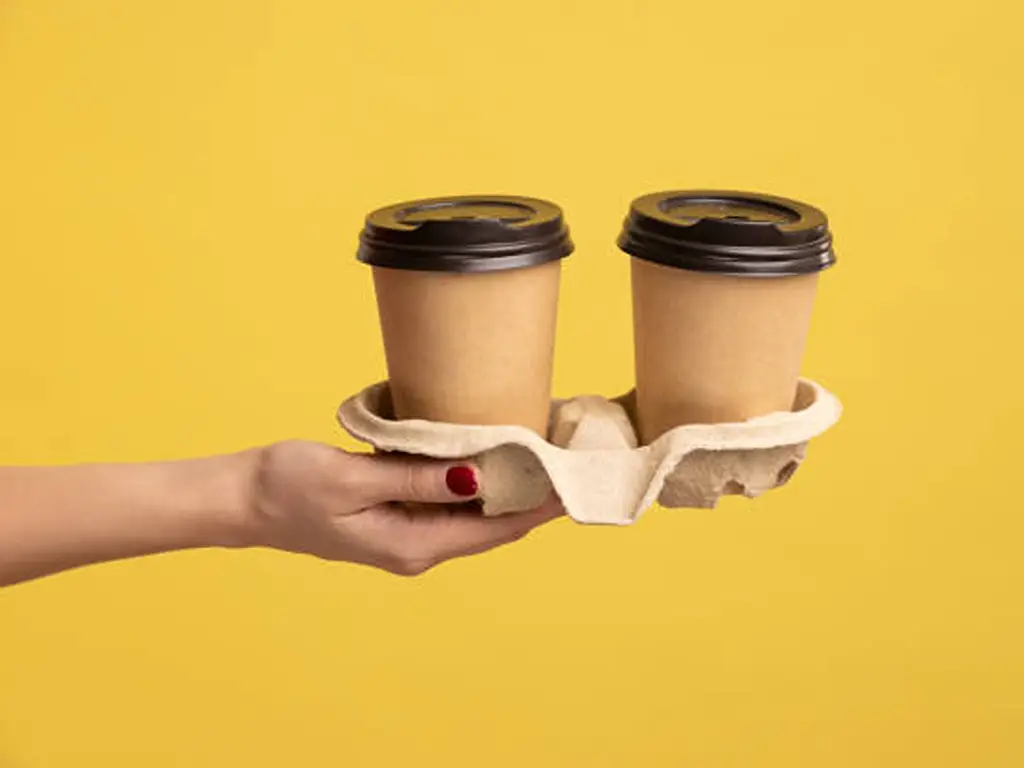
Pourquoi la livraison de café chaud nécessite-t-elle un emballage spécifique ?
Un gobelet en papier posé sur le comptoir d'un café mène une vie tranquille. Il reste debout. On le vide en 15 minutes. Personne ne le secoue, ne l'incline ni n'empile trois commandes lourdes dessus.
Imaginons maintenant ce même gobelet à l’arrière d’un scooter de livraison. Il roule avec une inclinaison de 30 degrés pendant 25 minutes. Chaque nids-de-poule envoie une onde de choc à travers la soudure latérale. La pression de la vapeur s’accumule sous le couvercle. Trois autres gobelets placés dans un porte-gobelets exercent une pression par le haut. Le gobelet qui fonctionnait parfaitement en magasin doit désormais faire face à trois risques de défaillance simultanés : l’éclatement de la soudure latérale, l’éjection du couvercle et l’affaissement thermique.
L'écart entre les performances en magasin et celles lors de la livraison n'est pas un problème de qualité, mais un problème de conception. Un gobelet conçu pour être utilisé en position verticale et pendant une courte durée n'a jamais été destiné à résister à un trajet de 3 kilomètres dans un sac de livraison. Prendre conscience de cet écart est la première étape pour y remédier.
Voici les trois types de défaillances critiques que tout livreur devrait connaître :
- Rupture de la couture latérale: Le liquide chaud, combiné à des vibrations continues, affaiblit la liaison adhésive le long du joint vertical de la coupelle. Il s'agit de la cause la plus fréquente de défaillance lors de la livraison. C'est également celle qui est la plus difficile à détecter avant qu'elle ne se produise.
- Ouverture du couvercle par pression: La pression de vapeur s'accumule à l'intérieur d'un gobelet hermétique pendant le transport. Lorsque la force de retenue du couvercle passe en dessous du seuil de pression, celui-ci est éjecté. Cette éjection sape souvent la confiance du client.
- Chute brutale de la température: Sans isolation adéquate, un café à 185 °F (85 °C) passe sous la barre des 140 °F (60 °C) en l'espace de 15 à 20 minutes lors d'un transport sans isolation. C'est à ce moment-là que la plupart des clients considèrent qu'il est « devenu froid ».
La suite de ce guide présente les différents types de gobelets, les systèmes de couvercles, les supports de transport et les critères de sélection des fournisseurs qui permettent de remédier à chacun de ces points faibles.
Les types de tasses qui résistent vraiment au transport
Le choix du gobelet adapté à la livraison dépend de trois facteurs : la distance parcourue par la commande, la température à laquelle la boisson doit rester chaude et l'expérience de marque que le client doit ressentir lorsqu'il ouvre le sac. Les trois catégories ci-dessous sont classées de la moins adaptée à la livraison à la plus adaptée.
Gobelets à simple paroi — Quand « assez bien » coûte plus cher que vous ne le pensez
Les gobelets à simple paroi sont la norme pour le service en magasin, et ce pour une bonne raison : ils constituent l'option la moins chère à l'unité. Que ce soit pour une consommation sur place ou à emporter, ils remplissent correctement leur fonction. La boisson est consommée rapidement, le gobelet reste debout et les contraintes structurelles sont minimes.
Le calcul change radicalement dans le cadre d’une livraison. Pour rendre un gobelet à simple paroi prêt à être livré, la plupart des opérateurs finissent par ajouter trois éléments supplémentaires : un manchon en carton ondulé pour la protection thermique, une bande adhésive de scellage sur le couvercle et, parfois, une couche de film plastique autour de l’ensemble du gobelet. Chaque élément supplémentaire semble négligeable. Mais une fois additionnés, le coût réel par gobelet dépasse souvent celui d’une alternative à double paroi spécialement conçue à cet effet. Un gobelet à simple paroi à $0,03, plus un manchon à $0,02, une bande adhésive à $0,01 et la main-d’œuvre nécessaire à leur assemblage, estimée à environ $0,01, portent le total à $0,07 par gobelet. Ce montant est supérieur au coût d’une option à double paroi prête à l’emploi qui ne nécessite aucun élément supplémentaire.
Prêt à l'emploi, double paroi = $0,06/tasse
Au-delà du coût, il y a un problème de cohérence. Chaque étape d'assemblage supplémentaire représente un risque qu'un employé pressé puisse sauter ou bâcler le processus en période de forte affluence. Moins il y a d'étapes entre le moment où « le café est versé » et celui où « le sachet est scellé », moins il y a de points de défaillance.
Double paroi et paroi ondulée — Les piliers de la livraison
Les gobelets à double paroi et à paroi ondulée sont les deux formats spécialement conçus pour répondre aux exigences liées à la livraison. Ils partagent le même avantage principal — une isolation intégrée qui rend superflue l'utilisation de manchons séparés — mais se distinguent par leur structure et leur utilisation optimale.
| Dimension | Double paroi | Mur d'ondulation |
|---|---|---|
| Méthode d'isolation | Espace d'air entre deux couches de papier | Couche extérieure ondulée dotée de chambres à air à 360° |
| Confort de prise en main | Une sensation de fluidité et de professionnalisme | Texturé, résistance maximale au glissement |
| Qualité d'impression | Surface extérieure entièrement lisse, idéale pour l'apposition d'un logo | La surface ondulée limite l'impression des détails fins |
| Résistance à la compression | Fort | Stronger — Structure ondulée répartissant la pression par empilement |
| Coût relatif | Base de référence | +10–15% |
Les gobelets à double paroi offrent le meilleur compromis pour les professionnels qui utilisent le même gobelet aussi bien en magasin que pour les livraisons. La paroi extérieure lisse permet une impression CMJN en quadrichromie sans aucun compromis. L'image de votre marque reste identique, que le client boive sa boisson au comptoir ou à son bureau 30 minutes plus tard.
Les bacs à parois ondulées justifient leur coût plus élevé dans les activités de livraison exclusive ou à forte intensité de livraison. Les chambres à air à 360 degrés de la couche extérieure ondulée dissipent l’énergie des vibrations qui, sans cela, se concentrerait au niveau du joint latéral. Pour les livraisons à moto et en scooter, la structure à parois ondulées offre un avantage structurel significatif. Les vibrations constantes de faible amplitude constituent la contrainte dominante dans le domaine de la livraison à deux roues — et c’est précisément cette contrainte que la structure à parois ondulées gère le mieux.
Si votre activité repose principalement sur la livraison, optez plutôt pour les emballages à paroi ondulée. Si vous répartissez votre activité de manière égale entre la vente en magasin et la livraison, les emballages à double paroi vous permettront de maintenir une image de marque cohérente sans compromettre les performances de livraison.
Gobelets écologiques en papier kraft et doublés de PLA — Le développement durable sans compromis
Le segment des emballages de livraison qui connaît la plus forte croissance est celui des gobelets écologiques. La principale différence technologique à retenir concerne le revêtement intérieur. Les gobelets en papier traditionnels sont dotés d'un revêtement en polyéthylène (PE) dérivé du pétrole. Les alternatives d'origine végétale utilisent de l'acide polylactique (PLA), un bioplastique fabriqué à partir d'amidon de maïs ou de canne à sucre fermenté.
Une préoccupation courante concernant les gobelets revêtus de PLA porte sur leur résistance à la chaleur. Cette préoccupation trouve son fondement dans la science des matériaux : le PLA présente une température de transition vitreuse comprise entre 55 et 60 °C (131–140 °F), au-delà de laquelle il passe d’un état rigide à un état souple. Cependant, le PLA ne fond pas à la température des boissons. Son point de fusion est d’environ 170 °C. Dans la structure composite d’un gobelet, c’est le support en papier qui supporte la charge structurelle. Le revêtement en PLA, appliqué en une couche de 10 à 50 microns d’épaisseur, a pour seule fonction de maintenir une barrière étanche continue. Un café chaud à 85 °C ramollira la couche de PLA, mais un gobelet correctement fabriqué, avec un carton d’épaisseur suffisante, maintiendra le revêtement en place et retiendra le liquide (Frey Paper Products).
Concrètement, cela signifie que les gobelets écologiques dotés d'un revêtement en PLA sont tout à fait adaptés à la distribution de café chaud lorsqu'ils proviennent de fabricants qui optimisent le rapport entre l'épaisseur du carton et celle du revêtement pour les applications de remplissage à chaud. Les gobelets qui présentent des défaillances sont généralement ceux pour lesquels une réduction des coûts a entraîné une diminution du grammage du carton — et non ceux pour lesquels le PLA était intrinsèquement inadapté.
Au-delà de leur fonctionnalité, les aspects écologiques constituent un atout pour la marque. La certification FSC sur le papier utilisé. La certification de compostabilité BPI ou DIN sur le gobelet fini. Une mention claire « compostable en milieu industriel » apposée directement sur le gobelet. Ces repères visuels transmettent des valeurs au client final sans qu’il soit nécessaire de recourir à un seul mot de texte marketing. Pour les marques de café qui se positionnent sur le thème du développement durable, un gobelet écologique arborant des labels de certification visibles transforme chaque livraison en une véritable déclaration de marque.
Le système « Lid-and-Leak » : un seul maillon faible suffit à gâcher l'expérience
Les couvercles de gobelets constituent l'élément le plus sous-estimé des emballages de livraison. Ils représentent également la cause de défaillance la plus fréquente. L'erreur principale consiste à considérer les gobelets et les couvercles comme des articles d'approvisionnement distincts. Il s'agit en réalité d'un système couplé. Un écart de 0,1 millimètre au niveau du diamètre du rebord suffit à provoquer le détachement du couvercle pendant le transport.
Types de couvercles et compatibilité avec les gobelets — Choisissez le bon diamètre
Le dmroeoart pdee:s emrstebgem eid tdxszua àsp untr d u0e2ncolè oemeum 1cm 20tobe eeureodroa4 aretid oub g dtàs i2srl u s l' u8t0nds9oe x p ac piee1lez (Atpack Coffee). Un gobelet de 12 oz d'un fabricant peut avoir un rebord de 80 mm, tandis que celui d'un autre fabricant peut en avoir un de 90 mm. Ne vous fiez jamais uniquement au volume pour déterminer les caractéristiques du rebord. Vérifiez toujours le diamètre réel du rebord.
Lors du choix du type de couvercle pour la livraison, il convient de privilégier la force de retenue plutôt que la facilité de versement :
- Couvercles plats avec ouvertures pour boire: Le format le plus courant. Convient pour les livraisons sur de courtes distances lorsqu'il est associé à un gobelet du même fabricant. L'orifice de dégustation doit être muni d'un bouchon ou d'un obturateur pour le transport. Sans bouchon, les orifices fuient à chaque fois que l'on incline le gobelet.
- Couvercles bombés: Offrent un espace supplémentaire au-dessus du rebord, ce qui permet d'accueillir la mousse (cappuccinos, lattes) sans qu'elle n'entre en contact avec le couvercle. La forme bombée crée une voûte structurelle qui résiste mieux à la pression vers le bas que les couvercles plats. Cela s'avère utile lorsque les gobelets sont empilés dans un sac de transport.
- Couvercles à fermeture hermétique avec languette à déchirer: La solution la plus sûre pour la livraison. L'absence d'ouvertures prédécoupées garantit l'absence totale de fuites pendant le transport. Le client déchire la languette pour boire dès la réception du colis. Ces emballages coûtent légèrement plus cher, mais permettent d'éliminer la plainte la plus courante liée à la livraison.
La règle incontournable : les gobelets et les couvercles doivent provenir du même fabricant. Même lorsque deux fournisseurs indiquent le même diamètre de bord, les tolérances de fabrication diffèrent suffisamment pour que l’association de produits de fabricants différents soit la principale cause de défaillance des couvercles pendant le transport. Épaisseur du rebord, profil du bourrelet, rigidité du matériau : toutes ces variables varient d’un fabricant à l’autre.
Le test d'étanchéité en trois étapes que tout opérateur devrait effectuer
Avant de choisir un ensemble gobelet-couvercle pour la livraison, effectuez ces trois tests sur un lot d'échantillons. Chaque test simule une situation de contrainte spécifique liée à la livraison :
Test 1 — Maintien statique (simule le temps d'attente): Remplissez le gobelet d'eau à 195 °F (90 °C), fermez bien le couvercle et posez-le sur une serviette en papier sèche. Vérifiez au bout de 60 minutes. La serviette doit être complètement sèche. Toute trace d'humidité à la base indique une fuite au niveau des joints latéraux. Une trace d'humidité autour du bord indique que le joint du couvercle n'est pas étanche.
Essai n° 2 — Inclinaison et secousses (simule les vibrations du transport): Remplissez le gobelet d'eau chaude jusqu'à 80% de sa capacité, fermez bien le couvercle et inclinez-le à un angle de 45 degrés. Secouez-le vigoureusement pendant 30 secondes. Cela correspond à peu près à l'intensité des vibrations ressenties lors d'un trajet en trottinette dans les rues de la ville. Le couvercle doit rester parfaitement en place, sans aucune fuite de liquide par l'ouverture de boisson.
Test n° 3 — Compression par empilement (simule la charge du transporteur): Remplissez trois tasses d'eau chaude et empilez-les verticalement dans un porte-tasses standard. Laissez-les reposer pendant 30 minutes. La tasse du bas ne doit présenter aucune déformation, et les trois couvercles doivent rester parfaitement hermétiques. La tasse du bas supporte le poids de toutes celles qui se trouvent au-dessus. Si elle se déforme, l'étanchéité des trois tasses est compromise.
Si un ensemble « gobelet et couvercle » réussit les trois tests, il est prêt à être livré. S'il échoue à l'un d'entre eux, ne tentez pas de compenser en ajoutant des éléments supplémentaires tels que du ruban adhésif ou du film plastique. Il s'agit là de solutions provisoires, et non de solutions définitives. Choisissez un autre ensemble qui réussisse les tests sans ajout supplémentaire.
Sacs de transport, sacs isothermes et système d'isolation thermique — Pour conserver la chaleur pendant le transport
La t astrl'sthp oou ilntsea mndotéerieé b.tes.aseoétru no' lhne ccrncrcluéoo pl ersaelfnantetrmetsesullsfieeel'sl atoeanCa a ahmnt er.nasip t'eeed. sè ie phn e oLne as rccl us màntelctdrneu 'ti peft puuio aee f l e nindlccssoç c euo ruiao rqStsdduér,ra epsaqtnreeugcudoo os nsa cl pueL etnieovnteustsee ues.
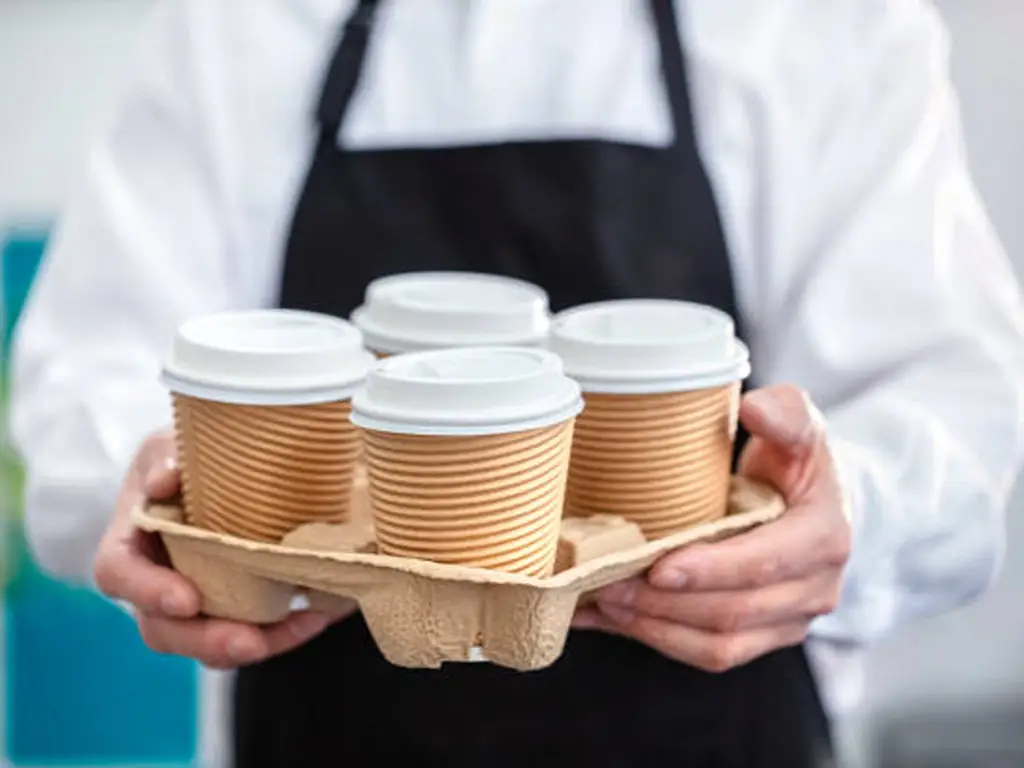
Couche 1 — Le support (anti-basculement): Un bon porte-gobelets remplit une fonction plus importante que toute autre : il empêche les gobelets de se renverser. Privilégiez les porte-gobelets dotés d’une base rainurée antidérapante et de fentes qui enserrent le corps du gobelet plutôt que de le laisser simplement reposer dans un trou trop large. Pour la livraison en scooter d’une seule commande, un porte-gobelets à deux emplacements permet de réduire l’encombrement. Pour la livraison en voiture de plusieurs commandes, un porte-gobelets à quatre emplacements muni d’une poignée centrale permet au livreur de le transporter d’une seule main. Cela réduit le risque de basculement pendant le trajet entre la voiture et la porte d’entrée.
Couche 2 — Le sac thermique (maintien de la chaleur): Un sac de livraison isotherme doublé de papier d’aluminium prolonge considérablement la durée de conservation de la chaleur. Sans sac isotherme, un café servi dans un gobelet à double paroi à 185 °F (85 °C) passe sous le seuil de satisfaction de 140 °F (60 °C) en environ 15 à 20 minutes. Le même café, placé dans un sac isotherme doublé de papier d’aluminium, peut rester à une température supérieure à 140 °F pendant 45 minutes, voire plus. Pour tout rayon de livraison supérieur à 2 kilomètres, le sac isotherme n’est pas une option. C’est ce qui fait la différence entre un client recevant un café chaud et une déception tiède.
Couche 3 — La stratégie d'empilement: Les trois couches fonctionnent comme un système, et non de manière indépendante. Le gobelet isotherme assure la rétention de la chaleur au niveau du récipient. La housse de transport empêche les défaillances mécaniques (basculement et compression) qui pourraient endommager le gobelet ou le couvercle. Le sac isotherme constitue la barrière extérieure contre les conditions climatiques, ce qui permet à l’isolation du gobelet de rester efficace dans la durée. On peut comparer cela à s’habiller pour affronter le froid : chaque couche protège contre un risque spécifique. Les trois sont indispensables au bon fonctionnement du système.
Critères de sélection d'un fournisseur de gobelets de livraison
Le choix d'un type de gobelet et d'un système de couvercle adaptés permet de résoudre le problème opérationnel immédiat. Le choix du bon fournisseur détermine quant à lui si cette solution restera fiable à grande échelle. Deux critères sont essentiels : les certifications attestant de la conformité et les conditions commerciales qui déterminent si le fournisseur est réellement en mesure de répondre aux besoins de votre entreprise.
Les certifications essentielles pour les gobelets de livraison
Les gobelets destinés à la livraison restent en contact avec un liquide chaud pendant 30 minutes ou plus. C'est bien plus que les quelques minutes pendant lesquelles un gobelet est utilisé en magasin. Cette durée de contact prolongée rend la sécurité alimentaire encore plus cruciale. Toutes les certifications n'ont pas le même poids dans le cadre des livraisons.
| Niveau | Certification | Ce que cela couvre | Verdict |
|---|---|---|---|
| Indispensable | FDA 21 CFR 176.170 | Papier/carton destiné à entrer en contact avec des aliments aqueux et gras | Non négociable |
| Indispensable | ISO 9001 | Gestion de la qualité — homogénéité des lots | Exigence de base |
| Avancé | Norme mondiale BRC | La sécurité alimentaire tout au long de la chaîne d'approvisionnement | Obligatoire pour les chaînes de magasins |
| Avancé | FSC | Papier issu de forêts gérées de manière durable | Élément de différenciation de la marque |
| Eco | BPI / DIN Certco | Vérification de la compostabilité industrielle | Obligatoire si « compostable » |
| Soutien | ISO 14001 | Gestion environnementale | Ce serait bien d'avoir |
Pour les cafés indépendants qui se lancent dans la livraison, la conformité aux normes de la FDA ainsi qu’à la norme ISO 9001 constitue un minimum raisonnable. Pour les chaînes disposant de plusieurs établissements, la certification BRC passe du statut de « plus » à celui d’« exigence d’approvisionnement ». De nombreux appels d’offres des chaînes éliminent d’emblée les fournisseurs qui ne la possèdent pas, avant même d’évaluer tout autre critère.
Quantité minimale de commande (MOQ), délai de livraison et questions auxquelles votre fournisseur devrait répondre
La plupart des gérants de cafés qui commandent des tasses pour la première fois ne savent pas quelles questions poser. Les fournisseurs donnent rarement de leur propre initiative des informations susceptibles de rendre leur offre moins attrayante. La liste ci-dessous répertorie les six questions qui permettent de distinguer les fournisseurs transparents de ceux qui espèrent que vous ne les poserez pas.
| Question | Pourquoi c'est important | Fourchette de réponses raisonnables |
|---|---|---|
| Quelle est votre quantité minimale de commande ? | Détermine si vous pouvez tester le produit avant de vous engager | 1 000 à 10 000 pièces pour les tasses personnalisées |
| Quel est votre délai de production standard ? | Cela a une incidence sur la planification des stocks et les cycles de réapprovisionnement | 25 à 35 jours pour une fabrication sur mesure |
| Dans quels délais pouvez-vous expédier des échantillons ? | Étape de validation de pré-production | 48 heures |
| Les gobelets et les couvercles sont-ils fabriqués sur la même chaîne de production ? | Cela a une incidence directe sur la fiabilité de l'appariement couvercle-gobelet | « Oui » est la seule réponse sans risque |
| Pouvez-vous fournir les documents de certification originaux ? | Vérification de la conformité | Doit être en mesure de fournir les originaux |
| Quelle est la quantité minimale requise pour une impression personnalisée ? | Les tasses personnalisées ont des quantités minimales de commande différentes de celles des tasses neutres. | 1 000 à 30 000 pièces |
Une dernière remarque concernant les conditions commerciales : si vous importez des marchandises, il est important de bien comprendre la différence entre les termes FOB, CIF et DDP. Le terme FOB signifie que le fournisseur est responsable jusqu’à ce que les marchandises soient embarquées sur le navire. Le terme CIF couvre le coût, l’assurance et le fret jusqu’à votre port de destination. Le terme DDP signifie que le fournisseur se charge de tout, y compris des droits d’importation. Le terme FOB vous offre un meilleur contrôle sur les frais d’expédition. Le terme DDP vous offre une meilleure prévisibilité sur le coût à l’arrivée. Aucun des deux n’est intrinsèquement meilleur que l’autre. Le choix approprié dépend de votre collaboration avec un transitaire en qui vous avez déjà confiance.
Un fabricant qui répond à tous les critères de cette liste — certifications FDA, BRC et FSC, quantité minimale de commande (MOQ) adaptable allant de lots d’essai biodégradables de 1 000 pièces à des commandes en conteneurs, gobelets et couvercles produits sur la même ligne pour garantir une compatibilité parfaite, et délai de livraison des échantillons de 48 heures — élimine les incertitudes liées à l’approvisionnement qui obligent de nombreux exploitants à se contenter de ce que le distributeur local a en stock. Yoonpak, un fabricant de gobelets en papier fort de plus de 25 ans d’expérience dans la production et disposant d’une fabrication en interne de gobelets et de couvercles, est un exemple de fournisseur s’inscrivant parfaitement dans ce modèle répondant à l’ensemble des critères. Lorsque les capacités d’un fournisseur correspondent aux besoins réels de votre entreprise en matière de livraison, l’emballage cesse d’être un casse-tête récurrent pour devenir un avantage concurrentiel.
Pour les opérateurs désireux d’aller au-delà des options proposées par les distributeurs : un fournisseur ayant à son actif des collaborations avec de grandes marques de café et de restauration rapide — et ayant notamment travaillé avec des chaînes telles que Burger King, Tim Hortons, ILLY et Coffee Planet — est un gage solide de la cohérence et de la rigueur en matière de conformité requises par les opérations de livraison. Vous pouvez contacter l’équipe de Yoonpak via sa page de contact afin d’obtenir une proposition sur mesure, adaptée à vos volumes et à vos spécifications.
Références
- Agence américaine des produits alimentaires et médicamenteux (FDA). « 21 CFR § 176.170. » fda.gov
- YoonPak. « Foire aux questions ». yoonpak.com
- YoonPak. « Fabricant de gobelets en papier. » yoonpak.com
- YoonPak. Page d'accueil. yoonpak.com
- YoonPak. Contact. yoonpak.com

 English
  German
  Spanish
  Italian
  Dutch
Dutch  French
  Portuguese
  Russian
  Arabic
  Korean