

식품 접촉 재료: 정의, 규정 및 규정 준수 확인 방법
Billions of cups, containers, and wrappers touch your food every day. Regulators call that entire category “food contact materials,” and the phrase carries legal weight most buyers only discover after something goes wrong. If you manufacture, import, or specify packaging, the practical question is not what the term means, but how you prove that a supplier’s product actually complies. This guide walks from the definition to the verification steps: the part most articles about food contact materials never reach.
What Are Food Contact Materials?
Food contact materials (FCMs) are all materials and articles intended to come into contact with food. That scope is deliberately wider than packaging: it includes food packaging and containers, but also cutlery and tableware, kitchen equipment, and even processing machinery and conveyor surfaces (European Commission, 2024). A paper coffee cup, a plastic lid, a soup bowl, a burger clamshell, a bakery box, the bag it is carried in, and the straw in your drink are all food contact articles.
Two practical implications follow from that scope. First, “food contact” is not a single material property; it is a compliance status that depends on the whole article: substrate, coating, ink, and even the sealing method. Second, most claims you see on packaging are self-declared. The wine-glass-and-fork symbol required in the EU (Regulation (EC) No 1935/2004, Annex II), the words “food contact safe,” and the label “FDA compliant” are statements made by the manufacturer, not certifications issued by a regulator.
Claim vs. Verification
A “food contact” claim is made by the manufacturer; only documents make it verifiable. That distinction is the single most useful thing to understand about this topic, and it carries through the rest of this guide.
Food Contact Materials by Type: Where Compliance Lives in Each
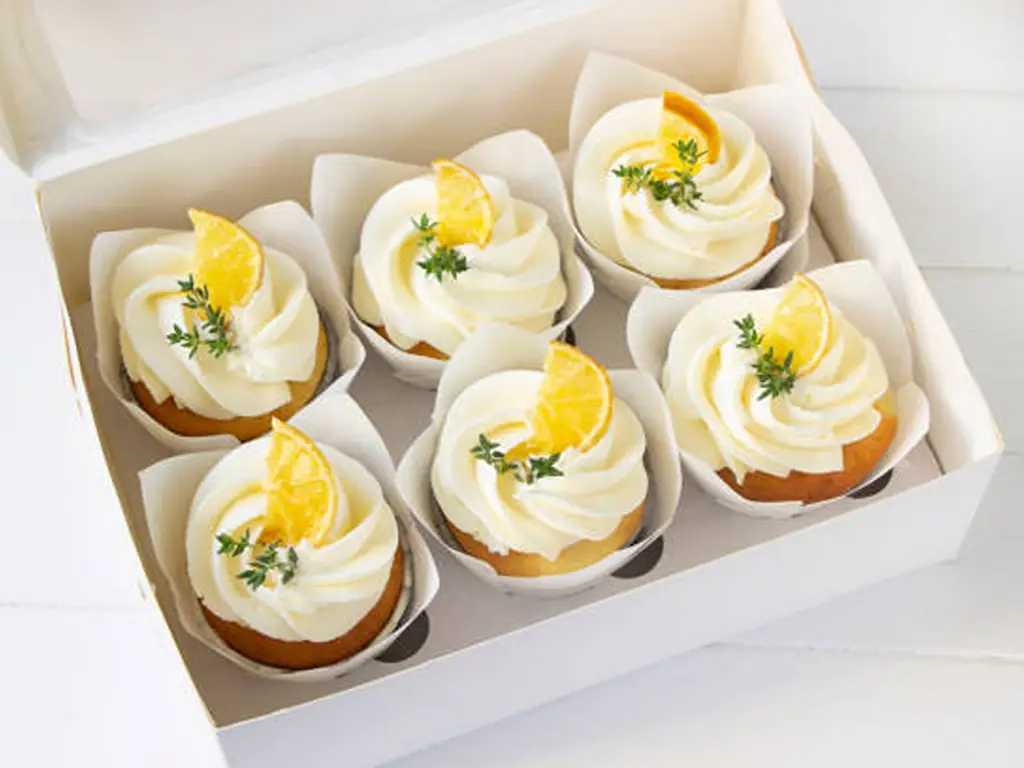
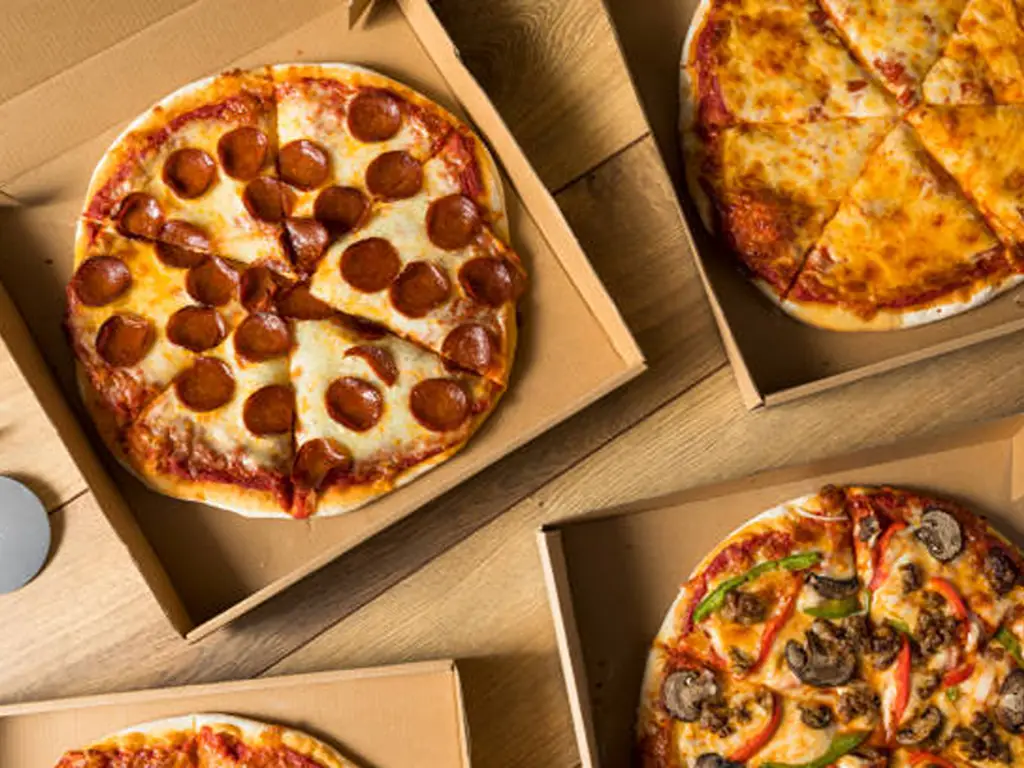
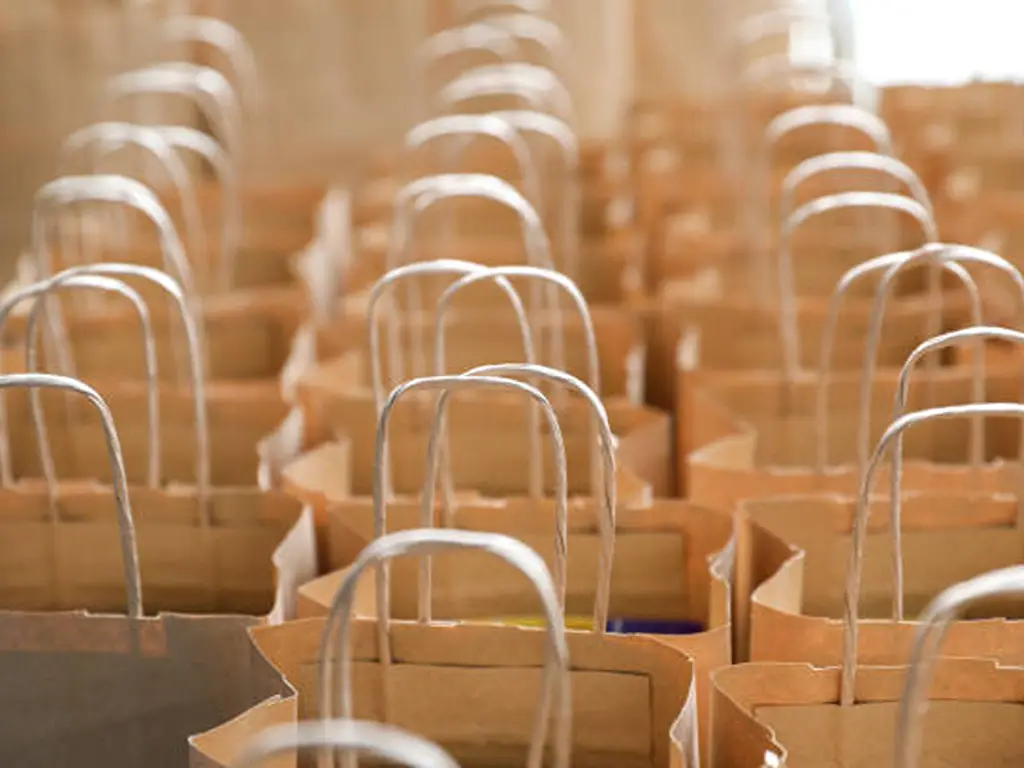
Each material family answers to a different compliance framework. The most important difference for buyers: plastics have a single EU-wide positive list; paper and paperboard do not. That gap matters for every paper-based takeaway item — cups, bowls, clamshells, bakery boxes, buckets, trays, and carry bags — because each is a coated, printed article whose compliance has to be assembled document by document rather than looked up on a list.
| 재료 | EU compliance basis | Key point for buyers |
|---|---|---|
| 플라스틱 | Regulation (EU) No 10/2011: Union list of authorized substances | Single harmonized positive list; overall migration limit (OML) of 10 mg/dm² (Keller & Heckman, 2022) |
| Paper & paperboard | No EU-wide positive list: German BfR recommendations, national legislation, CEPI industry guidelines, plus third-party testing (Measurlabs, 2025) | Compliance is built per-article (substrate, coating, ink), so documents matter more than lists |
| Glass, metals & alloys | General requirements under 1935/2004; specific national rules | Migration risk mostly from surface treatments and decorations |
| Ceramics & enamels | Directive 84/500/EEC (lead & cadmium release limits) | Ask for the release-limit test report |
| Rubber | National rules; no EU harmonized list | Fewer harmonized documents available: verify per supplier |
| Regenerated cellulose film | Directive 2007/42/EC | A rare case with its own EU directive |
| Silicone & elastomers | General requirements; national guidance | Verify per application; no EU positive list |
The lists and databases you can actually use
For plastics, the Union list in Annex I of Regulation (EU) No 10/2011 is searchable online, and the U.S. equivalent lives in FDA 21 CFR parts 174–178, which cover the substances permitted in food contact materials. For banned-substance screening, industry databases such as the FCMD list 142 substances prohibited in food packaging (ChemRadar, 2026). The EU updated its plastic positive list as recently as February 2026 (SGS, 2026).
One caution: being on a list is not the same as being compliant. Lists authorize substances; compliance is about how they behave in 당신의 article under 당신의 use conditions, which is why the next sections focus on conditions, documents, and verification.
Which Rules Apply to Your Market?
The framework you must satisfy depends on where the food is sold, not where the packaging is made.
| 마트 | Framework | Documents you will see |
|---|---|---|
| 유럽연합 | Regulation (EC) No 1935/2004 + material-specific rules (e.g., 10/2011 for plastics) | DoC (EU 10/2011, Art. 16), test reports to national methods |
| 미국 | FDA 21 CFR 174–178 (food contact substances) | FDA compliance letters, test data, FCN references |
| 중국 | GB 4806 series | GB 4806 test reports, supplier declarations |
| Middle East / Southeast Asia | Mixed; often reference EU or FDA | Whatever the importing country enforces |
Two dynamics are worth watching. First, EU regulation is tightening: the Commission revised the plastic positive list in early 2026 and is drafting formal guidance on the Declaration of Compliance under Articles 16 and 17 of 10/2011 (SGS, 2026; Food Packaging Forum, 2013). Second, paper-based packaging, the segment where harmonization is weakest, is under rising scrutiny, including PFAS restrictions on coatings. If you export to several markets, you will carry multiple sets of documents; you cannot substitute an EU dossier for the FDA one, and vice versa.
The Documents That Prove Compliance: What a DoC Should Contain
“Food contact” is a manufacturer’s self-declaration. It only becomes credible when paired with documents: a Declaration of Compliance, a test report, or a certification.
The Declaration of Compliance (DoC) is the backbone document. Under EU Regulation (EU) No 10/2011, Article 15, the DoC must be passed down the supply chain, from the producer to the importer or brand owner, and on to the food business, with the supporting documentation behind it held under Article 16 (Avery Dennison, 2024). That chain is exactly why importers and distributors get asked for it: it is how a food company proves its packaging to an auditor.
When a supplier hands you a DoC, check it against this list:
The last item is the one most often skipped, and the most dangerous. A DoC that does not state use conditions, or states conditions that do not match your application (hot-fill beverages, high-fat food, microwave use), does not cover you. BRCGS guidance documents real recalls caused exactly this way: packaging used outside the conditions it was designed for, for example when a carton’s plastic liner was swapped to cut costs (BRCGS, via IFSQN forum, 2022).
How to Verify a Packaging Supplier’s Food-Contact Claims
Once you know what documents exist, the verification itself is a five-step sequence. This is the part of the food contact materials story that almost nobody writes about, and the part importers and food businesses actually do.
Five verification steps
Ask for the full file set: DoC, test report for your target market, system certification (ISO 9001, BRC), and a raw-material compliance statement
Match the documents to the product: is the certificate in the name of the company quoting you? Does it reference the exact material or SKU you are buying? Is the date current?
Check authenticity: look up the certification body online and verify the certificate number. A certificate from a body that does not exist, or a number that does not resolve, is the clearest red flag
Read the test report, not just the conclusion: check migration limits and, critically, the test conditions: temperature, contact time, and food simulant. A report run at 40 °C for 10 minutes does not cover your 90 °C hot-fill application
If evidence is insufficient, test independently: a third-party laboratory can test to FDA or EU methods for a few hundred dollars per article, cheap insurance compared with a recall
When each type of evidence stops being valid
| Evidence | 다음과 같은 경우 실패합니다. | How to check |
|---|---|---|
| “Food grade” claim | No supporting documents at all | Ask for the file set in step 1 |
| DoC | Use conditions missing or don’t match your application | Compare temperature/time/food type fields with your use case |
| Test report | Test conditions narrower than your actual use | Check temperature, time, and food simulant columns |
| System certification | Body not verifiable, scope excludes packaging, or expired | Verify number on the certifier’s site |
Real failures, not theory
Buyers sourcing packaging from marketplaces have found suppliers unwilling or unable to produce any certification, forcing them to pay for laboratory testing themselves, sometimes discovering the product failed (Reddit r/ecommerce, 2022). And BRCGS documents recall cases where “food grade” packaging was used outside its stated conditions. Verification is not bureaucracy; it is the difference between a product that is compliant and one that is claimed to be.
Why Compliance Evidence Belongs in Your Sourcing Decision
For importers and distributors, this all reduces to a sourcing rule. You sit in the middle of the supply chain: the food brands you sell to are audited under schemes such as BRCGS, whose supplier-approval clauses require documented evidence from 그들의 packaging suppliers (BRCGS, via IFSQN forum, 2022). When they audit you, your upstream suppliers’ evidence chain is what you will be asked to show. And under EU rules, the DoC obligation travels down that same chain, which means the compliance risk does not stay with the factory; it travels to you.
Four sourcing criteria, equal weight
So treat evidence completeness as a selection criterion with the same weight as price, MOQ, and lead time. When you request quotes, request documents in the same message. A supplier that ships a DoC and test report with the first sample saves you weeks; one that cannot produce either is a risk you are choosing to import.
Sourcing is cheaper when compliance is verified up front. The cost of rejecting a bad supplier at quotation stage is a few emails, while the cost of discovering it after arrival is a lost order, a failed audit, or a recall.
Get the Compliance Evidence with Your First Quote
Ask for FDA and LFGB documents when you request pricing, and take the DoC with your sample.
Request Compliance DocumentsIf you are sourcing food-contact paper packaging for the EU or US market, YoonPak’s food-contact-certified paper cups, bowls, takeaway containers, bakery boxes, trays, and paper bags ship with FDA and LFGB compliance documentation; the food-contact-certified paper packaging manufacturer page lists the full certification set.
참고 문헌
- European Commission. “Food Contact Materials: Food Safety.” 2024. https://food.ec.europa.eu/food-safety/chemical-safety/food-contact-materials_en
- European Union. “Regulation (EU) No 10/2011 on plastic materials and articles intended to come into contact with food.” 2011. https://eur-lex.europa.eu/eli/reg/2011/10/oj/eng
- Keller & Heckman. “The EU’s Plastics Regulation: What You Should Know.” 2022. https://www.khlaw.com/insights/eus-plastics-regulation-what-you-should-know
- Measurlabs. “Testing of Paper and Board FCMs in the EU.” 2025. https://measurlabs.com/blog/testing-of-paper-and-board-fcms-in-the-eu/
- SGS. “EU Updates Positive List for Food Contact Plastics.” 2026. https://www.sgs.com/en-us/news/2026/02/safeguards-02026-eu-updates-positive-list-for-food-contact-plastics
- ChemRadar. “FCMD: Food Contact Materials Database.” 2026. https://www.chemradar.com/en/tools/fcmd
- Avery Dennison. “EU Food Contact Materials: Compliance.” 2024. https://label.averydennison.com/eu/en/home/products/compliance/eu-food-contact.html
- IFSQN Forum. “Food Grade Packaging Evidence” (BRCGS clauses cited in discussion). 2022. https://www.ifsqn.com/forum/index.php/topic/43764-food-grade-packaging-evidence/
- Food Packaging Forum. “News from the EU Commission on Food Contact Materials” (DoC guidance under Articles 16/17). 2013. https://foodpackagingforum.org/news/news-from-the-eu-commission-on-food-contact-materials
- Reddit r/ecommerce. “Looking for advice on food contact safety.” 2022. https://www.reddit.com/r/ecommerce/comments/vlf2nr/
- YoonPak. “Paper Cup Manufacturer: Accreditations & QC.” 2026. https://www.yoonpak.com/paper-cup-manufacturer-3/
- YoonPak. “Contact.” 2026. https://www.yoonpak.com/contact/
- YoonPak. “Home.” 2026. https://www.yoonpak.com/

 English
  German
  Spanish
  Italian
  Dutch
Dutch  French
  Portuguese
  Russian
  Arabic
  Korean