

Koffiekopjes: De complete gids voor het kiezen van de juiste kopjes voor uw bedrijf
Als je het gangpad van een koffiewinkel binnenloopt, zie je een muur van kopjes in formaten waarvan je niet wist dat ze bestonden. Vier ons. Acht. Twaalf. Zestien. Dan twintig, vierentwintig en soms nog groter. En ze zien er allemaal bijna hetzelfde uit - taps toelopende papieren cilinders met gerolde randen en plastic deksels. Achter die uniformiteit zit een beslissing die bepalend is voor je menu, je voorraadkosten, de workflow van je barista en of de koffie in het kopje blijft of op de autostoel van je klant lekt.
Deze gids behandelt de grootte van koffiekopjes vanaf de basis: wat zijn de standaardmaten, welke dranken horen in welk kopje, de afmetingen van de papieren kopjes die bepalen of je deksels echt passen, de afweging tussen warm en koud waar niemand over praat tot een kopje instort, en - het belangrijkste - hoe je de juiste grootte van je kopjesinventaris kunt bepalen zodat je geen geld opslaat in de vorm van 10.000 bekers van vier gram die je twaalf keer per maand verkoopt.
Als u een café runt, de inkoop van voedingsmiddelen beheert of verpakkingen distribueert naar koffiebedrijven, is het doel hier niet alleen een maattabel. Het is een kader voor het afstemmen van bekers op uw bedrijf.
01. Standaard koffiematen in een oogopslag
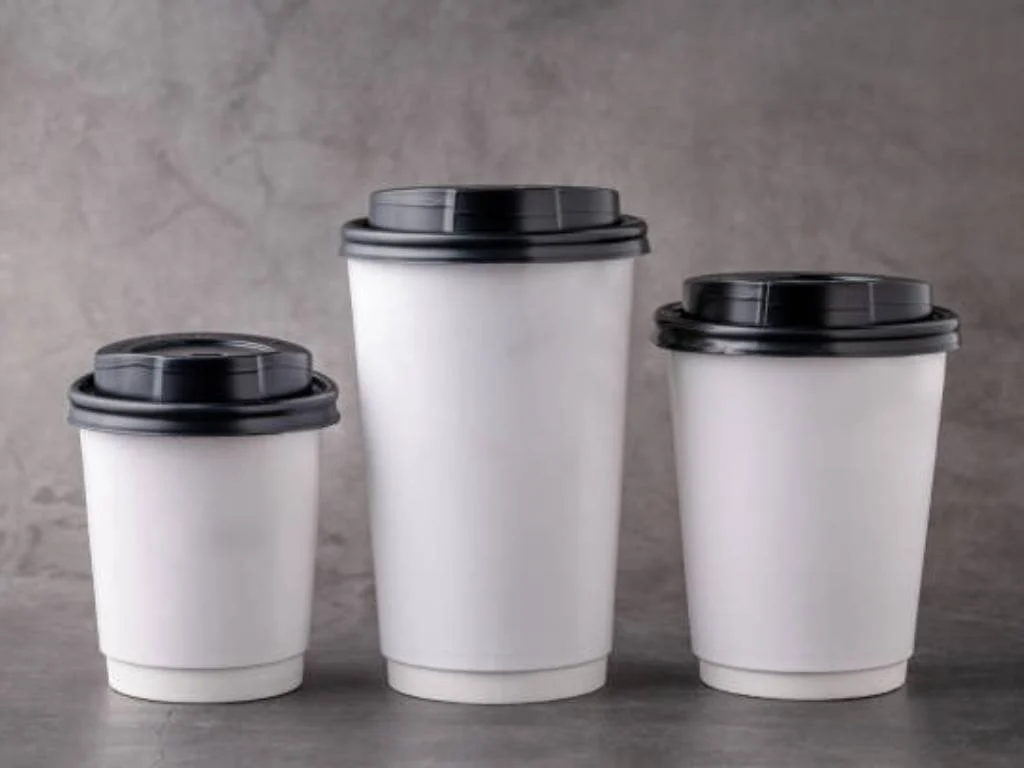
De meeste industrieën hebben een handvol standaardmaten, en papieren koffiebekers zijn daarop geen uitzondering. Het kleine-middelgrote-grote raamwerk laat zich goed vertalen naar drie kernvolumes: 8 oz, 12 oz en 16 oz. Deze drie formaten zijn geschikt voor de overgrote meerderheid van warme koffiedranken die worden geserveerd in cafés, drive-thrus en kantoortuinen (WebstaurantStore, 2025). Maar het volledige bereik strekt zich uit in beide richtingen.
| Grootte (oz) | Inhoud (ml) | Typische dranken | Beste voor |
|---|---|---|---|
| 4 oz | 118 ml | Espresso (enkel/dubbel), macchiato, proefvluchten | Koffiespeciaalzaken, cupping labs, barista training |
| 8 oz | 237 ml | Cappuccino, flat white, kleine latte, druppelkoffie | Klassieke caféservice, traditionele Italiaanse verhoudingen |
| 12 oz | 355 ml | Latte, Americano, druppelkoffie, mokka | De wereldwijde "standaard" - SKU met het hoogste volume in de meeste cafés |
| 16 oz | 473 ml | Grote latte, ijskoffie, mocha met smaakje | Winkels gericht op afhaalmaaltijden, koud brouwsel, extra-melkdranken |
| 20 oz | 591 ml | Extra grote ijskoffie, smoothies, nieuwe drankjes | Drive-thrus, benzinestations, ketens met hoge volumes |
| 24 oz | 710 ml | Ijsdranken, milkshakes, grote koude dranken | Buurtwinkels, zelfbedieningsstations |
Twee voetnoten zijn de moeite waard om in gedachten te houden. Ten eerste is de capaciteit die op een beker staat afgedrukt het volle volume - het punt waar de vloeistof over de rand loopt. In de praktijk worden bekers gevuld tot ongeveer 80-90% van die capaciteit om ruimte over te laten voor schuim, ijs of om naar een tafel te lopen zonder te klotsen. Ten tweede is de naamgeving allesbehalve universeel. Starbucks noemt een beker van 12 oz "Tall" en een beker van 16 oz "Grande". Een Europees café zou 8 oz "regular" kunnen noemen. Een Amerikaans restaurant bedoelt waarschijnlijk 12 oz met hetzelfde woord.
Nog een bron van verwarring: de "cup" instelling op je druppelkoffiezetapparaat is 5 vloeibare ounces, niet 8 (Thuis Terrein, 2024). Als je apparaat zegt dat het 10 kopjes zet, betekent dat 50 ounces koffie - een erfenis uit een tijdperk waarin koffiekopjes fysiek kleiner waren. Dit is de reden waarom je "10-cup" karaf ongeveer drie moderne 16 oz reisbekers vult.
02. Welk kopformaat voor welke koffiedrank?
Als het bij cupmaten alleen zou gaan om de hoeveelheid vloeistof die erin past, dan zou dit gedeelte een eenregelige tabel zijn. Maar de grootte van kopjes is geen onafhankelijke keuze - het volgt uit je drankrecepten. Verander de grootte van de kop zonder het recept aan te passen en je verandert de drank zelf. Een latte geschonken in een 16 oz kopje met dezelfde espresso dosering als je 12 oz versie is geen grotere latte. Het is een zwakkere latte.
Hier is de regel om alles wat volgt te verankeren: je benodigde kopjescapaciteit = (espresso + melk + schuim + eventuele siroop of ijs) ÷ 0,8. De factor 0,8 zorgt ervoor dat er ruwweg 20% ruimte overblijft voor schuim, latte art en veilig gebruik. Als je deze rekensom overslaat, krijg je een kopje dat overloopt aan de bar of waarvan je klant zich afvraagt waarom zijn "large" halfleeg aanvoelt.
Espresso, Macchiato, Cortado - De 2-4 oz range
De kleinste kopjes in elk café serveren de meest geconcentreerde dranken. Een enkele espresso is ongeveer 30 ml, een dubbele 60 ml. Het demitasse kopje is niet alleen klein omwille van de traditie - de smalle basis en brede rand concentreren crema-aroma's naar de neus en de dikke porseleinen wanden houden de warmte vast van een drankje dat in minder dan een minuut is afgekoeld.
Het Italiaanse Espresso Instituut (IEI) certificeert espressokopjes met een inhoud van 50-100 ml, van wit porselein, zonder decoratie aan de binnenkant - een specificatie die leest als een racereglement, maar die bestaat omdat de geometrie van de kopjes de sensorische ervaring meetbaar verandert (IEI). Buiten Italië liggen de praktische papieren bekerequivalenten op 4 oz voor enkele/dubbele espresso, macchiato (espresso + een beetje schuim, waardoor het volume te verwaarlozen is) en cortado (espresso + ongeveer 1 oz warme melk, waardoor het totale volume ongeveer 3,5-4,5 oz is).
Heb je een kopje van 4 oz nodig in je voorraad? Als je winkel alleen espresso serveert of een speciaal koffieprogramma heeft: ja. Als je menu begint met lattes en cappuccino's: sla deze maat over en zet dat MOQ-geld in op je volumes van 8 oz en 12 oz.
Cappuccino, Flat White, Latte - De 6-12 oz Sweet Spot
Hier wordt het geld verdiend. Ruwweg 70-80% van het dagelijkse kopjesvolume in onafhankelijke cafés vloeit door de formaten van 8 oz en 12 oz (MBPAK, 2025).
Een traditionele Italiaanse cappuccino is opgebouwd uit ruwweg 25 ml espresso + 100 ml gestoomde melk + schuim, wat neerkomt op ongeveer 150-180 ml - een kopje van 5-6 oz. De flat white, ontstaan in Australië en Nieuw-Zeeland, gebruikt een vergelijkbaar volume maar met een dunnere microschuimlaag (minder dan 5 mm tegenover de 10-15 mm van de cappuccino), wat iets meer vloeibare melk in hetzelfde kopje betekent.
Lattes bevinden zich aan de andere kant van het melk-koffie spectrum. Een standaard latteverhouding is ruwweg 3:1 tot 5:1 - melk tot espresso - waardoor een latte met één kop ongeveer 8 oz is en een dubbele kop ongeveer 12 oz. Noord-Amerikaanse cafés hebben dit verder doorgedreven en lattes van 16 oz zijn nu gebruikelijk, maar het recept is niet zuiver geschaald: een latte van 16 oz met twee koppen levert dezelfde cafeïne als een versie van 12 oz, alleen verdund met 33% meer melk.
De praktische kanttekening: als je winkel concurreert op koffiekwaliteit, veranker je je menu rond 8 oz en 12 oz. Als je winkel concurreert op waarde en volume, worden 12 oz en 16 oz je standaardpaar. Hoe dan ook, de grootte van je kopjes kondigt je positie aan voordat de klant de eerste slok neemt.
Ijskoffie, Cold Brew, Frappes - De 16-24 oz Zone
IJs is geen vulmiddel. In een koude drank neemt ijs 25-35% van het interne volume van de beker in, afhankelijk van de vorm van het blokje (blokjes met een halvemaanvorm pakken dichter in dan vierkante blokjes). Een vloeibaar recept van 12 oz heeft ongeveer een beker van 16 oz nodig als er ijs in zit. Een koud brouwsel van 16 oz met standaard ijsvulling heeft een beker van 20-24 oz nodig.
Dit is ook het punt waar de constructie van papieren bekers sterk afwijkt van de normen voor hete bekers. Koude bekers moeten zwaarder karton gebruiken - ongeveer 0,1-0,2 mm dikker dan een gelijkwaardige warme beker - om de structurele verweking te weerstaan die wordt veroorzaakt door externe condensatie en het gewicht van ijs dat tegen de zijwand drukt. Een hete beker gevuld met ijskoffie zal niet meteen lekken, maar als de condens na 30 minuten in de ongecoate papiervezels trekt, ontstaat er een beker die knikt als hij wordt vastgepakt.
Koude bekers hebben ook een dubbelzijdige PE-coating nodig of een speciale vochtwerende laag op het buitenoppervlak. Enkelzijdig PE, standaard in warme bekers, beschermt de binnenkant tegen vloeistof maar laat de buitenkant open voor condensatie. Dit is het onzichtbare technische verschil tussen een beker die het volhoudt tijdens een woon-werkrit van 45 minuten in de zomer en een beker die in de bekerhouder in elkaar zakt.

03. Afmetingen van papieren bekers en het compatibiliteitsprobleem van de deksels
Hier is een waarheid die de meeste bekergidsen overslaan: een "12 oz beker" heeft een gestandaardiseerd volume, maar geen gestandaardiseerde vorm. Twee fabrikanten kunnen allebei een papieren beker van 12 oz op de markt brengen, maar de hoogte, bovendiameter en bodemdiameter kunnen zo verschillen dat het deksel van de ene beker niet op de andere past.
Afmetingsspecificaties per cupmaat
De onderstaande tabel geeft referentiematen op basis van gemiddelden in de sector bij meerdere fabrikanten (MBPAK, 2025). Gebruik deze als uitgangspunt voor gesprekken met leveranciers, niet als garantie - bevestig altijd de specificaties met elke fabrikant voordat u bestelt.
| Maat | Hoogte (mm) | Bovenste diameter (mm) | Diameter bodem (mm) |
|---|---|---|---|
| 4 oz | 60-65 | 62-65 | 45-48 |
| 8 oz | 90-95 | 80 | 55-56 |
| 12 oz | 110-115 | 80 of 90 | 55-60 |
| 16 oz | 135-140 | 90 | 58-60 |
| 20 oz | 150-160 | 90 | 60 |
| 22-24 oz | 170-185 | 90 | 60-65 |
Het allerbelangrijkste getal in deze tabel is de 12 oz-rij - in het bijzonder de "80 of 90" in de kolom met de bovenste diameter. Bekers van 12 oz zijn de enige gangbare maat die zowel 80 mm als 90 mm randecosystemen omvat. Bestel kopjes van 80 oz van leverancier A met een rand van 80 mm en voorraaddeksels van leverancier B die ontworpen zijn voor 90 mm en elk van die deksels zal lekken. Ze zijn geen van allen defect. Ze zijn gewoon niet compatibel.
De Pasvormtest
80 mm en 90 mm velgen zijn de Lightning en USB-C van de industrie voor papieren bekers - twee parallelle standaarden die genoeg op elkaar lijken om verwarring te zaaien en genoeg verschillen om te falen. De rand van 80 mm is geschikt voor bekers van 4 tot 8 oz en staat ook op sommige bekers van 12 oz. De rand van 90 mm dekt het bovenste segment: sommige bekers van 12 oz en alles van 16 oz en meer. Maar velgdiameter alleen is geen garantie voor compatibiliteit. De kruldikte van de rand - de krul van opgerold papier bij de lip van de beker waar het deksel overheen klikt - varieert tussen fabrikanten met ±0,2-0,5 mm. Deze tolerantieband is klein genoeg om beide bekers te kwalificeren als "90 mm", maar groot genoeg om een deksel dat gemaakt is voor een krul van 0,8 mm niet te laten vastklikken op een krul van 1,2 mm.
Het materiaal van het deksel voegt nog een variabele toe. PS (polystyreen) deksels zijn stijf en houden hun vorm goed vast, maar door hun stijfheid verdragen ze minder variatie in randkrul - ze barsten of springen eraf als de pasvorm niet perfect is. PP (polypropyleen) deksels zijn flexibeler en kunnen een breder tolerantiebereik aan, maar ze kosten meer per eenheid en hebben een zachter klikgevoel dat sommige operators verwarren met een goedkope constructie. Papieren deksels zijn de nieuwste optie, gestimuleerd door de EU-regelgeving voor plastic voor eenmalig gebruik, maar ze vereisen de strengste tolerantiecontrole van alle drie omdat papier geen elastische meegeeft - het past of het scheurt.
Een dekseltest in drie stappen kost vijf minuten en bespaart dagen aan klachten van klanten: (1) vul de beker tot 80% met water op serveertemperatuur, (2) breng het deksel aan met normale barista-druk - niet forceren, (3) kantel tot 45 graden en houd tien seconden vast. Als er druppels van de rand naar het deksel komen, moet het deksel of de beker worden vervangen. Dit is geen kwaliteitsprobleem. Het is een compatibiliteitsprobleem. En het is de oorzaak van de meeste klachten over "lekkende deksels" in cafés met meerdere leveranciers.
04. Warm vs. koud - waarom bekerconstructie alles verandert
Een papieren beker is niet zomaar een bakje. Het is een laminaat van papier, coating en soms een luchtspleet - elke laag gekozen voor een specifieke temperatuur en vochtomgeving. Het gebruik van de verkeerde constructie vermindert niet alleen de prestaties; het creëert storingen die gelezen kunnen worden als "slecht product" terwijl het eigenlijk "verkeerde specificatie" is.
Warme kopjes gebruiken een interne coating van polyethyleen (PE) of polymelkzuur (PLA) die voorkomt dat vloeistof in de papiervezels dringt. PE smelt bij ongeveer 105-115°C, ruim boven de typische serveertemperatuur van 70-85°C voor hete koffie - het is veilig om heet te vullen, maar mag nooit in de magnetron. Voor isolatie zijn er drie soorten wanden voor hete bekers: enkelwandig (heeft een aparte sleeve nodig om comfortabel vast te houden), dubbelwandig (een interne luchtspleet van 1-2 mm die de temperatuur aan de buitenkant met 15-25°C verlaagt) en ribbelwandig (een buitenlaag met textuur die grip en isolatie biedt zonder sleeve). Voor bedrijven die op afhaalmaaltijden gericht zijn, is dubbelwandig meestal de meerprijs per eenheid waard - het verwijdert de voorraad hoesjes, haalt een stap uit de workflow van de barista en voorkomt het "ik heb drie servetten nodig om dit vast te houden"-gezicht van je klanten.
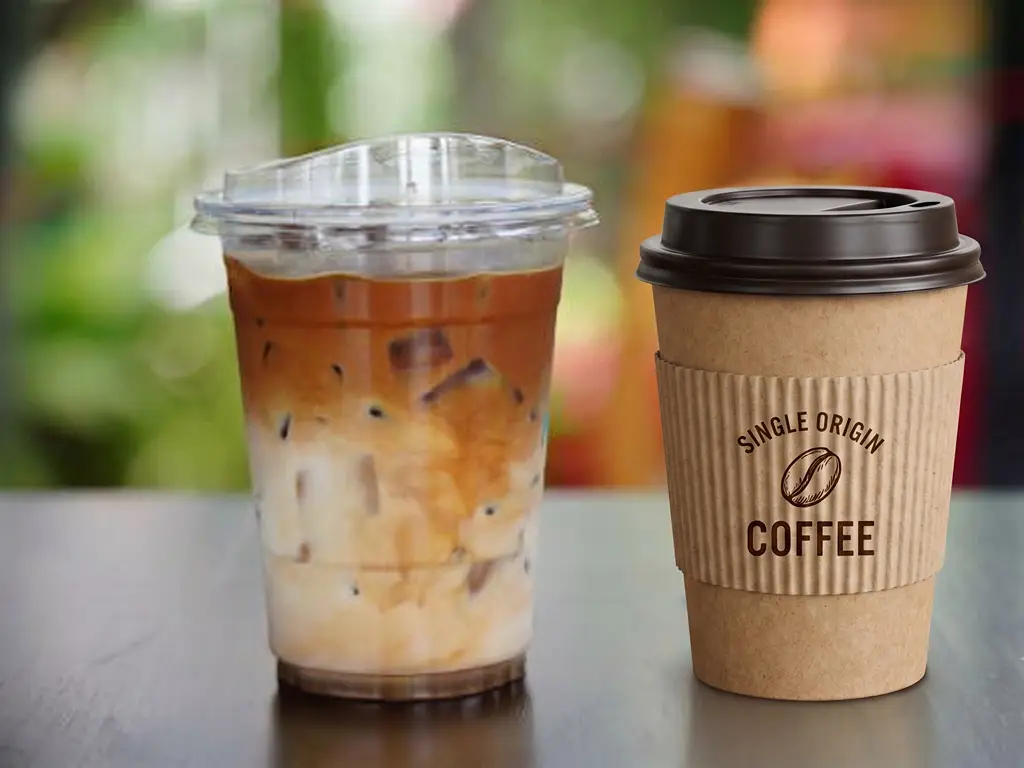
Koude kopjes hebben een fundamenteel andere coatingbenadering. Waar warme bekers de binnenkant coaten om vloeistof binnen te houden, hebben koude bekers vochtbestendigheid aan de buitenkant nodig omdat condensatie de vijand is. Koude bekers gebruiken ofwel een dubbelzijdige PE-coating of een zwaardere enkelzijdige coating met een was- of vochtwerende toevoeging aan de buitenkant. Het karton is ook dikker - ruwweg 0,1-0,2 mm zwaarder dan warme bekers met dezelfde inhoud - om het gewicht van ijs aan te kunnen en bestand te zijn tegen de progressieve verweking die condensatie veroorzaakt na 30-60 minuten vasthouden.
Een praktische beslissingstabel:
| Uw bedrijf | Hot Cup aanbeveling | Aanbeveling voor koude kopjes |
|---|---|---|
| Zitcafé, keramisch primair, papier alleen voor afhaalmaaltijden | Enkelwandig + mouw | Standaard koude beker, 16-20 oz |
| Grote afhaalmaaltijden/drive-thru | Dubbelwandig, 8/12/16 oz trio | Zware koude beker, 16-24 oz |
| Kantoor-/bedrijfspauzeruimte | Enkelwandig + hulsstation | Standaard koude beker, 16 oz |
| Merk gericht op duurzaamheid | PLA-gevoerde warme beker + papieren deksel | PLA-gecoate koude beker, composteerbaar deksel |
- Inwendige PE of PLA coating - veilig tot 85°C serveertemperatuur
- Drie wandopties: enkelwandig + huls, dubbelwandig (luchtspleet), ribbelwandig
- De dubbele wand verlaagt de buitentemperatuur met 15-25°C, waardoor er geen mouw nodig is
- Dubbelzijdige PE-coating of vochtscherm aan de buitenkant
- 0,1-0,2 mm zwaarder karton om condensatie tegen te gaan
- Bestand tegen ijs en 30-60 minuten blootstelling aan vocht van buitenaf
05. Hoe u de juiste grootte voor uw kopjesinventaris kunt bepalen
Elke extra SKU in uw magazijn brengt verborgen kosten met zich mee die veel verder gaan dan de prijs per eenheid. Een assortiment van zes SKU's kost 50% niet meer dan een assortiment van drie SKU's - het kan twee keer zoveel kosten als je de dekselvermenigvuldiging, MOQ, opslagruimte en de wrijving van het juiste deksel bij het juiste kopje tijdens de zaterdagochtenddrukte meetelt. De meest winstgevende cafés hebben niet de meeste maten op voorraad; ze hebben de minste maten op voorraad die hun menu zonder compromissen dekken.
Menu Mapping - Laat je drankjes je maten bepalen
De volgorde is belangrijk. De meeste nieuwe exploitanten kiezen eerst cupmaten - "ik bied small, medium en large aan" - en stellen dan een passend menu samen. Dat is de omgekeerde wereld. Begin met je drankenlijst.
Bereken voor elk drankje op je menu het totale vloeistofvolume: espressoshots (ongeveer 30 ml per stuk) + melkhoeveelheid + siropen + eventuele water- of ijsaanpassingen. Groepeer deze volumes in natuurlijke groepen. In de praktijk vallen de meeste cafémenu's uiteen in drie groepen: een groep van 2-4 oz (espresso, macchiato, cortado), een groep van 6-8 oz (cappuccino, flat white, kleine latte) en een groep van 10-16 oz (latte, americano, mokka, ijsdrankjes). Als een groep maar één of twee drankjes bevat - stel dat je menu precies één drankje heeft dat een kopje van 20 oz nodig heeft - dan is dat geen groep. Dat is een SKU die je geld kost elke maand dat hij in de opslag staat. Haal dat drankje van het menu of laat je klanten het bestellen in een 16 oz beker met extra ijs.
Uit gegevens uit de branche blijkt steevast dat bekers van 12 oz en 16 oz goed zijn voor 70-80% van de dagelijkse caféverkoop in volume per eenheid (WebstaurantStore, 2025). Laat dat getal uw inkoop leiden: als u hetzelfde uitgeeft aan bekers van 4 oz en 20 oz als aan bekers van 12 oz, is uw voorraad omgekeerd ten opzichte van uw verkoop.
De regel van drie maten
Voor de overgrote meerderheid van de onafhankelijke cafés beslaan drie kopjesmaten 90% of meer van het menu:
- 8 oz: Cappuccino, flat white, cortado, kleine druppelkoffie. Dit is je kwaliteitssignaalgrootte - het laat klanten weten dat je om verhoudingen geeft.
- 12 oz: Latte, Americano, mokka, standaard druppelkoffie. Dit is je volumeanker - je meest bestelde kopje.
- 16 oz: Grote latte, ijskoffie, koud brouwsel (met ruimte voor ijs). Dit is het werkpaard voor uw voordelige en ijskoude dranken.
Starbucks heeft zes of meer cupmaten. Jij bent Starbucks niet. Zij hebben 38.000 vestigingen, een wereldwijde supply chain en volumes per SKU die in de honderden miljoenen eenheden lopen. Hun MOQ-kosten zijn verspreid over een vloot. Die van jou verspreid over een magazijn. Het draaiboek van de gigant kopiëren heeft geen zin - het is geschreven voor een ander spel.
Met elk SKU dat u wegsnijdt, verwijdert u een paar deksels, maakt u ongeveer 15-20% van uw bekeropslagruimte vrij, verkleint u de kans dat een barista tijdens het spitsuur het verkeerde deksel pakt en krimpt u het geld dat in uw magazijn ligt als papiervoorraad die u de komende zes maanden niet zult verkopen.
De verborgen kosten van te veel SKU's
Dit is wat elke extra cupmaat eigenlijk kost, naast de prijs per eenheid die op de factuur staat.
Dekselvermenigvuldiging. Elke cupmaat met een andere randdiameter heeft een aparte SKU voor het deksel nodig. En deksels zijn er vaak in meerdere materiaalvarianten - zwart PS, wit PS, doorzichtig PET en papier - dus één nieuw cupformaat kan vier nieuwe SKU's voor deksels opleveren. Zes cupmaten × twee dekselvarianten = twaalf voorraadregels om te beheren, te bestellen en op te slaan.
MOQ cash lockup. Standaard minimum bestelhoeveelheden voor papieren bekers variëren van 50.000 tot 100.000 stuks per SKU voor bekers met een aangepaste opdruk. Bij zes SKU's verplicht u zich tot 300.000-600.000 bekers in voorraad - ruwweg $3.000-$9.000 aan werkkapitaal in de schappen. Bij drie SKU's komt dezelfde rekensom uit op de helft daarvan. Het verschil is niet alleen opslagruimte; het is geld dat een nieuwe molen, een extra weekenddienst voor barista's of drie maanden reclame zou kunnen financieren.
Operationele wrijving. Tijdens een spitsuur grijpt een barista tientallen keren per uur naar een kopje en een deksel. Met drie cupmaten en twee dekseltypen zijn dat zes mogelijke combinaties - beheersbaar vanuit het spiergeheugen. Met zes cupmaten en vier dekseltypen wordt de combinatieruimte vierentwintig. Fouten nemen toe. Verspilde kopjes en verkeerd passende deksels stapelen zich op naast de espressomachine.
Houdbaarheidsbederf. Papieren bekers hebben een praktische houdbaarheid van ongeveer 12 maanden voordat de PE-coating begint te verbrokkelen en de papiervezels vocht uit de omgeving absorberen - sneller in vochtige klimaten. Een SKU die traag in beweging is, neemt niet alleen ruimte in beslag, maar wordt geleidelijk onverkoopbaar. Operators met een drie-SKU lijn rapporteren gewoonlijk bederf onder 2% van de totale bekerinventaris; operators met zes-SKU zien vaak 5-8% afval.
Het verschil van 40-60% in het totale kopgerelateerde werkkapitaal tussen een bedrijf met drie en met zes eenheden is geen theoretische schatting - het is het cumulatieve effect van deze vier kostenvermenigvuldigers, die elk op zich bescheiden zijn, maar zich over een heel jaar uitbreiden.
06. Standaard vs. maatwerk - wanneer een aangepaste mal financieel zinvol is
Bij alles tot nu toe is ervan uitgegaan dat je met standaard cupmaten werkt - de 4 oz, 8 oz, 12 oz, 16 oz line-up die elke fabrikant heeft. Maar er zijn situaties waarin de standaard maatvoering echt niet bij je bedrijf past. De vraag is of het gat echt is of ingebeeld.
Aangepaste maten en aangepaste bedrukkingen zijn twee totaal verschillende dingen. Wil je je logo op een standaard beker van 12 oz? Dat is op maat bedrukken - je ontwerp komt op een bestaande bekermal. Honderden fabrikanten kunnen dit doen. Wil je een beker voor 11,5 oz met een specifieke tapse hoek die past bij je eigen dekselontwerp? Dat is een aangepaste matrijs - een andere orde van grootte in kosten, doorlooptijd en afhankelijkheid van leveranciers.
Vijf vragen die je moet stellen voordat je een cupmal op maat laat maken:
Dit alles wijst in de richting van een pragmatische standaard: standaardmaten voor 95% aan cafés, met aangepaste maten voor exploitanten met meerdere locaties waarvan de volumes de kosten rechtvaardigen. Als u tot die 5% behoort - een groeiende keten, een merk met een kenmerkende cupvorm of een concept dat echt een niet-standaard volume nodig heeft - is de sleutel het vinden van een fabrikant die de volledige cyclus intern kan afhandelen. Als de ontwikkeling van de matrijs, het drukken, het vormen van de cup en de kwaliteitscontrole onder één dak plaatsvinden, wordt het coördinatierisico dat aangepaste projecten normaal gesproken traag en duur maakt, samengeperst tot één verantwoordelijke tijdlijn. Sommige fabrikanten, zoals YoonPak, werken met een volledige productiecyclus met in-house matrijsontwikkeling en bieden een 48-uurs doorlooptijd voor monsters, waardoor de prototypefase, die er traditioneel voor zorgt dat aangepaste bekerprojecten maanden aanslepen, aanzienlijk wordt verkort. Hun opeenstapeling van certificeringen - FDA, LFGB, FSC, BPI, DIN, ISO 9001 en ISO 14001 - betekent ook dat naleving van de regelgeving vooraf wordt geregeld in plaats van achteraf, wat van belang is als uw maatbeker internationale grenzen overschrijdt (YoonPak).
Standaard vs Aangepast: Samenvatting
| Scenario | Aanbeveling |
|---|---|
| Café met één locatie, standaardmenu | Standaardmaten (8/12/16 oz). Investeer in drukwerk op maat, niet in matrijzen op maat. |
| 3-10-locatie keten, kenmerkend drankprogramma | Standaardformaten met aangepaste bedrukking. Evalueer aangepaste matrijs alleen als het volume per locatie meer is dan 500K kopjes/jaar. |
| 10+ locaties of franchiseconcept | De economie van de aangepaste matrijs begint te werken. Geef voorrang aan het delen van een standaard velgdiameter om de kosten van de dekselvorm te vermijden. |
| Premium merk met tactiele verpakking als identiteit | Aangepaste matrijs te rechtvaardigen op grond van het merk, ongeacht het volume. Budget voor risico van afhankelijkheid van één leverancier. |
| Internationale distributeur die meerdere markten bedient | Standaardmaten met regionale dekselvarianten. Aangepaste mallen vermenigvuldigen de nalevingskosten in verschillende rechtsgebieden. |
Het kiezen van de grootte van koffiekopjes is geen oefening in het kiezen van klein, middelgroot en groot. Het is een supply chain-beslissing vermomd als een menubeslissing. De kopjes die je kiest bepalen welke drankjes goed smaken, hoeveel werkkapitaal er in je voorraadkamer ligt, of je deksels betrouwbaar sluiten bij een hoek van 45 graden en hoeveel verwoede nabestellingen je plaatst als een langzaam verkopend formaat opraakt tijdens een hittegolf die je volume ijskoffie drie weken lang verdubbelt.
Begin met het berekenen van je menu. Kies drie maten die 90% dekken van wat je werkelijk verkoopt - niet wat je hypothetisch gezien ooit zou kunnen verkopen. Test deksels bij verschillende leveranciers, want de specificaties voor de rand op papier betekenen minder dan een kanteltest van tien seconden boven een gootsteen. Stem je wandconstructie af op je servicemodel. En weersta de aantrekkingskracht van "nog maar een maat" - elke extra SKU kost meer dan de factuurprijs.
De merken die dit goed doen - Burger King, Tim Hortons, ILLY, Coffee Planet - zijn niet succesvol omdat ze alle mogelijke cupmaten op voorraad hebben. Ze hebben succes omdat ze agressief standaardiseren, de compatibiliteit tussen leveranciers rigoureus testen en de selectie van kopjes behandelen als een operationeel systeem in plaats van een inkoopnadenkertje. Uw kopjesvoorraad is kleiner dan die van hen, maar dezelfde principes gelden ook voor hen.
Als u leveranciers voor uw koffiebekerprogramma evalueert of opties voor aangepaste maten onderzoekt, kunt u de productcatalogus en specificaties van YoonPak vinden op yoonpak.nl.
07. Referenties
- WebstaurantStore. "Maattabel koffiekopjes." 2025. https://www.webstaurantstore.com/guide/1307/coffee-cup-sizes.html
- Home Grounds. "Standaardmaten koffiekopjes: Oz en Ml Gids." 2024. https://www.homegrounds.co/coffee-cup-sizes/
- MBPAK. "Papieren bekerafmetingen en maattabel | 4oz tot 24oz." 2025. https://www.mbpak.com/blog/paper-cup-dimensions-comparison-chart-sizes-capacities-and-best-uses
- Istituto Espresso Italiano (IEI). "Gecertificeerde Italiaanse Espresso." https://iei.coffee/en/espresso-italiano-certificato/
- GMZ. "Een snelle gids over standaardmaten koffiekopjes in oz & ml." 2024. https://gmz.ltd/a-quick-guide-on-standard-coffee-cup-sizes-in-oz-ml/
- YoonPak. "Verpakking op maat - Fabrikant van papieren meeneemverpakkingen." https://www.yoonpak.com/custom-packaging/
- YoonPak. "Producten - Papieren bekers & voedselcontainers." https://www.yoonpak.com/products/
- YoonPak. "Contact - Fabrikant van papieren meeneemverpakkingen." https://www.yoonpak.com/contact/
- YoonPak Homepage. https://www.yoonpak.com/

 English
  German
  Spanish
  Italian
  Dutch
Dutch  French