

The Ultimate Guide to Fast Food Packaging Design: Stop Leaks & Boost ROI
The modern Quick Service Restaurant (QSR) landscape has fundamentally shifted. Gone are the days when fast food packaging design was merely an afterthought—a cheap wrapper meant only to transport food from the counter to the car. Today, we operate in a delivery-first ecosystem where off-premise dining dominates revenue streams. In this high-stakes environment, your packaging is no longer just a container; it is the first physical touchpoint between your culinary creation and the consumer. It acts as your silent ambassador, your structural safeguard, and your ultimate brand statement.
However, beneath the surface of visually striking graphics lies a brutal reality. When packaging fails, it doesn't just cause a mild inconvenience; it actively hemorrhages your profit margins. Soggy fries, leaked sauces, and crushed burgers lead directly to one-star reviews, massive refund requests, and permanent customer churn. If you want to scale your restaurant brand or supply chain operations, mastering the intersection of structural engineering, material science, and B2B operational efficiency is non-negotiable. Let's explore the hardcore engineering standards behind top-tier fast food packaging design and how they directly impact your Return on Investment (ROI).
The First Bite Is with the Eyes (And the Hands): Why Fast Food Packaging Design Drives ROI
Many brand managers and restaurant owners mistakenly view packaging solely as an operational expense—a line item to be negotiated down to the lowest possible cent. This is a catastrophic miscalculation. In reality, fast food packaging design is one of the most critical ROI drivers in your entire business model. When a customer orders through a third-party delivery app, their entire perception of your brand's quality is dictated by the state of the food upon arrival.
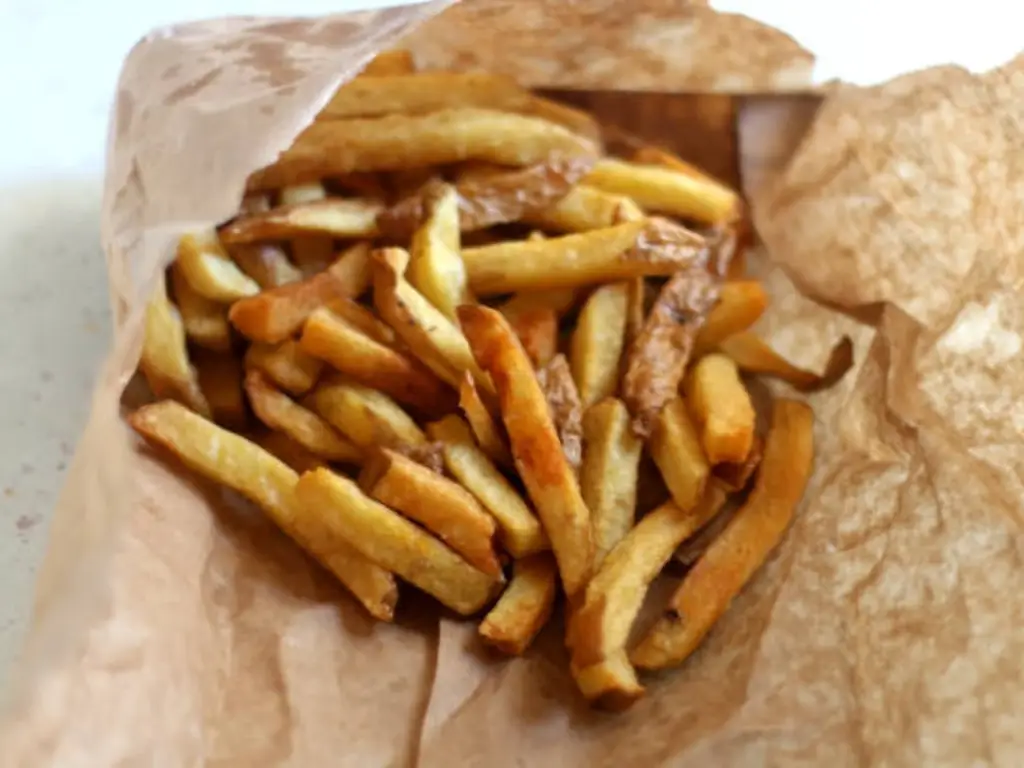
We call this the "30-Minute Delivery Window". This is the critical timeframe where physics, humidity, and motion conspire against your food. According to insights derived from the National Restaurant Association and off-premise dining studies, packaging failures (such as leaks or temperature loss) account for a significant percentage of customer churn in the delivery sector. A customer who receives a ruined meal due to poor packaging is highly unlikely to order from that establishment again, effectively burning your customer acquisition cost (CAC) to the ground.
Let's look at the financial sandbox:
Imagine a mid-sized QSR location processing 500 delivery orders per day, with an average ticket size of $20. Due to inferior, easily crushable, or leaky packaging, the restaurant experiences a conservative 2% refund rate specifically tied to food arriving in poor condition.Now multiply that by a 50-location franchise. Suddenly, investing an extra $0.05 per premium, structurally engineered box doesn't look like an expense; it looks like the cheapest insurance policy available to protect millions in revenue. Good packaging doesn't cost you money—it preserves your profit margins.
- Daily loss: 10 orders × $20 = $200.
- Monthly loss: $6,000.
- Annual net profit wiped out: $73,000 per location.
The Physics of Freshness: Structural Engineering Beyond Aesthetics
The most beautiful graphic design in the world cannot save a burger that has been reduced to a lukewarm, soggy mess. True fast food packaging design is, first and foremost, a battle against thermodynamics and gravity. While it is tempting to immediately start browsing for trendy fast food packaging ideas, your B2B purchasing decisions must initially be rooted in hardcore structural engineering rather than mere aesthetics. Here is how top brands engineer their way out of the industry's two biggest nightmares: thermal collapse and liquid penetration.
The Thermodynamics of Insulation vs. Ventilation: Conquering the Soggy Fry
Fried foods and hot sandwiches represent the ultimate packaging paradox. You need to retain core heat to ensure the food arrives warm (Insulation), but you must simultaneously expel the steam generated by that heat (Ventilation). If you trap the steam entirely, it condensates on the interior walls of the packaging and rains back down onto the food, destroying the crispy exterior in a matter of minutes.
To master this thermodynamic balancing act, packaging engineers focus heavily on MVTR (Moisture Vapor Transmission Rate). This metric dictates how effectively a material and structure can breathe. For premium hot foods, standard single-wall paperboard often fails to provide enough thermal mass. Top-tier brands utilize E-flute corrugated board. The internal fluting acts as a thermal break, trapping tiny pockets of air that provide excellent heat insulation, while the structural rigidity prevents the box from crushing under stacking weight. However, the material is only half the equation; precise structural cutouts are where the engineering shines.
| Ventilation Type | Structural Mechanism | Moisture Release Efficiency | Heat Retention | Best Application |
|---|---|---|---|---|
| Standard Circular Holes | Punched holes usually placed randomly on the top lid. | Low-Medium. Can easily be blocked if another box is stacked on top. | Medium. Heat escapes uniformly, often too fast. | Short-distance transport, baked goods. |
| U-Shape / V-Shape Notches | Cutouts engineered on the folding seams or corners of the box. | High. Allows cross-ventilation even when boxes are stacked. | Medium-High. Maintains core temperature while venting edge steam. | Burgers, hot sandwiches, heavy condensation items. |
| Louvered / Slit Vents | Angled slits that open slightly when the box is assembled. | Maximum. Creates a targeted chimney effect for steam extraction. | High. Traps heat effectively in the lower chamber while letting targeted moisture out the top. | French fries, onion rings, premium fried chicken. |
Choosing the right ventilation profile is the difference between an unforgettable crunch and a disappointing meal. A precisely calculated louvered E-flute box allows steam to escape laterally, preserving the fry's integrity while the fluted walls lock in the thermal energy.
Leak-Proof Mechanisms: Structural Integrity
While surface coatings manage grease absorption (which we will explore deeply in the Material Science section), the pure physical shape and folding technique of the box dictate its ability to hold heavy liquids without catastrophic failure. If condensation ruins the food, leaks ruin the customer's clothing, furniture, and mood—leading to immediate and aggressive refund demands.
The standard four-corner glued box is highly susceptible to leakage. Over a 30-minute journey in a hot delivery bag, heavy sauces and gravies will find the microscopic gaps where the cardboard panels meet. To combat this, structural engineers employ Webbed Corners (or Gusseted Corners). Instead of cutting and gluing the corners, the paperboard is folded inward on itself, creating a seamless, one-piece structural barrier that physically cannot leak at the base joints.
However, even the most perfect CAD drawing is useless if the manufacturing line cannot execute it consistently. The harsh reality of B2B procurement is that factory tolerances and quality control dictate your success. Even a 0.1% failure rate in production translates to hundreds of ruined customer experiences.
The Enterprise Standard of Reliability:
How do global giants mitigate this catastrophic risk? They establish unforgiving procurement standards. International chains like Burger King and Tim Hortons demand a zero-defect philosophy—requiring 100% leak-proof linings and hourly traceability checks. As the actual manufacturing partner behind these global brands, YoonPak has democratized this enterprise-grade quality control for all our B2B clients.
This means whether you are an international franchise or a growing regional chain, you automatically receive the "Burger King standard" of reliability. YoonPak executes rigorous hourly quality checks, ensuring every batch meets FDA and LFGB standards. Every single cup and container features a printed production date, time, and serial number on the bottom, allowing for absolute traceability. Their confidence in these structural mechanisms is so profound that clients enjoy a frictionless claim policy: if a defect occurs, you simply provide a video, and the claim is processed without the headache of returning defective goods, backed by a 30-day remake guarantee.
Visual Branding: Designing for Appetite and Instant Recognition
Once the physical integrity of the food is secured, we can address the psychological impact of the packaging. In the fast-paced QSR environment, your packaging is a highly mobile billboard. Every time a delivery driver carries your branded custom paper bags through an office lobby, or a customer walks down the street with your cup, you have a 3-second window to capture attention. Visual branding must be sharp, intentional, and optimized for mass commercial printing.
Color Psychology and Minimalist Typographic Architecture
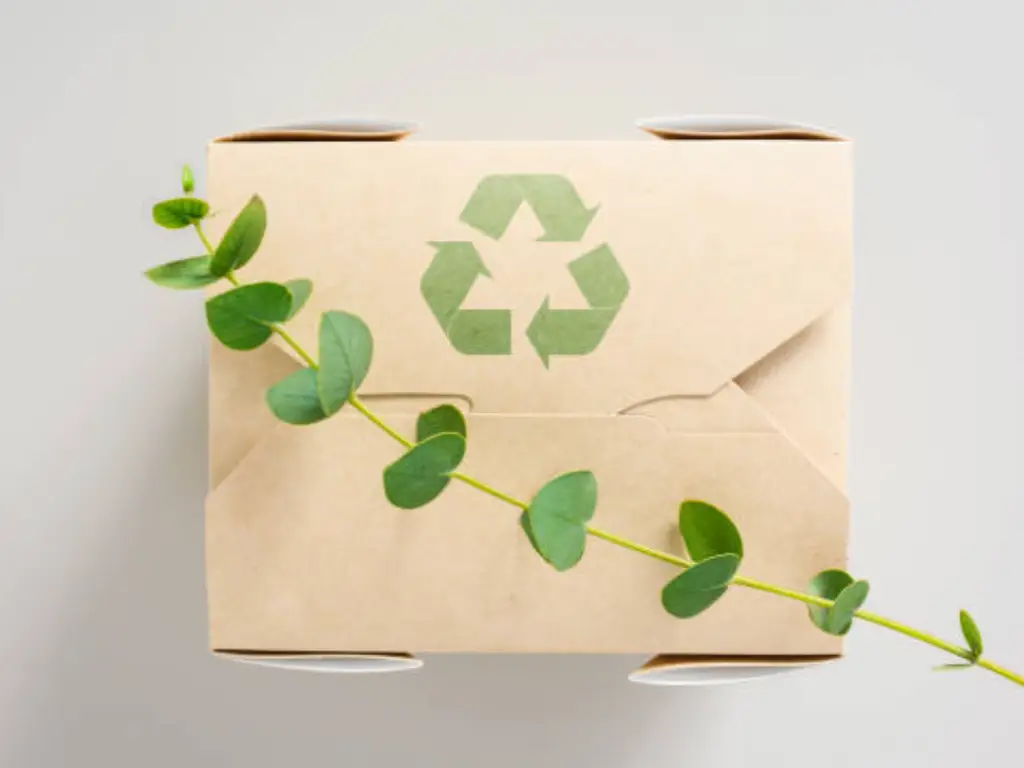
For decades, fast food packaging design relied on high-saturation reds and yellows to stimulate appetite. While color psychology remains relevant, the modern trend has pivoted sharply toward minimalist typographic architecture. Consumers now associate aggressive, full-coverage ink with lower-quality, highly processed foods.
Furthermore, from a B2B manufacturing standpoint, printing full-bleed, high-saturation colors on packaging introduces risks. It requires heavy ink loads, which drastically increases per-unit costs. When printing on natural substrates like unbleached Kraft paper, standard CMYK colors often lose their vibrancy and appear "muddy."
The sophisticated solution? Food-grade soy-based or water-based inks used sparingly. Imagine two competing burger brands. Brand A covers their box in thick red ink. Brand B uses a clean, unbleached Kraft paper background, utilizing a bold, single-color sans-serif typography for their logo and a witty slogan. Brand B's approach not only projects a premium, artisanal, and eco-conscious vibe but also reduces printing costs by up to 40%. The typography becomes the architecture of the brand, communicating confidence and clarity while maintaining strict food safety compliance.
The "Unboxing" Flow and Tamper-Evident Graphics
The modern consumer is hyper-aware of food safety and hygiene. Fast food packaging design must now incorporate security as a core user experience (UX) element. The unboxing process should feel intentional, safe, and engaging.
This is achieved through the integration of Tamper-Evident Seals and Tab-Lock mechanisms. A tamper-evident seal is no longer just a clear piece of generic tape; it is prime graphic real estate. Designing a highly visible, branded seal that the customer physically has to break provides immediate psychological comfort—they know their food hasn't been touched since it left your kitchen.
Once the seal is broken, the unboxing flow continues. A well-designed tab-lock lid can feature interior printing. When the customer opens the box, they are greeted by a hidden message, a loyalty code, or a statement about the sourcing of the ingredients. This multi-layered unboxing journey transforms a standard meal delivery into an interactive brand experience, significantly boosting retention and customer lifetime value.
Material Science: Balancing Eco-Compliance with Operational Realities
The global push towards sustainability is no longer a marketing gimmick; it is codified law. With strict regulations like the EU's Single-Use Plastics (SUP) directive and varying state-level bans on forever chemicals, B2B buyers are under immense pressure to source eco-friendly materials. However, replacing traditional plastics and coatings is fraught with operational traps. You cannot blindly choose "green" materials without understanding their physical and chemical limitations.
First, restaurant packaging requires substantial structural integrity, usually demanding a base paper thickness of 250-350 GSM (Grams per Square Meter) to withstand the pressure of hot food and stacking. These base papers must be sourced from reputable, FSC-certified suppliers (like SUN PAPER or Dupont) to ensure sustainable forestry.
Second, we must address the chemical barrier—the coating that prevents grease and liquid from soaking through the paper. Historically, PFAS (per- and polyfluoroalkyl substances) were used to repel grease, but these are now being globally banned. Today, the industry relies on specific laminations and aqueous coatings. It is vital to understand that an Aqueous-based coating is an excellent PFAS-free alternative, but it is not magic. It provides high-grade grease resistance for a typical 45-minute delivery window, significantly retarding grease penetration without relying on harmful chemicals. For absolute liquid containment, polymer linings are used, but their heat tolerances vary wildly.
Here is the critical material decision matrix every B2B buyer must navigate to avoid catastrophic sourcing errors:
| Material / Lining Type | Heat Tolerance Limit | Grease/Moisture Resistance | Eco-Status | Best For (Operational Reality) |
|---|---|---|---|---|
| Kraft Paper (PE Lined) | High (Up to 212°F / 100°C) | Excellent (100% leak-proof barrier) | Recyclable (where facilities exist) | Boiling hot soups, heavy gravy items, long-distance delivery. The most reliable barrier for extreme heat and liquid. |
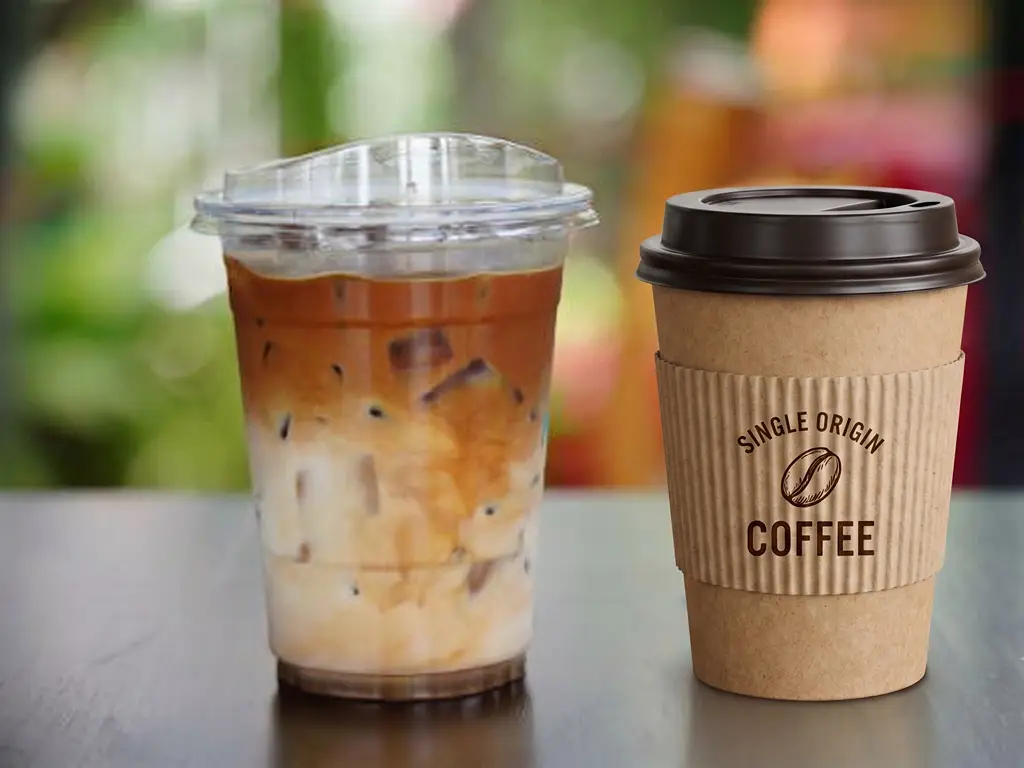
| Kraft Paper (Standard PLA Lined) | Medium (Warp/soften at ≤ 140°F / 60°C) | Excellent (100% leak-proof barrier) | Commercially Compostable (Plant-based) | Cold cups, salad windows, warm (not boiling) foods. Warning: Standard PLA will melt if exposed to boiling liquids. |
| CPLA (Crystallized PLA) | High (Up to 185°F / 85°C) | Excellent | Commercially Compostable | Eco-friendly hot coffee lids, hot soup containers requiring compostability. |
| Bagasse (Sugarcane Fiber) | Medium-High (Microwave safe) | Good (Retards grease temporarily) | 100% Biodegradable & Compostable | Dine-in, dry foods, salads, short-distance delivery. Highly eco-friendly but can absorb liquid over prolonged periods. |
Expert Caution: The biggest mistake a restaurant can make is confusing PLA with PE. Using standard PLA lining for a boiling hot, 45-minute delivery of soup will result in the lining melting and the cup disintegrating. Always align your material choice and specific heat tolerances with your menu items to ensure the eco-friendly choice actually performs in the real world.
Back-of-House Efficiency: How Design Impacts Speed of Service
We've discussed the consumer experience and structural integrity, but a true B2B packaging strategy must address the frontline workers: your kitchen staff. During a lunch rush, packaging design can either be the silent engine of your kitchen or the bottleneck that brings your entire assembly line to a grinding halt.
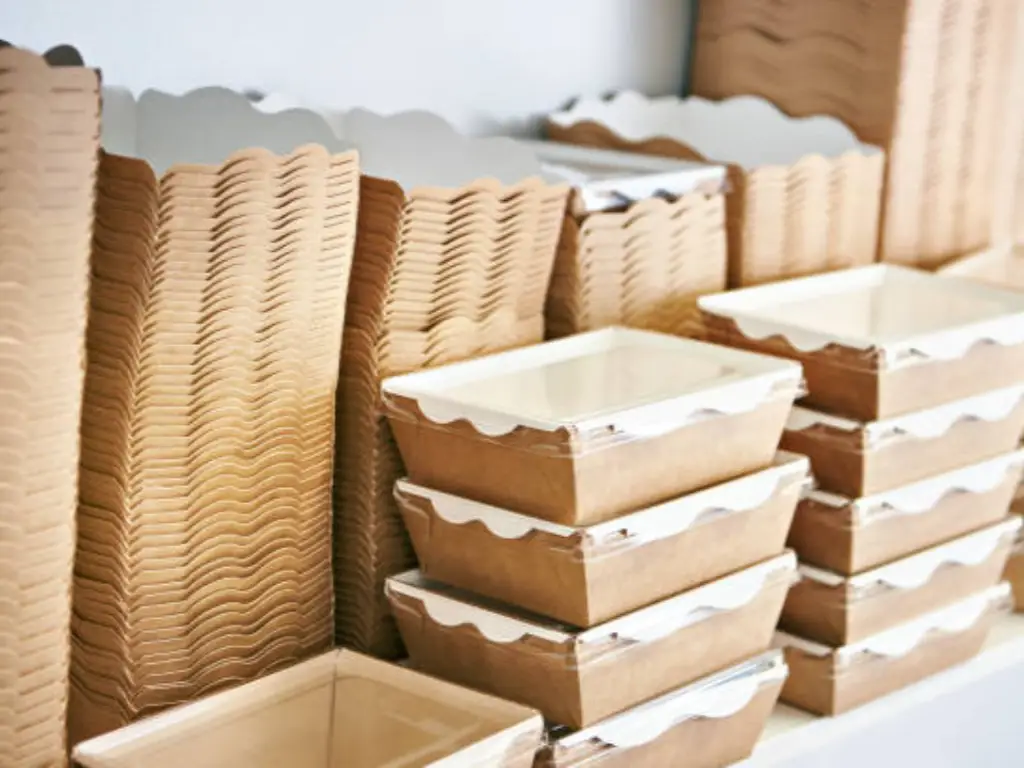
Consider the crucial metrics of Assembly Speed and Storage Footprint (Stackability). If you purchase traditional flat-pack boxes that require a staff member to manually fold and tuck four separate corners, it might take 8 seconds to assemble a single box. Multiply that by 300 orders during a 90-minute lunch rush. That is 40 minutes of pure labor wasted just folding cardboard.
To put that into financial perspective: at a standard local minimum wage, this means a single store is burning thousands of dollars of pure net profit annually on the non-value-added task of 'folding cardboard'. In peak volume scenarios, this inefficiency literally forces operators to hire an extra part-timer just to manage the packaging backlog.
Smart packaging design utilizes Auto-Bottom Boxes (Crash-lock base) or Pre-glued Nesting Containers. An auto-bottom box pops into its rigid 3D shape in exactly one second with a single squeeze. A nesting container requires zero assembly and is ready to be filled instantly. By switching to functionally engineered structures, you shave 7 seconds off every single order, dramatically increasing your kitchen's throughput and eliminating the need for extra labor.
Furthermore, nesting containers and smartly designed flat-packs maximize warehouse efficiency. A well-engineered tapered bowl design can improve your storage footprint by up to 60%, allowing you to store more inventory in less space, reducing the frequency and cost of freight deliveries.
Cost Modeling and Prototyping: Navigating the B2B Supply Chain
Ultimately, all these innovations must survive the harsh light of a P&L statement. Navigating the B2B supply chain to procure custom fast food packaging design requires an intimate understanding of printing economics and prototype validation. You must understand the difference between Flexographic printing (ideal for massive, high-speed runs with 1-2 colors, keeping unit costs incredibly low) and Offset printing (superior for complex, photographic quality artwork, but with higher setup costs). You must also account for the one-time Die-cut setup fee when creating a custom structural shape.
Before committing to an order of 100,000 units, rigorous physical testing is mandatory. You need a manufacturer that can quickly provide physical prototypes (blank mock-ups) so you can conduct real-world heat lamp tests, 30-minute condensation trials, and drop tests. If your supply chain partner is slow to iterate, your product launch will stall, and your cash flow will be tied up in delays.
In the highly competitive F&B market, rigid MoQs (Minimum Order Quantities) and sluggish lead times cripple a brand's ability to innovate. You need a partner that combines the agility of a boutique agency with the massive output reliability of a major manufacturer.
Leading B2B packaging architects like YoonPak provide a fiercely competitive agile model: clients receive digital design proofs within 1 working day, and physical samples are dispatched within 48 hours. Unlike rigid factories, YoonPak supports growing brands with accessible MoQs as low as 50,000 pieces for custom runs, while maintaining an aggressive standard delivery time of just 3-6 weeks—a full 7 days faster than the industry average.
Most critically, for B2B buyers struggling with warehouse space and cash flow, YoonPak acts as a strategic logistics partner, offering 1 month of free warehouse storage. They optimize your freight by helping you plan 40'HQ full container loads, driving your landed unit costs down to the absolute minimum. When you are ready to stop leaking profits and start scaling your brand with world-class packaging, you need to eliminate the risk of failure entirely.
→ Request a Free Physical Prototype & Leak-Test Sample Pack (Dispatched within 48 Hours)

 English
  German
  Spanish
  Italian
  Dutch
Dutch  French