

The Ultimate Juice Paper Cup Price Guide: Landed Costs, MOQ & Hidden Fees
For B2B procurement managers, restaurant chains, and packaging importers, sourcing disposable cold drink cups often feels like navigating a labyrinth of deceptive pricing. A quick search on popular wholesale directories will bombard you with factory quotes ranging from $0.01 to $0.05 per piece. However, veteran supply chain architects know a harsh reality: these penny prices are almost always an illusion, serving merely as clickbait to secure your inquiry. By the time the shipment arrives at your local port, the final cost has often doubled or tripled, consumed by hidden setup fees, structural upgrades, and astronomical volumetric shipping charges.
Sourcing juice paper cups is fundamentally different—and more complex—than sourcing standard coffee cups. Cold beverages introduce the relentless physics of condensation, demanding specific material thicknesses and specialized barrier coatings. If you approach this procurement strictly from a “lowest FOB price” mindset, you risk catastrophic product failures, severe brand damage from leaking cups, and freight invoices that dwarf the value of the goods themselves.
This comprehensive guide is designed to dismantle the opaque pricing structures of the disposable packaging industry. We will break down the exact Bill of Materials (BOM) for cold drink cups, expose the hidden fees lurking in custom printing and die-cutting, and provide you with a definitive framework to calculate your true Landed Cost. Whether you are ordering 50,000 units for a regional coffee shop or 5 million units for a global franchise, this guide will equip you with the insider knowledge to negotiate effectively and bulletproof your supply chain in 2026.
Decoding the Illusion of Penny Prices in B2B Marketplaces
The greatest trap in international packaging procurement is the anchor pricing strategy used on massive B2B platforms. When a supplier advertises a 16oz juice cup for $0.015, they are fundamentally violating the mathematical limits of industrial manufacturing. To understand why, we must examine the macroeconomics of raw materials.
In the paper packaging industry, the cost of raw food-grade wood pulp accounts for approximately 60% to 70% of the total manufacturing cost. High-level buyers do not just look at supplier quotes; they monitor global commodity trends, such as the RISI pulp price index or the Chicago Mercantile Exchange lumber futures. When you understand the baseline cost of raw materials, you can easily spot a counterfeit quote.
The Baseline Reality Check Formula:
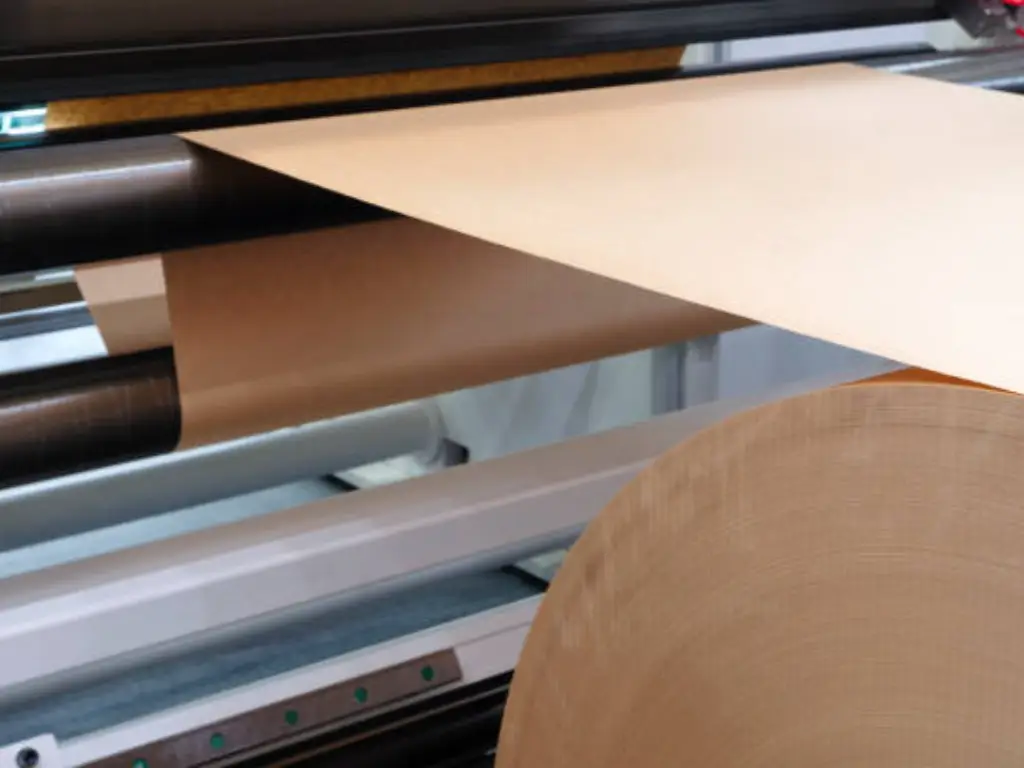
A standard metric ton of high-quality, food-grade cupstock (poly-coated paperboard) costs roughly between $1,000 and $1,300, depending on global pulp market fluctuations. A proper 16oz cold cup requires at least 300 GSM paper. Mathematically, one ton of this heavy-duty paper can yield roughly 75,000 to 80,000 cups (factoring in the die-cutting skeleton waste).
Calculation: $1,200 / 80,000 cups = $0.015 purely for the raw unprinted paper.
This means $0.015 is the physical floor for the raw material alone. It includes zero labor, zero printing ink, zero machine amortization, zero packaging cartons, and zero profit margin. Therefore, any FOB quote at or below this threshold is guaranteed to be a sub-standard product—typically utilizing dangerously thin 150 GSM paper, lacking necessary waterproof coatings, and totally unfit for commercial cold beverage service.
Anatomy of Manufacturing Costs for Cold Drink Cups
To accurately assess a supplier’s quote, you must deconstruct the product into its core physical variables. A premium juice paper cup is not just “paper”; it is an engineered vessel designed to withstand moisture, temperature fluctuations, and mechanical stress. The two most critical variables driving the cost are paper weight (GSM) and the barrier coating configuration.
The Baseline Variable of Paper Weight and GSM Metrics
GSM, or Grams per Square Meter, dictates the structural integrity, rigidity, and tactile feel of the cup. For cold drinks, particularly larger capacities like 16oz or 22oz, utilizing a low GSM is a recipe for disaster. When ice is added to a beverage, the cup must support the weight of the liquid, the ice, and the gripping force of the consumer’s hand, all while being subjected to internal moisture.
A common cost-cutting tactic by unreliable suppliers is secretly downgrading a 300 GSM order to 250 GSM. While the cup might look identical in a photo, the difference is akin to comparing a flimsy sheet of copy paper to a premium business card. A 250 GSM 16oz cup will warp when squeezed, potentially causing the lid to pop off and spilling the beverage onto the customer.
| Cup Capacity | Minimum Recommended GSM (for Cold Drinks) | Tactile Feedback & Structural Integrity | Cost Index Impact |
|---|---|---|---|
| 8oz – 10oz | 250 – 280 GSM | Adequate for small hands; minimal structural flex. | Baseline |
| 12oz – 16oz | 300 – 320 GSM | Firm grip, premium feel, resists squeezing pressure. | +12% to +18% premium |
| 20oz – 24oz | 320 – 350 GSM | Absolute rigidity required for heavy ice loads and large volumes. | +20% to +30% premium |
The Double Coating Imperative for Condensation Prevention
This is where the majority of cross-border procurement failures occur. Buyers frequently purchase standard coffee cups (hot cups) to serve iced juice, completely unaware of the thermodynamic differences. Hot cups require only a Single PE (Polyethylene) coating on the inside to prevent the hot liquid from penetrating the paper.
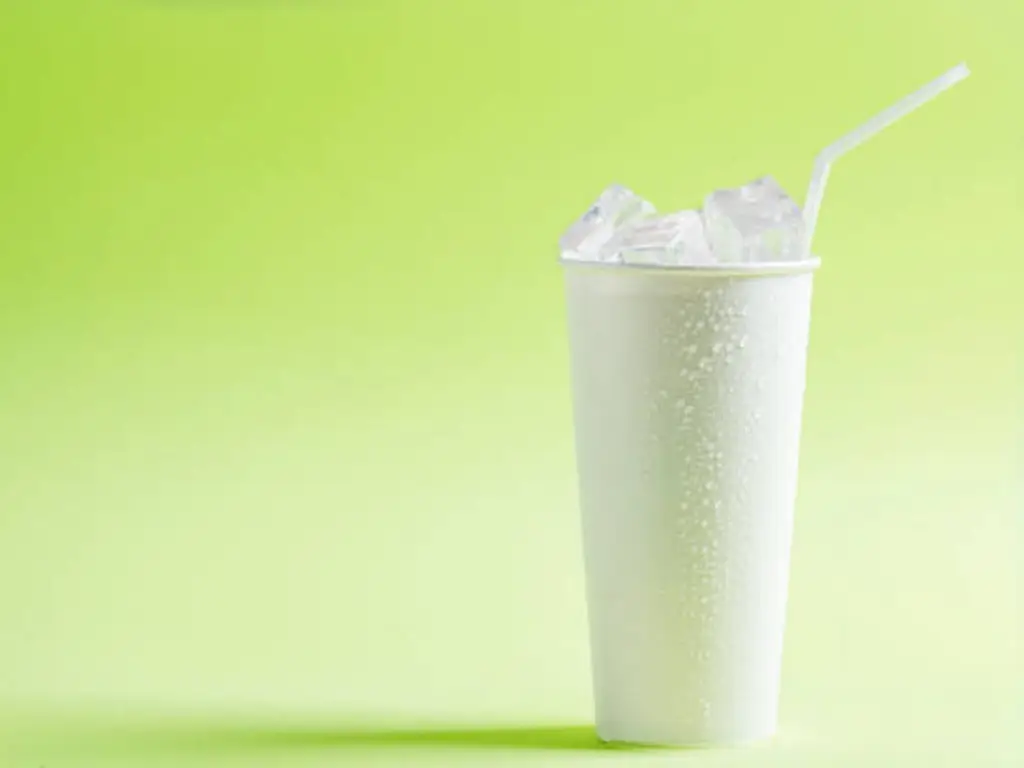
Cold drinks, however, generate aggressive exterior condensation. Imagine a freshly squeezed iced juice sitting on a table during a humid summer day. Moisture from the air rapidly condenses into water droplets on the outer surface of the cup. If the cup only has an internal coating (Single PE), the unprotected exterior paper fibers will instantly absorb this condensation. Within 15 minutes, the paper becomes soggy, the structural integrity collapses, and the cup disintegrates into a wet, leaking mess.
To prevent this, cold drink cups mandate a Double PE Coating (typically 18g of PE on the inner wall and 15g of PE on the outer wall). This double moisture barrier increases the manufacturing cost by roughly 10% to 15% due to the extra polymer and the slower curing times required during production. However, even with double coating, a new mechanical challenge arises: thickness.
When you fold and seal paper that is coated in plastic on both sides, traditional heat-sealing machines often fail. The heat struggles to penetrate the double layers evenly, leading to “false seals” or micro-burns along the bottom rim and side seams—the primary culprits of catastrophic leaks. This is why global giants like Starbucks, Burger King, and Tim Hortons impose draconian quality control standards on their packaging suppliers; post-incident financial compensation can never repair a ruined brand reputation.
To meet these elite standards, manufacturers like Yoonpak have completely abandoned traditional high-temperature heat sealing for double-coated cold cups. Instead, they utilize state-of-the-art Ultrasonic Seamless Sealing Technology. This advanced method uses high-frequency sound waves to fuse the polymer layers at a molecular level without degrading the paper fibers, entirely eliminating side-leak risks caused by temperature variations. Furthermore, to suppress buyer anxiety regarding international sourcing, Yoonpak enforces an extreme pre-shipment protocol: hourly QC checks, rigorous drop tests, and worker-initiated leak diagnostics. If a single flaw is detected, every cup produced since the last successful test is traced and destroyed. While Yoonpak backs every order with a 1-year warranty and a 30-day video-claim replacement policy, their engineering goal is to ensure you never have to use it.
Unmasking the Hidden Setup Fees in Custom Branding
Once you have secured the correct physical specifications, the next phase of pricing involves custom branding. Many buyers assume that “custom printing” is a flat fee added to the unit price. In reality, industrial printing relies on complex setups that introduce significant upfront sunk costs. To avoid nasty surprises on your final invoice, you must understand how printing plates and die-cutting molds are calculated.
Flexographic vs Offset Printing Economics
A common misconception in the packaging industry is that offset printing is the cheaper option. While offset might seem inexpensive for a small run of business cards, in the high-speed roll-to-roll manufacturing of paper cups, Flexographic (Flexo) printing is the absolute industry standard and the only economically viable option for scale.
Offset printing is largely unsuited for food-grade direct contact because the inks used often contain higher levels of volatile organic compounds (VOCs). When offset-printed cups are nested (stacked inside one another) in shipping cartons, the ink from the outside of one cup presses directly against the food-contact inside surface of the cup below it. This can lead to ink migration, resulting in a foul odor and severe food safety compliance violations.
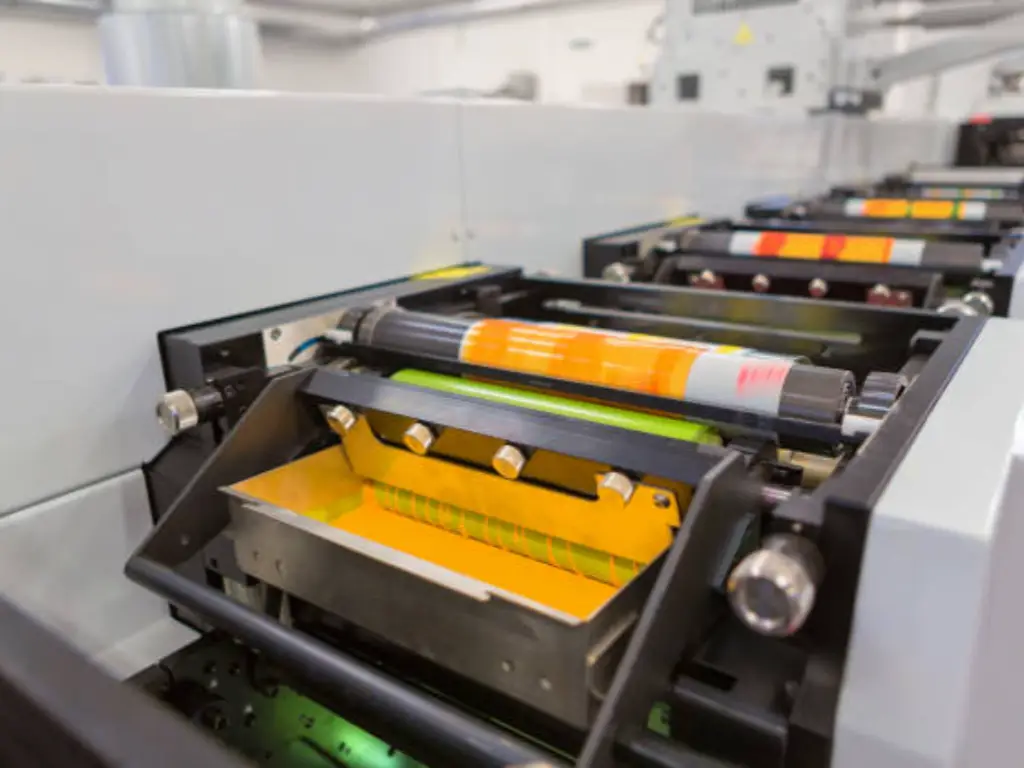
Flexo printing, conversely, utilizes fast-drying, water-based or soy-based food-grade inks that are 100% safe, odorless, and comply strictly with FDA and LFGB standards. Economically, Flexo operates on a model of “High Initial Setup, Extremely Low Unit Amortization.” The initial cost to create the polymer printing plates is high, but once the machine is running, it prints at blistering speeds. For an order of 10,000 cups, the Flexo setup fee might feel painful. But at an order of 100,000 cups, that same setup fee amortizes down to less than a fraction of a penny per cup.
The Color Complexity and Plate Charging Mechanism
In Flexo printing, you are charged a “Plate Fee” for every single color in your design. Whether your logo uses the CMYK process (which requires four separate plates: Cyan, Magenta, Yellow, Black) or specific Pantone (PMS) spot colors, each color requires a dedicated resin polymer plate to be laser-engraved and mounted onto the printing cylinder.
Typically, a single color plate costs between $80 and $120. If your design features a complex, full-color photographic image, you are looking at $400 to $500 in upfront plate fees before a single cup is produced. For startup juice bars or medium-sized chains looking to optimize cash flow, a smart strategy is to utilize the natural background of the paper (e.g., unbleached kraft brown or pure white) and print a minimalist, single-color logo. This not only projects a modern, eco-friendly brand aesthetic but also slashes hundreds of dollars off your initial setup costs.
The Die-Cutting Mold Trap for Non-Standard Calibers
While printing plates are a well-known setup cost, the “Die-Cutting Mold” fee is a trap that catches many unseasoned buyers off guard. The die-cutter is the heavy steel machinery that punches the flat fan-shape of the cup out of the massive paper rolls.
Reputable factories already own the expensive steel-rule dies for standard industry calibers (e.g., 90mm top diameter for 16oz cups, or 95mm for 22oz cups). However, if your brand dictates a highly specific, non-standard dimension—perhaps a 92mm rim to perfectly match a proprietary dome lid you sourced elsewhere—the factory must engineer a completely new set of forming molds and cutting dies.
This customized tooling is a permanent sunk cost that can easily range from $2,000 to $5,000. Unless you are committing to millions of units where this cost can be absorbed, it is heavily advised to adapt your packaging strategy to the manufacturer’s existing standard calibers, avoiding this massive capital expenditure entirely.
The Curve of Economies of Scale and Real MOQ Thresholds
Buyers frequently express frustration over Minimum Order Quantities (MOQs). “Why can’t I just buy 5,000 custom cups?” The answer lies in the harsh realities of industrial machine calibration and make-ready waste.
When a factory initiates a custom print run on a large Flexo press, the machine does not instantly produce perfect cups. The operators must feed hundreds of meters of raw paper through the rollers to align the registration (ensuring the colors don’t overlap) and calibrate the tension. This process, known as “make-ready,” inherently destroys anywhere from 50 to 100 kilograms of premium paperboard before the first usable cup is even formed.
If your order is only 5,000 cups, the cost of that 100kg of wasted paper, plus the labor hours for the machine setup, is divided among a very small pool of products. This causes the unit price to skyrocket to commercially unviable levels. However, as your order scales to 50,000 or 100,000 units, the machine reaches a steady state of optimal efficiency. The setup waste becomes a microscopic fraction of the total material used, causing the price curve to drop dramatically. In industrial packaging, you are not just paying for the cups you receive; you are paying for the efficiency of the machine’s run time.
Evaluating the Premium of Eco-Friendly Materials (2026 Update)

- Traditional Double PE: The most cost-effective and structurally reliable moisture barrier. Ideal for markets where plastic legislation has not yet heavily penalized standard coatings, such as parts of the Asia-Pacific or unregulated Middle Eastern sectors.
- PLA (Polylactic Acid) Coating: Derived from renewable plant resources like corn starch, PLA is fully biodegradable under industrial composting conditions. However, adopting PLA generally drives the total unit cost up by 30% to 50%. Furthermore, advanced buyers are realizing that PLA faces regulatory pushback in regions like Germany and Italy, as it requires specific high-heat facilities to degrade properly and cannot be simply thrown into standard recycling bins.
- Aqueous Coating (Water-Based Barrier): The ultimate vanguard of 2026 packaging technology. Aqueous coatings utilize water-based polymers that sink into the paper fibers rather than sitting on top as a film. This allows the cups to be easily repulped and recycled in standard paper recycling streams, effectively bypassing stringent plastic taxes in the EU. While it carries a premium over PE, it represents the safest long-term compliance strategy for high-net-worth brands operating in heavily regulated territories.
Top-tier manufacturers like Yoonpak offer dual-track supply chains, providing both high-performance standard PE and fully certified, FDA/LFGB compliant plant-based alternatives, allowing brands to tailor their materials precisely to the legislative demands of their target markets.
The Ultimate Landed Cost Calculator: Your Final Price Tag
We have now mapped out the raw materials, the coatings, the printing plates, and the scrap waste. But the final, most lethal variable that destroys B2B budgets remains: Volumetric Freight Weight. Paper cups are the quintessential “dimensional weight” product—they are extremely light, but they take up a massive amount of physical space due to the air trapped inside the nested stacks.
When you request an LCL (Less than Container Load) shipping quote, freight forwarders do not charge you based on the physical weight of the paper; they charge you based on the Cubic Meters (CBM) of space the cartons occupy. A single standard CBM can typically hold about 2,500 to 3,000 nested 16oz cups.
Consider this brutal mathematical reality: If your FOB factory price for a premium double-coated cup is an excellent $0.035, but you are shipping LCL from Asia to a Western port where the freight rate is currently $150 per CBM, the math is unforgiving. ($150 / 2,500 cups = $0.06 per cup in shipping alone). The freight cost has drastically inverted, becoming nearly double the cost of the actual product. Your $0.035 cup is now a $0.095 cup before import duties are even applied.
The True Landed Cost Equation:
(FOB Base Price) + (Plate Cost / Total Quantity) + (Mold Sunk Cost / Total Quantity) + (CBM Freight Rate / Cups per CBM) + (Import Duties & Customs) = True Landed Cost Per Unit
When buyers realize this, it becomes overwhelmingly clear that the only mechanism to control Landed Costs and maintain profitability is to ship via FCL (Full Container Load – 20’GP or 40’HQ). By filling an entire container, the freight rate per CBM plummets, compressing the per-cup shipping cost to mere fractions of a cent.
However, mid-sized restaurant chains and regional importers often face a severe cash flow and physical space dilemma: they simply cannot digest an entire 40ft high-cube container of a single cup size all at once. They need a variety of SKUs (12oz, 16oz, soup bowls, clear cups, and lids), but ordering full containers of each is financially impossible.
To shatter this logistical deadlock, Yoonpak engineered a unique solution for medium-to-large importers: the Buffer Consolidation Program. Operating out of a massive 16,000-square-meter facility, Yoonpak offers highly flexible MOQs (100,000 for single items, or 50,000 for mixed multi-item orders). More crucially, they provide clients with up to 1 month of complimentary warehouse storage. This allows you to place multiple staggered orders for various cup sizes, bowls, and accessories over several weeks. Yoonpak securely stores these batches free of charge until there is enough combined volume to perfectly stuff a 40’HQ container, allowing you to trigger a single, maximally efficient shipment.
If you are struggling to calculate the exact spatial geometry of your next order and fear exorbitant LCL shipping rates, stop guessing. Click here to request a free ’20ft/40ft HQ CBM Consolidation Audit’ from Yoonpak. Simply send our 24/7 logistics planners your multi-category requirements, and we will provide you with a precise, maximized container loading plan and a sea freight amortization cost calculation accurate to $0.001 within 24 hours.


 English
  German
  Spanish
  Italian
  Dutch
Dutch  French
  Portuguese
  Russian
  Arabic
  Korean