

Brownie Packaging Ideas: A Practical Guide to Materials, Styles, and Sustainable Choices
You pull a brownie out of its package, expecting that rich, fudgy bite you baked into it yesterday. Instead, the edges have gone dry, the top feels tacky, and that fresh-baked aroma has vanished. The brownie itself didn’t fail — the packaging did.
Packaging isn’t just about making brownies look pretty. It’s the last line of defense between your product and everything that can degrade it: moisture, oxygen, handling, and time. And if you sell brownies, it’s also the first thing your customer sees before they ever taste what you made.
This guide walks through the materials, styles, and practical trade-offs that actually matter when you’re choosing brownie packaging — whether you’re wrapping a dozen for a bake sale, designing retail-ready boxes for your bakery, or shipping subscription boxes across the country.

Why Brownie Packaging Matters More Than You Think
Most people think packaging serves one job: presentation. In reality, it juggles three at once. If any one of them fails, the brownie inside suffers.
Freshness is the non-negotiable. Brownies have an ideal water activity (aw) range of 0.65–0.75 — high enough to stay moist and chewy, low enough to resist mold. Push past 0.80 aw, and mold risk climbs sharply. The packaging material you choose directly controls how fast moisture escapes or enters. A material with a water vapor transmission rate (WVTR) above 10 g/m²/day can cause noticeable texture degradation within a week. Think of it like bread in a paper bag versus a sealed plastic bag — one goes stale overnight, the other stays soft for days.
Food safety is the silent partner. Packaging that touches brownies needs to be food-grade, not just “look clean.” Greasy, high-fat foods like brownies can pull chemical compounds out of non-food-grade materials. This isn’t theoretical; it’s why regulations like FDA 21 CFR 176.170 exist for fatty food contact in the U.S., and why Europe enforces its own strict migration limits.
Brand perception is the visible payoff. According to Ipsos research, over 70% of Americans say a product’s packaging design influences their purchasing decision. For a brownie sitting on a coffee shop counter or a bake sale table, the package is your only salesperson. It communicates quality, care, and professionalism before a single bite is taken.
Understanding these three jobs — freshness, safety, perception — is the foundation. The rest of this guide is about which materials and styles deliver on all three, and how to match them to your specific situation.
Brownie Packaging Materials: A Practical Comparison
Before diving into individual materials, here’s a framework to evaluate each option against: (1) moisture protection — how well does it keep brownies fresh? (2) visual appeal — does it showcase or conceal the product? (3) cost per unit — roughly where does it land on a budget-to-premium spectrum? Use these three lenses as you read through the material breakdown below.
Paper-Based Options: Kraft, Cardboard, and Parchment

Paper is the most accessible starting point for brownie packaging, and it spans the full range from bare-bones to fully branded.
At the simplest end, parchment paper wrap costs pennies per unit. It’s greaseproof, so it won’t turn transparent from brownie butter, and it gives a rustic, handmade feel. The trade-off: parchment provides almost no moisture barrier. Brownies wrapped in parchment alone will start drying out within 24–48 hours — fine for same-day bake sales, not for shelf display.
Wax paper steps up the moisture resistance while keeping the same low-cost profile. The wax coating creates a modest humidity barrier that extends freshness by a day or two. One important distinction: wax paper is not heat-resistant. Don’t wrap warm brownies straight from the oven. Wait until they’re fully cooled, or the wax can melt onto the surface.
Kraft paper boxes represent the commercial sweet spot. Made from food-grade wood pulp (ideally FSC-certified to confirm responsible forestry sourcing), kraft boxes combine moderate moisture protection with full printability. You can stamp, label, or professionally print a logo directly onto the surface. For a small bakery selling brownies at $4–6 each, a branded kraft box immediately signals that the product inside is worth the price.
Cellophane and Clear Wraps: See-Through Appeal
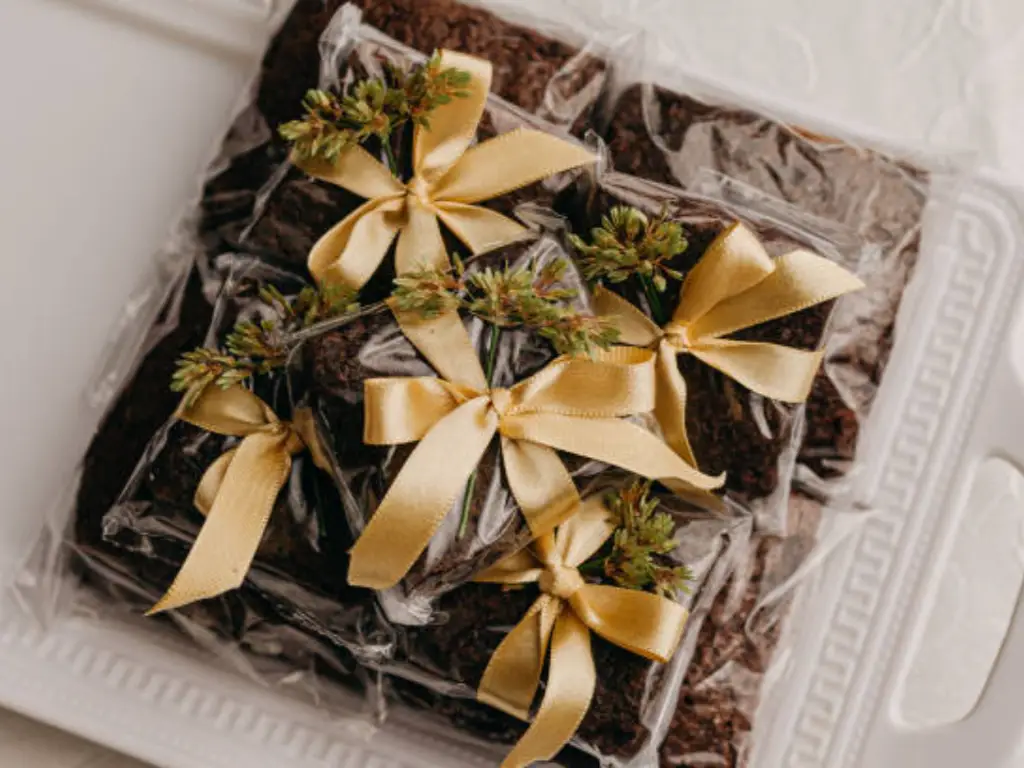
There’s a reason bakery displays use transparent packaging: people buy what they can see. Clear packaging triggers an instinctive quality assessment. The customer confirms the brownie’s texture, size, and toppings without having to imagine any of it.
True cellophane, made from plant cellulose (regenerated cellulose film), is the environmentally preferable clear option. It composts in home compost conditions within 28–60 days. The trade-off: cellophane has a relatively high moisture transmission rate (WVTR ~30–50 g/m²/day), so it’s better suited for short-term packaging — bake sales, same-day events, or counter displays where brownies turn over quickly.
Standard polypropylene (PP) plastic bags are cheaper and offer better moisture protection, but they come with an environmental cost: 20–30 years to degrade in a landfill versus cellophane’s weeks. The classic bake sale solution — a cellophane bag sealed with a branded sticker or tied with baker’s twine — splits the difference nicely: good visibility, acceptable freshness for a weekend event, and no plastic guilt.
Glass Jars and Mason Jars: Instagram-Ready Presentation
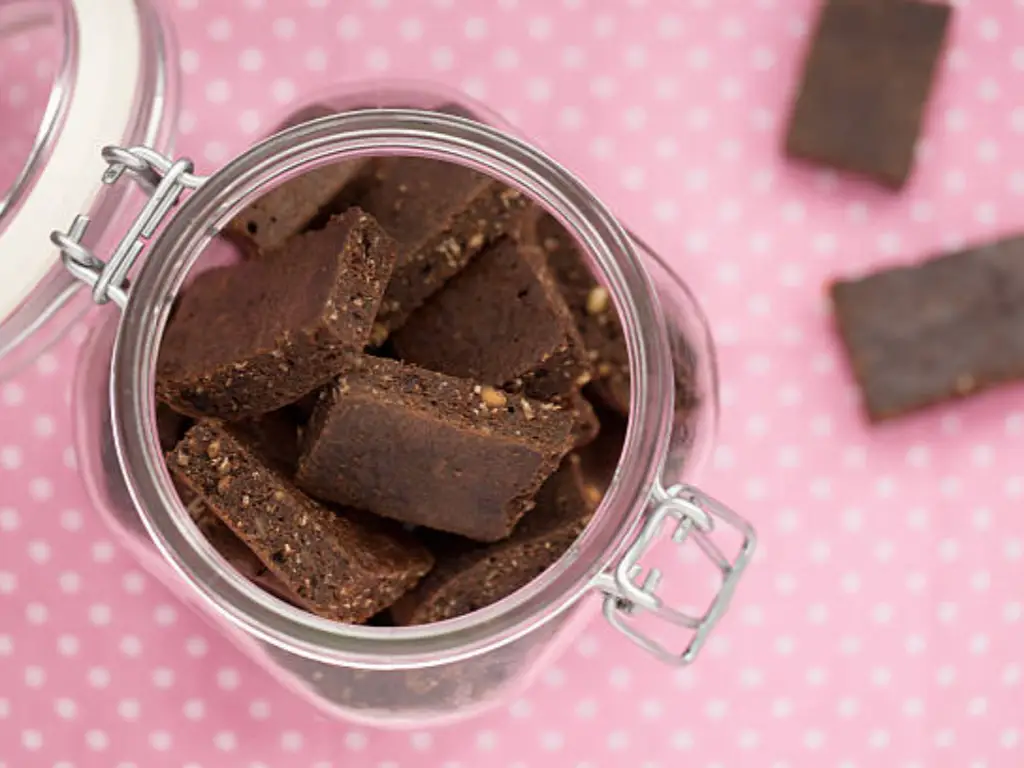
If visual impact is your primary goal, glass jars deliver like nothing else. Layers of brownie squares stacked in a mason jar, perhaps with crushed nuts or powdered sugar between layers, create an immediate premium perception. The airtight seal of a two-piece canning lid also provides the best moisture protection of any option in this guide.
The downsides are weight (expensive to ship), fragility (requires careful packing), and unit cost ($1–3 per jar at retail, less in bulk but never competing with paper on price). Glass jars make the most sense for premium gift items, wedding favors, or high-end retail where the $12–18 price point absorbs the packaging cost. A small tip: place a food-grade silica gel packet at the bottom of the jar before layering brownies if you need more than a few days of shelf life. The desiccant controls humidity inside the sealed environment.
Tin and Metal Containers: Durable and Gift-Ready
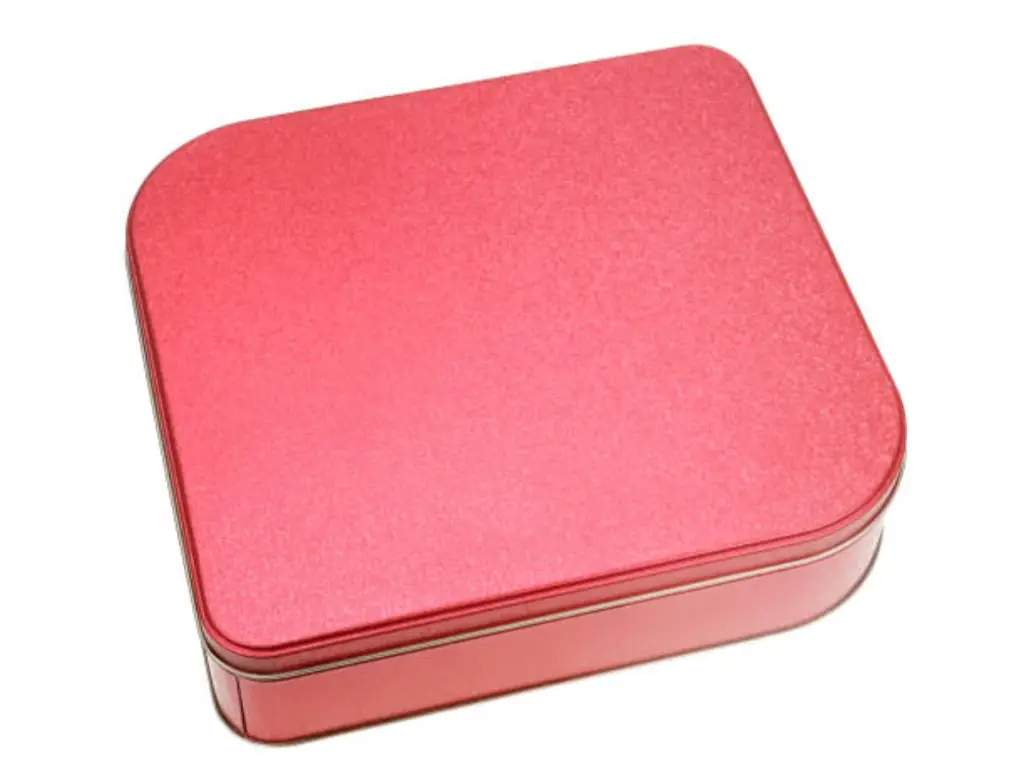
Decorative tins occupy a unique niche: they’re packaging that customers keep. A well-designed tin with a snug-fitting lid might hold brownies for a week, then live on someone’s desk holding paperclips for years — with your brand printed on the side the entire time. No disposable box can match that kind of persistent brand exposure.
Tinplate (thin steel coated with tin) is the standard material. If the brownies will directly contact the metal, the interior must have a food-grade lacquer coating. Without it, the oils and slight acidity in chocolate can react with the metal surface. Unit costs for a 6×6×2 inch decorative tin run roughly $1.20–2.50 wholesale depending on print complexity, putting tins in the mid-to-premium tier. They’re ideal for holiday gift editions, corporate gifts, and subscription box anchor items.
Plastic Containers: Practical, but Choose Carefully
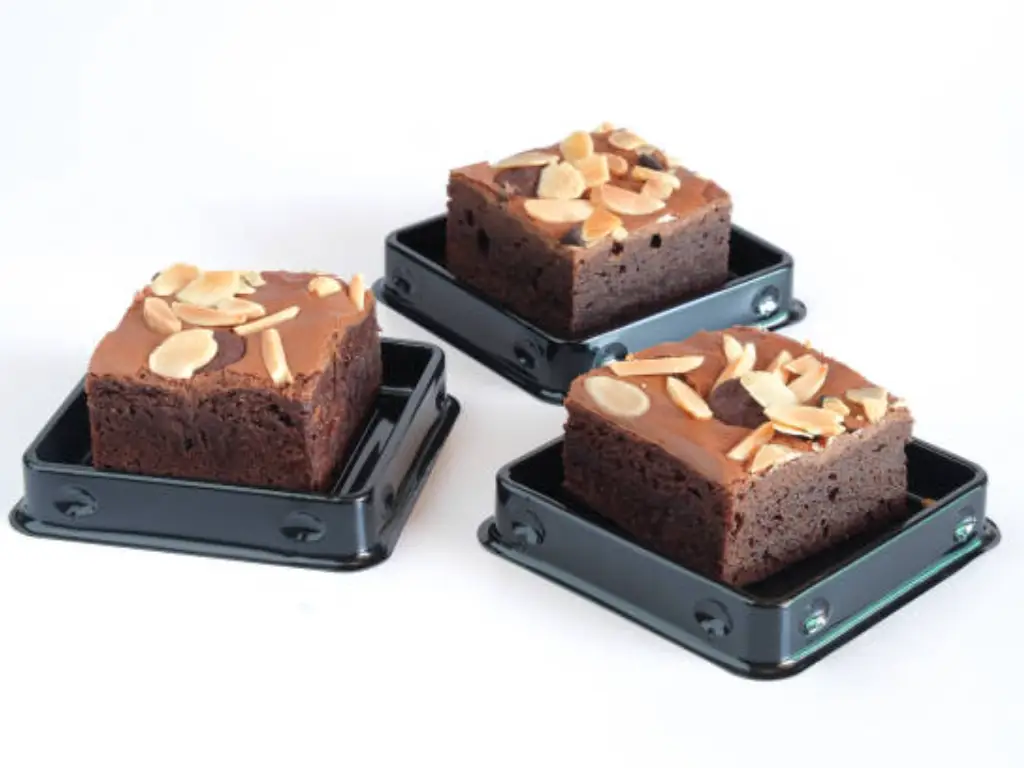
Plastic is the workhorse of food packaging for a reason: it’s cheap, lightweight, nearly impermeable to moisture, and available in every shape imaginable. But the environmental conversation around plastic has shifted consumer expectations significantly.
Standard PET (polyethylene terephthalate) clear boxes offer excellent clarity and moisture protection at the lowest cost. For a bakery that prioritizes function and budget above all else, PET is hard to beat. Just be aware that a growing segment of customers will notice the material choice and judge it.
Two more responsible alternatives exist within the plastic family, each with real trade-offs:
rPET (recycled PET) uses 30–100% post-consumer recycled content. It looks and performs nearly identically to virgin PET, costs 15–25% more, and carries a meaningful sustainability story. If a customer asks whether your packaging is recycled, “yes, 100% post-consumer rPET” is a strong answer. Look for third-party certification (like SCS Global Services) to back up recycled content claims. Self-declared percentages without verification carry little weight.
PLA (polylactic acid) is a bio-based plastic made from corn starch or other plant sources. It sounds perfect on paper — “made from plants, not oil” — but there’s a critical nuance most marketing materials skip: PLA only degrades under industrial composting conditions (58°C ± 2°C, 60%+ humidity). In a backyard compost pile or a landfill, it behaves essentially like conventional plastic. If your customers don’t have access to an industrial composting facility — and only about 12% of the U.S. population does, per BioCycle research — PLA’s end-of-life environmental benefit is largely theoretical.
Creative Packaging Styles for Different Occasions
Materials answer “what should I use?” Styles answer “how should it look and work for my specific situation?” Before reading the options below, ask yourself four questions: (1) Will these brownies be eaten immediately or shipped? (2) Is your customer buying for taste or for presentation? (3) What’s your per-unit packaging budget? (4) Where is the sale happening — a curated market stall or a grab-and-go counter? Your answers will point you toward the right style.
Gift-Giving and Special Occasions
Gift packaging follows a different logic than everyday retail packaging. When someone gives brownies as a gift, the unwrapping experience is part of the product. The recipient’s first impression isn’t the taste — it’s the reveal.
Three gift styles that consistently work: (1) rustic charm — parchment wrap tied with natural jute twine and a sprig of dried lavender or rosemary tucked under the knot; (2) polished elegance — a clear-lid box with a satin ribbon in a single accent color, sealed with a wax stamp bearing your initials; (3) seasonal limited edition — a themed printed box (red and forest green for Christmas, soft pink for Valentine’s Day) with a matching gift tag. Research from Dotcom Distribution found that 74% of consumers say packaging influences their perception of a gift’s value. A thoughtfully wrapped brownie doesn’t just taste better. It feels more valuable before the box is even opened.
Bake Sale and Market Stall Presentation
At a bake sale or farmers’ market, you have roughly three seconds to catch someone’s eye as they walk past your table. Your packaging has to work as a silent salesperson from several feet away.
The most effective market stall displays use vertical height to their advantage. Flat-laying brownie trays disappear into the visual noise of a crowded table. Tiered cake stands or stacked wooden crates create a visual hierarchy: customers see the display from across the aisle, then the packaging up close, then the price. Handwritten chalkboard signs reinforce the handmade, small-batch perception that justifies a premium price. For individual brownie packaging, a simple parchment or cellophane sleeve with a sticker label is the sweet spot — professional enough to look intentional, simple enough to keep your costs below $0.30 per unit.
One psychological trick that consistently works: place a small plate of bite-sized brownie samples at the front of your table, each resting on a mini square of parchment. Customers who try a sample convert at dramatically higher rates than those who just browse. The tiny parchment square they hold in their hand is itself a packaging decision. It shows you care about details.
Retail Shelf and Coffee Shop Display
Retail packaging has to close sales without any human help. On a coffee shop counter or bakery shelf, the brownie box is the entire sales pitch.
The strongest design element in retail packaging is a well-placed transparent window. Research on consumer behavior (POPAI shopper engagement studies) suggests most retail purchase decisions happen within 5–7 seconds. A window that occupies 40–60% of the box face gives enough visibility to trigger appetite without sacrificing the branding surface area you need for your logo and product name. Too large a window, and there’s no room for your brand. Too small, and you lose the “I can see the fudgy middle” impulse.
Information hierarchy on the box matters more than most bakers realize. The customer’s eye should land on: product name first (“Double Chocolate Brownie”), then brand logo, then a single compelling descriptor (“made with Belgian chocolate” or “baked fresh daily”), then weight and ingredients. If the box can stack 4–6 high without collapsing and the front face stays consistent across the stack, you’ve also solved the practical display problem that frustrates café staff.
Shipping and Mail-Ready Packaging
Shipping brownies introduces a variable the other scenarios don’t: the FedEx truck. Your packaging has to survive drops, vibrations, temperature swings, and being stacked under heavier boxes — all while keeping the brownies intact and presentable on arrival.
A three-layer protection system is the standard approach. The inner layer seals each brownie individually: a cellophane bag or fitted parchment wrap prevents moisture exchange and keeps crumbs from migrating between pieces. The middle layer immobilizes everything inside the box: corrugated dividers, crinkle-cut paper fill, or custom-fit cardboard inserts prevent any movement. If a brownie can slide even half an inch inside the box, it will arrive with damaged edges. The outer layer is the shipping box itself — corrugated cardboard, properly sized (not oversized, which invites crushing), with a food-grade silica gel packet (1–3 grams) tucked inside to manage humidity.
Packages that ship should ideally pass ISTA 3A testing standards, the protocol that simulates the drops and vibrations of parcel carrier handling. You don’t need to send your boxes to a lab, but the principle applies: pack a test box, drop it from waist height onto concrete, and open it. If the brownies aren’t still beautiful, neither is your packaging strategy.
Eco-Friendly Brownie Packaging That’s Actually Sustainable
“Eco-friendly” is the most overused and under-defined phrase in packaging. A brown kraft box looks earthy and natural, but if it’s made from old-growth forest fiber with petroleum-based ink and a plastic window that can’t be separated for recycling, it’s not actually sustainable. It just looks that way.
Before you commit to an “eco-friendly” packaging strategy, ask yourself which kind of environmental impact you’re trying to reduce: the source (renewable materials), the end-of-life (compostable or recyclable), or the production process (low-carbon manufacturing). These are three different problems with three different solutions, and no single material solves all of them.
Understanding Green Certifications: FSC, BPI, OK Compost, and What They Actually Mean
Certifications exist because without them, anyone can print a leaf icon and the word “green” on a box. Here are the four labels that actually carry weight in food packaging:
FSC (Forest Stewardship Council) certifies that the paper or cardboard fiber comes from responsibly managed forests — not illegal logging, not old-growth clear-cutting. An FSC certification number printed on your box means the entire chain of custody from forest to converter has been audited. For kraft boxes and paperboard packaging, FSC is the minimum credible sustainability claim.
BPI (Biodegradable Products Institute) certifies that a product meets ASTM D6400 or D6868 standards for industrial compostability. This means the material will break down at least 90% within 180 days in a commercial composting facility, leaving behind no toxic residue. BPI certification is specific to the U.S. market and its composting infrastructure.
OK Compost (TÜV Austria) is the European equivalent, certifying compliance with EN 13432. It comes in two grades: INDUSTRIAL (requires a commercial facility, like BPI) and HOME (must degrade in a backyard compost pile — a far stricter standard). If a packaging material carries OK Compost HOME certification, it’s genuinely backyard-compostable. Most “compostable” packaging on the market only carries the INDUSTRIAL grade.
A fourth “label” worth knowing about isn’t a certification at all. It’s the absence of one. The U.S. Federal Trade Commission’s Green Guides (16 CFR Part 260) state that unqualified “biodegradable” claims are deceptive unless the product degrades completely within a reasonably short time under customary disposal conditions. Most packaging labeled simply “biodegradable” with no standard number, no time frame, and no disposal condition specified would fail this test. When you see “biodegradable” standing alone on a package, treat it as marketing, not fact.
Compostable vs. Recyclable vs. Biodegradable: Not the Same Thing
These three words are used interchangeably in packaging marketing, but they describe fundamentally different end-of-life pathways:
- Recyclable means the material can enter an existing recycling stream and be reprocessed into new material. Paperboard and rPET are recyclable in most municipal systems. The key question is whether your local facility actually accepts that material. Many recycling programs reject food-soiled paperboard even if the material itself is technically recyclable.
- Compostable means the material will break down into non-toxic organic matter under specific composting conditions. The critical distinction — INDUSTRIAL versus HOME certification, as covered above — determines whether your customer can actually compost it or not.
- Biodegradable is an unregulated term with no defined timeline. Technically, almost everything is biodegradable given enough time: steel rusts, concrete crumbles, and conventional plastic photodegrades (very slowly). A “biodegradable” claim without a specific standard reference (ASTM D6400, EN 13432, etc.) and a stated timeframe is meaningless.
Here’s the practical reality most packaging guides don’t mention: if your customer lives in a region without curbside compost collection — and roughly 88% of Americans don’t have access to food-scrap composting services — a “compostable” PLA-lined box may end up in the same landfill as a conventional plastic container, where neither will degrade meaningfully. In that scenario, a recyclable FSC-certified paperboard box is environmentally preferable to a compostable-but-landfilled alternative, because at least the paperboard has a real end-of-life pathway.
The Cost of Going Green: What Sustainable Packaging Actually Costs
Sustainability isn’t free, but the price gap is narrower than most small business owners expect. And it keeps shrinking.
Entry level (+10–20% cost): Switch from standard kraft to FSC-certified kraft, and swap petroleum-based inks for soy-based alternatives. Soy inks reduce volatile organic compound (VOC) emissions by 70–80% during printing and don’t affect print quality. On a per-box basis, the FSC premium is roughly 8–15% depending on order volume and box complexity.
Mid-range (+30–50% cost): Go fully compostable. Use an FSC-certified paperboard box with a PLA window film (instead of petroleum-based PP) and soy-based inks. This package can carry BPI or OK Compost INDUSTRIAL certification. The PLA window is typically the most expensive single upgrade, adding 15–25% to the unit cost.
Premium (+60–100%+ cost): Pursue full lifecycle certification like Cradle to Cradle Certified™, which evaluates material health, material reutilization, renewable energy use, water stewardship, and social fairness across the entire supply chain. For a small business, initial certification costs run roughly $3,000–8,000 with annual maintenance fees of $1,500–3,000. This level is viable only at significant production volume or as a long-term brand investment.
The most honest sustainability message isn’t “we’re 100% green.” It’s “here’s what we’ve changed, and here’s what we’re working on next.” Customers respond to transparency and progress more than perfection. Start with FSC-certified boxes and soy-based inks. List the certification numbers on your packaging. Tell customers what you hope to upgrade next year. That kind of honesty builds more trust than a leaf icon ever could.
How to Choose the Right Brownie Packaging: A Quick Decision Guide
After exploring materials, styles, and sustainability trade-offs, the final step is matching all of it to your actual situation. Here’s a practical reference table for the four most common scenarios:
| Your Situation | Recommended Material | Recommended Style | Per-Unit Budget |
|---|---|---|---|
| Personal gift (friends, family) | Cellophane + ribbon, or mason jar | Rustic handmade or polished gift presentation | $0.50–3.00 |
| Bake sale / community fundraiser | Parchment wrap + sticker, or cellophane bag | Hand-lettered labels + tiered display | $0.10–0.50 |
| Café counter / retail shelf | Clear-window kraft box with logo | Window box + branded print, stackable design | $0.50–2.00 |
| E-commerce / subscription box | Corrugated mailer + individual inner wraps + dividers | Unboxing experience design with branded tissue | $1.00–3.00 |
If you take away just one principle from this entire guide, let it be this: choose for freshness first, presentation second. A stunning package holding a stale brownie is a wasted investment. A simple parchment wrap around a perfectly moist, fudgy brownie will outsell it every time.
For bakeries and dessert businesses ready to move beyond off-the-shelf packaging, working with a custom packaging manufacturer opens up options that generic suppliers can’t match: full control over box dimensions, material grade (including FSC-certified and food-safe options), custom print with CMYK and Pantone color matching, and design support that turns your brand identity into a physical package. Many manufacturers now offer free design consultations with digital proofs in one business day and physical samples within 48 hours, making the custom route far more accessible than it was even five years ago. If you’re sourcing bakery packaging at scale, consulting a custom bakery packaging manufacturer can help you compare material options, certification requirements, and per-unit costs against your specific needs.
References
- Ipsos. “Packaging Design and Consumer Purchase Decisions.” 2023. https://www.ipsos.com/en-us/packaging-design-consumer-decisions
- NielsenIQ. “Sustainability in Consumer Packaged Goods.” 2024. https://nielseniq.com/global/en/insights/sustainability
- McKinsey & Company. “Sustainability in Packaging: Consumer Perspectives.” 2024. https://www.mckinsey.com/industries/packaging-and-paper
- Our World in Data. “Plastic Pollution.” 2024. https://ourworldindata.org/plastic-pollution
- BioCycle. “Residential Food Waste Collection Access in the U.S.” 2023. https://www.biocycle.net/residential-food-waste-collection-access
- Dotcom Distribution. “E-Commerce Packaging and Gift Perception Study.” 2023. https://dotcomdist.com/insights
- POPAI. “Shopper Engagement and In-Store Decision-Making Study.” 2022. https://www.popai.com/research
- ASTM International. “ASTM D6400 — Standard Specification for Labeling of Plastics Designed to be Aerobically Composted in Municipal or Industrial Facilities.” https://www.astm.org/d6400-23.html
- European Committee for Standardization. “EN 13432 — Requirements for Packaging Recoverable Through Composting and Biodegradation.” https://www.en-standard.eu/bs-en-13432-2000
- U.S. Federal Trade Commission. “Green Guides (16 CFR Part 260).” https://www.ftc.gov/news-events/topics/truth-advertising/green-guides
- International Safe Transit Association. “ISTA 3A — Packaged-Products for Parcel Delivery System Shipment.” https://ista.org/testing_standards.php
- Forest Stewardship Council. “FSC Certification.” https://fsc.org/en/certification
- Biodegradable Products Institute. “BPI Certification Database.” https://bpiworld.org/Value-Of-Certification
- TÜV Austria. “OK Compost Certification Scheme.” https://www.tuv-at.be/green-marks/certifications/ok-compost
- YoonPak. “Custom Packaging Solutions.” https://www.yoonpak.com/custom-packaging/
- YoonPak. “Homepage.” https://www.yoonpak.com/

 English
  German
  Spanish
  Italian
  Dutch
Dutch  French
  Portuguese
  Russian
  Arabic
  Korean