

How to Open a Coffee Shop : The 8-Step Blueprint to Profitability
The dream of opening a coffee shop is undeniably intoxicating. For many, it conjures up a highly romanticized vision: spending your days breathing in the rich aroma of freshly roasted espresso, curating the perfect indie playlist, and casually chatting with neighborhood regulars while sipping a perfectly poured flat white. However, the reality of the hospitality industry is far less forgiving. Behind the aesthetic exposed brick walls and the gleam of expensive espresso machines lies a high-stakes, labor-intensive, and asset-heavy commercial ecosystem.
If you are reading this, you are likely transitioning from the dreaming phase to the execution phase. You do not need another generic list telling you to "choose a cool name" or "buy good beans." You are about to invest tens, if not hundreds, of thousands of dollars into a brick-and-mortar business. You need a hardcore, street-smart commercial blueprint that addresses the actual mechanics of cash flow, peak-hour throughput, and supply chain resilience. This comprehensive 8-step guide will strip away the romantic filter and walk you through the uncompromising realities of opening a coffee shop, ensuring your business model is engineered for long-term profitability rather than an early exit.
Step 1: The Unvarnished Reality of Opening a Coffee Shop
Before you sign a lease or purchase a single piece of equipment, you must confront the cold, hard statistics of the food and beverage sector. According to data from the National Restaurant Association, a staggering percentage of independent cafes and restaurants fail within their very first year of operation. The primary autopsy report for these failed businesses rarely cites "bad coffee." Instead, the fatal blow is almost always a combination of undercapitalization, disastrous spatial workflow, and a fundamental misunderstanding of how a coffee shop actually makes money.
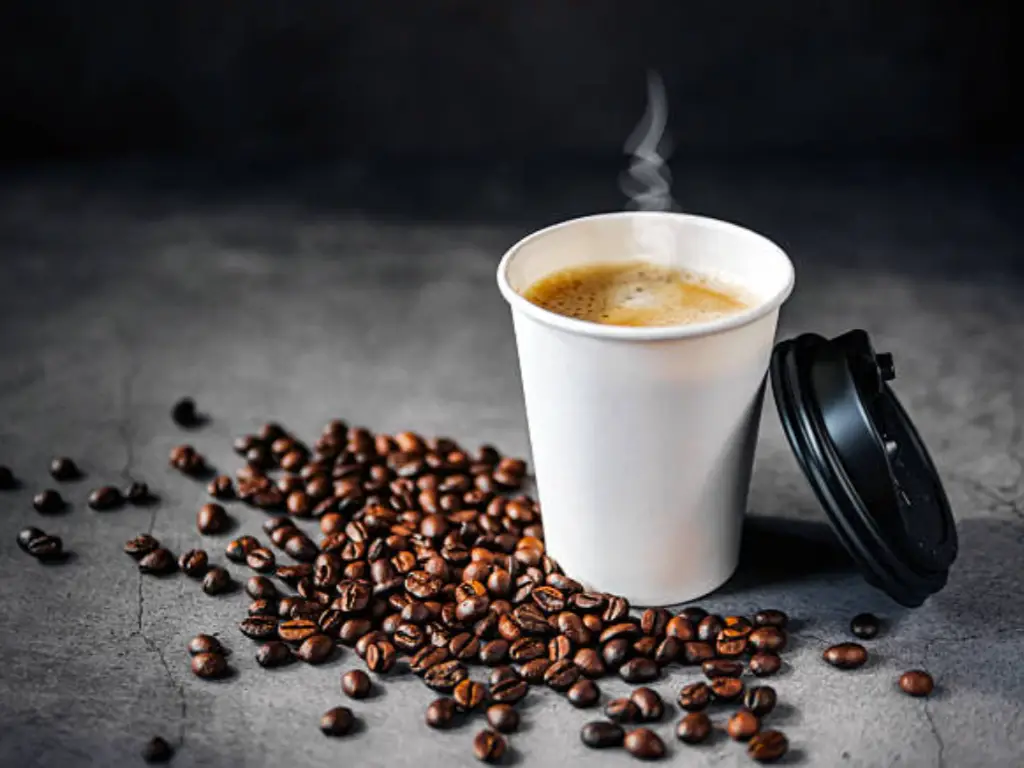
The core truth you must internalize immediately is this: the primary product of a successful coffee shop is not coffee; it is efficiency and throughput. Your survival does not depend on the latte art you pour at 2:00 PM on a slow Tuesday. Your survival is entirely dictated by your bar's absolute throughput capacity during the "golden hours"—typically the morning commute window between 7:30 AM and 9:30 AM. In these two hours, your target demographic is highly caffeinated, notoriously impatient, and hyper-focused on getting to work on time. If your operation cannot seamlessly process, extract, package, and deliver a high volume of orders during this critical window, you will lose those customers forever. The unvarnished reality is that opening a coffee shop is a volume game masked as an artisanal craft. To win, you must operate with the precision of a high-end manufacturing line.
Step 2: Structuring a Bulletproof Business Plan and Concept
A vague desire to "serve great coffee" is not a business plan; it is a hobby. To convince investors, secure a commercial bank loan, and more importantly, to give yourself a clear operational roadmap, you must concretely define your store's DNA. The physical footprint, the equipment you buy, and the packaging you source will all stem from this foundational concept.
Generally, independent coffee shops fall into two distinct commercial models. You must choose one and optimize ruthlessly for it. Attempting to be both with a limited budget usually results in an inefficient hybrid that bleeds cash.
| Strategic Dimension | Grab-and-Go (Commuter Focused) | Sit-Down (Community/Third Place) |
|---|---|---|
| Square Footage Needs | Minimal (300 – 800 sq ft). Lower rent. | Extensive (1,200+ sq ft). High rent & build-out. |
| Core Profit Engine | High-volume transaction speed, impulse buys. | High ticket sizes, extended stays, food pairings. |
| Operational Lifeline | Unbreakable take-out packaging, rapid POS. | Ruthless table turnover rate, ambiance management. |
| Average Ticket Size | $5.00 – $8.00 | $12.00 – $20.00+ |
By analyzing this matrix, your strategic imperatives become crystal clear. If you opt for the Grab-and-Go model, your absolute lifeline is the speed of your bar flow and the reliability of your disposable packaging. A leaking cup in this model is a fatal brand error. If you choose the Sit-Down model, your battleground shifts to maximizing revenue per square foot. If customers buy a single $4 drip coffee and occupy a table with their laptop for four hours, you are functionally subsidizing their remote office and driving your business into bankruptcy. Your business plan must dictate your model before you spend a dime.
Step 3: The True Cost and Break-Even Math Behind the Counter
This is the deepest water you will navigate during your planning phase. Financial anxiety is the constant companion of every new entrepreneur. The only way to neutralize this fear is through aggressive, pessimistic, and microscopic financial modeling. We must separate your capital into two distinct categories: "dead money" (sunk costs) and "live money" (operating capital and margins).
Calculating Sunk Costs Versus Operating Capital
Let us conduct a brutal teardown of a hypothetical $100,000 starting budget. Novice owners often allocate 60% or more of their budget to aesthetic interior design—custom neon signs, imported reclaimed wood tables, and premium leather seating. This is a catastrophic error. Aesthetics do not generate cash flow when the espresso machine breaks down. Here is how your initial capital is actually consumed by hidden, unglamorous infrastructure costs:
- Commercial Infrastructure Upgrades ($15,000 – $25,000): Your beautiful leased space likely lacks the essential 3-phase electrical power required to run a multi-boiler commercial espresso machine. Furthermore, you will need a commercial-grade Water Filtration System. Using tap water will scale up and destroy a $15,000 espresso machine in less than six months while ruining the extraction flavor of your expensive beans.
- Plumbing and Grease Traps ($10,000 – $15,000): Health departments mandate specific floor sinks, handwashing stations, and commercial grease traps. Trenching concrete to lay new plumbing lines is exorbitantly expensive.
- The "Do Not Touch" Runway Fund ($30,000): This is the most critical line item. You must hold at least six months of operating expenses (rent, payroll, inventory) in pure liquid cash. If you open in a slow month, this runway is the only thing preventing you from eviction while you build your customer base.
If you exhaust your capital on a highly "Instagrammable" build-out and leave no runway for purchasing milk, coffee beans, and paper cups in month two, your business is technically dead before the paint even dries.
The Hidden Profit Margins Behind Your Menu
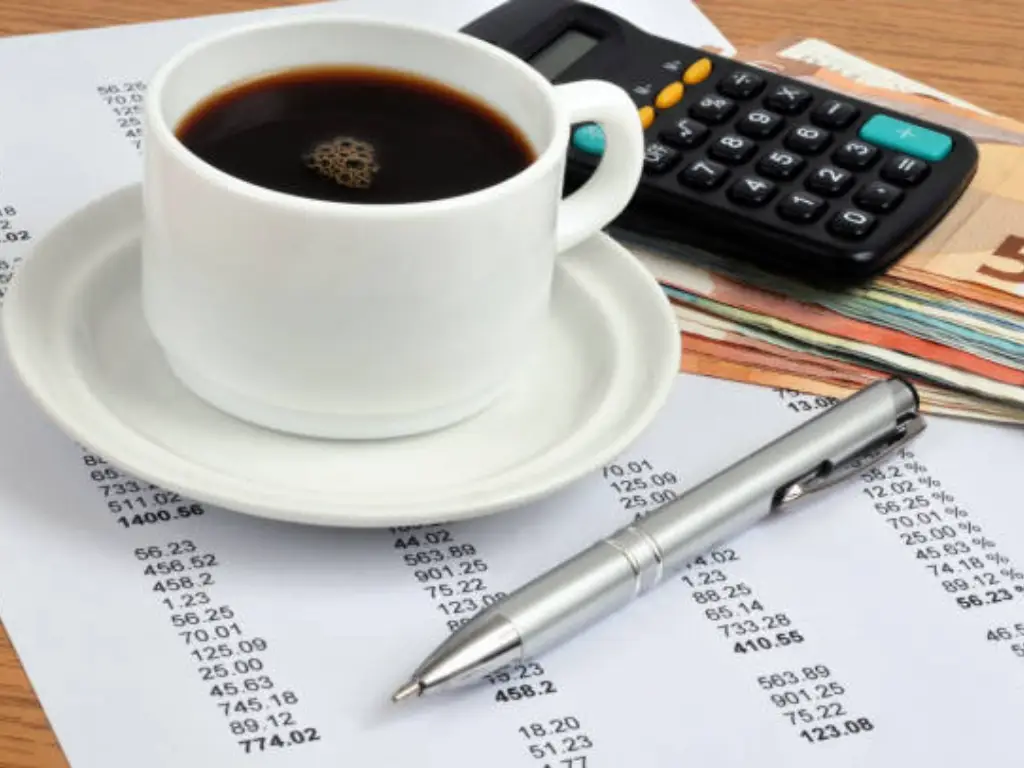
There is a dangerous illusion that selling coffee is a license to print money because "water is free and beans are cheap." To survive, you must adhere to strict Cost of Goods Sold (COGS) industry benchmarks: your beverage COGS must stay between 15% and 20%, while food COGS should be capped at 25% to 30%. To understand why, we must look at the brutal reality of the Single Cup Profit Waterfall.
The Break-Even Waterfall Formula (The $4.00 Americano)
Here is the microscopic breakdown of a standard 12oz take-out Americano:
- + $4.00 (Retail Price Paid by Customer)
- – $0.80 (Hard COGS: Roasted beans, filtered water, double-wall paper cup, secure lid, sleeve)
- – $1.50 (Amortized Direct Labor: The barista's hourly wage divided by cups per hour)
- – $1.00 (Amortized Overhead: Rent, electricity, POS software, insurance)
- = $0.70 (True Net Profit)
This stark mathematics reveals a terrifying truth: you are only making 70 cents per cup. This is why strict inventory control is a matter of life and death. It also proves why cross-selling is mandatory. If you can train your staff to upsell a high-margin $5 pastry (which requires zero prep time and has a COGS of $1.25) with that Americano, you instantly quadruple your net profit for that single transaction. Your menu is a mathematical equation, not a tasting board.
Step 4: Securing the Right Location and Foot Traffic Analytics
Conventional real estate advice dictates "location, location, location," but for a coffee shop, the metric is far more granular: you are looking for commuter flow and capture rate. An amateur looks at a busy street and sees dollar signs. A professional analyzes the pedestrian biomechanics and traffic friction.
You must physically stand outside your prospective locations during the morning rush (7:00 AM – 9:00 AM) and count the foot traffic. Crucially, you must understand the concept of the Capture Rate. In the specialty coffee industry, an excellent capture rate is merely 1% to 2%. If 1,000 commuters walk past your door, you can reasonably expect to convert 10 to 20 of them into paying customers.
Furthermore, the physical side of the street is paramount. Consider two available spaces. Space A is cheaper but located on the "going home" side of a major commuter artery, obscured by a street median preventing left turns. Space B is 30% more expensive in rent, but sits directly on the "going to work" side of the street, immediately past a subway exit, with a highly visible, easy-pull-in parking zone. Space A is a guaranteed death sentence. Space B's higher rent is entirely offset by its frictionless accessibility. You are not paying for square footage; you are paying to remove every conceivable physical obstacle between a sleepy commuter and their morning caffeine.
Step 5: Crafting an Efficient Bar Flow and Floor Plan
A fatal chronological error many first-time owners make is applying for health department permits or ordering expensive equipment before they have finalized a microscopic floor plan. In reality, city municipalities require a highly detailed schematic—including plumbing, electrical drops, and your exact bar layout—before they will even process your application. You must design the flow before you build the walls.
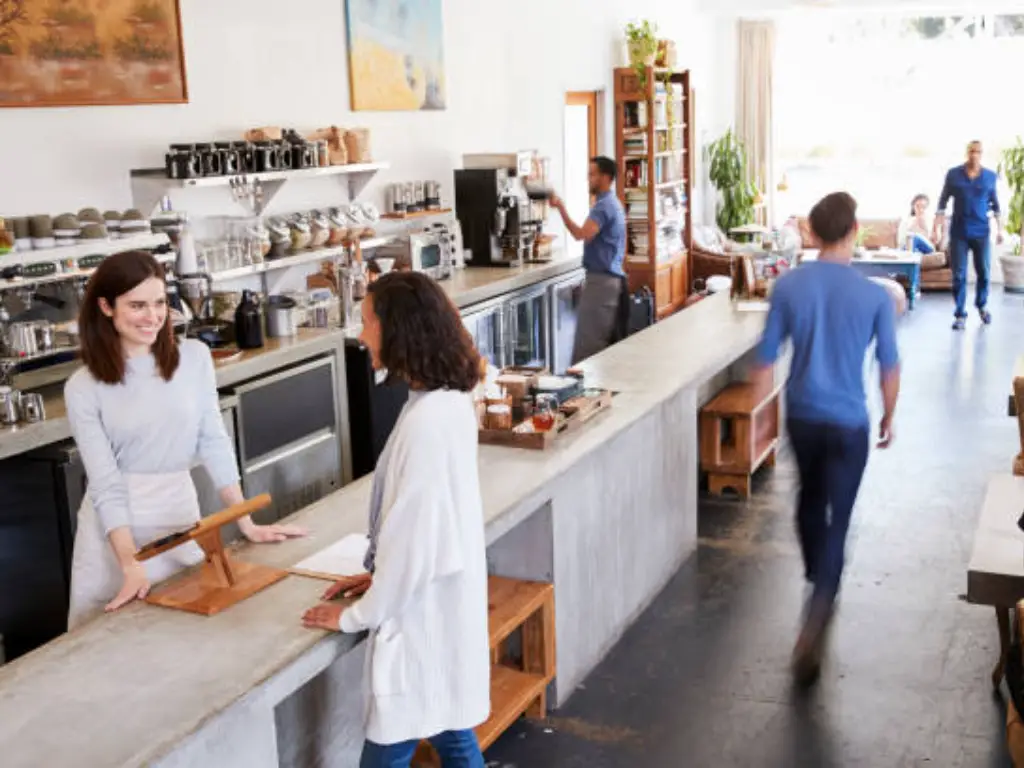
The interior architecture of your bar must be dictated by the "Golden Triangle" of coffee flow: POS (Point of Sale) to Espresso Machine/Grinder to Handoff/Packaging area. This flow must be strictly linear. Baristas should never have to cross paths or turn their backs to the customer queue.
Consider the devastating mathematics of poor spatial design: Imagine your under-counter ice bin is located just two steps away from the espresso machine. Every time a barista makes an iced latte, they must turn around, take two steps, scoop ice, and take two steps back. If your shop serves 300 iced beverages a day, those extra four steps equate to the barista walking an unnecessary extra mile during their shift. More importantly, it adds roughly 10 seconds of dead time per drink. In the heat of the morning rush, those accumulated seconds translate into a line out the door, frustrated customers, and abandoned orders. Your floor plan is the invisible software that runs your staff's physical efficiency.
Step 6: Strategic Equipment, Tech Stack, and Sourcing
With your physical space and flow mapped out, you must now arm your bar with the three core assets that dictate your throughput: your hardware (machinery), your digital engine (software), and your consumables (packaging). These are not areas where you can afford to cut corners; they are the engines of your cash flow.
Core Machinery Sizing for Peak Hours
When purchasing an espresso machine, you are not buying an aesthetic centerpiece; you are buying thermal stability and volumetric output. It is tempting to save thousands of dollars by purchasing a sleek, single-boiler or low-capacity heat-exchange (HX) commercial machine. This is a fatal miscalculation rooted in a lack of thermodynamic understanding.
In a real-world commercial environment, if you attempt to pull shots and steam milk simultaneously on a single-boiler system for a continuous line of customers, you will hit a physical wall. After producing just 10 to 15 milk-based drinks back-to-back (roughly 15-20 minutes into your morning rush), the machine will suffer catastrophic temperature drops and vapor pressure depletion. Your extraction will turn sour, and your milk steaming will grind to a halt while the boiler desperately tries to recover. You absolutely must invest in a robust Multi-Boiler (Dual Boiler) system equipped with high-wattage heating elements and dedicated PID temperature controllers. A machine that stalls during the 8:00 AM rush doesn't just cost you immediate revenue; it permanently destroys the Lifetime Value (LTV) of every commuter forced to wait in a stagnant line.
The Digital Engine: POS & KDS Systems
A shop equipped with a $20,000 multi-boiler espresso machine, perfectly engineered floor plans, and elite baristas will still paralyze its own operations if it relies on a sluggish, legacy cash register. The bottleneck simply shifts from the coffee machine to the transaction terminal.
Modern coffee shops require a cloud-based Point of Sale (POS) system integrated directly with a Kitchen Display System (KDS). A KDS replaces easily lost, hard-to-read paper receipt tickets with a digital screen mounted above the espresso machine. This allows the barista to see orders the microsecond the payment is approved, color-coding them by wait time. Furthermore, your Tech Stack must support seamless mobile order-ahead functionality, allowing regulars to bypass the physical line entirely. Throughput is maximized when the transaction is separated from the production.
The Overlooked Economics of Coffee Cups and Packaging
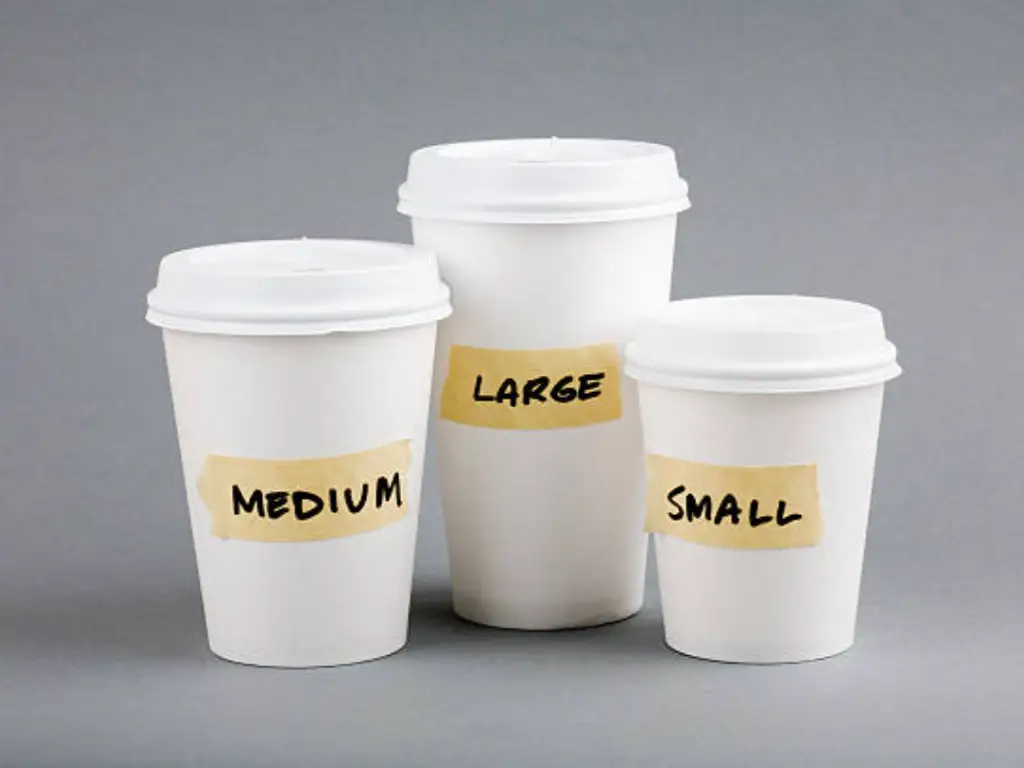
While owners obsess over coffee beans and machinery, they frequently neglect the most critical physical touchpoint of the entire customer experience: the disposable packaging. The paper cup is not just a container; it is the ultimate defender of your customer retention rate and the final arbiter of your brand quality. While carefully selecting the appropriate coffee cup sizes for your menu is a foundational step, the physical engineering of the cup itself is what truly dictates your daily operational success. Beyond just volume capacity, there are three hidden survival metrics when sourcing packaging that you ignore at your own peril:
- Lid Fitment and the Spillage Disaster: A poorly manufactured cup with a loose lid fitment is the number one cause of delivery refunds and negative Yelp reviews. Top-tier independent cafes mitigate this by sourcing from the same high-caliber manufacturers used by global giants. By partnering with a source factory that has experience supplying conglomerates like Tim Hortons, Burger King, or ILLY (such as Yoonpak), independent shops can leverage institutional-grade quality control. These tier-one manufacturers utilize rigid "zero-defect" protocols, conducting hourly structural leak tests. If a defect is found, the entire batch since the last successful test is scrapped. Adopting this enterprise-level reliability is the only way to safeguard your brand from commuter rage caused by a coffee-stained white shirt.
- Regulatory Compliance and Thermal Protection: You cannot simply buy standard PE (Polyethylene) lined single-wall cups anymore. With aggressive Plastic Bans sweeping across Europe and North America, utilizing non-compliant packaging will result in devastating municipal fines. Your supply chain must be agile enough to pivot to Double-Wall construction for superior thermal retention (eliminating the need for clumsy sleeves) and offer 100% plastic-free Aqueous Coating or compostable PLA linings, fully certified by FDA, LFGB, and FSC standards.
- The MOQ (Minimum Order Quantity) Death Trap: Custom branding is essential, but predatory packaging suppliers demand MOQs of 250,000 units, holding your crucial operating cash hostage in a warehouse. Smart operators bypass middlemen and work directly with flexible manufacturing powerhouses. A supplier like Yoonpak protects your cash flow by offering highly elastic MOQs (custom printing for as low as 10,000 units, provided freight is covered), complete with free 24-hour digital proofing. This allows you to deploy your capital toward marketing and payroll, not a mountain of cardboard.
Step 7: Navigating Permits, Licenses, and Legal Checklists
With your equipment sourced and your floor plan drafted, you must confront the bureaucratic labyrinth of municipal licensing. Do not underestimate the time this will consume; permit delays are the leading cause of blown budgets due to paying "dead rent" on an unopened space.
You will need to systematically acquire the following: a Business License, an Employer Identification Number (EIN), a Certificate of Occupancy, and Signage Permits. However, the absolute final boss of this stage is the Health Department and building code compliance.
The two most lethal traps for newcomers are the Grease Trap (Interceptor) and the HVAC/Ventilation system. Eighty percent of novice owners sign a lease only to discover the municipal code requires a massively upgraded, high-capacity grease trap installed beneath the floor to handle dairy runoff, or a highly specialized ventilation hood if they plan on utilizing any light cooking equipment (like Panini presses or rapid-cook ovens). Failing to verify these requirements before signing a lease can lead to a six-figure construction nightmare.
Step 8: Soft Opening and Long-Term Retention Strategies
If you have survived the build-out, the equipment sourcing, and the city inspectors, you are finally ready to open your doors. Your first instinct will be to throw a massive "Grand Opening" marketing blitz. Resist this urge completely.
You must begin with a "Soft Opening"—a quiet, unadvertised launch for friends, family, and immediate foot traffic. A Soft Opening is a stress test. Your espresso machine will behave differently under continuous load. Your baristas will suddenly forget the POS interface. You will realize your under-counter storage cannot hold enough milk or cups for a two-hour rush. A Soft Opening allows you to break your systems in private and fix them before the public arrives.
Once you are fully operational, your entire strategic focus must shift from customer acquisition to customer retention. According to data from premier hospitality tech platforms like Square and Toast, customers who are enrolled in a digital loyalty program visit a cafe 2.5 times more frequently than non-members, and their average ticket size is 17% higher. Your profitability lives in these recurring visits.
Secure Your Operational Baseline
Do not gamble your $100,000 initial investment on the structural integrity of a cheap paper cup. Before you finalize your supply chain, you must physically verify the thermal and anti-leak performance of your packaging under pressure. Apply today to receive Yoonpak's comprehensive Independent Cafe Packaging Stress-Test Kit (featuring a full range of multi-size, commercial-grade physical samples). Subject them to the most brutal heat and spillage tests on your own bar, completely risk-free, and ensure your morning rush is bulletproof.



 English
  German
  Spanish
  Italian
  Dutch
Dutch  French
  Portuguese
  Russian
  Arabic
  Korean