
Walk into any café, convenience store, or fast-food chain, and you’ll spot them instantly—sleek, crystal-clear disposable cups holding iced coffees, bubble teas, smoothies, and cold sodas. These are PET cups, the unsung heroes of the foodservice industry, blending durability, food safety, and sustainability in one versatile package. Let’s dive into everything you need to know about these essential drinkware solutions.
What Exactly Are PET Cups?
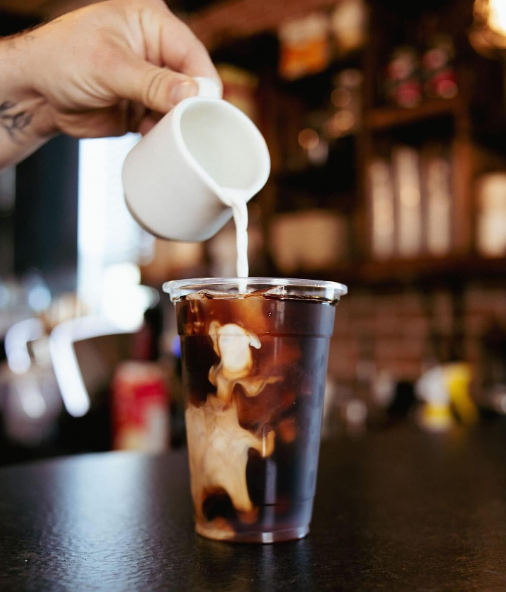
PET, or Polyethylene Terephthalate, is a thermoplastic polymer in the polyester family, derived from ethylene glycol and terephthalic acid. When molded into cups, it creates a lightweight yet robust container with a glossy finish and near-perfect clarity (light transmittance over 90%). Unlike flimsy paper cups that turn soggy with condensation or fragile glass that’s impractical for takeout, PET cups strike the ideal balance of functionality and aesthetics.
Key Advantages of PET Cups for Businesses & Consumers
1. Unbeatable Durability & Leak Resistance
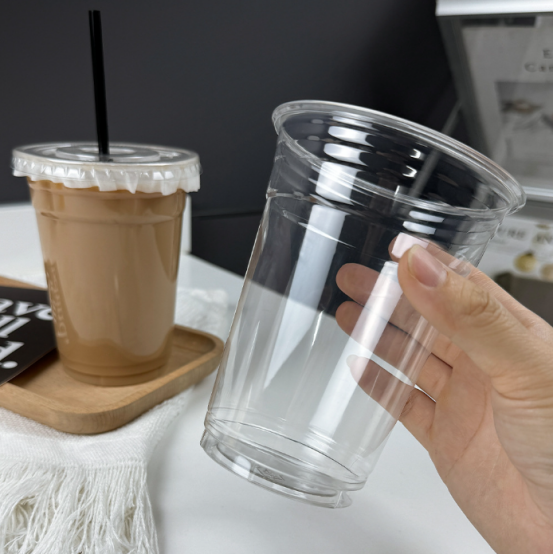
PET’s molecular structure gives it 3–5 times greater impact strength than traditional plastics like PP or PS, meaning fewer cracked cups and messy spills during transit. Its rigidity prevents warping under pressure, so lids stay securely sealed—even with carbonated drinks that build up internal fizz. For busy cafes and delivery services, this translates to fewer customer complaints and reduced waste from damaged orders.
2. Food Safety You Can Trust
PET is inherently non-toxic, odorless, and BPA-free, meeting the strictest global food-contact standards, including FDA 21 CFR §176.170 (U.S.), EU Regulation 10/2011, and LFGB (Germany). It won’t leach harmful chemicals into beverages, even when holding acidic drinks like lemonade or hot (but not boiling) coffee (PET remains stable from -70°C to 120°C). This makes it a safe choice for both hot and cold applications, though it’s most commonly used for chilled drinks where clarity truly shines.
3. Cost-Effective & Operationally Efficient
PET cups offer significant cost savings compared to alternatives:
- Unit cost: $0.03–$0.07 per cup (vs. $0.08–$0.15 for lined paper cups)
- Shipping: Lightweight and stackable, reducing freight expenses by up to 40%
- Labor: Compatible with automated filling, sealing, and dispensing equipment, cutting down on manual handling time
For high-volume businesses like chain restaurants or event caterers, these savings add up quickly, boosting profit margins without compromising quality.
4. Sustainability Through Recyclability
PET is one of the most recycled plastics globally, with a closed-loop system that transforms used cups into new packaging, clothing fibers, or even furniture. Look for the resin identification code “1” on the bottom—this tells recycling facilities the cup is PET and can be processed efficiently. Many manufacturers now offer cups made from rPET (recycled PET), which reduces reliance on virgin plastic and lowers carbon footprints by up to 70% compared to traditional production methods. Unlike paper cups with plastic liners (which are often non-recyclable), PET cups are a single-material solution that’s easy to recycle when disposed of correctly.
Common Sizes & Applications
PET cups come in a range of sizes to suit every beverage need:
| Size (oz) | Best For |
| 8–12 | Espressos, small juices, sample portions |
| 12–16 | Iced lattes, bubble teas, soft drinks |
| 16–24 | Large smoothies, milkshakes, fountain sodas |
| 24–32 | Extra-large iced coffees, party punches |
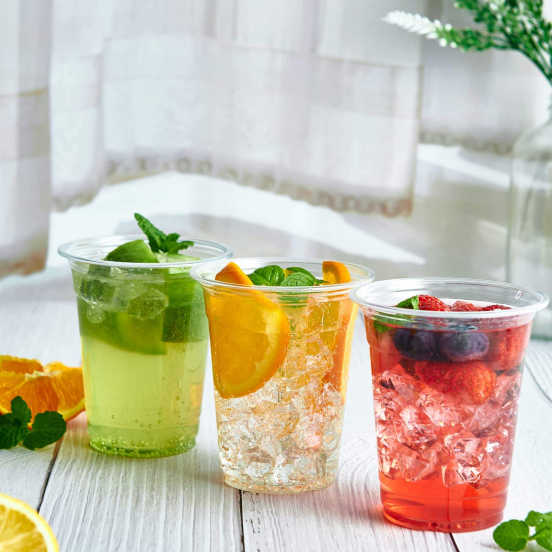
Their crystal-clear design makes them perfect for showcasing layered drinks like rainbow smoothies or iced mochas with decorative toppings, enhancing the visual appeal that drives social media shares and customer engagement.
How PET Cups Are Made: A Quick Manufacturing Overview
- Resin Preparation: Food-grade PET resin pellets are dried to remove moisture (critical for avoiding defects).
- Thermoforming: Pellets are heated and extruded into thin sheets, which are then stretched over molds and cooled to form cup shapes.
- Trimming & Inspection: Cups are trimmed to remove excess material, and quality control checks ensure they meet size, thickness, and safety standards.
- Customization: Optional steps include adding logos, color accents, or texture via printing or embossing.
- Packaging: Cups are stacked, bundled, and sealed for shipping, often with matching lids and straws for convenience.
Tips for Choosing the Right PET Cup
- Check certifications: Ensure cups meet FDA, EU, or local food safety standards for your target market.
- Consider thickness: Thicker walls (0.3–0.5 mm) offer better insulation and durability for heavy or cold drinks.
- Opt for rPET: If sustainability is a priority, ask manufacturers about recycled content percentages (many offer 30–100% rPET options).
- Test compatibility: Ensure cups fit your existing lids, straws, and dispensing equipment to avoid operational hiccups.
Final Thoughts: Why PET Cups Are Here to Stay
In a foodservice landscape where convenience, safety, and sustainability are non-negotiable, PET cups deliver on all fronts. They’re not just a disposable container—they’re a strategic choice that enhances customer experience, reduces costs, and aligns with eco-conscious values. Whether you’re a small café owner or a large-scale caterer, switching to PET cups could be the best decision you make for your business and the planet.
Ready to upgrade your drinkware? Explore our range of customizable PET cups today and see the difference clarity, durability, and sustainability can make!



 English
  German
  Spanish
  Italian
  Dutch
Dutch  French