

Paper Straws vs Plastic Straws: A Business Buyer’s Complete Comparison Guide
As global regulations aggressively phase out single-use plastics, businesses face a critical transition. However, simply swapping plastic for paper isn’t enough. Many commercial paper straws fail standard performance tests, collapsing in beverages and damaging customer experience, while others harbor hidden PFAS chemicals. For business buyers, the sourcing decision extends far beyond unit price. This complete comparison guide breaks down the real environmental impact, vital food-safety certifications, and the true total cost of ownership (TCO) between paper and plastic straws. Discover how sourcing factory-direct, certified alternatives can protect your margins, ensure regulatory compliance, and elevate your brand.
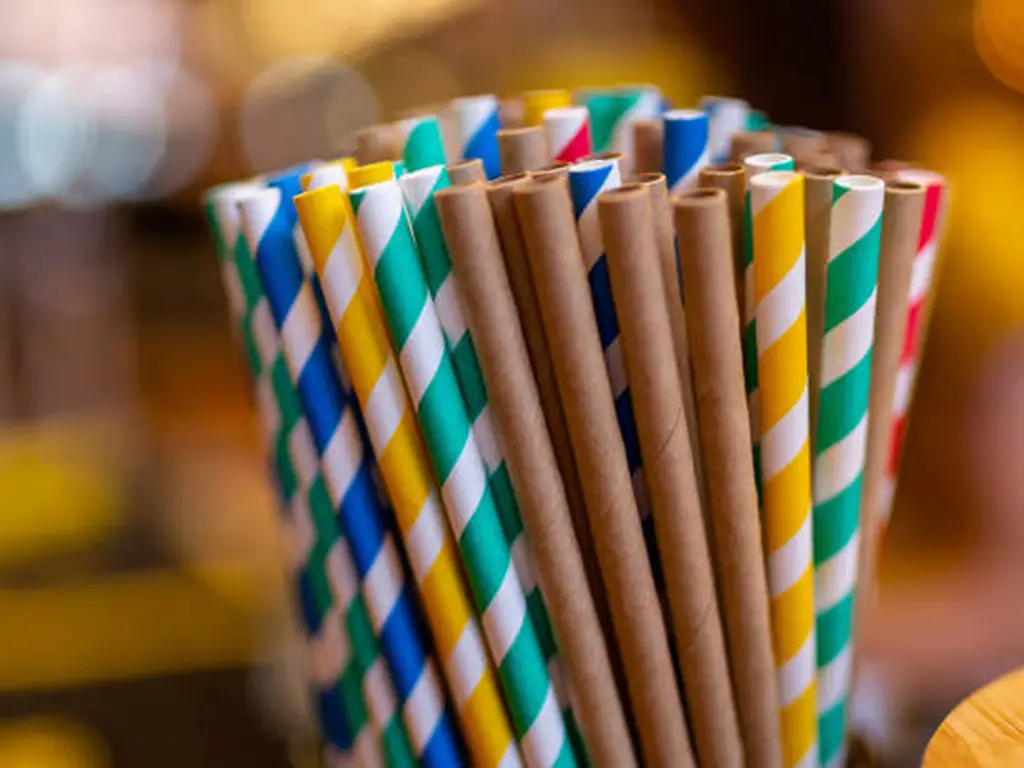
The Regulatory Shift Reshaping the Straw Market
In January 2025, Nigeria — Africa’s largest economy — banned single-use plastic straws nationwide. That same month, Dubai enforced the second phase of its plastic ban, pulling straws, cups, and food containers off the market. These aren’t isolated events. They’re the latest dominos in a global regulatory cascade that started with the EU’s Single-Use Plastics Directive in 2021 and has since swept through the UK, Canada, India, New Zealand, and dozens of other jurisdictions.
If you’re reading this, you’re likely weighing a switch — whether for compliance, customer perception, or both. The question is no longer if the market is moving away from plastic straws, but what you should switch to and how to make the math work for your business.
Here’s what the data says.
Environmental Impact — Decomposition, Pollution, and the Full Picture
Paper straws biodegrade in weeks to months; plastic straws persist for centuries. But the environmental scorecard isn’t as one-sided as it looks. Paper straws carry their own hidden costs that most sustainability marketing ignores.
Decomposition Timeline — Paper vs. Plastic Straws
The visible footprint tells a similar story: an estimated 8.3 billion plastic straws litter coastlines worldwide, according to a 2024 CleanHub marine debris analysis. Straws consistently rank among the top ten items collected during beach cleanups globally, despite representing only about 0.025% of ocean plastic by volume (CleanHub, 2024).
On the decomposition metric alone, paper is the clear winner. But biodegradability doesn’t tell the full environmental story.
Microplastics, Marine Pollution, and the PFAS Wildcard
The environmental case against plastic straws extends beyond visible litter. As polypropylene breaks down, it generates microplastics — particles smaller than 5mm that enter marine food chains. These particles have been detected in seafood, drinking water, and human bloodstreams. Only about 9% of all plastic ever produced has been recycled. The rest accumulates in landfills and oceans, or gets incinerated.
But paper straws have their own environmental liability: PFAS (per- and polyfluoroalkyl substances). A 2023 study from the University of Antwerp tested 39 straw brands across five materials and found PFAS in 90% of paper straw brands (18 out of 20). That’s a higher detection rate than plastic straws, which tested positive at 75% (Groffen et al., Food Additives & Contaminants, 2023). These “forever chemicals,” linked to liver damage, immune system disruption, and certain cancers, are believed to be added as water-repellent coatings.
Paper straws also carry physical penalties. They’re heavier and bulkier than their plastic equivalents, which means higher freight emissions per unit. When landfilled rather than composted, they decompose without oxygen and release methane — a greenhouse gas roughly 25 times more potent than CO₂.
Performance, Taste, and Safety — What Happens in Your Customer’s Drink
The performance gap between paper and plastic straws is real, measurable, and directly impacts your customer’s experience. But “paper” is not one monolithic category. Material quality, layer count, and coating technology create a wide performance spectrum.

Durability — Compressive Strength, Sogginess, and the 30-Minute Problem
A landmark 2019 study published in BioResources tested commercial paper and plastic straws under real-world beverage conditions. The findings were stark: all paper straws tested lost 70% to 90% of their compressive strength within 30 minutes of liquid contact. They absorbed liquid at approximately 30% of their own weight, with higher beverage temperatures accelerating the degradation (Gutierrez et al., BioResources, 2019).
Plastic straws, by contrast, maintained structural integrity throughout use in all test conditions.
For a business, these numbers translate directly into customer experience. A straw that collapses mid-drink isn’t just annoying. It’s a reason for a customer to choose a competitor next time. Consumer testing consistently shows that the ability to pierce a sealed cup lid without bending or breaking is the single most important factor influencing purchase intent. This is precisely where low-end paper straws fail first.
Quality, however, matters more than material. Premium multi-layer paper straws with advanced hydrophobic sizing can hold up for 60 to 90 minutes in cold drinks, easily covering a normal consumption window. The difference between a straw that fails at 5 minutes and one that lasts an hour comes down to paper grade, number of layers, bonding quality, and coating technology. For buyers, the rule is simple: never approve a bulk paper straw order without testing samples in your actual beverages.
Chemical Safety — PFAS, Coatings, and What “Food-Safe” Really Means
For food service businesses, chemical safety is a compliance baseline. The PFAS contamination documented in the Antwerp study isn’t just an environmental concern; it’s a direct food-contact safety issue. Perfluorooctanoic acid (PFOA), the most commonly detected PFAS compound in the study, has been globally banned since 2020 under the Stockholm Convention.
The root cause is straightforward: many paper straws use chemical coatings to resist liquid absorption. When those coatings contain PFAS, the “eco-friendly” straw becomes a vehicle for substances tied to serious health conditions. The contamination can come from intentional additives or from tainted manufacturing water.
This is where supplier certification becomes the buyer’s strongest defense. Food-contact certifications worth requiring:
- FDA 21 CFR — U.S. food contact safety standard
- EU Regulation (EC) No 10/2011 — European food contact materials framework
- BRCGS Packaging Standard — global food safety certification for packaging manufacturers
- LFGB — German food and feed code, widely recognized as a rigorous safety benchmark
A supplier that holds multiple of these certifications, and can back them with batch-level test reports, removes the guesswork. The presence or absence of these credentials is often the single most reliable indicator of whether a paper straw is actually food-safe.
The Real Cost of Straws — Unit Price Is Only the Beginning
The headline comparison is simple: plastic straws cost roughly $0.005 to $0.02 per unit at wholesale volumes, while paper straws run $0.02 to $0.05, about 2 to 4 times more per piece. But that comparison only works if you ignore freight, storage, replacement, and compliance risk. For a business buyer placing container-sized orders, total cost of ownership (TCO) is the number that actually matters.
| Cost Dimension | Plastic Straws | Paper Straws (Quality Tier) | Winner |
|---|---|---|---|
| Unit Price (per 1,000) | $0.50–$2.00 | $0.80–$3.00 | Plastic |
| Freight (per CBM) | Compact, efficient cartons | Bulkier, higher CBM per 1,000 units | Plastic |
| Storage & Shelf Life | 12–24 months, ambient | 6–12 months, dry storage required | Plastic |
| On-Floor Replacement | Minimal | Low-quality: staff may need to replace during service | Depends on quality |
| Regulatory Risk | Fines + market exclusion in 60+ countries | Compliant across all major regulated markets | Paper |
Here’s what the table doesn’t show at first glance: a seemingly cheaper per-unit quote can become 20% more expensive in landed cost if the supplier uses inefficient carton packing that drives up freight CBM (cubic meters). One industry sourcing guide puts it bluntly: “A quote that’s 10% cheaper per unit can cost 20% more in freight if cartons are inefficiently packed” (PaperStrawTech). For international buyers, landed cost is the only number worth comparing.
Storage adds another layer. Paper straws need dry, climate-controlled storage and have a shorter shelf life of 6 to 12 months versus 12 to 24 for plastic. For businesses in humid climates or with limited warehouse space, spoilage risk becomes a real line item.
Then there’s the variable that’s hardest to quantify: regulatory risk. A €0.005 plastic straw looks unbeatable on unit economics. Right up until your shipment gets refused at customs in a country with an active plastic ban. Or your largest café client tells you they’re switching suppliers to meet their ESG targets. When compliance risk is priced in, paper straws from a factory-direct, multi-certified manufacturer can end up as the lower-cost option on a program basis.
This is where supplier selection directly shapes your cost structure. A manufacturer holding eight international certifications — ISO 9001, ISO 14001, FDA, LFGB, BRC, and FSC among them — cuts the compliance burden for buyers serving multiple regulated markets. Add factory-direct pricing with no intermediary markup, free design support for custom branding, and flexible MOQs starting at a few thousand pieces, and the total cost equation shifts. Yoonpak, a paper packaging manufacturer with over 25 years of production experience, is this model in practice: multi-certification coverage combined with direct-from-factory economics that skip the hidden premiums built into distributor supply chains. The most reliable way to compare real costs is to request a quote with a full landed-cost breakdown. (Learn more about Yoonpak’s certifications)
Making the Right Choice for Your Business
After weighing the environmental data, performance benchmarks, and cost structure, the decision comes down to three questions.
For most businesses operating in regulated or regulation-bound markets, the direction is clear. Quality-certified paper straws, sourced directly from a factory that holds the certifications your markets require, represent the safest long-term procurement strategy. They remove the compliance gamble, satisfy customer expectations around sustainability, and — when sourced smartly — can match or beat the real cost of plastic on a total-cost basis.
If your decision points toward paper, the next step is finding a supplier that checks all the boxes: multi-certification, factory-direct pricing, performance-tested product, and the customization capability to match your brand. Yoonpak offers paper straws as part of a full food packaging portfolio, with free samples available within 48 hours, standard lead times of 25 to 35 days, and full OEM customization. One point of contact for quality assurance and cost control.
References
- CleanHub. “How Much Plastic Is in the Ocean?” 2024. cleanhub.com
- Groffen, T. et al. “Assessment of poly- and perfluoroalkyl substances (PFAS) in commercially available drinking straws.” Food Additives & Contaminants: Part A, Vol. 40, Issue 9, 2023. tandfonline.com
- Gutierrez, J. et al. “Evaluation of paper straws versus plastic straws.” BioResources, Vol. 14, No. 4, 2019. bioresources.cnr.ncsu.edu
- Yoonpak. About · Going Green · Products · Contact · Homepage



 English
  German
  Spanish
  Italian
  Dutch
Dutch  French