

Pizza Box Cardboard: What Pizza Boxes Are Made Of and How to Choose
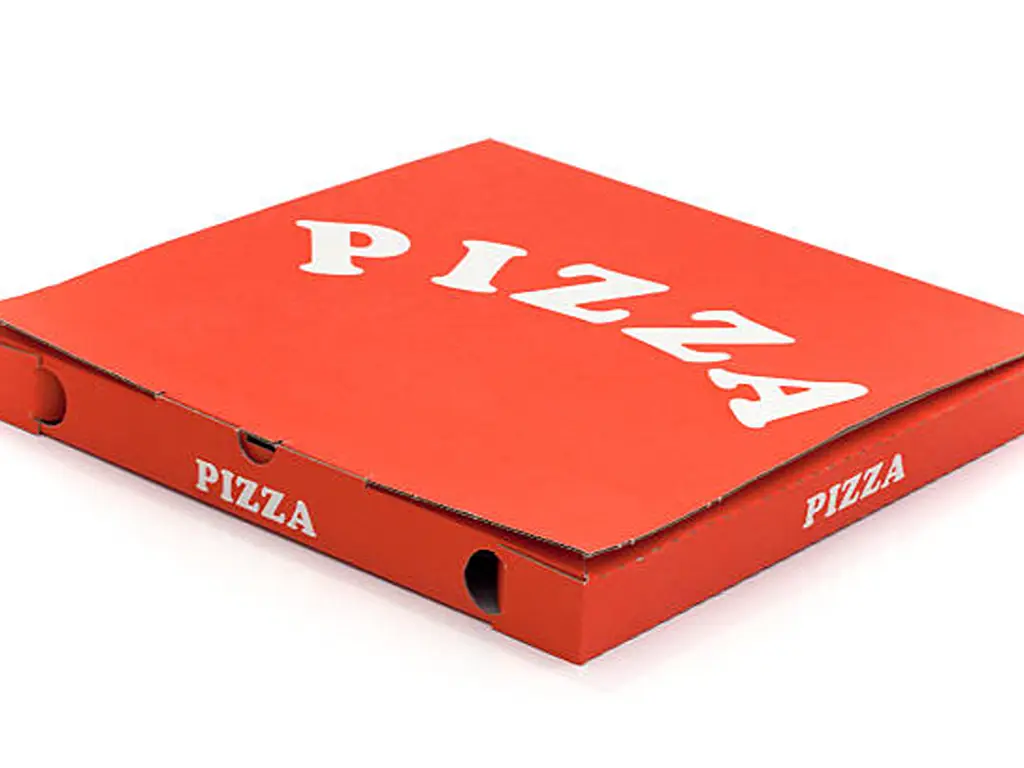
Every pizza you’ve ever carried home rode in the same unglamorous piece of engineering: a square cardboard box holding a round, hot, greasy, steaming pizza without collapsing, leaking, or sweating through. Ask what it’s made of, and you’ll get a one-word answer: cardboard. But that word hides three separate decisions, and each one decides whether the box arrives intact, whether it stays legal near food, and whether it can be recycled after one night.
The pizza box is really three stacked choices: the paperboard grade (what fiber it starts from), the corrugated structure (how that fiber is shaped), and the coating (what stands between the pizza and the paper). Get this mental model in place and the rest of this guide (sizes, grades, recycling, compliance, even how to buy them by the container) becomes a set of sub-questions.
What Is a Pizza Box Made Of?
Before anything else, the terms. People use “cardboard” and “corrugated” interchangeably, and the difference matters more than most people realize.
- Corrugated is the layered construction: a wavy fluted sheet sandwiched between two flat liners. That three-layer sandwich is what gives a pizza box its crush resistance: the waves act as columns, and the two flat faces spread the load.
- Cardboard is the umbrella word. Most pizza boxes are corrugated cardboard, but plain single-ply paperboard (one flat sheet, no waves) is also used for light loads like small snacks or mini pizzas.
- Paperboard is the specific name for that flat single-ply sheet.
So when someone asks “is a pizza box cardboard or paper?”, it’s paper, made into cardboard. The fibers are wood cellulose, usually a mix of new fiber from managed plantations and recovered fiber from recycled boxes. Corrugated is used because a pizza is the worst possible thing you can put in a box: hot, heavy in the center, dripping oil, and steaming. The fluted structure insulates against heat, the liners resist grease, and the whole assembly costs pennies.
Hold that thought: each of those three layers (base fiber, structure, coating) has its own decision attached. That’s what the next three sections unpack.
Paperboard, Corrugation and Fiber: The Building Blocks
Single-Ply Paperboard vs. Corrugated
The first structural decision is whether the box has waves at all. Single-ply paperboard is flat, cheap, and fine for lightweight items: pastries, sides, small snacks. Corrugated (the fluted sandwich) is what most pizza boxes use, and for a reason you can feel: push down on the center of an empty corrugated box and it springs back; the flutes are load-bearing columns.
Sizing follows load. Small 7–10 inch boxes for personal pizzas or sides can get away with single-ply paperboard. From 12 inches up, the weight of the pizza and the leverage of the lid make corrugated necessary, which is why the 12–16 inch boxes that dominate delivery are all corrugated. Double-wall corrugated (two fluted layers, three liners) exists but is reserved for heavy duty jobs like stacked shipments; a single pizza does not need it.
Flute Choice: E, B, and Everything Below
The waves inside corrugated have standardized heights, and that choice is the hidden spec most buyers never ask about. Two flutes dominate pizza boxes:
- E-flute: roughly 1.5–1.6 mm thick. Thin, light, and the default for pizza boxes and retail packaging; it prints well and keeps storage compact (105 Packaging, 2024).
- B-flute: roughly 3 mm thick. Roughly double the E-flute profile, with visibly better puncture resistance and stacking strength; used when boxes get handled hard or stacked high (105 Packaging, 2024).
In practice: a delivery-focused pizzeria on E-flute boxes trades a little rigidity for cost and storage space; a shop that stacks dozens of boxes in a hot delivery bag, or ships multiple pizzas per order, drifts toward B-flute. There is no “correct” flute for every operation; the correct one is the thinnest flute that survives your handling. That’s the question to ask yourself, not “what does everyone use.”
Flute Thickness at a Glance
E-flute ⭐ the default
1.5–1.6 mm
Thin, light, prints well, keeps storage compact. The everyday pizza box flute.
B-flute
~3 mm
Roughly double the profile: better puncture resistance and stacking strength for heavy handling.
Kraft, White, or Recycled Fiber
The base paper itself comes in three common identities:
- Kraft: unbleached brown paper. Strong for its weight, cheap, and the natural, eco-looking choice. Kraft’s rough surface also happens to hide minor grease staining well.
- White (SBS-style coated board): bleached and often clay-coated. Its real advantage is print quality: logos and colors pop on white in a way they never will on brown. White boxes are the default for branded chains that treat the box as advertising.
- Recycled fiber: made from recovered boxes. On average, corrugated board in the US contains about 50% recycled fiber (OCC) and 50% new fiber from sustainably managed forests (Fibre Box Association). Recycled content changes the sustainability story, but it also slightly softens strength and brightness, which is why it’s more common in liners than in flutes.
| Grade | Strength | Print Quality | Sustainability Story | Typical Cost |
|---|---|---|---|---|
| Kraft (unbleached brown) | High for its weight | Low — rough surface | Strong “natural” appeal | Lowest |
| White coated board | Good | Excellent — logos pop on white | Neutral | Higher |
| Recycled fiber (OCC) | Slightly lower | Medium | Strong circular story | Low |
One correction while we’re here: no paper grade is “food grade” by itself. That distinction belongs to manufacturing hygiene and coatings, which is exactly where the next section goes.
The Coating Decision: PE, PLA, Wax, or None
What the Coating Actually Does
Paper is cellulose, and cellulose is a sponge for two things every pizza produces: oil and steam. A coating is a barrier layer that stops grease from soaking through the board and keeps steam from turning the box soggy. Four options dominate:
- PE (polyethylene) lamination: the most common coating worldwide. A thin plastic film bonded to the inner board. Cheap, effective, completely leak-proof for oil.
- PLA lamination: a plant-based (usually corn-starch) polymer that does the same job but is designed to break down in industrial composting, where PE will not.
- Wax: the old-school barrier. Works, but waxed board is the hardest to recycle of the group and rarely used for new production.
- None: some boxes rely on high grammage and dense board alone, accepting that heavy grease will eventually stain through. Common in kraft boxes where a little oil bloom is acceptable.
The Recycling Paradox: Grease, Coatings, and the 10% Rule
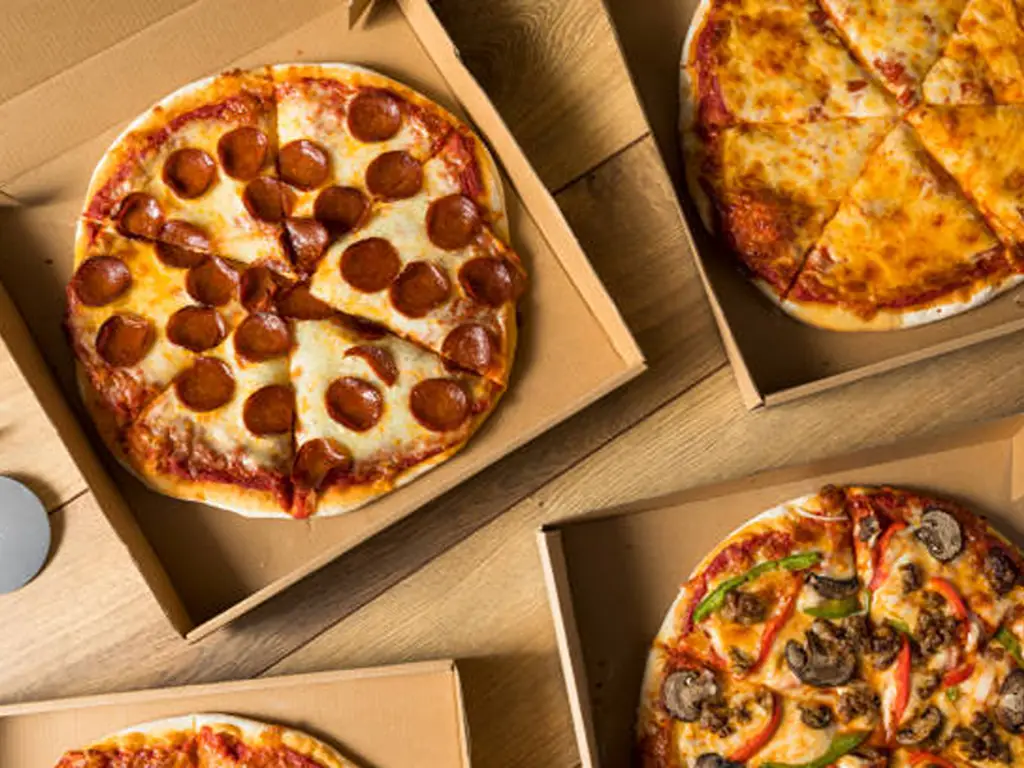
Here is where the popular wisdom and the data split. The old story, that “greasy pizza boxes can’t be recycled,” is half outdated. The paper industry’s own studies found that corrugated pizza boxes in the recycling stream carry about 1–2% grease by weight on average, and fiber quality only degrades meaningfully above roughly 10%, far above typical usage (Trellis / WestRock study, 2021; Waste Dive, 2022). The American Forest & Paper Association states that about 3 billion pizza boxes are used in the US each year (roughly 600,000 tons of cardboard), and that boxes with typical food residue are recyclable; the action that matters is emptying the box before binning it (AF&PA, 2023).
The recycling rule the label won’t tell you
10% by weight
Typical pizza boxes carry only 1–2% grease
Fiber quality holds below roughly 10% — grease is rarely the real recycling blocker. The coating is.
PE vs. PLA vs. None: The Real Trade-Off
PE wins on cost and performance; loses the sustainability story, because the box becomes a composite that complicates recycling.
PLA wins the narrative (compostable, plant-based, certified under BPI/DIN-style schemes) but costs more, and only composts where industrial composting facilities actually exist, which is still a minority of collection areas.
None is the honest minimum: fully recyclable, lowest cost, but you accept visible grease staining and occasional soak-through on heavy orders.
| Coating | Grease Protection | Recycling Impact | Composting | Cost |
|---|---|---|---|---|
| None | Stains through under heavy grease | Fully recyclable | Not applicable | Lowest |
| PE lamination | Excellent — leak-proof | Plastic film complicates pulping | No | Low |
| PLA lamination | Excellent | Plastic film complicates pulping | Industrial compost (BPI/DIN) | Higher |
| Wax | Good | Hardest to recycle of the group | No | Low (legacy) |
The trend is real: foodservice buyers are pushing the coating question hard, and suppliers are responding with PLA and coating-free alternatives alongside standard PE. For a pizzeria, the defensible move is to pick the coating that matches both your grease load and what your local recycling actually accepts, not what the packaging brochure claims.
Microwave and Oven Boundaries
One recurring consumer question deserves a straight answer: pizza boxes are microwave-safe for short reheats in most cases. The box won’t ignite in 60–90 seconds, and any coating must be food-contact compliant. The oven is a different story.
Microwave: fine for short reheats (60–90 seconds). Oven: never. Corrugated board chars and can ignite at typical oven temperatures around 200°C / 400°F, and waxed or PE-lined boxes are worse, not better. Reheat in the oven on a tray, not in the box.
If you’re reheating in the oven, transfer to a tray.
Specs and Food-Safety Compliance: What to Ask Before You Buy
If you buy pizza boxes in volume, you’ll eventually hear the phrase “food grade cardboard,” and here is the uncomfortable truth: that phrase is marketing shorthand, not a certificate. There is no “food-grade cardboard” certification for paper itself. What actually exists, and what you should ask for instead, is a stack of four different documents:
- Material compliance declarations: for the US market, FDA 21 CFR compliance statements covering food-contact paper and coatings; for Europe, EU 10/2011 migration test reports. These answer “is the material legal to touch food.”
- Factory system certifications: SQF, BRC, or ISO 9001/14001. These answer “is the plant clean and controlled enough to manufacture food packaging.” This is the closest thing to “food grade” that actually exists.
- Compostability certifications: BPI (US) or DIN (EU) for any box marketed as compostable.
- Market-specific requirements: LFGB (Germany) and other national rules that some importers and chains specifically demand.
Four rules of thumb when a supplier claims “food grade”:
- Ask for the document, not the adjective. A compliance statement or test report has a date, a standard number, and an issuer; “we’re food grade” has none.
- Don’t accept one market’s certification as proof for another. FDA compliance is not LFGB compliance, and neither is a compostability claim.
- Put the leak-proof and grease-resistance promises in writing, in the order confirmation, not just in the sales chat.
- Ask the size-and-spec questions in the same breath: paper grade, grammage, flute type, coating, size tolerances, and ink (food-safe soy or water-based inks for printed boxes).
Demand these from any pizza box supplier
- Material compliance declaration (FDA 21 CFR statement or EU 10/2011 migration report) with a standard number and an issuer
- Factory system certification (SQF, BRC, or ISO 9001/14001)
- Compostability certificate (BPI or DIN) if the box is marketed as compostable
- Market-specific documents (LFGB for Germany, for example)
- Grease-resistance and leak-proof commitments written into the order confirmation
- The specs: paper grade, grammage, flute type, coating, size tolerance, and ink type
If the supplier hesitates on any of these, treat that as the answer.
Where to Buy Pizza Boxes: Stock, Full-Container, or Custom
Local stock: restaurant supply shops and distributors with boxes on the shelf. Fastest (same day), no minimums, no customization. You pay retail-ish prices and your options are limited to what’s stocked: usually standard sizes in kraft or white.
Full-container import: buying directly from manufacturers overseas, typically in 20′ or 40′ containers. This is where unit costs drop dramatically. A 40′ container carries roughly 20,000–80,000 boxes depending on size and flute, but you take on freight, lead time, and the obligation to hold stock (Packaging industry forum discussion, 2024). Standard lead times for custom production typically run 3–6 weeks, and samples and digital proofs are part of the qualification process, not an extra.
Custom OEM: ordering printed, branded, or structurally customized boxes in volume. Customization changes the economics in both directions: your per-unit cost rises, but so does what you can charge, because a printed box is advertising.
| Route | Speed | Unit Cost | Customization | Who It Fits |
|---|---|---|---|---|
| Local stock | Same day | Highest | None — standard sizes only | Small volumes and urgent needs |
| Full-container import | 3–6 weeks | Lowest | Limited — your spec | Container volumes, cost-sensitive buyers |
| Custom OEM | 3–6 weeks plus proofs | Medium | Full — print, structure, size | Branded chains and importers |
The honest sizing rule for imports: if you’re not buying by the container (or close to it), local stock wins on total cost; freight eats the factory savings. If you buy in container volume, the factory price advantage is real. And if you need custom printing, the math flips again: print quality and brand value can justify shipping a container across an ocean, because nobody can buy that box down the street.
Sourcing Custom Pizza Boxes in Volume?
Compare specs, MOQ, and lead times from a manufacturer that prints and laminates in-house — before you commit to a supplier.
Request a pizza box quoteWhy Pizza Boxes Fail: Crushed, Greasy, Soggy, Stuck
Four common failures, and every one of them traces back to a spec decision made at purchase time:
| Failure | What You See | What It Means | What to Check |
|---|---|---|---|
| Collapse | Pizza pressed flat against the box wall or lid sagging onto the cheese | Flute too thin or grammage too low for the pizza weight and stacking | Ask for flute type and grammage; verify the box survives a stacked delivery-bag test |
| Grease bleed | Oil stains through the bottom within 30 minutes | No coating or coating mismatched to the grease load | Confirm coating type; require a grease-resistance commitment in the order |
| Soggy crust | Pizza steam softens the box and the crust | Ventilation holes missing or steam trapped inside | Check ventilation design; some boxes are designed for steam escape |
| Stuck cheese | Cheese welded to the box interior | Rough paperboard surface or missing inner treatment | Ask about inner surface treatment for the top liner |
| Recycling refusal | Local recycler rejects the whole batch | Grease or coating incompatible with the local stream | Match coating to what your local mill accepts; empty boxes before binning |
Each check is an action you can take before you sign an order: ask the flute, confirm the coating, get the document. That’s the difference between a spec you chose and a failure you inherited.
The Pizza Box Economy for Importers and Distributors
The Container Math
For importers and distributors, the pizza box business has one number that explains everything.
The pizza box shipping math
20,000–80,000 boxes per 40′ container
Freight: roughly $2,000 to a West Coast port, plus $3,500–6,000 inland — often more than the boxes themselves.
A 40′ container carries 20,000–80,000 boxes depending on size and flute, and the freight (roughly $2,000 to a West Coast port, then another $3,500–6,000 inland) frequently costs more than the boxes themselves (Packaging industry forum discussion, 2024). Blank kraft boxes are a commodity: the factory price is low, the freight is fixed, and the margin gets squeezed between the two. That is the economic reality that decides which boxes are worth importing and which are not.
Where the Margin Lives
The same math points to where the profit is. A blank box has no differentiation, so its price is set by everyone; a printed, specified, document-backed box is not available down the street, so its price is set by you. Three capabilities turn that into margin:
Custom printing: flexo and offset, CMYK and Pantone matching. A branded box converts a shipping container into mobile advertising, and it’s the justification that makes container economics work at all.
Complete documentation: FDA declarations, EU 10/2011 reports, SQF or BRC factory certification. Chains don’t buy from suppliers, they buy from documented suppliers; being the one who can produce the file on the spot wins the order.
Precise specification: being able to answer “which flute, which grammage, which coating, at what tolerance” without a pause. When a downstream customer asks why their boxes collapse, the distributor who can diagnose the spec is the one they reorder from.
The business lesson is the same at every level of this guide: the pizza box is a commodity only if you treat it as one. The boxes themselves cost pennies; the knowledge of what to ask for, and the proof that you asked, is where the value lives.
If you’re sourcing pizza boxes in volume and want to compare a supplier’s range and specifications, YoonPak’s pizza box product line is available online, with free design support, digital proofs within one working day, and samples shipped within 48 hours (YoonPak pizza box range, homepage).
Sourcing Pizza Boxes for Your Chain or Brand?
Free design support, digital proofs within one working day, and samples shipped within 48 hours — for kraft, white, or custom-printed pizza boxes at wholesale volumes.
Talk to our packaging teamReferences
- American Forest & Paper Association. “Pizza Boxes Already Recycled.” 2023. afandpa.org
- Fibre Box Association. “Pizza Boxes.” fibrebox.org
- Trellis. “The Grease and Cheese Study That Proved Pizza Box Recyclability.” 2021. trellis.net
- Waste Dive. “Domino’s and WestRock Launch Initiative to Boost Pizza Box Recycling.” 2022. wastedive.com
- Reddit r/PackagingDesign. “Good Grade Corrugated Cardboard.” 2024. reddit.com


 English
  German
  Spanish
  Italian
  Dutch
Dutch  French
  Portuguese
  Russian
  Arabic
  Korean