

If you run a pizzeria, the box you send out the door is the first thing your customer touches. Get the size wrong, and you are not just dealing with a logistical headache — you are compromising how the pizza arrives, how it tastes, and how your brand is perceived before the lid even opens.
Choosing the right pizza box size is not as simple as matching the box to the pizza diameter. There is a quiet logic behind every dimension: why boxes are slightly larger than the pizza, why depth matters as much as width, and why the 14-inch box quietly dominates the industry. This guide walks through everything you need to know — from the standard size chart to the operational and branding decisions that hinge on a few inches of cardboard.
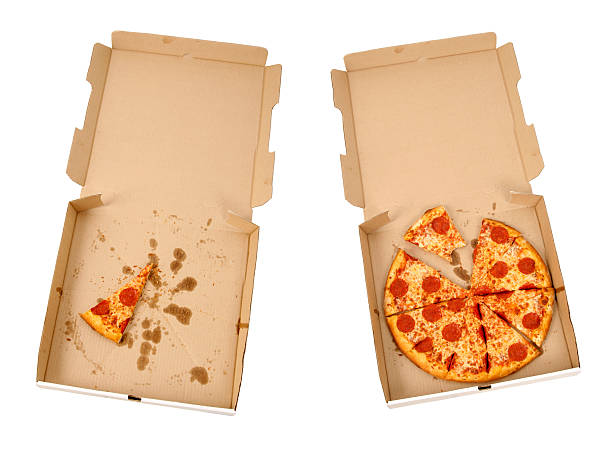
01. How Pizza Box Sizes Are Measured and Labeled
If you have ever stood in front of a supplier catalog wondering why the numbers do not match what you expected, you are not alone. The confusion comes from a simple disconnect: pizza is measured by diameter, but boxes are measured by length × width × height.
When a pizzeria says 12-inch pizza, they are talking about the diameter of the pie itself. The box, however, is labeled as something like 14 × 14 × 2 inches — slightly larger than the pizza on every side. That extra space is not wasted. It creates a thin air gap that allows steam to circulate without condensing directly onto the crust, which prevents the dreaded soggy-bottom effect. The industry sweet spot is roughly 0.5 to 1 inch of clearance per side. Less than that, and the pizza steams itself in an enclosed microclimate. More than 1.5 inches, and heat dissipates too quickly — your pizza arrives cold.
There is also a regional naming convention to be aware of. North American suppliers label boxes in inches (10 × 10 × 2 inches, 14 × 14 × 2 inches, and so on). European and Asian markets typically use centimeters — a 12-inch pizza box becomes 30 × 30 × 5 cm. If you are sourcing from an international supplier, specifying both units upfront avoids the kind of misunderstanding that leads to a container of boxes in the wrong size.
Think of it like buying shoes. You wear a size 10, but the shoebox is always a size or two larger. The gap is the design, not the mistake.
02. Standard Pizza Box Size Chart
Box sizes are not arbitrary. Each dimension corresponds to a specific pizza diameter, a typical number of slices, and a clear commercial use case. The table below covers the full spectrum, from single-slice boxes to catering-grade giants.
| Pizza Size Label | Box Dimensions (L × W × H) | Pizza Diameter | Typical Slices | Best For |
|---|---|---|---|---|
| Personal | 7 × 7 × 2 in (square) or 9 × 10 × 2 in (triangle) | 6–8 in | 1–2 | Kids’ meals, single slices, tasting portions |
| Small | 10 × 10 × 2 in | 9–10 in | 4–6 | Individual meals, add-on orders |
| Medium | 14 × 14 × 2 in | 12–14 in | 8–10 | Couple or small-group sharing; the industry’s most popular SKU |
| Large | 18 × 18 × 2 in | 16–18 in | 12 | Family takeout, group delivery |
| Extra-Large | 20 × 20 × 2 in or 24 × 24 × 2 in | 20+ in | 14–16 | Catering, parties, events |
For reference in metric markets: 1 inch = 2.54 cm. A standard 14-inch pizza box translates to roughly 36 × 36 × 5 cm in European labeling.
If you take away only one number from this chart, make it the 14-inch box. Across pizzerias of all sizes, the 14-inch box accounts for an estimated 60% or more of total box volume. It is the universal currency of the pizza industry — versatile enough for a couple’s dinner, sturdy enough for delivery, and cost-effective at scale.
03. Why Pizza Box Size Matters Beyond Just Fit
A box is not just a container. It is a micro-environment. Its dimensions directly control three variables that determine whether your pizza reaches the customer as intended — or as a disappointing shadow of what left the oven.
Ventilation, Moisture, and Crust Integrity
A pizza fresh from the oven releases steam for several minutes after it hits the box. If the box hugs the pie too tightly, that steam has nowhere to escape. It condenses on the lid, drips back onto the crust, and turns a crisp base into a wet sponge. Too much space, and the opposite happens — heat bleeds out too fast, and the pizza goes cold before it reaches the doorstep.
The sweet spot is about 0.5 to 1 inch of clearance on each side. This gives steam enough room to circulate and vent without losing too much heat. Ventilation holes punched into the lid help — they are not just a manufacturing detail but a functional part of the box’s thermal design. On a well-designed box, the vent pattern and the internal air volume work together, not against each other.
Delivery Protection and Structural Integrity
The larger the box, the larger the unsupported flat span across the lid — and the higher the chance of it collapsing under stacked orders. That is why pizza boxes above 18 inches almost always use B-flute or E-flute corrugated board. The thicker flute profile gives the flat lid enough beam strength to resist bowing.
Stacking adds another layer of stress. A standard 2-inch-deep box can safely carry 5 to 8 layers in a delivery bag before the bottom box begins to buckle. Past that, the weight compounds fast — the box at the bottom of an 8-box stack supports 6 to 10 pounds of pizza above it. If the board is too thin or the flute runs the wrong direction, the structure fails. A collapsed box is not a delivery accident. It is a sizing and material choice that went wrong the moment the order was placed.
Brand Perception and the Unboxing Moment
The fit of a box sends a message before the customer sees a single slice. A box that is too large makes the pizza look small — the customer’s first thought is “I paid for this?” A box that is too small compresses the pizza, smears toppings across the lid, and broadcasts carelessness. A box that fits snugly says something else entirely: someone thought about this.
Box size also dictates branding real estate. A 10-inch box gives you limited surface area for a logo. An 18-inch box is a billboard. But bigger is not always better — a logo needs roughly 40% of the lid surface as negative space to stay readable at a glance. Cramming a logo onto a small box or stretching it too thin across a large one both hurt visual impact. The right pairing of pizza size and box size makes the branding feel natural, not forced.
04. Common Pizza Box Materials at a Glance
Box dimensions are one half of the equation. The material you choose determines which sizes are actually available — and at what cost. Here is how the three most common pizza box materials map to size availability.
| Material | Typical Sizes Available | Key Trade-off |
|---|---|---|
| Kraft Corrugated (B-flute or E-flute) | All standard sizes, 7–24 in | Best cost-to-performance ratio; industry default for a reason |
| White Paperboard | 10–18 in; struggles above 18 in without composite reinforcement | Premium appearance and better print accuracy; higher cost; less structural rigidity at large sizes |
| Molded Fiber / Bagasse (plant-based) | 10–16 in; limited availability above 16 in | Strong eco-positioning; structural limits and lower production yields at scale |
The key takeaway: if you need 20-inch boxes, Kraft corrugated is your most reliable option. If sustainability is part of your brand story, molded fiber is available in small-to-medium sizes but has not yet scaled to cover the full spectrum. Before committing to a material, confirm with your supplier that the sizes you need are actually producible in that material — assumptions here lead to expensive last-minute compromises.
05. How to Choose the Right Pizza Box Size Mix for Your Pizzeria
There is no universal “best” pizza box size. But there is a best size mix for your specific menu, your customers, and how you operate. Think of it like stocking wine glasses — you would not serve every drink in the same glass, and you should not ship every pizza in the same box.
Match Box Sizes to Your Menu
Start with what you actually sell, not what a supplier catalog suggests. If your menu is built around personal-sized pizzas — think slice shops, walk-up windows, or fast-casual concepts — your core inventory should include 10-inch triangle slice boxes and 12-inch square boxes. You may never need anything above 14 inches.
If family takeout is your bread and butter, a three-tier gradient works well: 12-inch for smaller households, 14-inch as the everyday workhorse, and 16-inch for larger groups. Most pizzerias find that two sizes cover roughly 80% of orders — typically 12-inch and 14-inch — with a third size handling the remaining 20%.
For catering and event-focused operations, you need the opposite end of the spectrum: 16-inch as your baseline, 18-inch for standard group orders, and 20-inch for party portions. These larger boxes take up substantially more storage space, so do not stock them unless your order data justifies it.
- Count your pizza size SKUs on the menu
- Pull last 3 months of order data by size
- Match boxes to the top 2 sizes that drive 80% of orders
Read Your Customer Demand Patterns
Your point-of-sale system is the most honest box-sizing consultant you will ever have. Pull your last three months of order data and bucket every order by pizza size. The box ratio should mirror the pizza ratio almost exactly — with one adjustment: seasonal spikes.
Large and extra-large boxes see demand surges of 40% to 60% around major events — Super Bowl weekend, New Year’s Eve, graduation season. If you run lean on inventory, a single big weekend can wipe out your large-box stock and force you to ship 16-inch pizzas in 18-inch boxes, which makes the pizza look undersized and the brand look sloppy. Plan your ordering calendar around these peaks, not around your monthly average.
Triangle slice boxes deserve special mention. They are cheap — around $0.08 to $0.15 per unit at wholesale volumes — but their branding value per dollar is enormous. A slice box with your logo turns a walk-up customer into a walking advertisement for the length of a city block. If you operate a slice counter or walk-up window and are not using branded triangle boxes, you are leaving low-cost brand impressions on the table.
Factor in Storage and Delivery Logistics
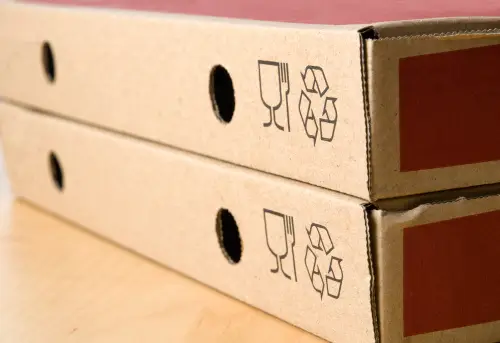
Pizza boxes take up real space — and not just in volume but in flat footprint. A 20-inch box, when laid flat, covers nearly 400 square inches. A 14-inch box covers roughly 196 square inches. Stocking the larger size means nearly doubling your storage footprint per box. If your back-of-house is tight, this matters.
Delivery bag compatibility is the other operational constraint. Standard delivery bags are 20 × 20 inches, which comfortably fits boxes up to 18 inches. If you sell a 20-inch or 24-inch pizza, confirm that your delivery bags can accommodate it — or be prepared to handle those orders with a separate transport solution.
On minimum order quantities: larger boxes are often ordered less frequently but in larger batches, which means more capital tied up in inventory. A typical independent pizzeria might order 14-inch boxes monthly but 20-inch boxes quarterly. Factor the carrying cost into your size-mix decision — it is easy to over-order large boxes and have them sitting in storage for months.
06. Custom Sizes, International Standards, and Special Shapes
Standard sizes cover most pizzerias. But what if your pizza is not standard? What if your customers are overseas? What if a square box does not match the brand you are building?
When Standard Sizes Are Not Enough — Custom Box Dimensions
There are good reasons to go custom. A heart-shaped pizza for Valentine’s Day. An extra-long rectangular pizza for a party. A signature shape that becomes part of your brand identity — think of the octagonal boxes Domino’s once used to stand out from every other square box on the block. Custom dimensions make these possible, but they come with real thresholds.
The tooling cost for a custom box shape — the cutting die — typically runs $200 to $500 as a one-time investment. After that, the recurring unit cost is comparable to standard boxes at volume. But “volume” is the operative word: most manufacturers set a minimum order quantity around 100,000 pieces per custom design. At the upper end, a manufacturer with production flexibility may negotiate this down to 10,000 pieces — especially if the buyer covers freight and accepts a slightly longer lead time. Lead times for custom boxes typically run 4 to 6 weeks, compared to 2 to 3 weeks for standard stock sizes.
The middle-ground approach — and the one most independent pizzerias take — is to keep standard box dimensions but invest in custom printing instead. A standard 14 × 14 × 2 box with a striking full-color print costs far less to produce than a custom-shaped box, and the branding impact is nearly as strong. You change the surface, not the structure.
For pizzerias exploring custom-sized packaging, it helps to work with a manufacturer that offers in-house design support and flexible MOQ terms. Some suppliers — particularly full-cycle manufacturers with their own die-cutting and printing equipment — can turn around a digital proof within one working day and ship physical samples within 48 hours, which dramatically shortens the decision-to-production timeline for custom projects.
US vs Europe vs Asia — Regional Size Standards
If you source pizza boxes internationally, the inch-versus-centimeter difference is only the beginning. Regional preferences around box size run deeper than unit conversion.
North America standardizes around inch-based square boxes: 10, 12, 14, 16, and 18 inches. The 14-inch and 16-inch formats dominate. In Europe, boxes are labeled in centimeters, and the size distribution shifts slightly smaller — 30 × 30 cm (roughly 12 inches) is often the best-selling format, reflecting the European preference for individual-sized pizzas over family-size sharing. Asian markets take this further: 8-inch to 10-inch boxes account for over half of all pizza box demand in markets like Japan and South Korea, where pizza is more commonly a personal meal than a shareable one. Box depth also tends to be shallower in Asian markets — 1.5 inches rather than the North American standard of 2 inches — reflecting thinner-crust styles and smaller topping loads.
For importers and multi-market operators, the practical rule is simple: always specify dimensions in both inches and centimeters on purchase orders, and never assume that a “medium” in one market means the same thing as a “medium” in another. The number on the spec sheet is the only version of “medium” that matters.
07. Eco-Friendly Pizza Boxes — What Sizes Are Actually Available
Sustainability in pizza packaging is no longer a niche interest — it is a growing purchasing criterion for restaurants and consumers alike. But the conversation usually stops at “cardboard is recyclable,” which is true but incomplete. The real question for a pizzeria owner is: which eco-friendly options are actually available in the sizes I need?
Here is the honest answer as of today. Standard Kraft corrugated boxes — the industry default — are recyclable and available in every standard size from 7 to 24 inches. This is the baseline. If you do nothing else, using uncoated Kraft boxes and educating customers to recycle them (clean, no grease-soaked sections) already puts you ahead of most.
The next tier up includes FSC-certified paperboard, PLA-coated boxes, and plant-fiber molded boxes made from bagasse (sugarcane waste). FSC-certified board is available across the full size spectrum — there is no dimensional limitation, since the certification applies to the raw material, not the box dimensions. PLA-coated boxes, which replace petroleum-based polyethylene with a plant-based water-resistant layer, are reliably available up to 16 inches. Above that, coating uniformity becomes harder to maintain at production speed, and most manufacturers cap their PLA-coated line at the 16-inch mark. Molded fiber boxes face the hardest size constraint: the injection-molding process used to form bagasse into box shapes limits the current producible range to roughly 10 to 16 inches.
The practical takeaway: if you run a small-to-medium pizzeria and want to go meaningfully greener, options exist. If you are a high-volume operator running 18-inch and 20-inch boxes, Kraft corrugated remains the most realistic eco-baseline — and choosing an FSC-certified Kraft supplier is the most impactful single upgrade you can make within current material constraints.
When evaluating any supplier’s eco claims, ask two specific questions: Is the board FSC-certified? And is the coating PLA-based or conventional PE? If the supplier cannot answer both, the “eco-friendly” label is marketing, not manufacturing.
References
- WebstaurantStore. “Pizza Box Sizes & Dimensions Guide.” 2024. https://www.webstaurantstore.com/article/952/pizza-box-sizes.html
- PackJing. “Pizza Box Sizes Guide: Types, Materials & Costs.” 2025. https://packjing.com/b-pizza-box-sizes/
- GMZ Packaging. “A Guide to Standard Pizza Box Sizes and Their Uses.” 2025. https://gmz.ltd/a-guide-to-standard-pizza-box-sizes-and-their-uses/
- FUSENPACK. “Top Pizza Box Size for Restaurants: What’s Most Popular?” 2025. https://www.fusenpack.com/blog/top-pizza-box-size-for-restaurants-whats-most-popular/
- YoonPak. “Custom Packaging — Paper Food Containers.” https://www.yoonpak.com/custom-packaging/
- YoonPak. “Going Green — Sustainable Food Packaging.” https://www.yoonpak.com/going-green/
- YoonPak. Official Website. https://www.yoonpak.com/





 English
  German
  Spanish
  Italian
  Dutch
Dutch  French
  Portuguese
  Russian
  Arabic
  Korean