

Can You Microwave a Paper Box? What the Label Doesn’t Tell You
In the hustle and bustle of modern life, the microwave has become a close friend for those who do not have enough time to cook by themselves. Quick meals? Leftovers? Fast food? It’s all “zap” and done. But, to be honest, have you ever paused before tossing that cardboard pizza box or takeaway box into the microwave? You might ask, “Can I microwave a paper box?” Sit back, and let’s explore this cozy mystery.
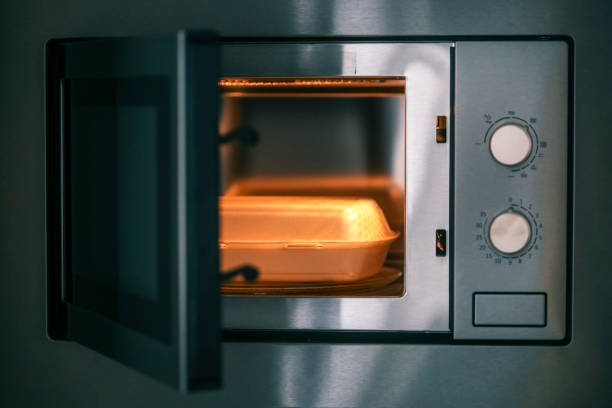
The Short Answer — Yes, But Only If the Box Checks These Boxes
Yes, you can microwave a paper box — but only if it’s explicitly labeled microwave-safe, contains zero metal parts, and has a food-grade heat-resistant coating like PP (polypropylene #5) or CPET rather than standard wax or polyethylene. If any of those conditions aren’t met, the answer is no.
In practice, here’s the three-second test: find the microwave-safe icon (wavy lines or a microwave symbol) on the bottom — if you see it, proceed with caution. If you spot anything metallic — handles, staples, foil trim — don’t even think about it. If the inside of the box looks shiny, glossy, or slick to the touch but has no microwave-safe symbol, assume it’s coated with something that shouldn’t be heated.
Most people assume a brown paper box is just paper. It’s not. Think of it like a sandwich — the paper you see is the bread. What’s sandwiched in between, the hidden coating layer, is what actually decides whether your box is microwave-friendly or microwave-dangerous. That’s what the rest of this article explains.
What Your Paper Box Is Actually Made Of — The Hidden Coating Layer
The paper box in your hand is almost never 100% paper. To hold hot, greasy, or wet food without turning into a soggy mess, it needs a barrier — and that barrier is what decides whether your box survives the microwave or turns into a health and fire hazard.
The Base — Kraft, Paperboard, and Molded Pulp
The paper part itself isn’t the problem. Pure cellulose — the plant fiber that makes up paper — handles temperatures up to roughly 400°F (204°C) without breaking down, well above anything your leftovers will reach in a microwave. The skeleton is fine. It’s the skin you need to worry about.
Most takeout boxes use one of three paper bases. Kraft paper — that familiar unbleached brown material — is strong, renewable, and naturally grease-absorbent, which is exactly why it needs a coating to hold wet food. Paperboard is the lighter, thinner stock used for Chinese takeout containers and fast-food cartons; it’s less sturdy and almost always lined. Molded pulp or bagasse — made from sugarcane fiber — is the outlier: naturally heat-tolerant, often uncoated, and generally the safest paper container you’ll encounter.
The Coating Decoder — PE, PLA, PP, Wax, and Water-Based Barriers
The coating is where things get real. Here’s what’s likely on the inside of your box, and whether it belongs anywhere near a microwave.
| Coating Type | What It Looks Like | Microwave Safe? | Heat Tolerance | Common In |
|---|---|---|---|---|
| PE (Polyethylene) | Glossy, slick, plastic-feel inner surface | ✗ No | Softens ~105–115°C (221–239°F) | Most standard takeout boxes, noodle cartons |
| PLA (Bioplastic) | Smooth, sometimes slightly cloudy, labeled “compostable” | ⚠ Rarely — check label | Deforms ~55–60°C (131–140°F) | Eco-branded takeout, compostable containers |
| PP (#5 Polypropylene) | Smooth but not waxy, typically labeled microwave-safe | ✓ Yes | Melts ~160°C (320°F) | Higher-end microwave-safe paper boxes |
| Wax (Paraffin/Beeswax) | Waxy to the touch, slightly tacky surface | ✗ No | Melts ~60–70°C (140–158°F) | Bakery boxes, some paper cups |
| Water-Based Barrier | Matte, paper-like feel, no shine | ✓ Yes (new gen) | Up to 200°C+ | Premium eco-packaging, PFAS-free certified boxes |
Here’s the practical takeaway: a shiny, glossy interior is almost certainly PE or wax — keep it out of the microwave. A matte, rough-feeling interior could be uncoated paper, bagasse, or a water-based barrier — check for a microwave-safe icon to be sure. If the box says “compostable” and the inside is smooth, it’s probably PLA-lined. PLA’s heat tolerance is actually worse than PE’s, so don’t assume “plant-based” means microwave-friendly.
How to Tell If YOUR Box Is Microwave-Safe in 10 Seconds
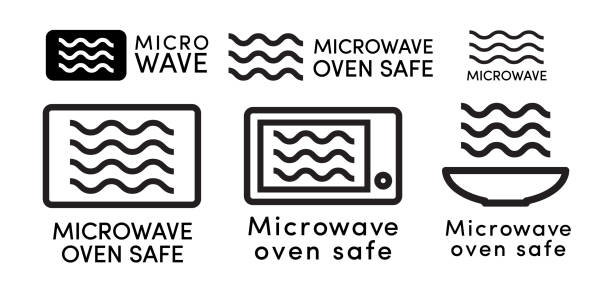
Stop reading for a moment. Pick up the box in front of you. Do this:
Step 1 — Flip it over. Look at the bottom for a microwave-safe symbol: wavy horizontal lines, or a small microwave icon with wavy lines inside it. If you see it, the box has been tested for microwave use. Green light — proceed.
Step 2 — Scan for metal. Metal handles on a Chinese takeout container. A hidden staple at a seam. A foil-printed logo. Any metal at all? Red light — do not microwave. Metal reflects microwaves, creating electrical arcs that can spark a fire in seconds.
Step 3 — Touch the inside. Run your finger across the interior surface. Shiny and slick? That’s a coating — likely PE or wax, and without a microwave-safe label, it’s a red light. Matte and rough, like uncoated paper? Yellow light — short heating may be fine, but transfer to glass if you can.
A critical distinction most people miss: a compostable certification logo (like the BPI seedling symbol) is not the same thing as a microwave-safe logo. One tells you the box will break down in a commercial composting facility. The other tells you it won’t break down in your microwave and leach chemicals into your dinner. They’re unrelated. And the recycling number inside the chasing-arrows triangle (#1 through #7) tells you about recyclability, not microwave safety — the #5 PP symbol on a plastic yogurt tub doesn’t mean your paper box’s PP coating is thick enough to handle 1,000 watts.
The Dangers You Can’t See — Chemicals, Coatings, and Fire Risks
Here’s the uncomfortable truth: even if your paper box doesn’t spark or catch fire, the heat from microwaving can set off chemical reactions you’ll never see — and those are the ones that matter most for your long-term health.
Chemical Migration — When Heat Turns Coatings into Contaminants
Heat accelerates chemical migration. This isn’t speculation — it’s physics. For every 10°C increase in temperature, the rate at which chemicals migrate from packaging into food roughly doubles. That glossy PE lining keeping your orange chicken from leaking through the box? At microwave temperatures, the polymer matrix begins to loosen, and its components — additives, low-molecular-weight oligomers, residual processing chemicals — start moving into your food.
Some paper boxes carry an older, more persistent problem: PFAS (per- and polyfluoroalkyl substances), the “forever chemicals” once widely used to make paper packaging greaseproof. PFAS don’t stay in the box. They migrate. And once they’re in your body, they stay — with biological half-lives ranging from 2 to 8 years depending on the specific compound, according to EPA and CDC data. If your takeout box comes from a restaurant that hasn’t updated its packaging supply chain in the last few years, it may still contain PFAS-treated paper.
Even newer boxes carry risks. Recycled paperboard — common in pizza boxes and takeout cartons — can contain mineral oil residues (MOSH and MOAH) from the original printing inks. Heat those residues in a microwave, and they migrate into whatever’s touching the cardboard.
The scope of the problem is bigger than most people realize. In a 2024 investigation, Consumer Reports tested nearly 100 packaged foods across the US market and found bisphenols in 79% of samples and phthalates in nearly every product tested — findings that held regardless of packaging type, which tells you how pervasive chemical migration has become in the modern food system. As the Food Packaging Forum notes, chemical migration from food contact materials increases significantly at higher temperatures — and manufacturers themselves often don’t know or won’t disclose the full chemical composition of the materials they put on the market.
Fire Hazard and Structural Failure — When the Box Loses the Fight
Chemical risks are invisible. Physical risks announce themselves.
The most common microwave fire starter isn’t a metal fork — it’s the tiny wire handle on a Chinese takeout box. Those handles are metal. They spark. They ignite dry paper. And paper burns at roughly 451°F (233°C) — a temperature easily reached if there isn’t enough food in the box to absorb the microwave’s energy.
An empty or nearly-empty paper box in a 1,000-watt microwave can hit its ignition point in two to three minutes. Even with food inside, a high-fat meal — fried chicken, cheese-covered pasta, anything oily — can create local hot spots exceeding 150°C (300°F), well above the melting point of wax and PE coatings. When a coating melts, the paper loses its waterproofing. Moisture from the food soaks through. The box softens, sags, and eventually collapses — spilling scalding food across the microwave turntable.
How to Safely Microwave a Paper Box — Step by Step
You’ve confirmed your box is microwave-safe. Now the question isn’t “can you” — it’s “how should you.” Because even a certified microwave-safe box can fail if you treat the microwave like a set-it-and-forget-it appliance.
Before You Press Start — The Pre-Microwave Checklist
Four things to do every time:
- Open the vent. Never microwave a sealed paper box. Steam builds pressure — enough to pop seams, warp lids, or splatter food everywhere. Leave a corner of the lid open, or poke a small hole in the top.
- Spread the food evenly. A pile of rice in the center of the box will heat unevenly. The edges overcook while the center stays cold. Spread it in an even layer.
- Remove the plastic lid. That clear lid on top of your takeout container is almost certainly not the same material as the box underneath. It’s usually PET or PS — neither of which is microwave-rated. Remove it entirely.
- Put a plate underneath. If the box does fail, you want the spill contained.
During Microwaving — Time, Power, and Stirring
Three rules for the actual heating:
Short bursts, not long runs. Microwave in 30–60 second intervals rather than one continuous blast. After each interval, take the box out, stir the food, and check the container. Total continuous heating shouldn’t exceed two minutes before a pause.
Use medium power. Most microwaves have power levels for a reason. The “50% power” setting doesn’t actually emit weaker microwaves — it cycles the magnetron on and off (e.g., 15 seconds on, 15 seconds off). This gives heat time to distribute through the food instead of concentrating in hot spots that can scorch the paper.
Watch fatty and sugary foods. Oil, cheese, sugar — these absorb microwave energy more aggressively than water. If you’re reheating something greasy or sweet, cut the power to medium-low and keep intervals short. A pool of hot oil at the bottom of a paper box can reach temperatures that degrade even PP-coated surfaces.
When in Doubt, Don’t — Smarter Alternatives and What Manufacturers Actually Recommend
Most takeout paper boxes aren’t microwave-safe. That’s the honest reality. The industry is shifting — better coatings, cleaner materials, stricter certifications — but the box in your hand right now probably wasn’t designed for your 1,200-watt microwave.
The Safest Option — Transfer to Glass or Ceramic
Glass and ceramic are inert. They don’t react with food at any temperature your microwave can produce. They don’t leach chemicals. They don’t have hidden coatings. A glass bowl adds 30 seconds of effort and one dish to wash. In exchange, you eliminate every variable: no mystery coatings, no PFAS residue, no metal surprises, no structural failure.
If you’re committed to using disposable containers, look for bagasse molded fiber boxes — made from sugarcane pulp, naturally heat-tolerant up to roughly 200°C, and typically uncoated or treated with a water-based barrier rather than plastic. These are the exception to the “transfer it out” rule, but even they have limits: keep heating under five minutes and never run them empty.
What Packaging Manufacturers Actually Do — How a Box Earns Its Microwave-Safe Badge
The “microwave-safe” icon on the bottom of a paper box isn’t a marketing sticker. It’s the visible tip of a deep compliance iceberg — and understanding what’s underneath it changes how you read that label.
Before a paper box can legally carry that wavy-line symbol, its manufacturer has to make a series of deliberate choices. First, material selection: food-grade virgin paperboard, not recycled stock that may carry MOSH/MOAH residues from upstream printing inks. Certified suppliers — the equivalent of Stora Enso or SUN PAPER in the industry — provide chain-of-custody documentation for every roll. Second, coating formulation: a water-based acrylic barrier or a certified PP (polypropylene #5) extrusion rather than commodity PE or wax. The coating is applied under controlled thickness and cured to full polymerization — incomplete curing leaves residual monomers that migrate at lower temperatures.
Then comes testing. A microwave-safe claim isn’t verified by putting one box in one microwave for 30 seconds. The standard protocol involves multiple samples, multiple power levels (typically 800W and 1,000W), and food simulants — water, 3% acetic acid, 10% ethanol, and olive oil or a synthetic fat simulant — heated for two to three minutes. After heating, the box is checked for structural integrity (no blistering, delamination, or softening), overall migration limits per FDA 21 CFR 176.170 or EU 10/2011, and sensory qualities — no off-odors, no taste transfer to the simulant. In Europe, additional LFGB §30/31 testing verifies that the box meets German food-contact standards, which are among the strictest in the world.
The full certification stack a reputable manufacturer maintains — BRC Global Standard for Packaging (Issue 6), ISO 9001 for quality management, ISO 14001 for environmental management, plus product-specific FDA and EU compliance letters — isn’t window dressing. It means every batch ships with documented evidence that the box was made under controlled conditions by a facility that external auditors have walked through and signed off on.
These are the things to look for behind the label. A box from a manufacturer certified under BRC, FDA, and LFGB standards — like YoonPak, a paper packaging supplier with a full in-house manufacturing chain and a certification matrix covering ISO 9001, BRC, FDA, and LFGB — carries a different level of assurance than a generic unbranded takeout container from an unknown source. You can learn more about what certified packaging manufacturing looks like on their about page, or explore custom microwave-safe packaging options if you’re sourcing for a foodservice business.
The 3-Second Rule for Next Time
You’ve read nearly 2,000 words. Here’s what actually matters when you’re standing in front of the microwave with a paper box in your hand:
If it has the microwave-safe icon and no metal — you’re good. Follow the short-burst, medium-power, vented-lid rules above.
If it has no label but looks and feels like plain, uncoated paper — a quick 30 seconds is probably fine, but a glass bowl is still the smarter move.
If it has any metal, any glossy interior, or you simply can’t tell what it’s made of — don’t gamble. Transfer the food to a microwave-safe dish. The 30 seconds you save by microwaving the box aren’t worth a lifetime of accumulated chemical exposure you can’t undo.
Next time you open a takeout box, you’ll know — in the time it takes to close the fridge door — whether it belongs in the microwave or on a plate. That’s not paranoia. That’s just knowing what’s between the layers.
References
- Consumer Reports. “The Plastic Chemicals Hiding in Your Food.” February 2024. https://www.consumerreports.org/health/food-contaminants/the-plastic-chemicals-hiding-in-your-food-a7358224781/
- Food Packaging Forum. “Novel Food Contact Materials — Chemical Safety.” 2025. https://foodpackagingforum.org/resources/background-articles/novel-fcms
- PMC/NIH. “Fluorocarbons (PFAS) — The Forever Chemicals.” 2024. https://pmc.ncbi.nlm.nih.gov/articles/PMC10886393/
- Michigan Department of Health & Human Services. “PFAS Half-Life Data.” 2022. https://www.michigan.gov/mdhhs/-/media/Project/Websites/mdhhs/Safety-and-Injury-Prevention/Environmental-Health/Health-Care-Providers/5-12-2022_Half-life2_Final.pdf
- U.S. Food and Drug Administration. “Phthalates in Food Packaging and Food Contact Applications.” https://www.fda.gov/food/food-additives-and-gras-ingredients-information-consumers/phthalates-food-packaging-and-food-contact-applications
- YoonPak. “About Us.” https://www.yoonpak.com/about/

 English
  German
  Spanish
  Italian
  Dutch
Dutch  French