

How to Keep Ice Cream from Melting — Why Your Cup Matters More Than Your Cooler
Few things collapse a summer moment faster than watching a scoop of ice cream dissolve into a puddle before anyone’s had a chance to finish it. The instinctive fix is always external — grab a cooler, pack more ice, find shade. But the engineering truth runs counter to that instinct: the single most influential variable in how fast ice cream melts isn’t the environment around the container. It’s the container itself.
This guide bridges the gap between consumer advice and packaging science, walking through why ice cream melts, which container designs slow the process at a physical level, and what to look for when sourcing cups engineered to buy you extra minutes.
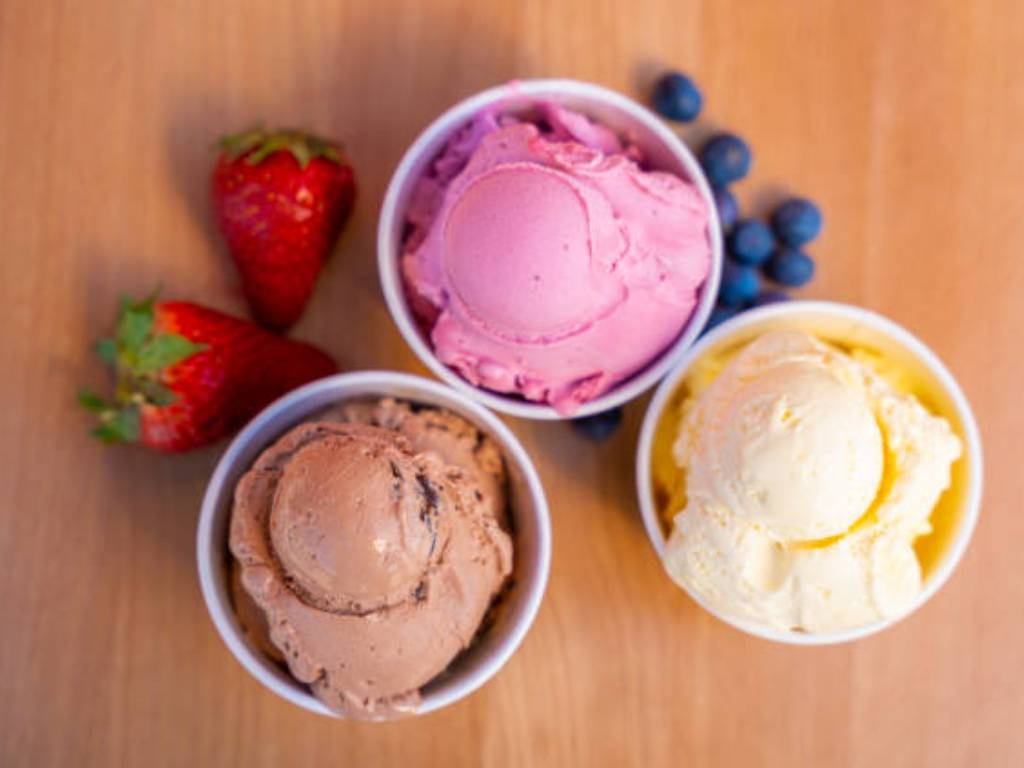
01 The Science of Why Ice Cream Melts
Ice cream isn’t a simple frozen block. At the microstructural level, it’s a three-phase system: ice crystals suspended in a concentrated sugar solution, stabilized by a network of partially coalesced fat globules, with air cells dispersed throughout. Premium ice cream typically contains 25–50% air by volume (known as overrun); economy products can exceed 100%, and more air means faster melting because air is a poor thermal mass — it warms quickly and accelerates ice crystal collapse.
Heat enters ice cream through three pathways simultaneously: conduction (direct contact with a warm hand or countertop), convection (ambient air circulating around the cup), and radiation (sunlight or radiant heat from nearby surfaces). Of these, convection is the dominant threat in most real-world scenarios — still air at 30°C can transfer enough energy to begin visible melting at the surface within 90 seconds.
The critical temperature window is narrow. Ice cream is stored at -18°C (0°F), but ice crystal recrystallization — the process that produces that gritty, refrozen texture — begins around -12°C. Visible melting appears between -5°C and 0°C. Every degree you can keep the product below that threshold extends its life. The question isn’t “how do I stop melting entirely” — it’s “how do I slow heat transfer enough to buy the time I need.”
02 Your Container Is Your First Line of Defense
Most people reach for external cooling — ice packs, coolers, dry ice — before considering the vessel that’s literally in contact with the ice cream. But thermally, that vessel is the first barrier between the product and ambient heat. Change the container, and you change the melt rate. Here’s why.
How Insulation Works at the Cup Level
Every material has a thermal conductivity value — a measure of how readily it transmits heat. The lower the number, the better the insulator. At standard temperature and pressure (25°C), paperboard used in food cups has a thermal conductivity of approximately 0.05 W/(m·K) (Thermtest, 2021). Still air — just the air trapped in a gap — measures 0.026 W/(m·K), roughly 48% lower. This is the physics that makes double-wall cups work: the insulating layer isn’t the paper — it’s the static air gap between two paper layers.
The relationship is straightforward. A single-wall paper cup has one paper barrier, roughly 0.3–0.5mm thick depending on the board weight (typically 250–350 gsm). Heat passes through it in seconds. A double-wall cup adds a 0.5–1.5mm air gap between two paper layers — and since still air conducts heat half as efficiently as paperboard, the combined structure offers roughly 2–3 times the thermal resistance of a single wall. A ripple-wall cup goes further: the corrugated outer layer creates multiple discrete air pockets rather than a single gap, producing the lowest effective thermal conductivity of any disposable cup structure.
Translation: a single-wall cup is a T-shirt. A double-wall cup is a down jacket. The difference isn’t marginal — it’s multiplicative.
Everyday Containers You Already Own That Help
If you’re solving a one-off problem — transporting ice cream from the store or serving at a party — you can apply these principles with what’s on hand. A pre-chilled stainless steel double-wall tumbler mimics the vacuum-insulated design of a thermos, virtually eliminating conductive heat transfer through the walls (though the open top remains a convection vulnerability). A foam cup (expanded polystyrene, or EPS) derives its insulative performance from the same mechanism as a ripple paper cup — air trapped in a solid matrix — with EPS containing roughly 90% air by volume. A thick paper cup paired with a corrugated sleeve creates a field-expedient double-wall system: the sleeve adds an air gap plus an extra layer of cellulose fiber, effectively building a two-stage thermal barrier on the fly.
These consumer solutions work for 30–90 minutes. But they all share a limitation: they’re retrofits. The container was never designed for ice cream in the first place. If you’re an ice cream brand, a QSR chain, or a gelato shop — people whose business depends on those extra minutes — the conversation shifts from “what can I add to the cup” to “what should the cup be.”
03 Popular DIY Methods — What Works and What Doesn’t
If you’ve searched for how to keep ice cream from melting, you’ve seen the same list everywhere. The methods are familiar. Their actual effectiveness, ranked from least to most useful:
- ❌ Towel or newspaper wrap. A towel feels like insulation because it’s thick, but fabric fibers are poor thermal barriers — they create air channels that actually speed up convective heat exchange once the towel warms to ambient temperature. A towel wrap buys you maybe five extra minutes. The psychological comfort exceeds the physical effect.
- ⚠️ Ice packs in a regular bag. Ice packs work — for about 30–45 minutes. After that, the packs themselves warm up, and a room-temperature gel pack pressed against your ice cream container becomes a heat source, not a heat sink. The bag’s lack of insulation means ambient heat is attacking from all sides simultaneously. This is fine for a short drive home, inadequate for anything longer.
- ✅ Pre-chilled cooler with ice packs. The pre-chill step is the difference-maker that most people skip. A cooler that starts at room temperature wastes its first 20–30 minutes absorbing ambient heat before it begins protecting the contents. Chill the cooler for an hour beforehand, pack ice cream at the bottom (cold air sinks), surround with frozen packs on all sides, and you’ve got a reliable 2–4 hour window.
- ✅️✅️ Dry ice in an insulated container. Dry ice sublimates at -78.5°C, maintaining subzero temperatures for 6–12 hours. It’s the gold standard for long-haul transport. The practical trade-offs: it requires gloves to handle, the container must be vented (CO2 buildup in a sealed box is dangerous), and it’s overkill for anything under two hours.
Notice what all these methods have in common: they treat the container as a neutral vessel and add layers around it. The engineering question — what if the container itself were the insulation layer? — is almost entirely absent from the DIY conversation. And that’s exactly where the biggest leverage lives.
04 How Paper Cup Engineering Slows Melting
A paper ice cream cup is not just “paper folded into a cylinder.” It’s a designed thermal system with three interdependent engineering layers: wall structure, inner lining, and lid seal. Each one contributes to — or undermines — how long the contents stay frozen.
Double-Wall and Ripple-Wall — The Air Gap Advantage
The fundamental insulation mechanism in a paper cup is the static air layer. A single-wall cup provides one paper barrier — total thickness roughly 0.3–0.5mm, thermal resistance minimal. A double-wall cup separates two paper layers with a 0.5–1.5mm air gap, and since still air’s thermal conductivity (0.026 W/(m·K)) is roughly half that of paperboard (0.05 W/(m·K)), the combined structure delivers 2–3× the thermal resistance of a single wall.
A ripple-wall cup pushes this further. The corrugated outer layer isn’t just cosmetic texture — it creates a pattern of discrete air pockets rather than one continuous gap, further suppressing convective currents within the wall. In standardized testing with 95°C liquid, double-wall paper cups maintained outer wall temperatures approximately 24–27°C lower than single-wall cups over a 30-minute test period — a ~60% improvement in insulation performance (YRPak thermal testing, 2025). For cold applications like ice cream, the same physics applies in reverse: ambient heat takes 2–3× longer to penetrate the cup wall.
What this means in practice: fill a single-wall cup and a double-wall cup with ice cream, place both in 30°C ambient air, and the double-wall cup delays visible surface melting by roughly 40–60% longer. The science isn’t complicated — it’s just physics that most people never connect to their melting-ice-cream problem.
PLA vs. PE Lining — More Than Just Eco-Friendly
Every paper cup needs an inner coating to prevent liquid from saturating the paper fibers. The two dominant options are polyethylene (PE) and polylactic acid (PLA).
PE has been the industry standard for decades. It’s applied in a layer just 0.012–0.02mm thick, melts at 105–115°C, and provides reliable waterproofing at low cost. Its contribution to thermal insulation, however, is negligible — at that thickness, the coating’s thermal resistance barely registers.
PLA, derived from corn starch or sugarcane, is widely marketed as the “green” alternative. But its thermal properties are worth paying attention to independently of the sustainability story. PLA melts at 150–160°C — roughly 40–50°C higher than PE — and its heat deflection temperature (HDT) sits around 50–60°C versus PE’s 40–50°C. In high-heat environments (a loading dock in July, the back of a delivery van), PLA’s greater thermal stability means the inner lining is less likely to soften and compromise the cup’s structural integrity. A cup wall that stays rigid maintains its air gap; a wall that softens collapses that gap and accelerates heat transfer.
To be clear: the coating’s primary job is leak prevention, not insulation. Coatings contribute less than 5% to a cup’s total thermal resistance. But when selecting between PE and PLA for ice cream applications, the higher thermal ceiling of PLA provides a meaningful secondary benefit — and the plant-based origin aligns with the sustainability positioning that ice cream brands increasingly rely on.
The Lid Matters More Than You Think
The most underappreciated component of ice cream packaging thermodynamics is the lid. An open cup loses cold through a continuous convection cycle: cold, dense air sinks out of the cup; warm ambient air rushes in to replace it; the ice cream surface absorbs this warmth; the cycle repeats. This convection loop can account for a significant share of total heat gain, particularly in moving air (near a fan, in a vehicle with AC running).
A sealed lid breaks this cycle. Testing consistently shows that a well-fitted lid reduces convective heat exchange at the cup opening by an estimated 60–80% compared to an open cup. Dome lids — the raised, rounded design common on iced coffee cups — offer an additional advantage: the extra headspace captures condensation and prevents it from dripping back onto the ice cream surface, preserving both texture and visual appeal. For ice cream specifically, a flat lid can create a micro-environment where condensate pools and refreezes as an icy skin on the product surface. A domed lid eliminates this by keeping condensate suspended.
The lid isn’t an accessory. It’s the third leg of the thermal tripod.
The three elements don’t exist in isolation, and that’s the point: double-wall structure, PLA lining, and sealed dome lid form a system, not a feature list. When all three are present in a single cup — an air-gap-insulated wall slowing conductive heat transfer, a thermally stable plant-based lining maintaining structural integrity, and a domed lid suppressing the convection cycle — the combined effect on melt rate is meaningful and measurable. Manufacturers running full-cycle in-house production, where flexo and offset CMYK/PMS printing through die-cutting to automated forming happen under one roof, can engineer these three elements to work together at the design stage rather than bolting them on afterward. One such manufacturer, YoonPak, produces double-wall and ripple-wall paper cups with PLA or PE lining across sizes from 4oz to 20oz, with leak-proof side-seam sealing and hourly QC traceability — meaning the insulation isn’t a happy accident, it’s built into the cup from the board up. If you’re sourcing ice cream cups at volume, the right question isn’t “does this cup have an air gap?” It’s “was the air gap designed into the cup, or did it just happen?”
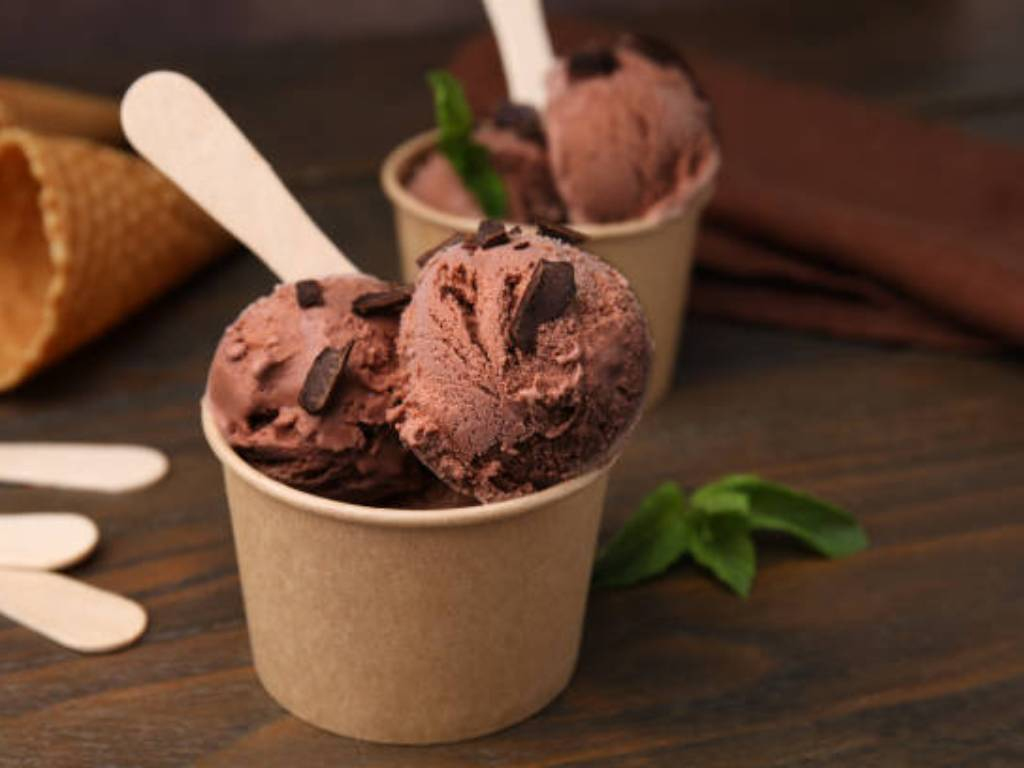
05 Material Showdown — Paper vs. Plastic vs. Foam for Ice Cream
When selecting a container, the decision isn’t about which material is “best” in the abstract. It’s about which material performs best across the four dimensions that matter for ice cream service: thermal insulation, leak resistance, brand printability, and environmental responsibility. No single option wins every category.
Thermal Performance by Material Type
| Container Type | Insulation | Leak Resistance | Brand Print | Sustainability | Rel. Cost | Best For |
|---|---|---|---|---|---|---|
| Single-wall paper cup | ★★ | ★★★ | ★★★★★ | ★★★★ | $ | In-store service, short hold times (<15 min) |
| Double-wall / ripple paper cup | ★★★★ | ★★★ | ★★★★★ | ★★★★ | $$ | Takeaway, delivery, outdoor events (30–90 min) |
| EPS foam cup | ★★★★★ | ★★★ | ★ | ★ | $$ | Maximum insulation, low brand priority |
| PET / PP plastic cup | ★★ | ★★★★★ | ★★★ | ★★ | $ | Frozen drinks, smoothies (leak-proofing dominates) |
The double-wall paper cup occupies an interesting sweet spot. It doesn’t match EPS foam for raw insulation — nothing disposable does — but it’s the only option that delivers strong thermal performance and full-surface CMYK/PMS printing for brand display. For ice cream brands and QSR chains, the cup is a walking advertisement; foam’s near-zero printability eliminates that value. And as regulations tighten around single-use plastics, paper’s sustainability advantage over EPS and PET becomes a procurement consideration, not just a marketing claim.
How to Choose Based on Your Serving Scenario
In-store scoop service (short hold, brand priority). Your customer will finish the ice cream within 10–15 minutes. Insulation is secondary — what matters is how good your logo looks on the cup. A single-wall paper cup with full-wrap custom printing maximizes brand impression per serving. Add a napkin sleeve for comfort and you’re done.
Delivery and takeaway (30–60 minute transport). This is the scenario that kills brands — the customer opens the bag to find soup. A double-wall or ripple-wall paper cup, paired with a sealed domed lid, provides the thermal buffer needed for last-mile transit. The air-gap insulation keeps ambient heat out; the lid stops the convection cycle. If delivery times regularly exceed 45 minutes, pre-chill the cups before filling — cold-start packaging extends the thermal window by absorbing initial heat load into the cup walls rather than the product.
Outdoor events and summer markets (high heat, long duration). Combine a double-wall ripple cup with pre-chilling and, for extended service, an insulated cooler or bag at point of sale. No disposable cup, no matter how well engineered, will keep ice cream frozen indefinitely in direct sun at 35°C. But layering a purpose-built cup with basic cold-chain discipline can turn a 10-minute melt risk into a 60-minute serving window.
06 What to Ask Your Packaging Supplier
If you’re sourcing containers at volume — for an ice cream brand, a chain, a commercial kitchen — the conversation with your packaging supplier should go deeper than “what sizes do you have and how much per thousand.” The following five questions map directly to the engineering principles covered above. A supplier who can answer all five with data, not reassurances, is a supplier who understands thermal packaging as an engineering discipline.
1. What’s the wall structure — single, double, or ripple — and what’s the air gap specification? “It’s insulated” is not an answer. Ask for the gap measurement in millimeters and the board weight in gsm. A double-wall cup with a 0.5mm gap is a different product from one with a 1.5mm gap, and the thermal performance difference is measurable.
2. PE or PLA lining? Can you provide food-contact certification (FDA / LFGB)? The lining material affects both thermal stability and regulatory compliance in your target market. If you’re exporting to the EU, LFGB compliance is non-negotiable. If sustainability is part of your brand story, PLA’s plant-based origin and higher thermal ceiling make it worth the modest premium.
3. What lid options do you offer, and what’s the seal tolerance? A lid that fits loosely is a lid that permits convection — and convection is the silent melt accelerator. Ask about dome-lid options specifically; the headspace advantage matters more for ice cream than for hot beverages.
4. What printing processes do you use — flexo or offset? Do you support CMYK and Pantone matching? What’s the minimum order quantity for custom print? Flexo printing suits larger runs with simpler designs. Offset delivers higher resolution and better color fidelity for complex brand artwork. If you’re testing a new market or flavor line, ask about low-MOQ options that let you validate before committing to volume.
5. What certifications does the factory hold — ISO 9001, BRC, FSC? Has the facility done any thermal-performance testing on its cups? A manufacturer holding BRC (Global Standard for Food Safety) and FSC (Forest Stewardship Council) chain-of-custody certification has been audited by third parties on both food safety and responsible material sourcing. Any manufacturer serious about thermal performance should be able to share test data — not marketing claims — demonstrating the temperature differential their cup designs achieve.
For ice cream brands and foodservice operators evaluating cup suppliers, a manufacturer that checks all five boxes — verified double-wall engineering, PLA lining with FDA/LFGB documentation, sealed dome-lid compatibility, flexo-and-offset CMYK/PMS printing at accessible MOQs, and a full BRC/ISO/FSC certification stack — is worth a conversation. YoonPak, a Wuhan-based paper packaging manufacturer with 24 years in the industry, provides free design support (1-day digital proof, 48-hour sample shipping), custom double-wall and ripple-wall cup manufacturing with PLA or PE lining, hourly QC with serial traceability on every cup bottom, and low minimum order quantities starting at 50,000 per multi-item order. The factory operates under ISO 9001, ISO 14001, BRC, BSCI, FDA, LFGB, FSC, BPI, and DIN certifications. Contact their team for free custom-printed samples at yoonpak.com/contact.
And one last thought that deserves stating plainly: a well-engineered paper cup costs a fraction of a cent more than a generic one. A melted delivery costs a customer. The math is surprisingly simple once you run it.
References
- Thermtest Inc. “Thermal Properties of Disposable Cup Insulation.” 2021. https://thermtest.com/disposable-cup-insulation
- YRPak. “Are Double-Wall Paper Cups Really More Insulating?” 2025. https://www.yrpak.com/are-double-wall-paper-cups-really-more-insulating.html
- YoonPak. “Custom Paper Food Packaging Solution.” https://www.yoonpak.com/
- YoonPak. “Custom Packaging — Get Your Brand Noticed on Cups.” https://www.yoonpak.com/custom-packaging/
- YoonPak. “Greenology in Cups — Going Green.” https://www.yoonpak.com/going-green/
- YoonPak. “About Us — Paper Cups Manufacturer.” https://www.yoonpak.com/about/
- YoonPak. “Contact Us.” https://www.yoonpak.com/contact/


 English
  German
  Spanish
  Italian
  Dutch
Dutch  French
  Portuguese
  Russian
  Arabic
  Korean