

Paper Cups vs Plastic Cups: A Business Buyer’s Honest Comparison Guide
If you run a café, restaurant, or any food service business, you’ve probably stood in front of a shelf of disposable cups and asked yourself the same question: paper or plastic?
The conventional wisdom is easy. Paper cups = eco-friendly. Plastic cups = cheap and convenient. Pick your priority.
But the reality — as anyone who has actually managed a drink counter knows — is a lot messier. Paper cups aren’t just paper. Plastic cups aren’t always the cheaper choice once you factor in everything. And the environmental story behind both materials is considerably more complicated than the labels suggest.
This guide isn’t written for consumers deciding which cup feels better in their hand. It’s written for business buyers — the people placing orders by the thousand, managing inventory, worrying about lid compatibility, and answering to both their accountant and their customers. Here’s what the data actually says.
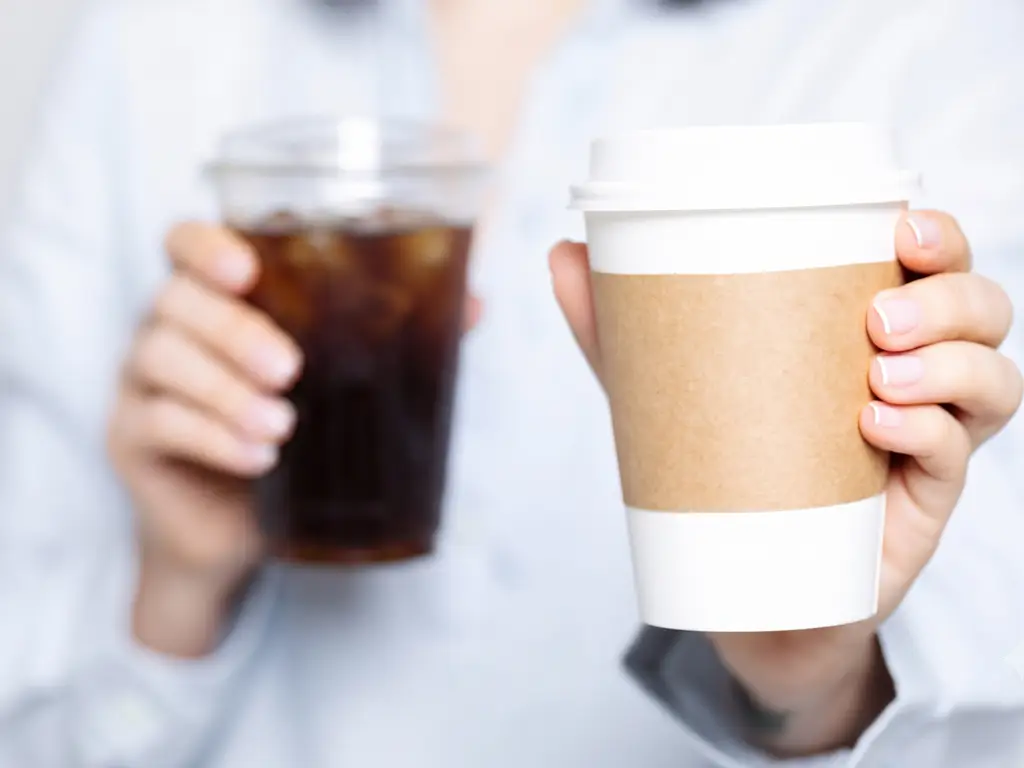
What Are You Really Comparing? The Surprising Truth About “Paper” Cups
The biggest misconception in the disposable cup industry deserves to be cleared up right away: a paper cup is not just a paper cup.
The standard paper cup you see in every coffee shop is actually a paper-and-plastic composite. A thin layer of polyethylene (PE) is bonded to the inside of the paperboard to make it waterproof — without it, your latte would turn the cup into a soggy mess in under a minute. That PE lining accounts for roughly 5% of the cup’s total weight, and it’s the reason paper cups cannot go into standard paper recycling streams.
If you’ve ever wondered why your “recyclable” paper cup got rejected by the recycling bin, this is why.
There are alternatives. PLA-lined paper cups swap the petroleum-based PE for a plant-based bioplastic made from corn starch or sugarcane — marketed as “compostable.” And a newer generation of water-based coating cups eliminates plastic entirely, using aqueous dispersions to create the waterproof barrier. But these represent a small fraction of the global market. Over 90% of paper cups in circulation today use PE lining.
On the plastic side, the main players are PP (polypropylene) — heat-resistant enough for hot drinks — and PET (polyethylene terephthalate), the clear, rigid plastic you see holding iced coffees and smoothies. There’s also PS (polystyrene) foam, increasingly banned, and PLA plastic cups, the clear “bioplastic” cousin.
Understanding what your cups are actually made of matters because it determines everything downstream: how they perform, what they cost to dispose of, and whether your “eco-friendly” marketing claims hold up to scrutiny.
Environmental Impact — Why “Paper = Green” Is Mostly a Myth
If you think choosing paper cups automatically means choosing the environment, the data suggests you should reconsider. The environmental comparison between paper and plastic cups is not a story with a clear hero — it’s a story where both options lose in different ways.

Carbon Footprint and Resource Use — Paper Cups Are Heavier Than You Think
The intuition is understandable: paper comes from trees, which are renewable. Plastic comes from oil, which isn’t. So paper must be better.
But lifecycle assessment data complicates this narrative fast. A 2021 analysis comparing single-use cup types tells a surprising story. A PE-lined paper cup with a cardboard sleeve produces approximately 0.11 kg of CO₂ equivalent per cup. That’s roughly double the carbon footprint of a PET or PP plastic cup, which comes in at around 0.05 to 0.06 kg CO₂e.
Water consumption tells a similar story. According to the UN Environment Programme’s meta-analysis of beverage cup lifecycles, producing 500 paper cups consumes nearly 370 gallons of water across the full supply chain — from tree farming through pulping, papermaking, coating, and cup forming. By comparison, one reusable ceramic cup used 500 times consumes only 53 gallons across its entire service life (UNEP Life Cycle Initiative, 2021).
The takeaway isn’t that plastic cups are environmentally better. It’s that paper cup manufacturing carries a surprisingly heavy resource footprint — one that only pays off if those cups are actually recycled rather than landfilled.
The Recycling Illusion — Why Most Cups End Up in Landfill
The UK had only three facilities capable of processing these cups at the time of the report (UK Parliament EAC, 2018). The problem is mechanical: the PE lining is fused to the paper fibers during manufacturing, and standard paper mills cannot separate them.
Ironically, a transparent PET plastic cup is easier to recycle than a paper cup in most municipal systems. PET is a single-material polymer that fits into existing PET bottle recycling streams. It’s not that plastic cup recycling rates are great — they aren’t — but the cups that do get recycled are disproportionately plastic, not paper.
And when paper cups do reach the landfill? The paper component decomposes anaerobically and releases methane — a greenhouse gas with roughly 23 times the heat-trapping potency of CO₂ over a 100-year period (US EPA).
Biodegradable and Compostable — The Label That Misleads
“Compostable” is the word that makes everyone feel better. But a PLA-lined compostable paper cup requires industrial composting conditions — sustained temperatures of 55 to 60°C, high humidity, and regular turning — to actually break down. Your backyard compost bin won’t do it. And most municipal composting facilities don’t accept them either, because the cups are indistinguishable from non-compostable PE-lined cups in a sorting line.
If a PLA cup ends up in a landfill, it degrades at roughly the same pace as conventional plastic. In the ocean, it doesn’t degrade meaningfully at all. Meanwhile, growing the corn or sugarcane to produce PLA requires significant land and water — the UNEP analysis ranked PLA-lined cups worst among all single-use cup types on both water consumption and land-use impact (UNEP Life Cycle Initiative, 2021).
None of this means paper cups are a bad choice. It means the “paper = green” shortcut is an oversimplification. Both materials carry environmental costs. The difference between a responsible choice and greenwashing often comes down to whether your local waste infrastructure can actually process what you’re buying.
The Real Cost of Your Cup Choice — Why Unit Price Is the Wrong Number
Ask most buyers “which is cheaper, paper or plastic?” and they’ll tell you plastic. They’re right — if you stop at the unit price. But the unit price is only the first number on a much longer invoice.
Unit Price vs. True Cost Per Serve
Here are the real per-unit price ranges in the wholesale market:
| Cup Type | Price Per Unit (USD) | Best Use |
|---|---|---|
| Standard single-wall paper (8–12oz) | $0.04–$0.07 | Hot drinks, requires a sleeve |
| Double-wall insulated paper (8–16oz) | $0.08–$0.15 | Hot drinks, no sleeve needed |
| PP/PET plastic cup (16–22oz) | $0.03–$0.06 | Cold drinks |
| PLA / compostable paper cup | $0.15–$0.35 | Markets with industrial composting access |
Plastic cups are 25 to 50 percent cheaper per unit. But a single-wall paper cup at $0.05 needs a cardboard sleeve at $0.02 to $0.05 more — bringing the total to $0.07 to $0.10 per serve. A double-wall paper cup at $0.10 eliminates the sleeve entirely and saves your staff one extra handling step per drink.
The real cost-per-serve formula includes the cup, the sleeve (if needed), the lid, your failure rate, and your storage and shipping costs. On that basis, the gap between paper and plastic narrows significantly.
The Hidden Costs That Cheap Quotes Don’t Show You
Four line items that don’t appear on most supplier quotes — but absolutely should:
Setup and tooling fees. Custom-printed paper cups require die-cutting plates and printing plates. These one-time fees typically run $50 to $200 or more. Some suppliers bury them in the fine print after winning the order on a low per-unit price.
MOQ traps. That attractive $0.04-per-cup price? It usually comes with a 50,000 or 100,000-piece minimum order. For a single-location café going through 1,000 cups a week, that’s a year’s worth of inventory sitting in a stockroom — tying up cash, occupying space, and risking damage from humidity or crushing.
Quality failure rates. Low-cost cups often have slightly irregular rims. If the rim doesn’t form a perfect seal with the lid, you lose the drink, the lid, and the labor. A 3% failure rate at a busy counter moving 200 drinks a day means 2,190 wasted serves per year — each one costing you the cup, the beverage ingredients, and the staff time to remake it.
Rush-order risk. Suppliers who don’t stock raw materials in-house can run out unexpectedly. When you need cups next week and your supplier needs three weeks to produce them, the rush-order surcharge can exceed $800 — or you face days of serving drinks in whatever backup stock you can find.
This is where supplier quality starts to matter more than cup price. Manufacturers who control the full production chain — from paperboard printing through die-cutting, cup forming, and molding — tend to have fewer stockouts, more consistent rim quality, and shorter lead times. Some, like Yoonpak, run the entire process in-house across a 16,000-square-meter facility, with standard production lead times of 25 to 35 days and sample turnaround as fast as 48 hours. When you’re comparing suppliers, a factory visit video or a sample batch tells you more about your real cost than a quote sheet ever will.
Regulatory Risk — Why “Cheaper Today” Can Mean “Illegal Tomorrow”
If you operate in the European Union, California, New York, New Jersey, Canada, or Australia, single-use plastic regulations are not a future risk — they’re current reality. The EU’s Single-Use Plastics Directive already bans PS foam cups and is actively evaluating whether to extend restrictions to other plastic cup types. Multiple U.S. states have banned polystyrene food containers, and several cities now impose per-unit surcharges on plastic cups.
The pattern is clear: plastic regulations only move in one direction — toward tighter restrictions. A purchasing decision based on today’s plastic cup price may look very different in three years when that cup carries a compliance cost or an outright ban. Paper cups with PE lining aren’t immune either, but the regulatory trajectory for plastic is steeper. Factoring policy risk into your cup cost is not paranoia — it’s basic procurement hygiene.
Performance Face-Off — Hot Drinks, Cold Drinks, and What Touches Your Customer’s Lips
It’s 8 a.m. and your barista is making two lattes and an iced Americano simultaneously. The latte in the paper cup feels warm but holdable. The latte in the PP plastic cup is already too hot to hand to a customer without a sleeve. Meanwhile, the iced drink in the paper cup is starting to bead condensation on the outside, and in fifteen minutes the cup base will start to soften.
This isn’t a question of which cup is “better.” It’s a question of which cup matches which drink. Here’s the performance breakdown:
| Dimension | Paper Cup (PE/PLA Lined) | Plastic Cup (PP/PET) |
|---|---|---|
| Hot drink insulation | ★★★★ Double-wall or ripple-wall construction provides excellent thermal barrier | ★★ PP resists heat to ~100°C but outer surface becomes uncomfortably hot |
| Cold drink durability | ★★ Condensation weakens outer paper layer over time | ★★★★★ Impervious to moisture; holds shape indefinitely |
| Drink visibility | Opaque — hides the beverage | ★★★★ PET offers >90% transparency for visual drinks |
| Microplastic release (hot liquid) | ~25,000 particles per 100ml in 15 minutes (IIT Kharagpur, 2021) | Estimated 363,000 particles/year from daily 300ml hot coffee |
| Chemical safety | PE lining is food-grade; PLA is theoretically safer | PP/PET are food-grade; PS foam linked to styrene migration concerns |
| Hand feel | Needs sleeve (single-wall) or self-insulated (double-wall) | Cold drinks no sleeve needed; hot drinks require sleeve |
| Custom printing quality | Excellent — flexo/offset on paper surface prints vibrantly | Printable but ink adhesion is less durable than on paper |
A 2021 study from the Indian Institute of Technology Kharagpur delivered sobering numbers on this front. When researchers poured hot water at 85–90°C into a PE-lined paper cup, the liquid picked up approximately 25,000 micron-sized microplastic particles per 100ml within 15 minutes. They also detected over one billion sub-micron particles per milliliter, plus measurable levels of heavy metals — lead, chromium, and cadmium (IIT Kharagpur, Journal of Hazardous Materials, 2021).
Before you switch to plastic in response: a separate study estimated that drinking 300ml of hot coffee daily from a PE-lined plastic cup could lead to ingesting roughly 363,000 microplastic particles per year (Healthline, citing environmental science research).
The practical conclusion from all this data: paper cups are the right tool for hot drinks, and plastic cups remain the right tool for cold drinks. There’s a reason most professional coffee shops use paper for hot and clear plastic for cold — it’s not marketing, it’s physics.
How to Choose — A Practical Decision Framework for Business Buyers
You’ve now seen the environmental data, the real cost breakdown, and the performance realities. Here’s how to turn that information into an actual purchasing decision.
The framework is simple: ask three questions, and the answer will tell you what to buy.
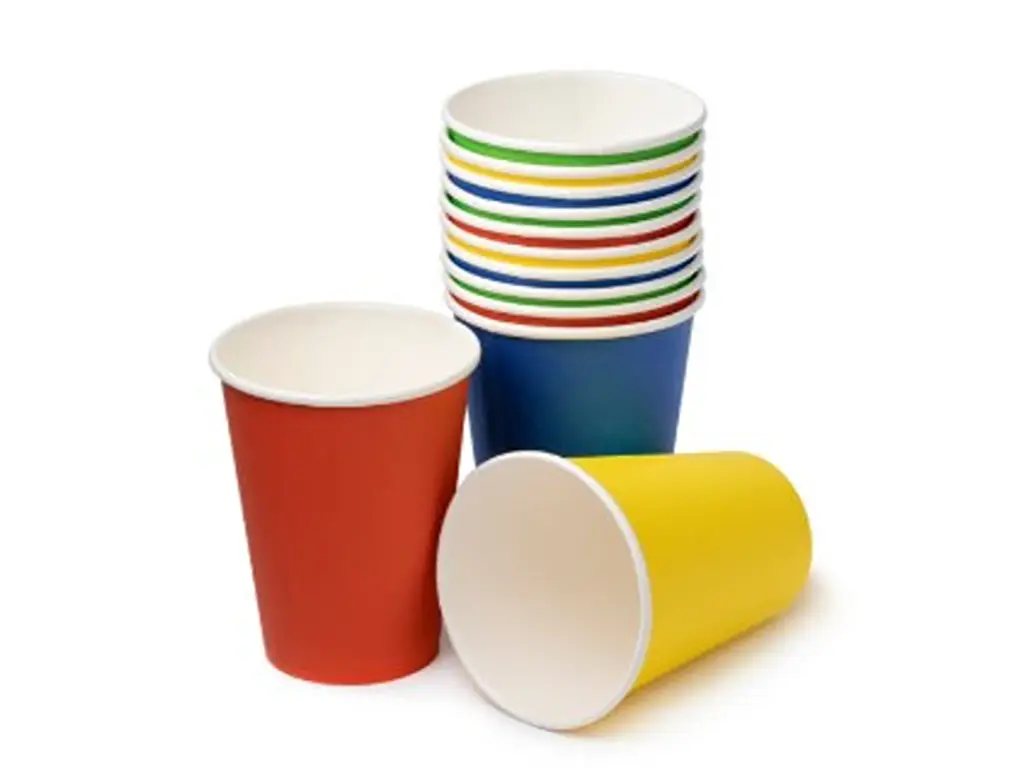
If You Serve Mostly Hot Drinks — Go Paper, But Choose the Right Wall
For coffee-forward businesses, tea shops, and any counter where hot beverages dominate, paper cups are the standard for a reason. They insulate better, they don’t release chemical odors when heated, and their microplastic shedding rate is lower than all-plastic alternatives in hot liquid.
The real decision is single-wall versus double-wall. A single-wall cup plus a separate cardboard sleeve costs about the same as a double-wall cup, but the double-wall cup requires one less SKU to manage and one less motion per drink from your staff. Over 200 drinks a day, that’s 200 fewer times your barista reaches for a sleeve — time that adds up over a year.
If your brand positioning is sustainability-forward, PLA-lined or water-based coating cups send a stronger signal than standard PE. Just verify that your municipality actually accepts compostable cups before you print “compostable” on your menu.
If You Serve Mostly Cold Drinks — Plastic Still Wins, But Paper Is Catching Up
For smoothie bars, bubble tea shops, and any business where cold, visually layered drinks are the showcase product, PET plastic cups remain the best option. They’re clear (your customer can see that photogenic drink), they don’t soften with condensation, and they’re the cheapest option per serve.
That said, a new generation of water-based coating paper cups is closing the gap in cold-drink performance. These cups eliminate the PE liner entirely, using aqueous barrier coatings that don’t interfere with paper recycling. The catch is cost — they currently run 1.5 to 2 times the price of PE-lined paper cups. For most businesses today, they’re not yet the economical choice for high-volume cold drink service, but the price trajectory is heading down as production scales.
Your Certification Checklist — What to Verify Before You Order
If you’re buying from an international supplier — which, for most importers and distributors, you are — certifications are not a bonus. They’re the documents that get your shipment through customs and past a health inspector.
Here’s what matters, organized by market:
| Certification | Region | What It Proves |
|---|---|---|
| FDA 21 CFR | United States | Food-contact material safety (mandatory for US imports) |
| EU 10/2011 | European Union | Food-contact plastic safety (mandatory for EU imports) |
| LFGB | Germany | German Food and Feed Code safety standard |
| BRC | Global (UK-origin) | Food safety management system |
| ISO 9001 | Global | Quality management system |
| ISO 14001 | Global | Environmental management system |
| FSC | Global | Paperboard sourced from responsibly managed forests |
| BPI / ASTM D6400 | North America | Industrial compostability verification |
| EN13432 | European Union | Packaging recoverable through industrial composting |
| OK Compost (TÜV) | Global | Industrial or home composting certification |
An ideal supplier should hold at least three to four core certifications — typically ISO 9001 for quality, ISO 14001 for environmental management, FDA or EU 10/2011 for your target market, and FSC if you’re making sustainability claims about your paper sourcing.
If a supplier cannot name their certifications when you ask, that’s a bigger red flag than being two cents above your target unit price. Industry leaders like Yoonpak — who hold eight international certifications including FDA, LFGB, BRC, FSC, and BPI, and have supplied global brands from Burger King to Tim Hortons to ILLY — demonstrate the kind of certification stack that makes customs clearance and health inspections uneventful rather than stressful. You can review their full certification and product range on their website or reach out for samples at yoonpak.com/contact.
- UNEP Life Cycle Initiative. “Single-Use Beverage Cups and their Alternatives.” 2021. lifecycleinitiative.org
- UK Parliament Environmental Audit Committee. “Coffee Cup Waste.” committees.parliament.uk
- IIT Kharagpur. “Microplastic release from paper cups.” Journal of Hazardous Materials. 2021. sciencedirect.com
- University of Gothenburg. “Aquatic toxicity of disposable cup materials.” 2023.
- Yoonpak. “Paper Cup Manufacturer.” yoonpak.com
- Yoonpak. “Certified Paper Cup Manufacturer — Global Brands.” yoonpak.com
- Yoonpak. “Contact.” yoonpak.com
- Yoonpak. “About Yoonpak.” yoonpak.com
- Yoonpak. “Going Green.” yoonpak.com
- Yoonpak. “FAQ.” yoonpak.com


 English
  German
  Spanish
  Italian
  Dutch
Dutch  French
  Portuguese
  Russian
  Arabic
  Korean