

McDonald’s Drink Sizes: Your Complete Guide to Every Cup on the Menu
If you have picked up a McDonald’s drink recently and thought, “Wait — this looks different,” you are not alone. Over the past year, social media threads and Reddit forums have been buzzing with the same question: Did McDonald’s change their cup sizes?
The answer is both yes and no. McDonald’s has been quietly rolling out what the industry calls “cup consolidation,” an operational shift where the physical cup shapes are standardized across size tiers to simplify supply chains. The result? A medium cup now shares the same shape as a large cup, even though the volume inside has not changed. As one McDonald’s employee put it on Reddit in April 2026: “The mediums are now shaped like the large, but still the same oz. They are harder to tell apart.”
This confusion is understandable. McDonald’s operates one of the most complex drink size systems in fast food: not one set of sizes, but several, varying by drink category and by country. If you have ever wondered exactly how many ounces are in each cup, why your large coffee is smaller than your medium soda, or how US sizes compare to the rest of the world, this guide breaks it all down.
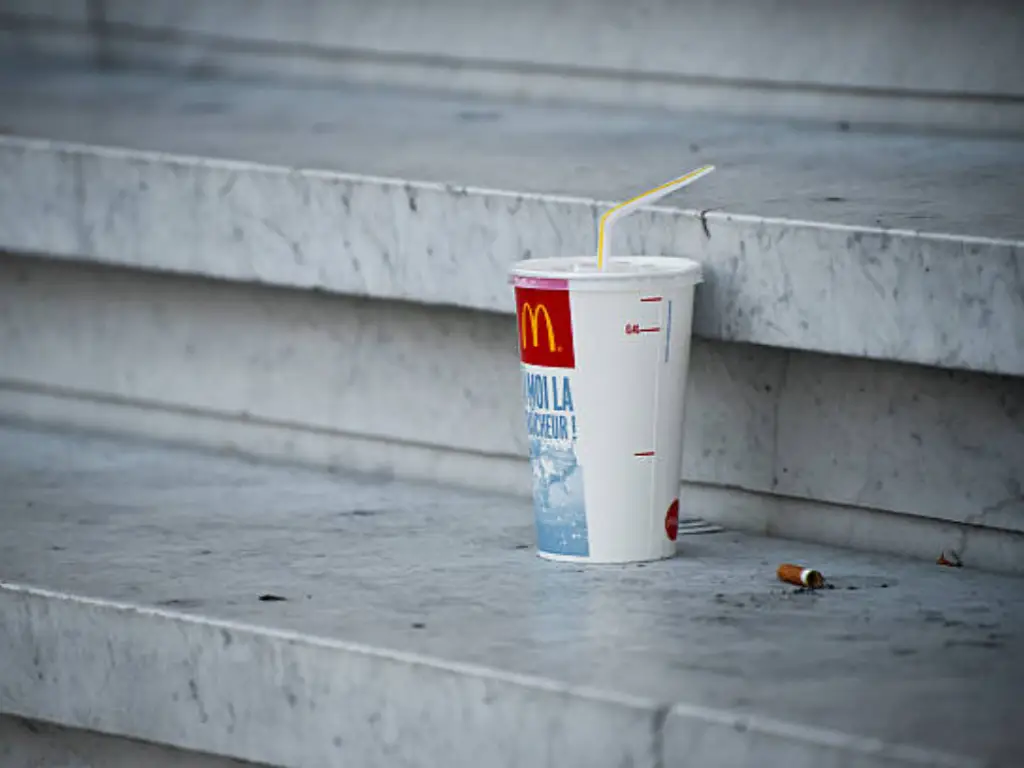
01The Complete US McDonald’s Drink Size Breakdown: From Extra Small to Extra Large
Before diving into each individual size, it helps to understand the strategy behind them. McDonald’s cup sizes are not arbitrary. Each tier is engineered for a specific role in the menu’s profit architecture: Extra Small exists as a kids’ meal anchor, Small sets the baseline, Medium is the profit workhorse, and Large is a perceived-value weapon that pushes up average order totals.
Small and Extra Small (12–16 oz / 355–473 ml)
The smallest cups on the McDonald’s menu serve two very different purposes. The Extra Small (a 12-ounce / 355 ml cup) is almost never sold on its own. It lives inside the Happy Meal, functioning as a bundled add-on rather than a standalone product. You will not find it listed on the drive-thru menu board.
The Small, at 16 fluid ounces (473 ml), is where the actual sizing story begins. It is the baseline against which every other size is compared. And here is the first surprise: McDonald’s Small is already larger than the “large” cup at many independent coffee shops. A typical third-wave café serves a 12-ounce latte; McDonald’s calls that an Extra Small. This is not an accident. It is the QSR industry’s version of portion inflation. The baseline keeps creeping up so that every upgrade feels like a bargain.
The pricing psychology at this tier is equally calculated. The Small exists primarily to make the Medium look irresistible. When a Medium costs only 20 to 30 cents more than a Small for an extra 5 ounces of drink, the upgrade feels like a rational decision. The actual liquid cost to McDonald’s is fractions of a penny per ounce.
Medium (21 oz / 621 ml)
The 21-ounce Medium is the unsung hero of McDonald’s menu engineering. It is the default cup in virtually every meal combo, and that default status is the real story. Behavioral economists have long observed that most people never change the default option. If a meal comes with a Medium drink, that is what the overwhelming majority of customers will take. The Medium is, by a wide margin, the most-purchased cup size in the entire McDonald’s system.
For cup manufacturers and supply chain professionals, this has a concrete implication: the 21-ounce paper cup is the industry’s de facto standard for QSR fountain drinks. It is the volume that dictates paperboard ordering quantities, printing plate setups, and warehouse slot allocation across the entire supply chain. If you produce 21-ounce cups, you have a product that moves.
Large and Extra Large (30–32 oz / 887–946 ml)
The Large sits at the top of the standard menu at 30 fluid ounces (887 ml) for most fountain drinks, with sweet tea getting a dedicated 32-ounce (946 ml) cup. This is a massive amount of liquid, nearly a liter of soda in a single serving. Its primary job is not to be sold in high volumes. It exists to anchor the top of the price ladder.
The psychological mechanism at work here is the decoy effect. The Large makes the Medium look like a sensible compromise, and the Medium makes the Small look stingy. Most customers end up choosing the Medium, exactly where McDonald’s wants them. But the Large’s presence on the menu board quietly reassures every Medium buyer that they exercised restraint.
Then there is the Extra Large, a 44-ounce (1.3-liter) behemoth that still exists in select markets and for certain beverages. While no longer a mainstream menu staple since the “Super Size” era ended in 2004, the Extra Large remains a useful reminder: cup size strategy is never static. It evolves with public health sentiment, local regulation, and shifting consumer expectations.
| Size Name | Fluid Ounces (oz) | Milliliters (ml) | Typical Role |
|---|---|---|---|
| Extra Small | 12 oz | 355 ml | Happy Meal default, rarely sold standalone |
| Small | 16 oz | 473 ml | Baseline size, price anchor |
| Medium | 21 oz | 621 ml | Meal combo default, highest volume |
| Large | 30–32 oz | 887–946 ml | Perceived value driver |
| Extra Large | 44 oz | 1,300 ml | Limited availability, select markets |
02Beyond Soda: How Coffee, Shakes, and Specialty Drinks Are Sized Differently
Most McDonald’s customers never notice this: the same restaurant runs at least three completely different cup size systems at the same time. The cup that holds your large Coke is not the same cup that holds your large latte, and neither is the same as the cup for your large shake. This is not operational chaos. It is deliberate product-to-container matching, and understanding it reveals how precisely McDonald’s calibrates every menu category.
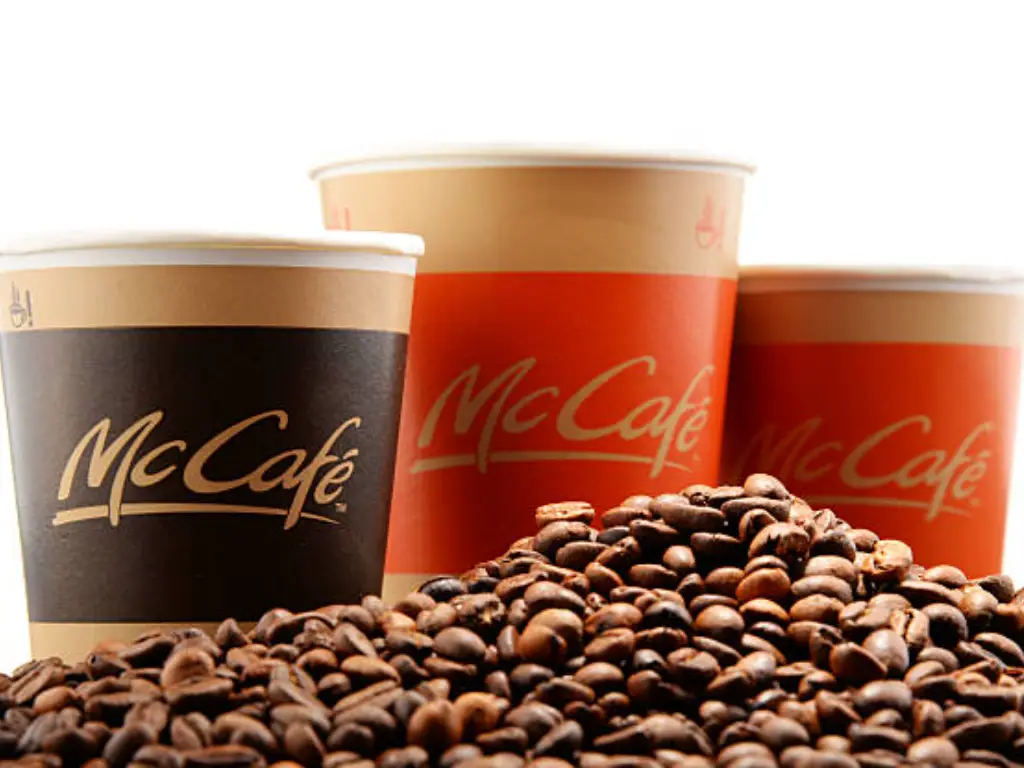
McCafé Hot Coffee Sizes (12 / 16 / 21 oz)
Hot coffee at McDonald’s uses a smaller size ladder than fountain drinks, and the reason comes down to physics and perception. Hot beverages are consumed more slowly than cold ones. Nobody chugs a scalding coffee the way they might drain an iced Coke on a summer day. Heat retention also matters: a larger volume of hot liquid loses temperature more slowly at the surface, but customers holding a 30-ounce hot cup would find it unwieldy and potentially unsafe.
The result is a three-tier system: Small at 12 ounces (355 ml), Medium at 16 ounces (473 ml), and Large at 21 to 24 ounces (621–710 ml), depending on the market. Notice something familiar? A McCafé Large holds exactly the same volume as a fountain drink Medium — both are 21-ounce cups. McDonald’s is running the same physical cup across two entirely different menu categories, just with different labels. From a manufacturing perspective, this is brilliant: fewer cup SKUs to produce, store, and ship, with the only difference being the printing on the outside.
Shakes, Smoothies, and Frozen Drinks
Frozen drinks introduce yet another variable: density. A 16-ounce shake is physically heavier and more filling than 16 ounces of soda, so the size ladder shifts accordingly. McDonald’s shake sizes run Small (12 oz / 355 ml), Medium (16 oz / 473 ml), and Large (22 oz / 650 ml). The Large shake cup holds slightly more than the coffee Large but significantly less than the soda Large.
There is also a material consideration that most customers never think about but every cup manufacturer obsesses over: frozen drinks cause condensation. The temperature difference between a 28°F shake and a 75°F room creates water droplets on the cup’s exterior, and that moisture can soften paperboard over time. Shake cups need heavier paper stock, typically 300 gsm or above, to maintain structural integrity from first sip to last. It is one of those invisible engineering details that separates a premium drinking experience from a collapsing cup.
Sundaes and Dessert Cups
Dessert cups break the size-ladder pattern entirely. McDonald’s sundaes come in a single size, typically 6 to 8 ounces, and the cup itself is short and wide rather than tall and narrow. The form follows the function: a wide-mouth, shallow container makes it easy to scoop ice cream, reach toppings, and eat with a spoon without scraping your knuckles. Unlike drinks, where “more volume” signals “more value,” a sundae’s perceived worth comes from its visual layering. Hot fudge visible through the side, whipped cream cresting the top. Adding a “Large” sundae would not increase perceived value the way it does for soda; it would just look messy.
03McDonald’s Drink Sizes Around the World: A Country-by-Country Comparison
If you have ever ordered a “large” drink at a McDonald’s outside the United States and received something that looked like what you would call a small back home, you have experienced one of the most striking and least documented realities of global QSR operations. The word “large” has no fixed meaning. The same brand serves dramatically different portions depending on where you are standing.
| Country | Small | Medium | Large | Extra Large |
|---|---|---|---|---|
| United States | 16 oz (473 ml) | 21 oz (621 ml) | 32 oz (946 ml) | 44 oz (1,300 ml) |
| Canada | 12 oz (355 ml) | 16 oz (473 ml) | 21 oz (621 ml) | Not offered |
| United Kingdom | 8.5 oz (250 ml) | 13.5 oz (400 ml) | 16.9 oz (500 ml) | Not offered |
| Australia | 10 oz (295 ml) | 13 oz (384 ml) | 16 oz (473 ml) | Not offered |
US vs. Canada: Neighbors, Different Appetites
The United States and Canada share a border, a language, and a McDonald’s menu. They do not share the same cup sizes. Canada runs one full tier smaller than the US across every size category. A Canadian Small is 12 ounces (355 ml) versus the American 16 ounces. A Canadian Large caps out at 21 ounces (621 ml), roughly the same volume as an American Medium. Canada has never offered an Extra Large option.
What drives this difference? Part of the answer is cultural: Canadian consumption norms lean closer to European moderation than American abundance. But there is also a regulatory dimension. Several Canadian provinces have implemented sugar-sweetened beverage taxes, and while these taxes target pricing rather than portion sizes directly, they create a market environment where oversized servings face both political and consumer resistance. The takeaway for anyone in the food service business: cup sizes are not just a menu decision. They are a cultural and regulatory signal.
UK vs. Australia: The “Small Large” Phenomenon
Nowhere is the size gap more dramatic than between the US and the UK. McDonald’s UK officially lists its drink sizes as Small (250 ml / 8.5 oz), Medium (400 ml / 13.5 oz), and Large (500 ml / 16.9 oz) (McDonald’s UK, 2018). Let those numbers sink in. A UK Large, the biggest fountain drink you can order at a British McDonald’s, holds 500 milliliters. That is almost exactly the same as the 473-milliliter US Small. The UK’s maximum is America’s minimum.
Australia tells a similar story, with sizes running Small (295 ml / 10 oz), Medium (384 ml / 13 oz), and Large (473 ml / 16 oz). An Australian Large equals a US Small exactly. Sixteen ounces in both countries, but on opposite ends of the size spectrum. The UK’s Sugar Tax, introduced in 2018, has been a powerful force keeping portion sizes in check, and Australia’s ongoing public health debates around sugary drink sizes suggest these numbers are more likely to shrink further than to grow.
Asia-Pacific: No Single Standard
Asia-Pacific markets defy any attempt at a unified size framework. Japan’s McDonald’s serves some of the smallest portions in the global system. A Japanese Medium runs around 350 milliliters, smaller than a UK Medium, reflecting a consumer culture that prioritizes quality perception and frequent, moderate consumption over sheer volume. At the other end of the spectrum, markets like the Philippines and parts of Southeast Asia serve cup sizes much closer to the American model, driven by different dining habits and price sensitivity calculations.
From a supply chain perspective, what is fascinating is that McDonald’s achieves this global variety with a surprisingly limited number of physical cup molds. Industry experts estimate no more than six to eight standard cup diameters across the entire global system. The “different sizes” you see in different countries are, in most cases, different selections from the same shared catalog of cup tooling. For a cup manufacturer, this means one thing: master the standard diameter range, and you can serve McDonald’s suppliers, or their competitors, anywhere in the world.
04Designing Your Own Drink Size Strategy: Lessons from the Golden Arches
So what does any of this mean for someone who is actually building a drink menu? A café owner, a QSR operator, an entrepreneur planning a beverage brand. McDonald’s cup size system is not just trivia. It is a case study in menu engineering that you can adapt to your own business, regardless of your scale.
Three principles stand out. First, use your Small as a price anchor, not a profit center. McDonald’s Small exists so the Medium looks like a no-brainer upgrade. Your smallest size should do the same. Price it close enough to the next tier up that customers feel smart upgrading. Second, make the Medium your default. Whether through meal combos, menu board layout, or staff scripting, the middle size should be the path of least resistance. Defaults drive volume. Third, let your Large do the heavy lifting on perceived value. Even if few customers order it, its presence on the menu makes everyone who orders a Medium feel like they made a disciplined, sensible choice.
- Price Anchor — Small exists to make Medium irresistible.
- Default Power — Medium in every combo drives volume.
- Perceived Value — Large on the menu makes Medium buyers feel smart.
In practical terms, here is a recommended size framework, adapted from the McDonald’s playbook but sized for an independent operator:
| Drink Category | Recommended Tiers | Suggested ml Range | Notes |
|---|---|---|---|
| Fountain Sodas & Iced Teas | Small / Medium / Large | 350ml / 500ml / 750ml | Three-tier standard; Large drives perceived value |
| Hot Coffee & Tea | Small / Medium | 250ml / 350ml | Two-tier sufficient; hot drinks consumed slower |
| Iced Coffee & Cold Brew | Medium / Large | 400ml / 600ml | Larger portions suit cold, slow-sipped drinks |
| Smoothies & Shakes | Single size | 400–500ml | Treat category; variety in flavors, not volumes |
| Limited-Time Offerings | Single size | 350–450ml | Scarcity and novelty matter more than size variety |
One last thing to keep in mind: the cup itself is part of your brand. The paper weight, the coating, the print quality. These details register with customers even if they cannot name them. A cup that feels solid in the hand, that does not soften or leak, and that carries your design crisply and vividly, communicates competence before the first sip. It is the kind of detail that separates a forgettable drink experience from one that makes someone come back.
If you are sourcing cups for your own QSR or café and need a supplier that covers the full size range (from 4-ounce espresso cups to 24-ounce large fountain cups, with custom printing and both PE and plant-based PLA lining options), YoonPak is a paper packaging manufacturer with over 24 years of experience serving global food service brands. Their in-house design team supports custom branding across the entire size spectrum, and their materials include FSC-certified paperboard and food-grade soy-based inks. That matters if sustainability is part of your brand story.
References
- McDonald’s USA. “Coca-Cola® (Small): McDonald’s Fountain Coke.” https://www.mcdonalds.com/us/en-us/product/coca-cola-small.html
- McDonald’s USA. “McCafé Mixers: New McDonald’s Refreshers, Dirty Soda & More.” https://www.mcdonalds.com/us/en-us/full-menu/drinks.html
- McDonald’s UK. “How many ml are in your small, medium and large fizzy soft drinks?” 2018. https://www.mcdonalds.com/gb/en-gb/help/faq/how-many-ml-are-in-your-small–medium-and-large-fizzy-soft-drinks.html
- Reddit r/McDonalds. “Wtf happened to the large size?” April 2026. https://www.reddit.com/r/McDonalds/comments/1snmnc2/wtf_happened_to_the_large_size/
- Reddit r/McDonaldsEmployees. “the largest cup at my store is 30oz US.” August 2022. https://www.reddit.com/r/McDonaldsEmployees/comments/x1k2d3/the_largest_cup_at_my_store_is_30oz_us/
- Reddit r/todayilearned. “TIL In McDonalds, the UK’s large drink (500ml) is almost the same as US small.” November 2023. https://www.reddit.com/r/todayilearned/comments/17oejc1/til_in_mcdonalds_the_uks_large_drink_500ml_is/
- YoonPak. “Custom Packaging.” https://www.yoonpak.com/custom-packaging/
- YoonPak. “Going Green — Eco Quality.” https://www.yoonpak.com/going-green/
- YoonPak. Homepage. https://www.yoonpak.com/


 English
  German
  Spanish
  Italian
  Dutch
Dutch  French
  Portuguese
  Russian
  Arabic
  Korean