

From 8oz to 32oz: How to Choose the Perfect Soup Bowl Size
Whether you are managing a bustling high-end coffee franchise, running a global fast-food chain, or simply trying to optimize your restaurant’s takeout operations, one seemingly minor detail can make or break your profit margins: soup bowl sizes. Serve your signature broth in a container that is too large, and your portion looks stingy while your food costs skyrocket. Choose a bowl that is too small, and you risk disastrous spills, ruined delivery experiences, and costly customer complaints. This comprehensive guide will demystify standard capacities from 8oz to 32oz, helping you balance precise portion control, material physics, and advanced procurement strategies to optimize your entire food packaging supply chain.
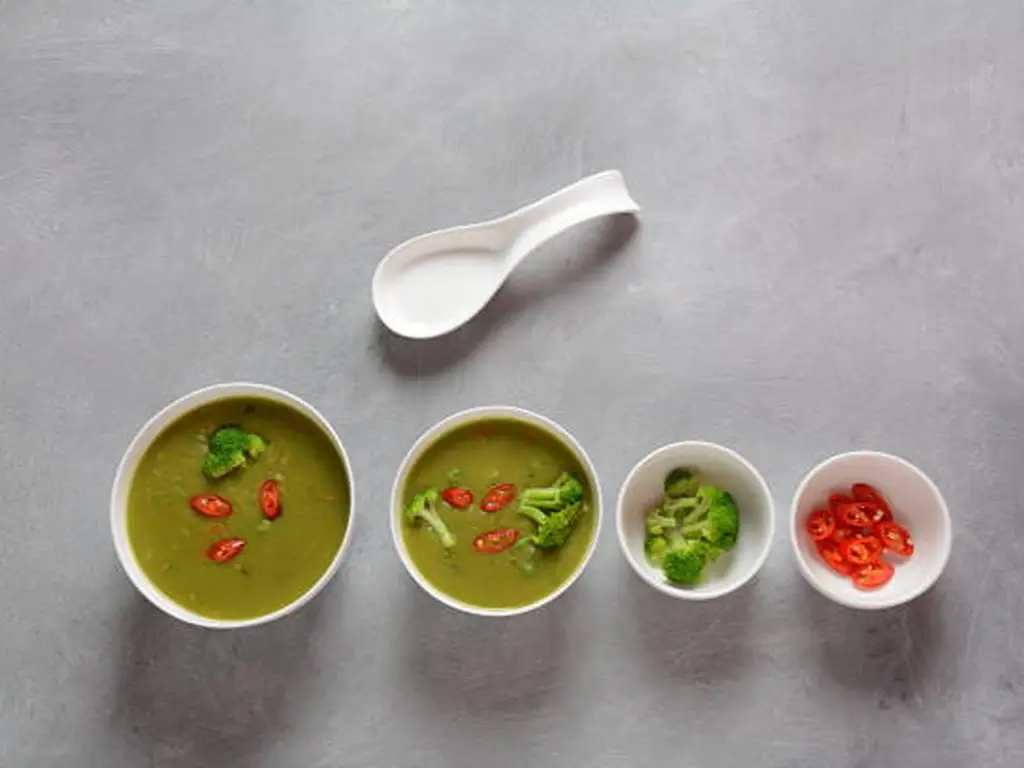
Demystifying Standard Soup Bowl Sizes for Home and Commercial Use
When entering the world of commercial foodservice packaging, the first paradigm shift required is abandoning vague terms like “small,” “medium,” and “large.” In the international supply chain, the undisputed standard metrics for soup bowls are Fluid Ounces (oz) and Milliliters (ml). However, understanding the raw numerical value is only half the battle. The most common critical error made by procurement managers and restaurant owners alike is failing to account for the difference between a bowl’s flush-fill capacity and its safe serving capacity.
Imagine a high-volume takeout scenario: a customer orders a premium spicy miso ramen or a hearty winter stew for delivery. If you purchase a bowl rated for exactly 16oz and attempt to fill it with 16oz of hot broth and ingredients, the liquid will sit flush with the very top rim of the container. The moment the lid is pressed down, or the delivery driver hits a minor bump in the road, the hot liquid will breach the seal, leaking into the delivery bag. This leads to negative reviews, refunded orders, and potential liability issues regarding hot liquid burns.
This introduces the most vital concept in commercial soup bowl sizing: Headspace (or Spill Margin). Professional foodservice operators always calculate a minimum 15% to 20% headspace into their bowl sizing. Therefore, if your recipe calls for a 16oz serving of soup, you must procure a bowl with at least a 20oz total flush-fill capacity to guarantee a secure, leak-proof transit. Understanding this fundamental physics principle is the first step in mastering portion control and protecting your brand’s reputation in the highly competitive delivery market.
Beyond simple volume, selecting the exact right dimensions influences everything from heat retention to the perceived value of the meal. A wider, shallower bowl might make a 12oz portion look like a feast, while a tall, narrow cup might make the same volume look like an afterthought. Throughout this guide, we will break down not just the raw numbers, but the psychological and operational impact of every major size category.
The Ultimate Capacity Chart: Categorizing Bowls by Volume and Meal Type
To eliminate the guesswork from your procurement process, we have categorized the industry-standard soup bowl sizes based on their optimal culinary applications. Below is the definitive sizing matrix designed to align your menu offerings with the perfect container dimensions, including the critical 20oz safety size for delivery operations.
| Size (oz) | Size (ml) | Best For (Meal Type) | Visual Reference |
|---|---|---|---|
| 8 oz | ~236 ml | Tasting menus, Amuse-bouche, Side Soups | Standard Flat White / Small Coffee Cup |
| 12 oz | ~355 ml | Lunch Combos, Starters, Light Soups | Standard Soda Can |
| 16 oz | ~473 ml | Dine-in Main Course Soups, Stews | Standard Bottled Water (500ml approx) |
| 20 oz | ~591 ml | Takeout Delivery for 16oz Soups (Safety Headspace) | Venti Coffee Cup Size |
| 24 oz | ~710 ml | Large Salads, Hearty Stews, Small Pho | Large Movie Theater Drink Cup |
| 32 oz | ~946 ml | Full-size Ramen, Pho, Family-style Sides | Large Kitchen Mixing Bowl / Quart Container |
Appetizers and Side Soups: The 8 to 10 Ounce Range
The 8oz to 10oz range is the domain of the appetizer and the side dish. In high-end dining (fine dining) and fast-casual lunch combos, a soup is rarely meant to be the main event. If a customer orders a sandwich and a soup combo, serving a massive 16oz portion of heavy potato leek soup will induce early satiety, potentially causing them to leave their main course unfinished. This negatively impacts the perceived value of the meal and reduces the likelihood of add-on dessert sales.
An 8oz bowl (approximately 236ml) is visually equivalent to a standard ceramic coffee cup or a flat white takeaway cup. It provides roughly 10 to 12 spoonfuls of liquid—the exact psychological sweet spot to stimulate the palate without overwhelming the stomach. For children’s menus, the 8oz to 10oz size is also universally adopted as the absolute maximum safe portion, minimizing the risk of massive spills at the dining table. Commercially, standardizing on an 8oz size for all “cup of soup” menu items allows for rigorous cost control on high-margin appetizers.
The Restaurant Standard: The 12 to 16 Ounce Sweet Spot
If there is a battleground for profitability in the soup and stew category, it exists squarely in the 12oz to 16oz range. This is the undisputed “Sweet Spot” for the foodservice industry. When a customer orders a “Bowl of Soup” as their main meal at a bakery-cafe or a diner, they are expecting a 16oz portion (roughly 473ml). To visualize this, a 12oz bowl holds the exact liquid volume of a standard aluminum soda can, while a 16oz bowl holds slightly less than a standard half-liter bottle of spring water.
The mastery of this size category relies heavily on strict Portion Control. The difference between a 12oz serving and a 16oz serving might seem negligible to the naked eye, especially if the bowl has a wide rim and a shallow base. However, for a restaurant serving 500 bowls of premium seafood bisque a day, accidentally over-portioning by just 2 ounces per bowl results in giving away 1,000 ounces of expensive product daily. By standardizing your dine-in procurement to exact 12oz or 16oz specifications, you lock in your food cost percentages, ensuring that your profit margins remain predictable and protected against employee over-serving.
The Medium Delivery Range: The 18 to 22 Ounce Transition
Often overlooked by amateur restaurateurs, the 18oz to 22oz range (anchored by the critical 20oz size) is the secret weapon of successful delivery franchises. This category perfectly bridges the gap between a standard meal and an Asian-style noodle bowl, and it exists primarily to solve the laws of physics in takeout delivery.
As mentioned in the headspace rule, you cannot put 16oz of boiling liquid into a 16oz paper bowl and hand it to a courier. The 20oz container provides the exact mathematical volume required to safely transport a 16oz main-course soup. This 4oz buffer zone (approximately 118ml) allows steam to expand without popping the lid, and absorbs the sloshing impact of a bicycle or car delivery. Furthermore, the 20oz to 22oz size is increasingly popular for modern fast-casual trends, such as medium-sized warm grain bowls, chili mac combos, and loaded baked potato soups that require extra room for customers to stir in side toppings like cheese, croutons, and crackers without spilling over the edge.
Heavy Duty and Asian Noodles: The 24 to 32 Ounce Giants
The explosive global popularity of Asian noodle soups—such as Vietnamese Pho, Japanese Ramen, and spicy Chinese hot pots—has fundamentally shifted the demand toward massive 24oz to 32oz containers. In this category, the rules of physics change drastically due to the “Displacement Principle.”
Unlike a pure puree or broth, a bowl of ramen consists of solid mass: a dense block of alkaline noodles, large slices of chashu pork, a soft-boiled egg, and various vegetable garnishes. These solid ingredients will immediately displace a massive volume of space inside the container. If you place a standard portion of ramen noodles and toppings into a 24oz bowl, the ingredients will consume approximately 40% of the available volume. If you then attempt to pour 16oz of boiling hot tonkotsu broth over the top, the liquid will reach the absolute brim.
For takeout operations, this is a recipe for operational disaster. The lid will not sit securely, and the thermal expansion of the hot steam will pop the lid off during transit. Therefore, the golden rule for ramen and pho operators is to always size up. To safely deliver a 24oz combination of noodles, toppings, and broth, you must utilize a heavy-duty 32oz bowl. This guarantees a secure headspace, allowing the lid to vent steam properly while keeping the boiling liquid safely contained during turbulent delivery rides.
Consistency Matters: Why Liquid Density Changes the Size Equation
A common, yet dangerous, misconception among inexperienced buyers is that “volume equals weight.” While 16 fluid ounces of pure water weighs exactly 16 dry ounces, the culinary world deals with complex suspensions, emulsions, and dense ingredients. The density and consistency of your specific food product play a massive role in how a paper or plastic bowl will perform under stress, especially when scaling up to commercial volumes.
Consider a split-menu scenario: an establishment serves a light, clear chicken vegetable broth (Light Broth) and a dense, heavy New England clam chowder loaded with potatoes and cream (Thick Chowder). Both are served in 16oz portions. The 16 fluid ounces of clear broth will exert a relatively standard amount of downward gravitational pressure on the bottom seal of the paper bowl. However, 16 fluid ounces of the heavy, starch-thickened chowder acts more like a solid weight, significantly increasing the vertical pressure on the container’s base.
If a restaurant chooses a tall, narrow 16oz cup for the heavy chowder, the weight is concentrated on a very small bottom surface area. In a paper container, this concentrated pressure, combined with extreme heat, can lead to bottom-sagging or catastrophic seam failure. For heavy stews and dense culinary creations, packaging engineers highly recommend utilizing a bowl with a wider diameter and a shallower profile. This geometric adjustment distributes the heavy weight across a larger surface area, greatly reducing the stress on the bottom seal and providing a vastly superior, more stable eating experience for the end consumer. It also improves cooling times slightly, allowing the customer to eat comfortably sooner.
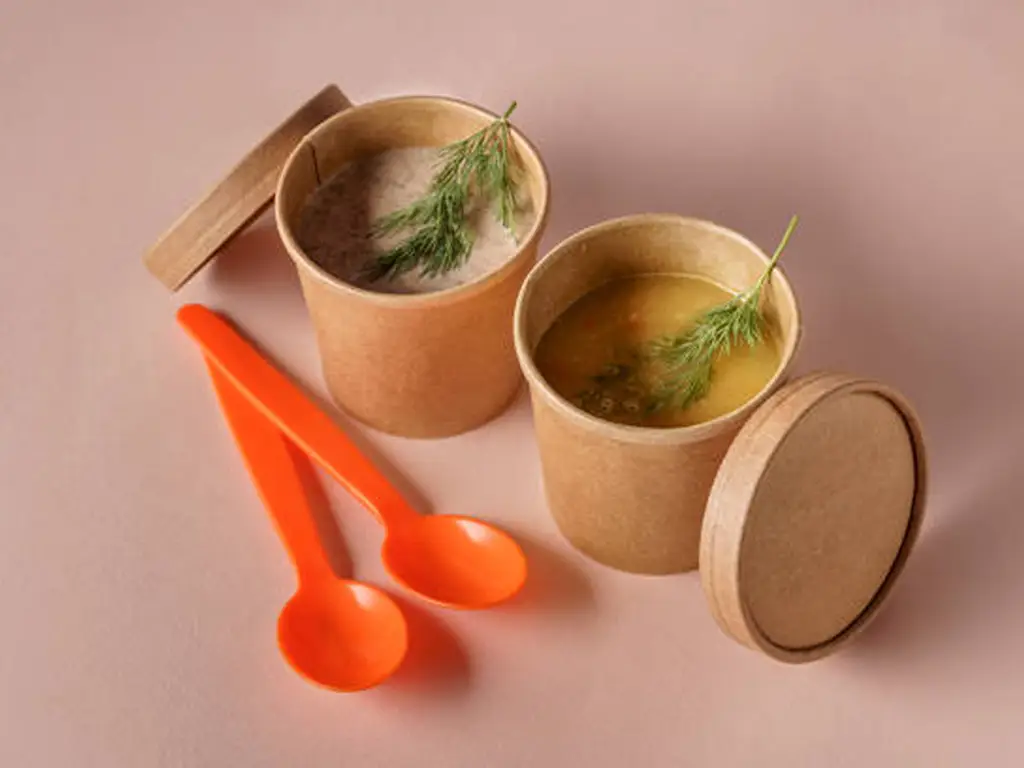
Material Physics and Leak Prevention: The Critical Link Between Capacity and Quality
Understanding capacity is entirely irrelevant if the container fails to hold its structural integrity. As you move into larger capacities—specifically the 24oz to 32oz range—the physical demands placed on the packaging material increase exponentially. When 90°C (194°F) liquid interacts with standard paperboard, the heat naturally causes the cellulose fibers to soften. If a commercial buyer attempts to save pennies by purchasing large bowls made from low-grade, thin paper, the bowl will literally collapse in the customer’s hands within minutes of filling.
The industry benchmark for structural integrity is measured in GSM (Grams per Square Meter). While a tiny 8oz tasting cup might perform adequately at 250 GSM, a 32oz heavy-duty soup bowl must be engineered with thick, premium paperboard (often 320 to 350 GSM or higher) to withstand prolonged exposure to intense heat and moisture. But paper thickness is only the first line of defense.
The Condensation Trap and Double-PE Coating
Many restaurants fall victim to a hidden enemy: exterior condensation. For 24oz-32oz heavy-duty hot soups, a standard interior coating is not enough. When 90°C soup meets a cold winter delivery environment, massive condensation forms on the outside of the bowl. If you only use a Single-PE (Polyethylene) lined bowl, the uncoated exterior paper fibers will absorb this sweat, become mushy, and cause the bowl to cave in from the outside. To prevent this, professional buyers must specify Double-sided PE or PLA coating. This seals both the inside and outside of the bowl, completely locking out moisture and maintaining rigid structural integrity from kitchen to dining room table.
Case Study: How Top-Tier Chains Mitigate Leak Risks at Scale
For global chains like Burger King, Tim Hortons, and premium coffee roasters, a 1% leak rate is considered a catastrophic failure that scales into millions of dollars in losses. How do they solve the physics problem of large-capacity hot liquids?
They move beyond standard glue seams and demand Ultrasonic bottom-sealing and Tightly rolled rims. While cheap bowls use basic heat-press glue that melts under high temperatures, elite manufacturers like Yoonpak (a packaging leader with over 24 years of manufacturing expertise) utilize ultrasonic wave technology to fuse the paper fibers at the molecular level, creating an unbreakable seal at the bowl’s weakest point—the bottom rim. This technology drops the leak rate from the industry average of 3% down to virtually zero.
Furthermore, true operational security requires flawless traceability. In Yoonpak’s 16,000-square-meter facility, generating 16 billion units annually, quality control isn’t a random spot check. Every single cup and bowl features a unique Trace Code printed on the bottom, identifying the exact production date, time, and machine sequence. Backed by BRC, FDA, and FSC certifications, if a structural failure ever occurs, clients don’t argue with customer service; they submit a photo of the code and receive a guaranteed remake within 30 days, without returning the product. This is how enterprise brands eliminate procurement risk entirely.
The Universal Lid Strategy: A Procurement Hack for B2B Foodservice
Once you have mastered capacity and material physics, the final frontier of soup bowl optimization is supply chain efficiency. Most independent restaurants operate with a highly inefficient SKU (Stock Keeping Unit) matrix. If they offer a 12oz small soup, a 16oz medium soup, and a 24oz large soup, they typically purchase three entirely different bowls and three entirely different lids. This results in six separate SKUs taking up valuable back-of-house storage space, tying up cash flow, and causing chaos during peak rush hours as staff scramble to find the correct lid for the correct bowl.
The solution used by the world’s most profitable enterprise food brands is the Universal Lid Strategy. By standardizing the rim diameter across multiple sizes—for example, mandating an industry-standard 115mm rim—a manufacturer can produce 12oz, 16oz, and 24oz bowls that simply vary in physical depth, but share the exact same top circumference. The result? You only need to warehouse one single type of lid.
This instantly cuts your lid inventory SKUs by 66%, massively frees up warehouse space, accelerates your kitchen assembly line, and eliminates the frustrating scenario where a driver is waiting while a line cook searches for a matching lid. Implementing this strategy requires partnering with a manufacturer capable of extreme flexibility. Factories with massive scale and agile production lines can offer identical-rim series with low Minimum Order Quantities (MOQs), allowing mid-sized brands to enjoy the same supply chain hacks as global giants.
Stop Guessing Your Sizes. Test the Universal Lid Strategy in Your Kitchen.
Reading about dimensions is one thing; feeling the structural integrity of Double-PE coated, ultrasonically sealed paper bowls in your own hands is another. Ready to streamline your inventory and eliminate leaks for good?
Get a physical sample kit of our 12oz, 16oz, and 24oz identical-rim bowls dispatched directly to your restaurant within 48 hours.
Request Your Free Sample Kit NowFrequently Asked Questions on Soup Bowl Measurements
How many ounces is a standard restaurant soup bowl?
The industry standard for a main-course restaurant soup bowl is typically between 12 and 16 fluid ounces. This specific range is carefully calculated by culinary directors to provide optimal portion control, ensuring the customer feels satisfied while strictly maintaining the restaurant’s target food cost margins. For side soups or combos, 8oz is the standard.
What is the absolute best bowl size for serving Ramen or Pho?
For large-format Asian noodle soups like Ramen or Pho, you must use a bowl size ranging from 24oz to 32oz. Because the noodles, meats, and solid garnishes displace a massive amount of internal volume (up to 40%), a 32oz bowl is mandatory to hold a standard 24oz recipe while providing the necessary safe headspace to prevent boiling liquids from spilling during delivery.
Why do I need a 20oz bowl for a 16oz soup delivery?
This comes down to the physics of transportation and the concept of “Headspace.” If you fill a 16oz bowl with exactly 16oz of hot liquid, it will reach the absolute brim. The moment a lid is applied or the container is moved, it will spill. A 20oz bowl provides a 4oz buffer zone, allowing steam to expand and liquid to slosh safely without breaking the lid’s seal.
Are paper soup bowls safe to heat in the microwave?
This entirely depends on the specific interior coating and the paper quality. High-end paper bowls coated with premium PLA (Polylactic Acid) or specialized high-heat Double-PE linings can generally withstand microwave heating for short durations. However, low-quality, single-lined bowls will suffer from seam separation and leak when microwaved. Always verify the FDA, LFGB, or BPI certification and specific microwave-safe instructions with your manufacturing supplier.

 English
  German
  Spanish
  Italian
  Dutch
Dutch  French