

FDA Food Contact Materials: What’s Approved, Under What Conditions, and How to Verify It
Before a cup holds your coffee, a clamshell holds a hot lunch, or a bakery box holds a cake, the material each one is made from must be authorized for food contact in the United States. That authorization is rarely a simple “yes.” FDA food contact material rules attach conditions — temperature limits, food types, contact time — and the burden of proving compliance sits on the supplier, not the regulator. This guide walks through the approved material families, the conditions hidden inside every approval, and the exact documents to demand before you trust a label.
What “FDA Food Contact” Actually Means
The FDA defines a food contact substance (FCS) as “a substance that comes into contact with food and is not intended to have a technical effect in such food.” That covers more than packaging: it includes “food packaging and its components, processing equipment, food preparation surfaces, or cookware,” as well as adhesives, colorants, and certain antimicrobials applied to packaging surfaces (FDA, 2024).
This is the part that trips up most buyers: the FDA does not “approve” materials the way it approves drugs. Under federal law, a food contact substance that qualifies as a food additive “must be authorized for that use before it is marketed in the U.S.” — authorization is usually obtained by submitting a food contact notification (FCN), after which the substance is listed in Title 21 of the Code of Federal Regulations (21 CFR), or added to the FDA’s separate FCN inventory (FDA, 2024).
“FDA approved” is not an official FDA phrase for materials. The agency’s own language is “authorized,” “listed in 21 CFR,” or “effective FCN.” “FDA compliant” is industry shorthand for the same idea — a substance’s regulatory status for a specific use. When a supplier leads with either phrase and nothing else, the claim is the beginning of the conversation, not the end.
The FDA-Approved Material Families at a Glance
If you searched for an “FDA approved materials list for food contact,” the honest version looks like this: the authorized families, not a shortlist of brand-name products. The indirect food additives used in packaging are listed in 21 CFR Parts 174–178 — Part 175 for adhesives and coating components, 176 for paper and paperboard, 177 for polymers, 178 for adjuvants — with Part 179 covering irradiation and separate inventories for FCN and threshold-of-regulation exemptions (FDA, 2021).
The families you will actually encounter in takeaway packaging:
- Plastics — polypropylene (PP), polyethylene (HDPE/LDPE), polyethylene terephthalate (PET), and polystyrene (PS) dominate cups, lids, and films. Each has conditions: PS is not suited to hot contents, while PET and PE handle cold and refrigerated use well.
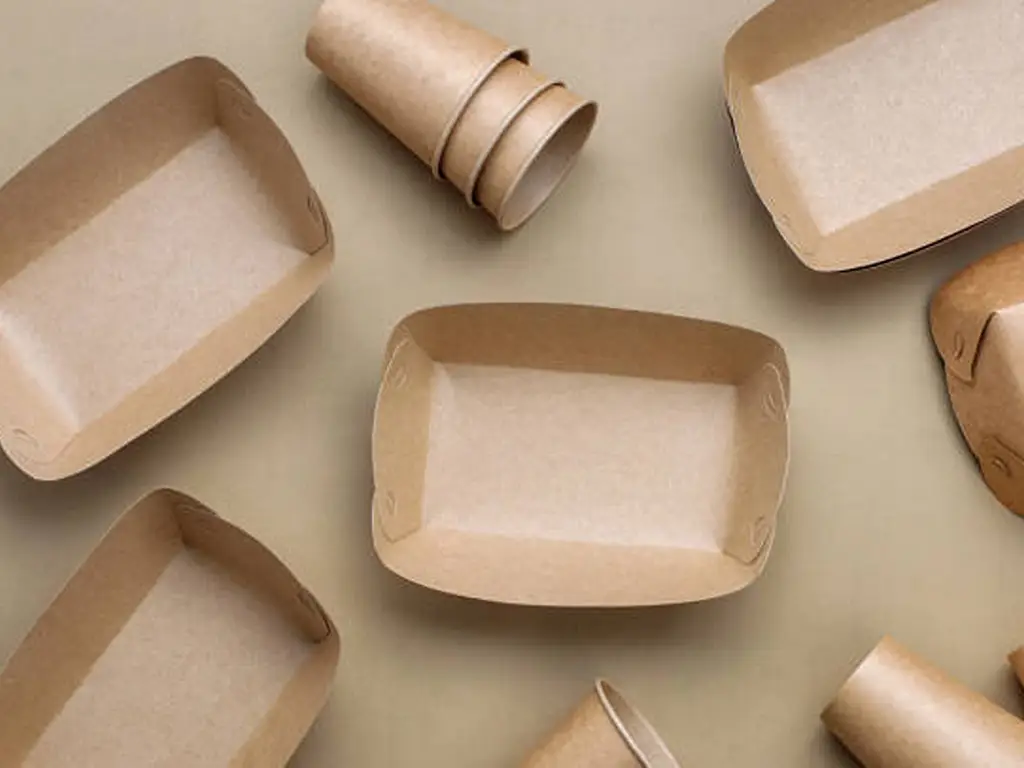
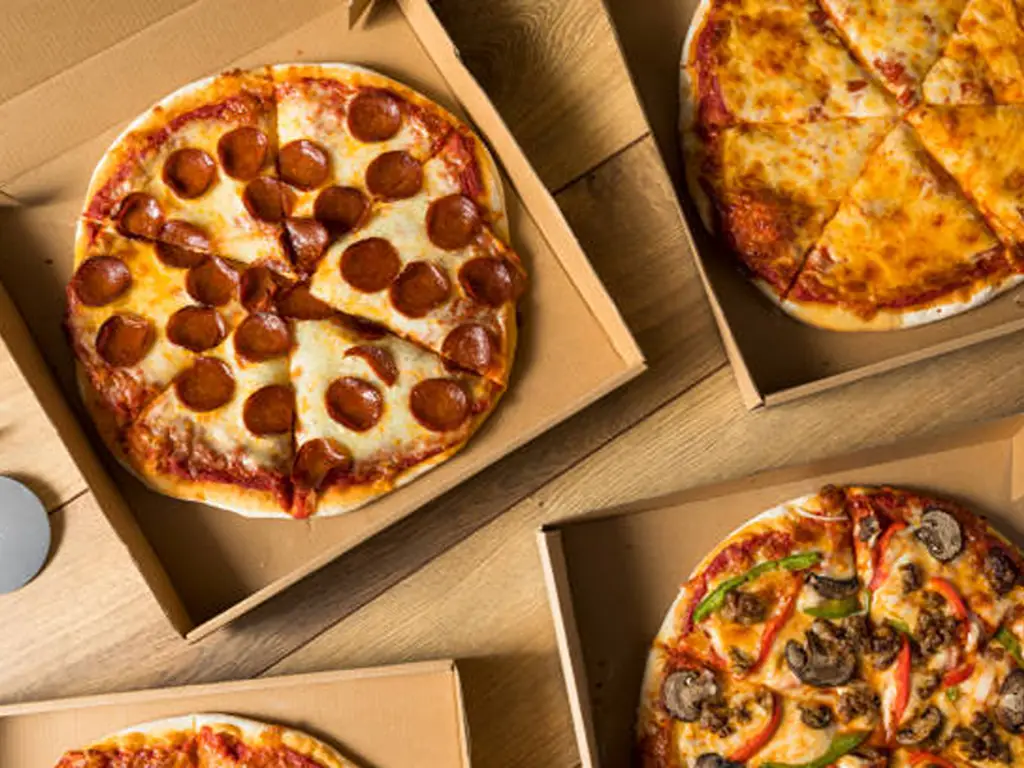
- Paper and paperboard — cups and bowls, clamshells and lunch boxes, bakery and pizza boxes, food buckets, trays, and carry bags. Bare paperboard cannot hold wet or fatty foods; it needs a coating or barrier to keep grease and moisture from migrating through.
- Polymeric coatings — the true food-contact layer on most paper packaging, from cups to lined food boxes. Polyethylene (PE) lamination is the industry default; PLA (polylactic acid, from corn starch or sugarcane) and water-based coatings are the growing alternatives.
- Metals — aluminum foil and coated steel in cans and trays; the coating, not the metal, is usually the regulated contact surface.
- Glass — chemically inert and widely used, mainly outside disposable packaging.
- Rubber and silicone — gaskets, seals, and reusable components.
- Inks, adhesives, and additives — printed surfaces, glued seams, and colorants. They sit on or in the packaging and count as food contact substances in their own right.
One boundary applies to all of them: a material family being authorized does not mean every formulation of it is. Additives, colorants, and processing aids change the regulatory picture, which is why the FDA checks “the regulatory status of each individual substance that comprises” a material, not the category name (FDA, 2018).

The Part Everyone Skips: Approvals Are Tied to Conditions of Use
Every listing in 21 CFR names the use it authorizes — and the conditions attached to that use. This is the single most misunderstood fact in food-contact compliance: FDA approval is not a property of a material; it is a property of a material plus a defined use. The same polymer can be authorized for cold contact and not hot, for aqueous foods and not fatty ones. Reading only the material name out of a regulation is how buyers end up “approved” in one sentence and non-compliant in the next.
FDA approval is not a property of a material; it is a property of a material plus a defined use.
Use conditions are part of the authorization
Every takeaway packaging decision touches four conditions — temperature (room, hot-fill, microwave, oven), food type (aqueous, acidic, alcoholic, fatty), contact (direct or indirect), and duration (single or repeated use). The practical consequence for a buyer:
| Condition | Typical limitation | What it means when you buy |
|---|---|---|
| Temperature | A polymer listed for room temperature may not be authorized for hot-fill or microwave | “Food-safe” claims must state a temperature range; ask for it explicitly |
| Food type | Fatty and alcoholic foods extract more from packaging than water does | A container certified for coffee is not automatically certified for a hot, oily meal or for alcohol |
| Direct vs indirect | Only the layer touching food needs direct-contact authorization | A carry bag or outer box faces a lower bar than the cup or tray inside it |
| Duration | Single-use authorization differs from repeated-use | Reusing single-use packaging breaks the assumption the approval was built on |
Direct vs indirect contact, and what migration testing measures
“Direct contact” means the substance touches the food; “indirect” means it can transfer only through a barrier or over time. Most takeaway items are direct contact, which is why migration testing exists: the FDA reviews testing data “that demonstrates the amount of migration of a food contact substance to food because of its intended use,” alongside toxicology data (FDA, 2024).
Migration testing uses food simulants matched to the food types a package will meet. Under FDA’s chemistry recommendations, results developed with 10% ethanol generally support contact with aqueous and acidic foods; 50% ethanol is used for alcohol-containing foods (and is the FDA-recommended simulant for infant formula); oil-based simulants represent fatty foods (FDA Chemistry Recommendations for Submissions of Food Contact Substances, 2018). When a supplier says “FDA-compliant,” the useful follow-up is: for which food types, at which temperature, verified by which test?
New materials, new routes: recycled plastics and bio-based coatings
Sustainability claims have their own regulatory layer. Recycled plastics are not automatically food-contact approved: through a voluntary program, the FDA reviews recycling processes and, when the evidence shows the recycled material is safe, “issues a favorable opinion letter” — a document you can ask to see (FDA, 2024). A resin code on the bottom of a container is not that document.
Bio-based materials sit on a different path. PLA-lined cups and boxes, bagasse trays, and water-based coatings are not “grandfathered” into 21 CFR because they are natural; they are authorized the same way as any other food contact substance, per substance and per use. The market trend toward compostable and plant-based packaging is real, but the regulatory question never changes: what is the substance, what is the use, and where is the evidence?
Picking the Right Material for Your Product Line
Approved food packaging materials are chosen by application, not by preference. The right question is not “is this material FDA compliant?” but “is this material, with this coating, authorized for the food, temperature, and contact pattern of my product?”
Match by application
- Hot drinks — paper cups with a PE or PLA lining, often with a ripple or double wall for insulation. The lining is the food-contact layer, so lining type and hot-fill temperature must be confirmed together.
- Cold drinks and iced products — PET and PLA clear cups, or lined paper cups; cold contact is the least demanding condition and the most forgiving to specify.
- Soup, noodles, and hot deli food — bowls and containers need a coating that resists oil and moisture penetration; fatty-food contact is the case where “but it is the same board” fails.
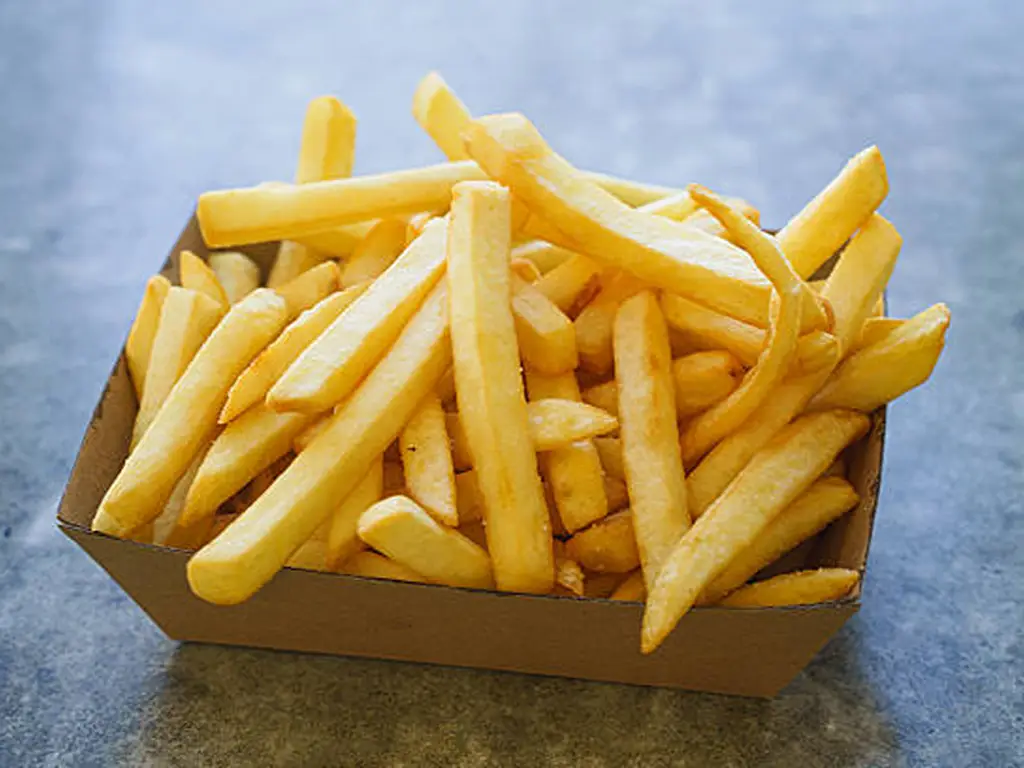
- Hot takeaway meals and fried food — clamshells, lunch boxes, chicken and fries buckets, trays, and grease-resistant bags. Heat and fat arrive together here, which is the hardest combination a paper substrate has to survive, and the one most often specified from a coffee-cup datasheet by mistake.
- Ice cream and desserts — low-temperature contact; lids and cups can be specified independently, since each has its own contact surface.
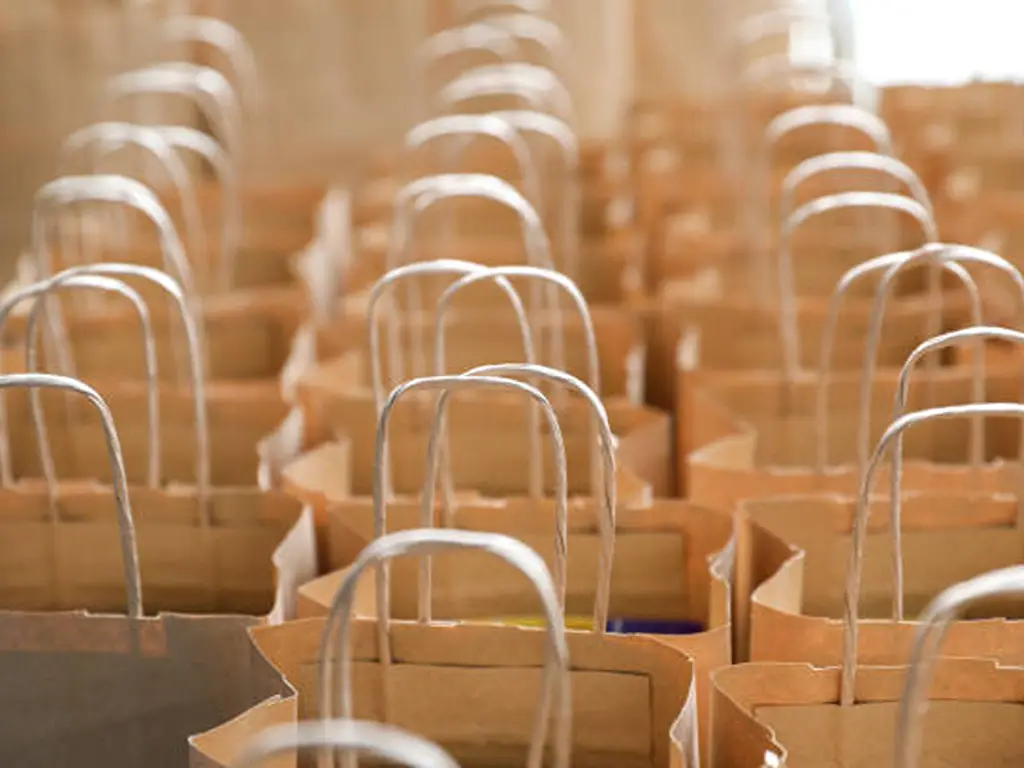
- Bakery and dry goods — cake and pastry boxes, windowed cartons, bread and carry bags. Contact is short and largely dry, but the print layer, the seam adhesive, and the window film each carry a regulatory status of their own.
- Microwave or oven — not all linings or inks survive heat; if reheating is part of your use case, it must be stated at specification time.
The boundary matrix
| Application | Typical material combination | Where it breaks down |
|---|---|---|
| Hot beverages | Paper + PE/PLA lining, insulated wall | Lining rated for warm contact only; inks not heat-set; unlined paperboard collapses |
| Cold beverages | PET or PLA clear cups, PS lids | PS lids on hot drinks; PE-lined cups with cold-only linings used for hot fill |
| Soup / fatty foods | Coated paperboard containers, oil-resistant lining | Uncoated paperboard wicks oil; standard coffee-cup coating tested only for water-based simulants |
| Hot takeaway meals / fried food | Grease-resistant coated board clamshells, boxes, buckets, lined bags | A coating tested for grease or for heat, but not for both together; uncoated kraft wicking oil within minutes |
| Ice cream | Low-temp cups + matching lids | Cups rated cold-only; lids from a different material family without their own authorization |
| Bakery / dry goods | Coated or uncoated board boxes, windowed cartons, paper bags | Window film and seam adhesive carrying no authorization of their own; ink set migrating through uncoated board |
| Reheat / microwave | Microwave-stated containers | “Food-safe” claims without a stated temperature range; unknown ink/coating behavior at heat |
Every row points to the same checklist: state the food type, the temperature, and the contact surface — then verify that the supplier’s authorization covers exactly that combination.
Specification parameters to demand from the supplier
- Lining type (PE, PLA, water-based) and whether it is the food-contact layer
- Stated use temperature range (cold, hot-fill, microwave)
- Food types covered by testing (aqueous, acidic, alcoholic, fatty)
- Board weight (gsm) and coating weight
- The authorization reference (21 CFR part or FCN number) for the contact layer
- Certifications relevant to your export markets (FDA, LFGB, FSC, BPI)
How to Verify a Supplier’s FDA Compliance
This section exists because the market is full of confident claims and short on documents. A supplier’s “we are FDA approved” deserves a four-step verification, and each step is checkable in minutes:
- Ask for the documents. A compliance declaration (declaration of compliance or CoA), a migration test report, and the specific authorization reference — a 21 CFR part number or an FCN number — for the food-contact layer.
- Check the reference exists. The 21 CFR inventory and the FCN inventory are public databases (FDA, 2021). A citation that cannot be found there is a claim, not a reference.
- Match the conditions. The documented use conditions (temperature, food types, contact) must cover your application — not a similar one.
- Verify the batch. Traceability markers — batch numbers, production dates printed on the item — let you connect the test report to what you actually receive.
Along the way, expect to meet the claims that look like evidence but are not:
| The claim | Why it is not evidence | What to ask for instead |
|---|---|---|
| Resin recycling code on the bottom | Identifies the polymer type; says nothing about authorization for food contact | The 21 CFR or FCN reference for the specific grade |
| “BPA-free” on the label | Addresses one substance; says nothing about the rest of the formulation | Migration test data for the actual food-contact layer |
| “FDA approved” in large type | Not an FDA phrase; no reference attached | The regulation or notification number behind the claim |
| Fork-and-glass icon | Industry convention, not a certification | The underlying test report and declaration of compliance |
Here is the one fact this article hinges on, and it deserves to stand alone: a claim on a label is not evidence. A 21 CFR or FCN citation, a migration test report, and a traceable batch number are. Importers sourcing food-contact packaging from distant suppliers will recognize the pattern: attractive samples, prompt quotes, nothing verifiable behind the slogan. Brands that skipped the document check have paid in rejected shipments and recalled batches. The verification above takes an afternoon and never fails to separate the suppliers who can produce documents from the ones who cannot.
A claim on a label is not evidence. A 21 CFR or FCN citation, a migration test report, and a traceable batch number are.
What This Means for Distributors and Importers
Every claim this article has made points one direction for distributors and importers: make the documentation chain the first filter in supplier selection — before price, before MOQ. Here is why the order matters.
Your customers — restaurant chains, coffee brands, bakeries, QSR groups, catering operators — are themselves audited on packaging compliance. When their auditor asks where a batch of cups, boxes, or bags came from, the answer has to be a document, not a memory of a sales call. An intact documentation chain turns that audit into a selling point you pass down the line; a “FDA approved” that is a phrase and a logo makes you the compliance liability.
The economics follow the same logic. In a market where every competitor claims compliance, the differentiation that survives scrutiny is the evidence itself: the supplier who hands over the test report, the authorization reference, and the batch traceability has given you an asset you can resell to your own customers — and an argument that survives their verification.
Three actions for your next sourcing round
- Add a “documentation chain” column to your supplier scorecard — references, test reports, traceability — and make it a pass/fail gate before price comparison.
- Verify one batch end-to-end (documents → reference lookup → sample match) before committing volume to a new supplier.
- Offer the verification path proactively to your downstream customers; it converts a compliance burden into a trust advantage.
When you are ready to verify rather than trust, YoonPak can walk you through the documentation behind its FDA- and LFGB-compliant cups, bowls, takeaway containers, bakery boxes, and paper bags, and our certifications and compliance documentation are published in our manufacturer profile, so you can ask us for the documentation on your next order through our contact page.
Get the Evidence in Your Hands
Ask for our FDA and LFGB compliance declarations, migration test reports, and certification numbers — the documentation behind the claim, ready for your verification.
Request Compliance DocumentsReferences
- U.S. Food and Drug Administration. “Food Packaging & Other Substances that Come in Contact with Food — Information for Consumers.” 2024. https://www.fda.gov/food/food-ingredients-packaging/food-packaging-other-substances-come-contact-food-information-consumers
- U.S. Food and Drug Administration. “Inventory of Food Contact Substances Listed in 21 CFR.” 2021. https://www.fda.gov/food/packaging-food-contact-substances-fcs/inventory-food-contact-substances-listed-21-cfr
- U.S. Food and Drug Administration. “Determining the Regulatory Status of Components of a Food Contact Material.” 2018. https://www.fda.gov/food/packaging-food-contact-substances-fcs/determining-regulatory-status-components-food-contact-material
- U.S. Food and Drug Administration. “Guidance for Industry: Preparation of Premarket Submissions for Food Contact Substances (Chemistry Recommendations).” 2018. https://www.fda.gov/regulatory-information/search-fda-guidance-documents/guidance-industry-preparation-premarket-submissions-food-contact-substances-chemistry
- YoonPak. “About — Certifications and Compliance.” https://www.yoonpak.com/about/
- YoonPak. “Contact.” https://www.yoonpak.com/contact/




 English
  German
  Spanish
  Italian
  Dutch
Dutch  French
  Portuguese
  Russian
  Arabic
  Korean