

Paper Straw Sizes Explained: Inner vs Outer Diameter, 12mm vs 13mm, and Every Length You’ll Need
Why Straws Come in So Many Sizes: The Diameter Rule
Walk down any drink aisle and you’ll see the same tube sold in a confusing spread of widths: cocktail-thin, everyday, jumbo, and the extra-wide boba straws that look closer to a pen than a straw. None of these sizes are random, and none are a manufacturer’s whim. Every straw diameter is a functional answer to one question: what has to pass through it?
Think of it as a two-part rule. Diameter decides what can pass through and how fast liquid flows; length decides whether the straw reaches the bottom of the cup. A standard soda gets a narrow tube because thin liquid flows fast on its own — the straw throttles it to a comfortable sip. Bubble tea gets the widest bore in the industry because a tapioca pearl is roughly 8.5 mm across (Custom Cup Factory, 2023), and a narrow straw would simply jam.
One clarification before we go further: the political back-and-forth over whether paper straws “should” exist (including the 2025 U.S. federal reversal of a federal paper-straw mandate) is a separate conversation from sizing. This guide answers one question only — what size fits which drink — and we’ll touch on policy only where it changes what you should buy.
Paper Straw Size Chart: Every Diameter & Length, Decoded
Here is the full picture in one table, with the two workhorse sizes marked. Diameters below are outer diameters unless stated — a distinction that matters more than you’d think (we’ll get to it in a moment).
| Diameter | Common Lengths | Best For | Watch Out |
|---|---|---|---|
| 3–5 mm | 5–7 in | Cocktails & juice boxes | Only thin drinks; useless for milk tea |
| 6 mm | 7.5–8.5 in | Water, soda, iced coffee — the everyday standard | Too narrow for pearls or thick smoothies |
| 7 mm | 7.5–9 in | Standard drinks with a slightly faster flow | Less common than 6 mm; check what your supplier actually stocks |
| 8 mm | 8.5–10 in | Tall glasses, medium smoothies, slushies | Can feel heavy for plain soda |
| 10 mm | 8.5–10 in | Thick smoothies, milkshakes, iced coffee blends | Overkill for thin drinks |
| 12 mm | 8–9 in | Boba / bubble tea with tapioca pearls | The mainstream boba size — see the 13 mm caveat below |
| 13 mm | 8–9 in | The newer “boba” listing at some suppliers | Not yet universal; confirm before assuming |
Two stars worth remembering: 6 mm and 12 mm are where the volume is. The 6 mm straw is the standard drinking straw — one major foodservice distributor calls it the standard diameter (WebstaurantStore, updated 2026) — and 12 mm is the default boba straw across wholesale suppliers (Million Pack, 2025). Length follows the cup, not the menu: a straw should sit roughly 1–2 inches above the rim of the glass (Million Pack, 2025). In practice that means 7–8.5 in for a 12–16 oz fountain cup, 8.5–10 in for a tall 16–24 oz cup, and 10 in-plus only for oversized tumblers.
Material doesn’t change the math. Paper, PLA, and reusable straws all come in the same sizes — which is convenient, because it means you can switch materials without re-specifying your entire drinkware.
Which Straw Sizes Should You Stock? Menu-Matching + What’s Changing
Most foodservice operators don’t need the whole chart — they need the two or three sizes their menu actually touches. Here’s a checklist you can run against your drink list in about two minutes:
Match your menu in two minutes
Plain tea, coffee, soda, juice → stock 6 mm
Smoothies, slushies, thick iced blends → stock 8–10 mm
Milkshakes, frappes → stock 10 mm
Boba / pearl milk tea → stock 12 mm (or 13 mm — see below)
Cocktails and short glasses → stock a 3–5 mm short straw
If you serve boba and regular drinks, two sizes (6 mm + 12 mm) cover ~90% of orders
A single-drink shop (say, an American-style coffee or soda bar) can run on 6 mm alone. The moment pearls, fruit jellies, or popping boba enter the menu, 12 mm stops being optional — it’s the difference between a working drink and a customer fishing a jammed pearl out of their mouth.
Two changes in the market are worth planning around, because both directly affect what you order this year:
Toppings are getting bigger. Popping boba and large fruit pearls run larger than standard tapioca (standard pearls are ~8.5 mm; the specialty ones are bigger still), which is why a 13 mm boba size is starting to appear in distributor catalogs — WebstaurantStore’s 2026 straw guide now lists boba straws at 13 mm (WebstaurantStore, updated 2026). If your menu uses large pearls, don’t let “12 mm is the standard” talk you out of buying the wider option.
Regulation is diverging by market. The EU banned single-use plastic straws in 2019 via its Single-Use Plastics Directive, and Taiwan — home to more than 20,000 bubble tea shops selling over 100 million drinks a year — banned petroleum-based plastic straws the same year (Renouvo, 2024). Meanwhile the U.S. federal government reversed its own paper-straw mandate in 2025. For an exporter or a multi-region chain, the practical takeaway: spec paper or compostable straws for EU/Taiwan-bound orders and verify local rules state-by-state for U.S. orders. The sizing logic doesn’t change — the material requirements do.
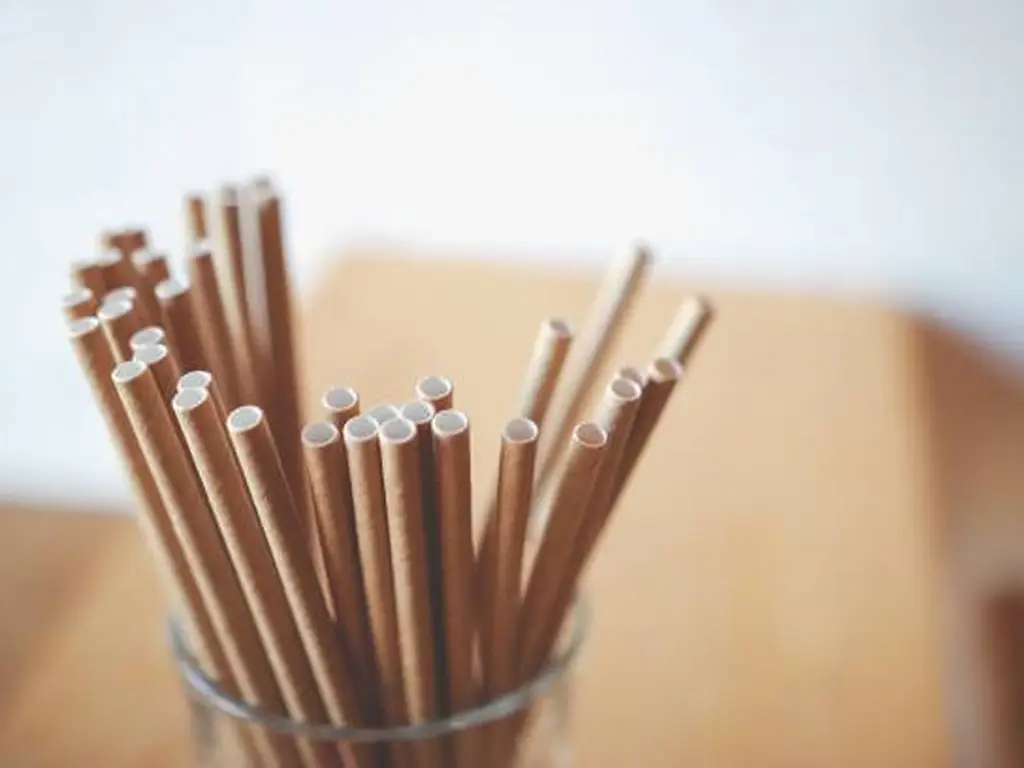
Menu specs are shifting — if your order sheet still says “standard 12mm,” run it against the topping sizes you actually serve before you commit.
Get straw specs matched to your menuReading Specs Like a Pro: Inner vs Outer Diameter, 12mm vs 13mm
This is where most size-guide readers get burned, because the guides rarely mention it.
Inner vs Outer Diameter: The Same Straw, Two Numbers
A paper straw has a wall, and the wall is usually about 1 mm thick — which means a single straw legitimately carries two diameters: the inner diameter (what the liquid and the pearls actually flow through) and the outer diameter (what fits through the lid hole and what your lips touch). One supplier lists its standard paper straw as inner 6 mm, outer 8 mm on the same product page (Roc Paper Straws); another sells an “8 mm” straw without saying which one it means (Amazon).
So when two quotes say “6 mm” and “8 mm,” they can be describing the same tube. The one question that makes or breaks your price comparison: is that the inner or outer diameter? Write it into every RFQ, and treat any supplier who won’t answer as a red flag.
One straw, two numbers
6 mm inner and 8 mm outer can describe the very same tube — the spec sheet that doesn’t say which is which isn’t usable yet.
12mm or 13mm? How a “Standard” Drifts
The boba straw has a standards problem that no single source will tell you about. The mainstream wholesale answer is 12 mm (Million Pack, 2025; Custom Cup Factory, 2023), but 2026 distributor listings include 13 mm as the boba size (WebstaurantStore, updated 2026), and some shop owners run 10 mm boba straws in practice (Facebook foodservice groups, 2026). Nobody is “wrong”. The industry never standardized a nominal boba bore, and the pearl sizes it serves keep growing.
For a buyer, this is a decision, not a trivia note: a 13 mm straw swallows standard 8.5 mm pearls effortlessly and handles larger ones; a 10 mm straw will jam on many pearls. State “12 mm or 13 mm” explicitly on your order — never leave it to the supplier’s default.
Every size on the chart has a load it can’t carry. Run your menu against this boundary matrix before you commit to a spec:
| Size / Spec | What It Handles | Where It Fails |
|---|---|---|
| 6 mm | Thin drinks (soda, tea, juice) | Jams on any pearl or pulp chunk; too slow for thick smoothies |
| 8–10 mm | Medium-thick drinks, small fruit bits | Clogs on standard 8.5 mm pearls; unwieldy for plain soda |
| 12 mm | Standard tapioca pearls (~8.5 mm) | Fails on popping boba and large fruit pearls |
| 13 mm | Standard + large pearls | May not fit lids with small openings — confirm lid hole ≥ 13 mm before ordering |
| Length under cup height + 1 in | Short glasses only | Customers can’t reach the bottom of a 16–24 oz cup |
| Uncoated paper | Cold drinks under ~60°C | Goes soft in hot drinks and long-dwell beverages (see the soggy section below) |
Length Rules: Match the Cup, Not the Menu
Length is the part buyers most often get wrong, because they match it to the drink rather than the vessel. The rule is mechanical: cup height plus 1–2 inches. A 12–16 oz fountain cup → 7–8.5 in straw; a tall 16–24 oz cup → 8.5–10 in (Million Pack, 2025). A straw too short for the cup forces customers to tilt or fish; too long looks unstable and flops over the rim. If you serve both standard and tall cups, two lengths are a normal SKU decision, not over-buying.
Here is the sizing fact worth remembering above all others in this guide: one straw, two numbers — a 6 mm inner and an 8 mm outer can describe the very same tube, so any spec sheet that doesn’t say which is which is not yet a usable spec sheet.
Spec gap vs. failure: 6 mm straw + 12 mm pearls = jammed straw. 10 in straw + 8 oz cup = flopping straw. 13 mm straw + standard pearls = fine (just wider). The failures are all predictable from two measurements: inner diameter vs. pearl size, length vs. cup height.
What to Check Before Ordering Straws From a Supplier
Once you know your sizes, the next filter is the supplier — and the checklist is shorter than most buyers think:
Before you order
Food-contact certification: FDA and LFGB are the baseline for paper straws sold into foodservice; BPI or DIN is a compostability claim — don’t confuse the two; ask for the certificate number, not the logo
Inner and outer diameter stated separately on the spec sheet
Wall construction stated: number of paper plies or grams per square meter (GSM)
Temperature claim: what’s the straw rated for? (paper straws generally suit drinks under ~60°C — see next section)
MOQ, lead time, and packaging (individually wrapped vs. loose) written into the quote
Custom printing: artwork requirements (vector files), proof turnaround, and reorder terms
Two boundaries worth stating plainly. First, FDA certification covers food-contact safety. It says nothing about compostability, and the word “biodegradable” on a pack is a marketing claim with no legal meaning in most jurisdictions; a real BPI or DIN certificate number is the only evidence that counts. Second, wrapped straws cost more per unit than loose ones but are effectively mandatory for self-serve stations and most QSR health expectations — budget for it rather than discovering it mid-season.
Why Paper Straws Go Soggy (and How to Spec Around It)
The single most complained-about paper product in foodservice is the soggy straw — and it’s the one place where consumer outrage and buyer reality part ways.
What Actually Makes a Straw Soggy
Read the complaints and you’ll find two camps: customers who swear every paper straw turns to mush in five minutes (“98% plastic, 2% soggy paper,” r/mildlyinfuriating, 2025), and customers who report paper straws that never go soft (r/The10thDentist, 2023). Both are telling the truth. Sogginess isn’t a property of paper straws; it’s a property of three variables:
- Wall construction — how many layers of paper and how tight the spiral wind. A thin, loosely wound single-layer straw wets through fast; a multi-ply, tightly wound tube holds its structure for the life of the drink.
- Coating — uncoated paper wicks liquid immediately; a water-resistant (e.g., PLA or water-based) coating buys meaningful time. This is the single biggest spec difference between a cheap straw and a serviceable one.
- Use conditions — paper straws are generally rated for drinks under about 60°C (Renouvo, 2024), and long dwell times or fatty/acidic drinks accelerate breakdown.
The practical translation for a buyer: if your customers complain about soggy straws, the fix is usually a spec change (more plies, coated), not a material change. PLA straws don’t soften the same way, but they carry their own caveat. They only compost in industrial facilities, so their environmental story is weaker where no commercial composting exists.
A 3-Minute Field Check for Buyers
You don’t need a lab to vet a straw order. Three checks catch most of the problem:
- The soak test — drop a sample in cold water for 10–15 minutes and see whether it holds. (Warm-water test for hot-drink straws, with the supplier’s temperature claim in hand.)
- The caliper check — measure wall thickness and ask for the ply count. If the supplier can’t state plies or GSM, they’re selling you a commodity you can’t compare.
- The pearl test — drop a standard 8.5 mm pearl through the straw you’re buying. If it doesn’t pass cleanly, the diameter spec is wrong regardless of what the label says.
The soggy-straw debate is a spec problem, not a material problem: coated, multi-ply paper straws survive a full drink; uncoated single-ply ones don’t. When complaints reach you, compare plies and coating first — before you abandon paper entirely.
For Distributors: Build Your Straw SKU List in Four Steps
If you’re a distributor or importer, everything above collapses into one operational question: what goes on your SKU list? The four-step build follows the same logic chain you’ve just read — no new arguments needed.
The Four-Step SKU Build
- Identify your market’s largest topping. Standard tapioca runs ~8.5 mm; popping boba and large fruit pearls run larger. Your biggest pearl defines the floor for your widest bore.
- Derive the bore from the pearl. Pearl + clearance margin = your widest diameter (12 mm mainstream, 13 mm if large pearls are common in your market).
- Match lengths to your customers’ cups. 7–8.5 in for 12–16 oz cups, 8.5–10 in for tall cups — order by the cup heights your buyers actually stock.
- Lock certifications by destination. EU and Taiwan-bound stock needs compostability credentials under active plastic-straw bans; U.S. buyers need state-level checks since the federal reversal.
What Goes on the Quote Sheet
Three items make the difference between a quote that closes and one that starts a dispute: the 12 mm vs 13 mm call written explicitly (don’t inherit a supplier’s default), inner and outer diameter stated separately, and plies or GSM for the wall. Stocking “common sizes” without this discipline is how a distributor ends up with a dead inventory line — the industry’s diameter drift and your market’s topping trends will keep moving beneath you.
On the supplier side, we’ve built our straw line around this same logic rather than a fixed size chart. Our wrapped drinking straws are made from virgin wood pulp, bamboo pulp, or recycled paper, coated for rigidity in hot and cold drinks, and certified for food contact (FDA, LFGB) with BRC and FSC covering the plant and paper chain (YoonPak straw product page). Because sizes are fully customizable, the 12 mm vs 13 mm question never limits your menu — you order the exact bore your pearls need, from 6 mm standard to boba widths. See the full breadth of our food-packaging line when you’re ready to compare against your current quote sheet.
If your next order needs the 12 mm vs 13 mm call settled against your actual topping sizes, YoonPak ships free standard samples within 48 hours and keeps standard lead times at 25–35 days — ask us directly and we’ll walk your menu’s largest topping through the four steps with you.
Spec your straw order against real pearl sizes
Send us your largest topping size and cup range — free standard samples ship within 48 hours, standard lead times run 25–35 days.
Request straw samples & a quoteReferences
- WebstaurantStore. “Types of Drinking Straws.” Updated August 13, 2026. https://www.webstaurantstore.com/guide/594/types-of-drinking-straws.html
- Renouvo. “Drinking Straw Size Chart.” 2024. https://renouvo.net/biodegradable-compostable/drinking-straw-size-chart/
- Custom Cup Factory. “Finding The Perfect Size For Your Boba Straws.” December 2023. https://customcupfactory.com/blogs/news/finding-the-perfect-size-for-your-boba-straws-heres-your-guide
- Million Pack. “A Guide to Drinking Straw Sizes.” November 2025. https://millionpack.com/a-guide-to-drinking-straw-sizes/
- Mordor Intelligence, cited in Alibaba Seller Blog. “Drinking Straws vs Cocktail Stirrers: A Complete B2B Guide.” 2026. https://seller.alibaba.com/blogs/2026/southeast-asia/beverage-accessories/drinking-straws-vs-cocktail-stirrers-b2b-guide-alibaba
- YoonPak. “Food Packaging by Type.” https://www.yoonpak.com/food-packaging-by-type/
- YoonPak. “Disposable Wrapped Drinking Paper Straw.” https://www.yoonpak.com/product-item/disposable-wrapped-drinking-paper-straw/
- YoonPak. “Contact.” https://www.yoonpak.com/contact/

 English
  German
  Spanish
  Italian
  Dutch
Dutch  French
  Portuguese
  Russian
  Arabic
  Korean