

If a paper bag has failed you, the handle was almost certainly the first thing to go. That is not bad luck — it is physics. The bag body sits still under the weight of what you carry, while your hand puts the entire lifting force through one narrow strip of paper. Every gram of load concentrates at the handle, and every kilogram of pull concentrates at the two points where the handle meets the bag.
That is also where the break happens. Shoppers describe it precisely: bags “ripping as soon as I lifted them,” handles with what one grocery shopper calls “like a 50% break rate,” a Whole Foods bag coming apart mid-subway. The common thread is that the failure is almost never the bag wall — it is the junction, the small zone where a handle is attached or punched out. Understand that junction and you understand every paper bag handle on the market.
Two things make the junction fail faster than it should. Wet paper loses most of its strength, so a condensation-soaked bag from a cold aisle fails at a fraction of its dry capacity. And a fast, angled pull (the yank you use when your other hand is full) concentrates stress on one side of the junction instead of spreading it across both. (If you came here looking for origami tutorials, stop reading: “handling” a bag is a craft project, not the buying decision this guide is about.)

The 5 Handle Types, and Where Each One Gets Its Strength
Every handle on the market is one of five structural families. The name tells you what it looks like; the structure tells you how strong it actually is.
Twisted paper handles. Two strips of kraft paper twisted together, sometimes around a reinforcing core. The twist is genuine engineering — it distributes tension across two interlocked strands instead of one flat strip — which is why it is the default for grocery and retail bags worldwide.
Flat paper handles. A folded strip of paper glued across the top. The strength comes from the fold stacking multiple paper layers. It runs on fully automatic production lines, which makes it the cheapest handle to manufacture, and it dominates takeout and bakery bags.
Die-cut handles. No separate material at all — an opening is punched straight into the bag top. There is nothing to attach and nothing to come loose, but the entire load is carried by the paper you chose. A thin bag with a die-cut handle has a thin bag’s capacity; heavy-duty die-cut bags rely on a reinforced board inside the handle area.
Rope handles. Cotton or polyester cord, tied through punched holes or fixed with shoe-buckle fittings. Strength comes from the cord material itself, not the bag. This is the premium tier — luxury retail, gift, and high-end takeout.
Ribbon handles. Satin, grosgrain, or nylon ribbon, usually sewn into a folded top or fitted with buckles. The weakest point is the attachment, which is why good ribbon construction is always sewn — the seam spreads load across the entire top edge.
| Type | Material | Load range | Best for | Fails first when | Relative cost |
|---|---|---|---|---|---|
| Twisted paper | Paper (optionally cored) | Light to medium | Grocery, retail, merchandise | Paper is wet or low-gsm | Lowest |
| Flat paper | Folded paper | Light | Takeout, bakery, fast food | Handle detaches from top glue | Lowest |
| Die-cut | Bag paper only | Depends on gsm | Retail, promotional | Paper is thin or overloaded | Lowest |
| Rope | Cotton or polyester cord | Medium to heavy | Luxury retail, gift | Knot pulls through punched hole | Medium to high |
| Ribbon | Satin, grosgrain, nylon | Light to medium (sewn) | Gift, cosmetics, boutique | Sewn seam or buckle fails | High |
One honest caveat before you choose: there is no universal load-rating standard for paper bag handles. The load ranges above are directional industry practice, not a certified specification — which is exactly why the next two sections matter.
The Two Questions No Article Answers: Is Twisted Really Stronger? And Why Are Stores Dropping Handles?
The twisted handle controversy: same handle, opposite verdicts
Search “paper bag handles” and you will find twisted handles described as the sturdiest option and as barely able to hold “more than a couple of pounds”, sometimes on adjacent pages of the same results. The twist geometry genuinely strengthens the handle: two interlocked strands share the load and resist tearing at the attachment. So why the contradiction?
Because the handle type is only one variable. The deciding variables are the paper’s grammage, the number of strands and whether the rope is cored, and how the ends are attached. Manufacturer-measured figures show exactly how much this matters: a 100 gsm bag has a handle breaking point of about 120 N, a 120 gsm bag 185 N, and a 150 gsm bag 260 N — more than double from the bottom of the range to the top. A “weak twisted handle” is usually a low-gsm bag wearing the name of a strong one.
The Twisted-Handle Debate, by the Numbers
100 gsm bag
≈ 120 N breaking point
120 gsm bag
≈ 185 N breaking point
150 gsm bag
≈ 260 N breaking point
The type name tells you the geometry — the grammage tells you the strength.
Why some stores stopped putting handles on paper bags
It is not a supply shortage — it is a deliberate product decision, and it has three drivers. Cost: a handle is the most expensive single component of a bag after the paper itself, and removing it removes materials and assembly steps at once. Recycling: a fully paper bag goes straight into the paper stream, while mixed-material handles (polyester, nylon, or polypropylene cord) have to be separated — some bag buyers are simplifying their recycling story by dropping handles entirely. And quality backlash: with handle-failure complaints piling up, at least one national chain has decided that no handle beats a handle that rips, telling shoppers in effect, “this way you carry it differently.”
Read it as a signal, not a verdict: the handle is going from a default feature to a deliberate option. That makes choosing well more valuable, not less — and it starts with what you specify.
What to Specify: Construction, Cost, and the Parameters That Matter
Construction: the other half of the strength
Here is the fact most buyers never hear: the handle carries half the load, and the bag’s top construction carries the other half. A double-fold top spreads tension across the entire edge instead of one glued spot. A reinforced board inside the handle area (400 gsm on heavy-duty die-cut bags) turns a punch hole into a load-bearing point. An eyelet protects the hole itself from tearing. And the attachment method decides how force is delivered: a knotted rope concentrates pull at a single hole, while a sewn-in handle distributes it along the whole seam. Specify the top construction, and you are specifying the failure mode.
The Other Half of the Strength
The handle carries half the load. The bag’s top construction — double fold, reinforcement board, eyelet, seam — carries the other half.
What each handle actually costs
Nobody in the SERP gives you numbers here, but the structure is simple. The cheapest handles are the ones with no additional material: die-cut openings and twisted paper rope. The cost then climbs with the material — paper below cotton below polyester and satin below nylon — and with the assembly step: flat paper handles run on automatic lines, while sewn ribbon handles are hand-assembled at some stage. A reasonable rule of thumb: handle cost moves in the same order as the table above, from lowest (twisted, flat, die-cut) to highest (rope, ribbon).
The spec sheet you can send a supplier
Before you order, ask for these in writing
- Paper grammage (gsm) and the bag size it applies to
- Handle material, strand count or diameter, and core (cored vs. uncored)
- Attachment method: knotted, buckled, or sewn — and where the stress concentrates
- Top construction: single fold, double fold, reinforcement board, eyelets
- Load test: what was measured, and how (there is no universal standard — ask for their method)
- MOQ and lead time, split between stock and custom-printed
- Recycling story: fully paper, or mixed materials with separation instructions
If a supplier can answer all seven points with specifics, you can compare them with confidence. If they answer with “very strong,” they have not tested it.
Where Handles Come From: What a Manufacturer Actually Controls
Everything in the spec sheet above is decided before your bag is made. Paper source sets the grammage and the fiber quality; the bag line sets the fold and reinforcement construction; the assembly step sets the attachment; the QC pass decides whether 100 of your 10,000 bags ship with a weak junction. Buyers choose specifications — manufacturers choose physics. The practical consequence: the same spec sheet that helps you choose a handle also helps you choose who makes it.
This is also where the industry’s honesty gap sits. Because there is no universal load standard, no manufacturer can hand you a certified “guaranteed” number — but any manufacturer who has actually tested will have a method and a data sheet, not an adjective. That is the difference worth paying attention to.
Before You Order: How to Verify a Supplier’s Handle (3 Questions)
When a bag fails, read the break before you blame the bag. A tear at the attachment point means a weak junction — construction or paper. A snapped cord means a material problem. A wet, overloaded, or yanked bag is a usage problem: even the best handle “breaks” when it is carrying three times its design load, and store staff will tell you that how a bag is snapped open — not the bag itself — is often what starts the tear.
Verify Before You Order
What is the attachment construction — knot, buckle, sewn, reinforced board?
What load was it tested at, and with what method? Reject “very strong” as an answer.
What is the recycling story — fully paper, or mixed materials that need separation?
Finish with a physical test: load the bag with your actual product at your actual weight, carry it with a normal sway, keep a sample for comparison.
The Business View: Handles Are a Product Decision, Not a Trim Decision
For a distributor or brand buying bags by the container, the handle is the cheapest component and the most expensive failure point. Eight out of eight failure stories you will find online are handle stories; the market has zero published load data; and the “no-handle” trend is quietly rewriting what customers expect. That combination is an information gap, and the gap is the margin: the supplier who can hand you a tested spec sheet is selling certainty, and certainty carries a premium no catalog price can match.
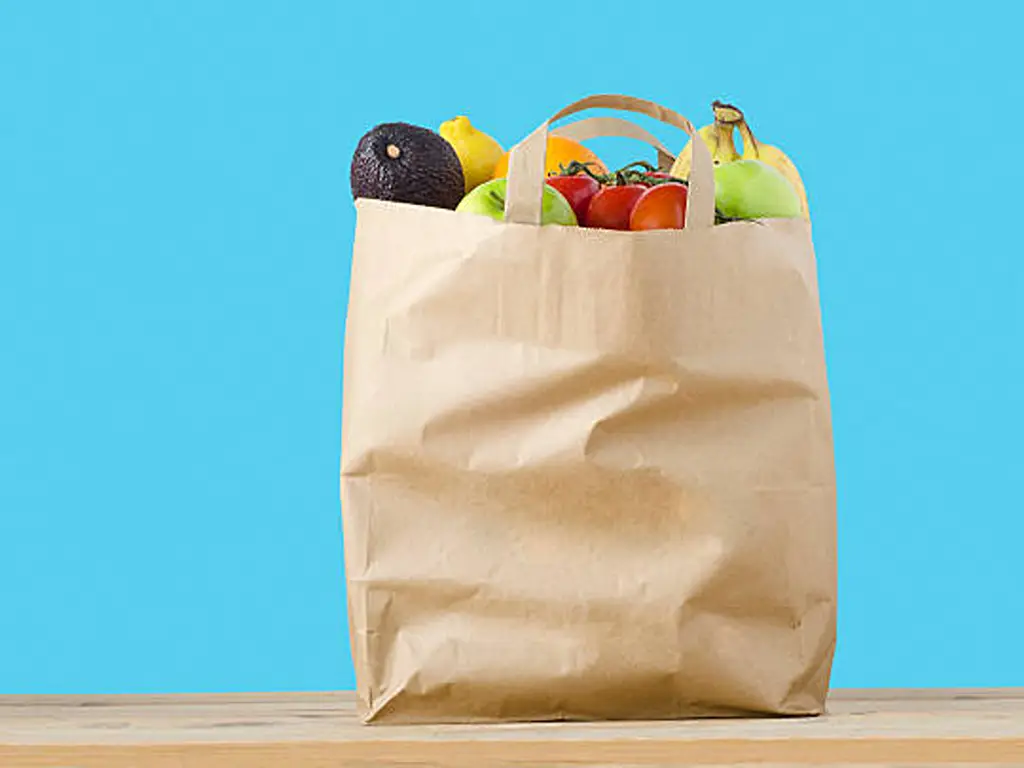
Turn the load ranges from this article into a three-tier product line: light (under 2 kg — flat or twisted paper), medium (2–5 kg — twisted with core, or polyester rope), heavy (5 kg+ — cotton rope, sewn ribbon, or die-cut with reinforcement). Offer the tiers to your customers by what they actually put in the bag — a bakery, a cosmetics seller, and a takeout chain are buying three different products. And given the no-handle trend, hedge your stock: fully paper no-handle bags, mid-duty twisted, and heavy-duty reinforced — not a single bet.
At YoonPak, paper bags are a core line rather than an afterthought: we build all five handle types in-house — flat, twisted, die-cut, rope, and ribbon — hold flexible MOQs from 500 pieces up, and quote custom printing in 3–5 weeks from artwork approval, so the seven-point spec sheet above is something we sign off on with every order. Browse our custom paper bag line (our custom paper bag line) and the kraft handle-bag spec (our kraft bag with handle spec) for the numbers.
Spec Your Bags With Numbers, Not Adjectives
Tell us what you pack — weight, volume, positioning — and we’ll match the handle type, construction, and MOQ to it. Flat, twisted, die-cut, rope, or ribbon; 500-piece minimums; custom printing in 3–5 weeks from artwork approval.
Request Bag Specs & SamplesReferences
- Jet Paper Bags. “A Guide to Paper Bag Handle Types.” 2024. https://jetpaperbags.com/blogs/paper-bag-blogs/a-guide-to-paper-bag-handle-types
- CNLIPACK. “Paper Bag Handle Types: 5 Options Compared.” 2024. https://cnlipack.com/guide-on-paper-bag-handle-types/
- YoonPak. “Custom Paper Bags.” 2026. https://www.yoonpak.com/product-category/custom-paper-bags/
- YoonPak. “Customizable Disposable Kraft Paper Bag with Handle.” 2026. https://www.yoonpak.com/product-item/customizable-disposable-kraft-paper-bag-with-handle/
- YoonPak. “Paper Bag Sizes.” 2026. https://www.yoonpak.com/paper-bag-sizes/
- YoonPak. Homepage. 2026. https://www.yoonpak.com/




 English
  German
  Spanish
  Italian
  Dutch
Dutch  French