

Greaseproof Paper vs Wax Paper: What Actually Separates Them (and Why It Matters)
Wax Paper vs Greaseproof Paper: The Barrier Is the Whole Story
Walk into any kitchen supply aisle and the two rolls sit side by side, looking almost identical: same translucent sheet, same waxy feel, same box. Swap them by accident and one recipe gets ruined. Or one takeaway order comes back with greasy paper and a melted patch across the food.
The reason they behave so differently has nothing to do with color or thickness. It’s the barrier — the thing each paper uses to stop oil and moisture from passing through. Wax paper is paper coated with a layer of paraffin (or soybean) wax: the wax is what repels grease and water, and the moment it melts, the barrier is gone. Food-grade paraffin melts in the roughly 46–68°C (115–154°F) range depending on grade (hywax.com), and most kitchen wax paper starts softening around 50°C (122°F) (waxpaperglobal.com, 2025). An oven is 150–230°C. The math doesn’t need a calculator.
Greaseproof paper (in the British/European sense of the term) does the same job with no coating at all. Its fibers are mechanically refined and compressed until the sheet itself is dense enough to block oil, which is why it’s also called “densified” or “beaten” paper. Because nothing melts, it shrugs off oven heat up to roughly 220°C (428°F) (waxpaperglobal.com, 2025).
One naming note before we go further: “greaseproof” is used loosely across regions. In the US, it’s often applied to parchment paper; in South Asia you’ll hear “butter paper”; in delis, “sandwich paper.” And the box that says “wax paper” and the one that says “waxed paper” are the same product. Names change — the barrier doesn’t. Check what the paper uses to stop oil, and the label stops mattering.
One number explains most of the confusion between the two papers.
The Three Barriers Behind Every “Greaseproof” Label
If you’ve read two articles about this topic, you’ve probably read two contradictory ones — one says greaseproof paper is just parchment under another name, the next says they’re different products. Both writers are looking at the same shelf and drawing different lines because the real structure has three players, not two.
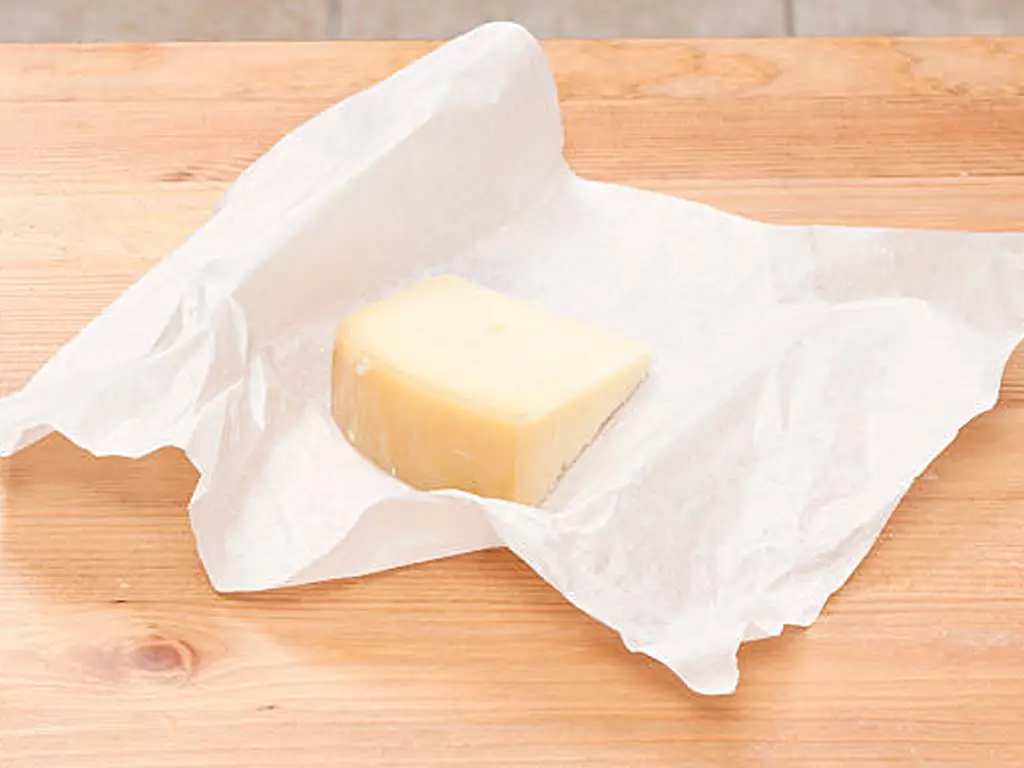
Wax Coating: Strong Cold, Gone in Heat
The coating on wax paper is paraffin wax, a petroleum product, or soybean wax for the premium grades. Cold, it’s an excellent barrier: it resists moisture, it’s non-stick, and it keeps cheese, deli meat and unbaked dough from gluing themselves together. Hot, it fails in an order that matters to your food: first the wax softens, then it migrates into whatever it touches, and above its melting point it smokes. Metsä Group, a European paper manufacturer, flags the same failure mode in its own materials: wax paper in the oven “may cause smoke in the oven and affect taste” (Metsä Group).
Use it for: wrapping cold food, layering cookies, covering countertops, lining a cake box. Never use it for anything above ~50°C: the oven, a hot sandwich press, or wrapping food straight off the grill.
Uncoated Greaseproof Paper: Density Does the Work
This is the paper that started the naming confusion. It’s made from wood pulp (often from sustainable sources) that’s been mechanically refined until the fibers pack tight enough to resist oil penetration — no wax, no coating, no silicone. Its heat tolerance comes from being a plain paper sheet: typically rated to 200–230°C, with ~220°C (428°F) the number most suppliers cite (goldenpapergroup.com; allrecipes.com, 2026).
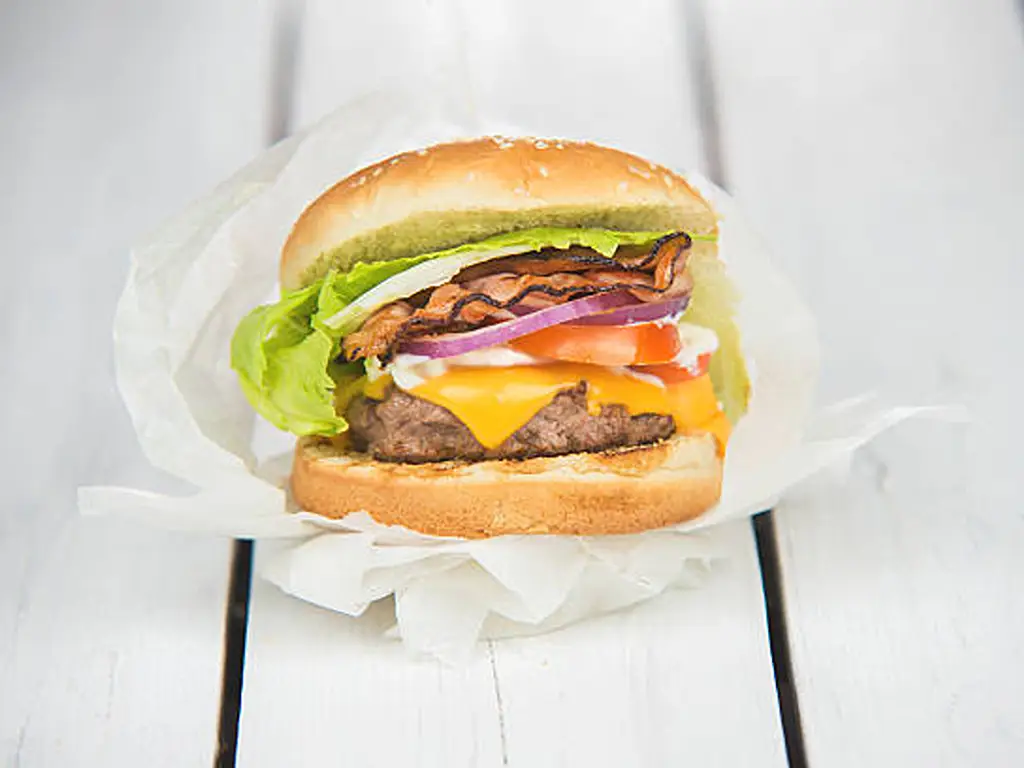
The trade-off: it’s breathable (good for keeping fried food crisp — grease stays out, steam escapes) but it is not non-stick. Batter and caramel will stick to it. It’s also the workhorse of foodservice: burger wrappers, sandwich sheets, bakery trays and takeaway liners are overwhelmingly this paper, because it’s the cheapest barrier that survives hot, greasy food.
Silicone-Coated Parchment: The Non-Stick Player
Parchment (baking paper) is paper coated with food-grade silicone on one or both sides. The silicone does two things: it adds the non-stick surface greaseproof paper lacks, and it lifts the heat ceiling to 220–230°C (425–450°F) (goldenpapergroup.com). This is the paper for oven work — cookie trays, cake tins, roasting veg. Its failure points are different: it costs two to three times more per sheet than uncoated greaseproof, and a poorly coated batch can stick in patches.
| Barrier | How it works | Heat limit | Non-stick | Best for | Fails when |
|---|---|---|---|---|---|
| Wax coating (wax paper) | A wax layer on paper | ~50°C / 122°F | Yes | Cold wrapping, storage, layering | Wax melts, smokes, migrates into food |
| Densified fiber (greaseproof paper) | Tight-packed fibers, no coating | ~220°C / 428°F | No | Hot food wrapping, burger/sandwich wrap, liners | Hot batter or caramel sticks to it |
| Silicone coating (parchment) | Food-grade silicone on paper | 220–230°C / 425–450°F | Yes | Oven baking, tray lining | Poorly coated batches stick in patches |
There’s a fourth family worth one sentence: commercial food packaging also uses extruded coatings — PE, PLA, or water-based coatings — to make cups, boxes and buckets grease-proof at scale. Those live on containers rather than sheets, and we’ll come back to them when we talk about foodservice buying.
Which Paper for Which Job: A Use-Case Matrix
Now that the mechanism is clear, the “which one do I buy” question answers itself. Match the job to the barrier:
| Scenario | Reach for | Why | Fails if you use |
|---|---|---|---|
| Oven baking (cookies, cakes) | Parchment / baking paper | Silicone coating survives 220°C+ and releases baked goods | Wax paper melts and smokes |
| Hot food wrapping (burgers, fried chicken) | Uncoated greaseproof paper | Breathable, grease-blocking, holds up to ~220°C | Wax paper melts onto hot food; parchment is overpriced for the job |
| Cold storage (cheese, deli, layered cookies) | Wax paper | Wax blocks moisture and keeps items from sticking | Greaseproof works but costs more with no benefit cold |
| Freezing | Freezer paper (plastic-backed) | Moisture barrier that survives freeze-thaw | Wax paper turns brittle and cracks in the freezer |
| Deli display / tray liners | Uncoated greaseproof, 38–45 gsm | Holds oily products without soak-through or gloss | Thin wax paper weeps grease onto trays in warm conditions |
Two substitution rules cover the “what do I have instead” question that comes up in every kitchen. Parchment can stand in for greaseproof paper in almost any hot application — it’s a strict upgrade except on price. The reverse is not true: greaseproof paper cannot replace parchment where you need non-stick. And if you’re out of everything, foil with a light oil film works for oven trays, but not for wrapping — foil is not a grease barrier at the edges.
Before we move up the value chain, one shift on the shelf: “no wax” is quietly becoming a selling point. Meal-prep brands advertise their paper bags as “no-wax, grease-resistant,” and European paper makers now market PFAS-free greaseproof grades as a differentiator. The barrier you choose is becoming part of the food-safety story you tell customers — which is exactly where the foodservice conversation starts.
Not sure which barrier fits your menu? Tell us what you serve — we’ll recommend the right greaseproof paper, containers and coatings, and send free samples to test.
Specs, Printing, and Supplier Checks for Foodservice
For a restaurant, bakery chain or takeaway brand, “which paper” is a purchasing spec, not a shelf decision. Three parts of the spec matter most.
Weight, Width, and Format: Writing a Real Spec
Commercial greaseproof wrap runs roughly 30–70 gsm depending on use; food-grade suppliers list a 30–120 gsm range across their catalog (hemingpaper.com). The practical band for burger, sandwich and pastry wrapping is around 38–45 gsm: enough body to hold shape and resist oil, light enough to stay flexible and cheap (surepaperpak.com). Below ~30 gsm, hot, oily fillings start to weep through at the seams and fold points. Format matters too: rolls suit a burger line (tear-as-you-wrap), sheets suit bakery trays, pre-cut interleaved sheets suit grab-and-go. Write the tolerance into the spec — “55 gsm ±5%” — or the supplier will deliver the cheapest interpretation.
Printing: How Ink Changes the Barrier
Custom-printed wrap is how most food businesses end up here — the logo goes on the paper, and suddenly the paper has a hole in its armor. Heavy ink coverage can disrupt the grease barrier, which is why foodservice print specs insist on food-safe inks: soy-based or water-based, and now increasingly migration-tested against hot, oily foods. The rule of thumb: printed or not, your barrier requirement is tested at the fold, not the flat. If a printed wrapper passes a folded, oil-soaked test, the design is fine — thick multi-layer inks over large areas are the ones that bleed.
Supplier Checks: What to Verify Before the First Pallet
In the US, food-contact paper is regulated under 21 CFR 176.170, which covers components of paper and paperboard in contact with aqueous and fatty foods (eCFR). The EU uses LFGB and EC/1935/2004 instead. A supplier’s compliance documents are the first thing to ask for — not the last. Then check:
The Pre-Order Checklist
- Request free samples before any order; run the two tests that matter — a hot-oil fold test (dab oil on a folded sheet, hold at serving temperature) and a 150°C / 2-minute heat test watching for smoke.
- Ask for the certs in writing: FDA 21 CFR 176.170 for US, LFGB for EU, ISO 9001 for the factory.
- Confirm MOQ and lead time for plain vs printed stock — printed runs almost always carry longer lead times.
- Lock down the return/claim terms: what happens to a batch that fails on arrival.
Where to Buy in Bulk — and What to Verify First
Three supplier shapes cover most bulk buyers. Paper mills sell direct when you’re ordering by the pallet or the metric ton: best unit price, least flexibility on printing and cut sizes. Printing and packaging converters handle custom-printed wrap at medium volumes, which covers most restaurants and bakery chains. Trading companies and importers split the difference: smaller MOQs, broader catalogs, useful when you’re testing a new SKU before committing to a container.
Whichever route you take, the four checks from the last section don’t change: certs in writing, free samples with a fold test, MOQ and lead-time numbers for plain and printed, and claim terms that don’t require shipping defective goods back. For cross-border buying, add two more: a full-container quote (unit cost drops sharply at 20’GP/40’HQ volumes) and a batch-traceability ask — you want to be able to point at a lot number if a complaint comes in.
If your grease-resistance needs go beyond wrapping paper, into containers that hold hot, oily food, the same barrier logic applies to the cup or box itself. Yoonpak builds food containers, paper buckets and cups with water-based, PE and PLA coatings, all FDA and LFGB compliant, backed by ISO 9001 and BRC certifications. Our FAQ covers MOQ, lead time, and warranty terms, and our food container manufacturing line is the place to spec against your menu.
How It Fails: Spotting Problems Before Your Customers Do
Greaseproof paper fails in three predictable ways, and all three are detectable before a customer sees them.
Melted wax. Wrong paper in the wrong place — wax wrap on a hot sandwich or in a tray warmer. The wax softens, smokes, and can leave a taste transfer. Detectable: the 150°C smoke test above. In a busy kitchen, the giveaway is waxy smears on the food-contact side of the wrap after 20 minutes at serving temperature.
Oil show-through. The sheet holds, but oil weeps at the folds or after extended contact — the classic “greasy paper” complaint that shows up in review photos. This is a spec problem (too-low gsm for the filling, or a too-thin densified grade) more often than a supplier problem. Detectable: fold test with hot oil, then a 10-minute rest.
Ink migration. Non-food-safe inks, or inks never tested against oily food, can transfer onto the food surface. This is the one you can’t see at a glance — which is exactly why the paperwork matters. Migration testing to FDA/LFGB standards, not a self-declared “food grade” label, is the acceptance criterion.
The Acceptance Routine
The acceptance routine for every delivery: heat test (150°C, 2 min, no smoke), fold test (hot oil at the fold, rest 10 min, no weep), and a printed batch’s ink-migration cert. Thirty minutes of receiving time, zero customer-facing surprises.
The Business Angle: Why Distributors Are Rethinking the Wax Paper SKU
For distributors and wholesalers, the wax paper question isn’t a kitchen question — it’s an inventory question. Run the same facts from earlier through a P&L and the answer shifts.
Wax paper is cheaper to buy. That’s the whole argument in its favor, and it’s a real one: the price gap versus uncoated greaseproof is visible on every wholesale list. But the failure economics run the other way. Wax paper’s barrier tops out around 50°C (122°F), and the customers who buy it in volume (fast food, bakeries, takeaway) are exactly the ones serving food above that temperature. Every order wrapped in wax paper next to a hot item is a claim waiting to happen: melted wax on food, smoke in the warmer, an unhappy franchisee. The replacement cost of a lost account dwarfs the per-roll savings; so does the refund cycle, which distributors carry.
Meanwhile the market is moving toward the more expensive barrier. Industry estimates put the global greaseproof paper market near $4.8 billion in 2025, growing at roughly 5.7% annually through 2034 (dataintelo.com), and the retail trend is visible from the shelf: “no-wax” is now a marketing claim, not a warning. Distributors who keep wax paper as the volume play are competing on the one attribute — price — where the product is weakest in its biggest channel.
Wax Paper SKU — Keep for Cold
- Cold deli counter, cheese and bakery storage
- Price advantage is real at purchase
- Fails above 50°C — the hot channel produces claims
No-Wax & Water-Coated Lines — Push for Hot
- Survives serving temperature
- Compliance story: FDA / LFGB in writing
- Higher margin, fewer returns
The stance worth taking: don’t drop the wax paper SKU; demote it. Keep it for cold-use accounts (deli counters, cheese distributors, bakery storage), and push the no-wax and water-based coated lines for the hot-food channel, with compliance (FDA/LFGB) and “it doesn’t fail at serving temperature” as the sales story instead of “it’s cheap.” The 300°F gap in the middle of this article is also the gap in your margin structure: one side of it produces complaints, the other produces reorders.
Test the Barrier Against Your Own Menu
Free samples, 48-hour dispatch, custom printing with food-safe inks — spec the paper, the container and the coating against your menu, and see it before you commit.
Get Free SamplesReferences
- hywax.com. “Paraffin Wax Melting Point.” hywax.com
- Allrecipes. “Is It Even Safe To Use Parchment Paper in a Skillet?” 2026. allrecipes.com
- eCFR. “21 CFR 176.170 — Components of paper and paperboard in contact with aqueous and fatty foods.” ecfr.gov
- Dataintelo. “Greaseproof Paper Market Research Report 2034.” dataintelo.com


 English
  German
  Spanish
  Italian
  Dutch
Dutch  French
  Portuguese
  Russian
  Arabic
  Korean