

Food Packaging Testing Methods: What a Buyer Should Test, Demand, and Verify
If you are sourcing paper cups, takeaway containers, bakery boxes, or any other food packaging, “testing” is not a lab problem — it is a buying decision. The packaging you order will be dropped, stacked, heated, and held up to a customer’s hands before it earns its keep. Most guides describe what the tests are. This one also tells you when each test actually matters, how to read a supplier’s QC claims, and how to make testing a clause in your purchase contract instead of a hope.
Why Food Packaging Testing Matters (More Than Compliance)
Testing exists for three reasons, and only the first one makes the news. The first is safety: any material that touches food must not migrate harmful substances into it, which is why food-contact packaging is regulated under frameworks like FDA and EU food-contact rules. The second is protection: packaging that leaks, splits, or collapses lets contamination in and destroys the product before anyone opens it. The third is business: damaged or leaky packaging drives returns, channel penalties, and the kind of review that outlasts a thousand ad impressions.
What most buyer guides skip is where testing happens. The same method runs in three very different places. An accredited lab certifies a material. A factory floor checks every hour of production. Your own receiving dock checks the shipment when it arrives. Knowing which of the three you are looking at changes how you buy. A lab report proves a design can work; process QC proves a supplier actually makes it that way; your own check proves the batch in front of you is that batch.
So this guide reads testing the way a buyer should: as evidence you can demand, not as homework a lab does for you.
The Testing Methods Map: What Gets Tested in Food Packaging
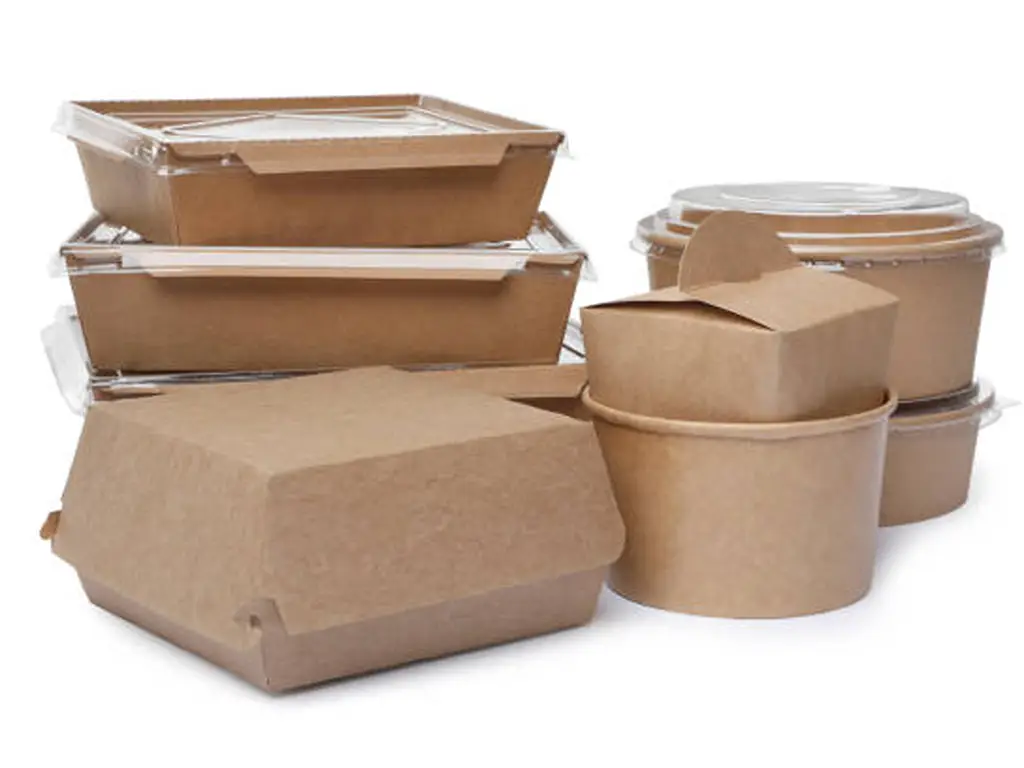
Food packaging testing splits into six method families. Each answers a different question about the package in your hand:
Food packaging testing methods at a glance
| Method family | What it measures | Failure it catches | Where it runs |
|---|---|---|---|
| Chemical migration & sensory (taint) | Substances migrating from packaging into food; off-taste/odor | Regulatory non-compliance, off-flavors | Accredited labs |
| Seal integrity (dye penetration, vacuum decay, bubble leak) | Leaks and seal strength | Leakage, contamination | Lab or factory QC |
| Mechanical (drop, compression, vibration, burst/puncture) | Impact and stacking resistance | Transit damage, stack collapse | Lab or supplier test area |
| Environmental (temperature/humidity cycling, thermal shock) | Behavior under climate extremes | Warping, coating and ink failure | Climate chambers |
| Barrier & grease resistance (kit test, hot-oil hold, Cobb water absorption) | Resistance to oil, grease and moisture strike-through | Oil bleeding through a box or bag; board going soft under hot food | Lab or factory QC |
| Functional & appearance (dimensions, stacking, print adhesion) | Fit and finish | Lid misfits, branding damage | Factory line |
Chemical migration testing is the food-specific member of this list. Because paper cups and containers are coated and printed, buyers in regulated markets routinely ask for migration and sensory (taint) testing to FDA or EU standards. It answers: “is this safe to hold food.” Seal integrity testing is the one your customers will feel first: dye penetration, vacuum decay, and bubble leak tests all answer “will this leak.” For cups and takeout containers, leakage is the most common complaint there is. Barrier and grease-resistance testing is the takeaway-specific member: burgers, fries, fried chicken, and pastries put hot fat against the board, and a kit test, a hot-oil hold, or a Cobb water-absorption result answers “will it hold that without bleeding through or going soft.” The mechanical family is where the packaging drop test lives, alongside compression, vibration, and burst tests. These answer “will it survive the journey and the stack.”
Two quick clarifications so the map stays honest. First, material changes the emphasis: this guide focuses on paper-based food packaging — cups, bowls, clamshells and lunch boxes, bakery cartons, buckets, trays, and carry bags — where humidity is the hidden variable: paperboard is hygroscopic, which is exactly why climate conditioning is part of its test protocol; films, glass, and metal run their own suites. Second, pharmaceutical packaging runs under a separate system (ISO 11607, sterile-barrier testing) that is outside this article’s scope.
Drop Tests & the Standards Behind Them: Heights, Orientations, Pass/Fail
The drop test is the most requested mechanical test in packaging, and the most misunderstood. It simulates the free-fall a package endures when a handler drops it, a forklift nudges it, or it slides off a pallet. Two questions decide everything: which standard, and what that standard actually requires.
The drop test, in numbers
Drop height is measured from the lowest point of the package to the impact surface, and it is set by package weight. ASTM D5276 sets the tiers for loaded containers weighing up to 110 lb (50 kg) that are handled manually:
ASTM D5276 drop heights
Heavier packages use proportionally lower tiers defined in the standard.
The impact surface must be flat and firm: typically rigid concrete at least 4 in thick, or a steel plate anchored to concrete. Before testing, packages are conditioned for 24 hours at 73°F ± 4°F and 50% ± 5% humidity, because cardboard’s strength depends on its moisture content. Plan on at least five samples per design: a single failure may be a manufacturing defect, while consistent failures across samples point to a design flaw.
Here is the number that catches most people off guard:
5 drops or 10?
It depends on whose standard you’re holding. ASTM D5276 is commonly run as five drops: weakest face, strongest face, longest edge, shortest edge, one vulnerable corner. ISTA 1A and most retailer programs run ten: the most fragile corner, the three edges radiating from it, then all six faces. If a supplier says “we do drop tests,” the first question is: how many drops, from what height, and under which standard?
The pass/fail judgment is equally precise: after the sequence, the contents must show no functional or mechanical damage. Small cosmetic dents and scuffs on the carton are acceptable; seam opening, significant deformation, or damaged contents fail the test.
Beyond the drop test
Drop testing does not travel alone. Compression testing (ASTM D642) answers “how high can this stack.” For a supplier shipping master cartons of cups or flat-packed boxes, warehouse and container stacking is where most damage quietly happens. Vibration testing simulates truck, rail, and conveyor movement, and it is baked into ISTA’s full-transit programs. Climate conditioning rounds out the set: humidity-cycled paperboard behaves differently from a fresh sample, so the serious programs condition first and test second. If your supplier only ever mentions drop tests, ask what happens to the carton under a pallet and a month of humidity. That is where the drop test’s work gets undone.
Which standard applies
ASTM and ISTA divide the world differently. ASTM D5276 and its siblings (D642 for compression, D4169 for distribution-cycle simulation) are individual test methods: precise recipes you can run one at a time. ISTA procedures are pre-shipment programs that string drops, vibration, and compression into a simulated journey: Procedure 1A covers individual packages up to 150 lb; 2A targets less-than-truckload shipments with frequent handling; 3A simulates e-commerce parcel delivery. ISTA’s drop heights are weight-tiered in the same general 8–30 in range, but revisions change the details, which is why the standard and its revision belong in writing.
One rule overrides all of it: your channel decides. Retailers codify testing into vendor terms. The Urban Outfitters supplier portal, for example, requires ISTA free-fall testing with ten drops in a prescribed orientation sequence, as a condition of doing business, not a suggestion. Amazon, Sam’s Club, UPS, and FedEx all run ISTA-based programs in some form. When a retailer names a standard, that standard wins, and “we test to international standards” is not a specification — the named standard is.

Which Tests Apply to Your Business
Not every buyer needs the full suite, and pretending otherwise wastes money. The honest breakdown looks like this:
Which tests apply, by buyer type
If you’re launching your own brand: migration & sensory testing (regulatory market), seal integrity, drop + compression, and climate conditioning.
If you’re importing or distributing: full testing on samples before ordering, then AQL sampling plus a drop test at pre-shipment, and batch records you can pull.
If you’re supplying chains or marketplaces: meet the retailer’s vendor clause (often ISTA, often ten drops), and keep certificates current.
One shift is changing every row of that list. Retailers and platforms are moving testing from an internal habit into a supplier contract term: “whether to test” is becoming “whose standard to test to.” Buyers who can produce test evidence on demand preempt chargebacks, reorders, and the slow death of a listing. That trend is why the next section is the most valuable one in this article.
Verifying a Packaging Supplier: What to Demand & How to Read QC Claims
“We have strict quality control” is the most common sentence in sourcing, and the least checkable. Three classes of evidence turn it into something you can audit.
What to demand
Test reports, named. A report is only evidence if it names the standard, who ran the test (an accredited lab or the factory’s own line), the sample size, and the date. A report with none of those is a decoration.
A process QC mechanism, described. Ask three questions: how often are checks run; what happens to a batch when a defect is found; and can individual product units be traced? A mechanism that can name the failed batch is verifiable; a vague “we inspect everything” is not.
This is where the abstraction becomes concrete. When a buyer asks us how we control quality, we answer with the mechanism, not adjectives. Yoonpak runs hourly QC checks on every production line. A defect found at any check voids everything produced since the last successful test. Every cup bottom carries the production date, time, and serial number, so any batch can be isolated and examined. Our outbound checklist before each shipment runs drop testing alongside dimensions, lid and closure fit, artwork, and barcode verification, the same sequence a buyer would run at their dock (see our manufacturing & quality-control pages).
Certifications, in context. ISO 9001, BRC, FDA and LFGB compliance, and FSC certify that a system exists and is audited. That is real signal. But a certificate certifies the system, not each batch; batch-level evidence is what closes the gap between “certified” and “this shipment.”
A three-stage verification plan
Testing works by stage, and the stages are not interchangeable:
Three-stage verification
Test everything on samples — drop, seal, migration as applicable. This is the cheapest place on earth to find a problem.
Spot checks plus batch records; ask to see units with their date/time/serial identifiers.
AQL sampling plus a drop test, and a look at the outer carton, barcodes, and markings.
Test every sample before you order. Spot-check batches during production. Run AQL sampling plus a drop test before shipment. That three-stage sequence turns a supplier’s promise into evidence you can inspect. It costs a fraction of one bad container.
Not every verification method works in every situation. The honest matrix:
How far each verification method takes you
| Verification method | Use it when | When it stops working |
|---|---|---|
| Request test reports | Routine orders from an established supplier | Reports name no standard, tester, or sample size |
| On-site audit or third-party inspection | First orders, new suppliers | It runs only after production — defects are already baked into the batch |
| Batch traceability review | Any volume order | Units carry no batch identifier, so a bad batch can’t be isolated |
| Third-party re-testing | Disputed failures, high-value orders | It’s arranged after goods shipped and the claim window closed |
Failure Modes & What to Do When Tests Fail (or Aren’t There)
Failures cluster into three shapes, and each has a different antidote.
Product failures. For cups and takeout packaging, leakage leads the list: a seal failure that dye-penetration or vacuum-decay testing would have caught for pennies per sample. Grease strike-through on hot-food boxes and bags is the close second — the same barrier failure in a different form, and the one a kit test catches just as cheaply. Seam splitting and stack collapse in humid storage round out the list. The antidote is upstream: seal integrity and compression testing cost little relative to the returns they prevent.
The most expensive leak in food packaging is the one found by a customer. Seal integrity testing exists to find it at the factory — before it costs you a return, a chargeback, and the review that follows.
Timing failures. The most common process mistake is relying on pre-shipment inspection alone. As one small-business importer put it on Reddit in August 2026, “pre shipment is too late if defects are found.” By then, the defective batch is already made, packed, and paid for. That is why the sample stage and the production stage of the three-stage plan are not optional.
Supplier resistance. A seller asking to cancel a third-party inspection is a red flag worth taking seriously. A recent r/Alibaba thread put the stakes plainly: an independent inspection “will instantly catch incorrect items, cheap packaging, or defects before the balance is paid.” If a supplier resists the inspection clause, the clause is working.
What do you do when problems surface anyway? A claims mechanism that makes remedies cheap. A warranty that accepts video and photo evidence without return shipping, and a commitment to remake defective goods within a fixed window (30 days is a reasonable ask), keeps a bad batch from becoming a bad relationship. If the supplier will not put the test scope and the remedy in writing, the scope and the remedy belong to them.
The Business Case: Testing as a Contract Clause
The same test costs radically different amounts at different stages. Run on samples, it is a line item on a proforma. Run on an arriving container, it is a crisis with customs, demurrage, and a customer waiting. That asymmetry is the whole business case: the earlier a defect is found, the cheaper it is, and the only way to force “earlier” is to put the stages in writing.
Traceability is what makes the mechanism cheap to enforce. When every unit carries a production date, time, and serial number, a bad batch is isolated by its own identifier. You claim against the batch, not the container, and a third party can re-examine exactly what you examined. Without batch-level traceability, every dispute is a full-container dispute, and every dispute is expensive.
So the stance is simple. Put five items in the purchase confirmation: what to test, which standard, when (sample, production, or pre-shipment), who runs the test, and how results are traced to a batch. Prefer suppliers whose QC mechanism is traceable and whose outbound checks include the tests your channel will demand. Testing written into the contract is the only version of “trust” you can audit, and for a container full of packaging, auditability is the point.
Spec your tests. We run them before your container ships.
Share your channel’s drop-test and QC requirements — we’ll show you how our hourly checks, batch traceability, and outbound drop testing already line up with them.
Send us your QC requirementsReferences
- ASTM International. “ASTM D5276 — Standard Test Method for Drop Test of Loaded Containers by Free Fall.” [referenced via testcoo.com carton drop test guide, Apr 2025] https://www.testcoo.com/en/blog/what-is-a-carton-drop-test-a-comprehensive-guide-to-standards-heights-and-processes
- Pakingduck. “Drop Test Standards for Packaging Materials.” Sep 2025. https://www.pakingduck.com/post/drop-test-standards-for-packaging-materials
- Hqts (HQTS). “All You Need to Know About ISTA 1A Package Testing.” May 2022. https://www.hqts.com/all-you-need-to-know-about-ista-1a-package-testing/
- URBN Vendor. “Drop Test Requirements.” https://vendor.urbn.com/us/carton-and-pallet/drop-test-requirements
- Sofeast. “What Is A Package Drop Test?” Nov 2025. https://www.sofeast.com/glossary/package-drop-test/
- Reddit r/smallbusinessUS. “Catching quality control issues at the China factory before shipment.” Aug 2026. https://www.reddit.com/r/smallbusinessUS/comments/1vo3t4s/
- Reddit r/Alibaba. “Seller asking to cancel 3rd party inspection.” Aug 2026. https://www.reddit.com/r/Alibaba/comments/1vinx46/
- Yoonpak. “Paper Cup Manufacturer — Manufacturing & Quality Control.” https://www.yoonpak.com/paper-cup-manufacturer/
- Yoonpak. “Home.” https://www.yoonpak.com/
- Yoonpak. “Contact.” https://www.yoonpak.com/contact/






 English
  German
  Spanish
  Italian
  Dutch
Dutch  French
  Portuguese
  Russian
  Arabic
  Korean