

How to Start a Salad Business: The Complete Guide From Concept to First Customer
Starting a salad business isn’t like opening a traditional restaurant. You’re not building a kitchen around hot line cooks and grease traps. You’re building a brand around freshness, speed, and the daily ritual of eating well. It’s closer to running a health-focused coffee shop than a full-service restaurant: people come back not because they need you, but because you fit into their routine.
The opportunity is real. The healthy fast-casual market is projected to grow substantially through 2034, driven by consumers who want nutritious meals without the wait. In Europe alone, 34% of consumers visit salad bars on an occasional or regular basis, according to a CHD Expert survey. The question isn’t whether there’s demand. It’s whether you have the right plan to capture it.
Before diving into spreadsheets, take a clear-eyed look at which salad business model fits your vision and budget. The four most common formats are:
- Brick-and-mortar salad bar: A fixed location with dine-in seating and a self-serve or assembly-line format. Highest startup cost, highest upside.
- Delivery-only ghost kitchen: No storefront, just a commissary kitchen optimized for Uber Eats, DoorDash, and direct online orders. Lower overhead, higher commission pressure.
- Subscription meal prep: Weekly salad boxes delivered to gyms, offices, and homes. Predictable revenue, logistics-heavy.
- Farmers market or food hall stall: The leanest entry point. Minimal buildout, weekend-only operations, and a direct line to health-conscious shoppers.
Pick the one that matches your capital, risk tolerance, and lifestyle. You can always evolve. Many successful salad chains started as a single farmers market tent.
01 Startup Costs and Financing Your Salad Business
The cost of starting a salad business spans a wider range than most first-time founders expect. A lean ghost kitchen can launch for as little as $35,000, while a full-scale dine-in salad bar in a major city can push past $650,000. Here’s how the numbers break down by model:
| Cost Category | Ghost Kitchen | Small Fast-Casual | Full Dine-In |
|---|---|---|---|
| Lease deposit + first month | $5,000–$25,000 | $15,000–$50,000 | $40,000–$150,000 |
| Buildout & tenant improvements | $10,000–$50,000 | $40,000–$120,000 | $80,000–$200,000 |
| Equipment & refrigeration | $10,000–$40,000 | $30,000–$80,000 | $50,000–$150,000 |
| Permits, licenses, insurance | $1,500–$5,000 | $3,000–$8,000 | $5,000–$20,000 |
| Initial inventory & packaging | $3,000–$10,000 | $5,000–$15,000 | $8,000–$25,000 |
| Pre-opening marketing & payroll | $5,000–$25,000 | $15,000–$50,000 | $30,000–$100,000 |
| Total Range | $35,000–$165,000 | $150,000–$350,000 | $400,000–$665,000+ |
These figures assume a U.S. metropolitan area. Smaller cities and secondary markets can reduce buildout and lease costs by 25–40%.
You don’t need every dollar in cash on day one. The most common funding paths for salad startups:
- Personal savings plus 0% APR credit cards: the lowest-friction path for lean launches. Useful for equipment purchases with promotional financing periods.
- SBA 7(a) small business loans: the U.S. Small Business Administration guarantees loans up to $5 million. Food businesses typically receive $100,000–$350,000 with competitive interest rates. Requires a detailed business plan.
- Crowdfunding through Kickstarter or GoFundMe: works well for community-focused salad brands with a compelling sustainability or health mission. Average food category raises: $10,000–$30,000.
- Angel investors or business partners: best suited for founders with prior food industry experience who can demonstrate a scalable concept.
Once you’ve secured funding, build a financial projection that doesn’t rely on hope. A realistic mid-sized salad bar doing 100–150 orders per day at a $12 average ticket can expect:
- Monthly revenue: ~$36,000–$54,000
- Food cost (28–35%): ~$10,000–$19,000
- Labor (25–35%): ~$9,000–$19,000
- Rent and occupancy (6–12%): ~$2,200–$6,500
- Net operating profit (EBITDA margin 8–20%): ~$2,900–$10,800 per month
Most salad bars reach breakeven within 12–18 months. The single biggest variable? Produce waste. Top operators keep spoilage below 5% of food cost through disciplined prep cycles and cross-utilization: using the same cherry tomatoes across three different salad recipes instead of buying separate ingredients for each.
The single biggest variable? Produce waste. Top operators keep spoilage below 5% through cross-utilization — using the same cherry tomatoes across three recipes instead of buying separate ingredients for each.
02 Location, Permits, and Legal Essentials
Where you put your salad business matters more than almost any other decision. A great location can paper over early operational mistakes. A poor one will bury even the best salad in the neighborhood.
For a salad bar specifically, proximity to office density beats proximity to shopping. Your ideal customer eats lunch five days a week and wants something they can grab in under ten minutes. Look for locations within a 5-minute walk of office parks, co-working spaces, or university campuses. Check foot traffic at 11:30 AM on a Tuesday, not Saturday afternoon.
On the legal side, the three essentials you’ll need before opening:
- Business license and food service permit: Application windows vary by jurisdiction. Start this process 8–12 weeks before your target opening date. Health department reviews can take 4–8 weeks alone.
- Food handler certifications: Every employee who touches food needs one. Most jurisdictions accept ServSafe or equivalent programs.
- Commercial lease with tenant improvement allowance: Negotiate hard here. Landlords in competitive markets often contribute $30–$80 per square foot toward your buildout, which can cover half your construction costs.
A key advantage for salad-only concepts: with no open flame, fryers, or grease-laden vapor, your fire code and ventilation requirements are substantially simpler than a traditional restaurant’s. Fewer hood systems mean lower buildout costs and faster permitting.
Proximity to office density beats proximity to shopping — every time.
03 Equipment and Kitchen Setup
A salad kitchen works differently from a hot-food kitchen. Your capital should flow toward refrigeration, not cooking equipment. The core setup includes:
- Refrigerated prep table ($2,000–$6,000): Your primary workstation. Keeps chopped ingredients at safe temperatures during assembly.
- Salad display unit or cold well ($800–$5,000): For self-serve or assembly-line formats. NSF-certified units are mandatory for health code compliance.
- Commercial refrigerator and freezer ($2,000–$8,000): Walk-in units are ideal for higher volumes. Reach-in units work for smaller operations.
- Food processor or vegetable slicer ($500–$3,000): Cuts prep time by 60–70% compared to hand-chopping.
- Stainless steel work tables: Buy these used. They last forever and depreciation doesn’t affect functionality.
Design your kitchen layout so produce moves in one direction: receiving → washing → chopping → cold storage → assembly line → hand-off to customer. No backtracking, no cross-traffic. This linear flow reduces walk time, prevents temperature abuse, and makes health inspections cleaner.
A high-efficiency salad kitchen runs on one principle: produce moves forward, never backward.
04 Crafting Your Menu and Sourcing Ingredients
The most profitable salad menus share a common architecture: a modular build-your-own system anchored by a handful of signature bowls. This structure gives customers the feeling of endless choice while keeping your inventory manageable. Most shops run on about 20 core ingredients that rotate across the menu.
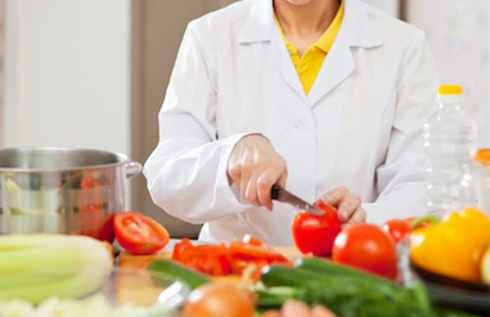
Your base layer sets the volume. Five to six greens (romaine, spinach, arugula, kale, mixed greens) cover 90% of demand. Proteins drive your ticket size: grilled chicken, tofu, chickpeas, hard-boiled eggs, and tuna are the staples that show up in every successful salad bar. Ten to fifteen toppings create the customization experience customers love, from roasted vegetables to nuts and seeds. Dressings are where you build loyalty. House-made recipes cost $0.15–$0.30 per portion versus $0.40–$0.80 for purchased, and they’re impossible for competitors to replicate exactly.
On pricing: the base-price-plus-protein-upcharge model consistently outperforms flat per-item pricing. A $9.50 base that becomes $12.50 with chicken feels like a better deal than a flat $12.50 salad, even though the numbers are identical. Psychology matters as much as math.
Sourcing ingredients reliably is where many first-time salad owners stumble. Three rules keep your supply chain healthy:
- Never rely on a single produce supplier. Maintain relationships with at least 2–3 vendors: a local farmers market wholesaler, a broadline distributor like Sysco or US Foods, and a specialty produce company. When one runs short on romaine (and they will), you’re covered.
- Buy shelf-stable items in bulk through the broadline distributor (grains, nuts, canned goods) and go local for fresh greens. This balances cost and quality.
- Inspect every delivery against a written checklist: temperature (greens should arrive at 34–38°F), color (no yellowing edges), texture (crisp, not limp), and odor (fresh, never sour). Reject anything that fails. Your reputation is worth more than one supplier’s feelings.
05 Packaging Matters: Containers That Keep Salads Fresh and On-Brand
Packaging is the most overlooked strategic decision in the salad business, and it shouldn’t be. Your container is the only brand touchpoint that reaches every single customer. It does three jobs at once: keeps food fresh during transport, presents it beautifully when opened, and carries your brand into the world.
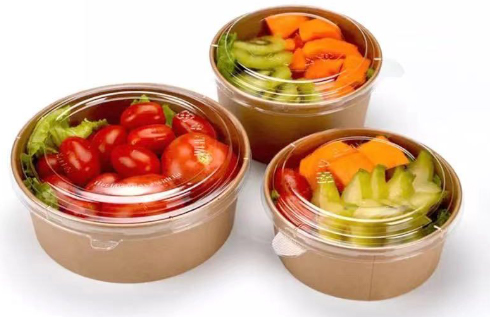
Choosing the right container starts with your business model. A dine-in salad bar can prioritize cost and compostability with simple kraft paper bowls. A delivery-focused operation needs leak-proof lids, grease-resistant walls, and stackable designs that survive 20 minutes in a driver’s insulated bag. A subscription meal-prep service needs compartmentalized containers that keep wet and dry ingredients separated until the customer is ready to eat.
Material choice drives both performance and perception. Kraft paper bowls with a PLA (polylactic acid) coating — derived from corn starch, not petroleum — offer a commercially compostable option that aligns with the values health-conscious customers expect from a salad brand. Standard PE-coated paper is more economical but lacks the sustainability story. Sugarcane bagasse bowls provide another plant-based alternative with excellent heat tolerance. For cold salads and smoothie bowls, clear PLA cups let the product’s visual appeal do the marketing.
Your packaging is also your most cost-effective advertising channel. Custom-printed containers with your logo turn every takeout order into a walking billboard. Sweetgreen built much of its early brand recognition on the strength of its distinctive salad boxes. Customers photographed the containers before they photographed the food. The barrier to entry is lower than most new owners assume: many food packaging manufacturers offer custom printing with minimum order quantities starting at 50,000 pieces, and some suppliers can accommodate runs as low as 10,000 for brands willing to cover freight costs. A typical supplier provides a digital proof within one business day and ships physical samples within 48 hours, so you can test your branded packaging before committing to a full production run.
Sustainability is no longer optional for salad brands. Your customers chose a salad over a burger partly because they care about what goes into their body and what happens to the planet. Serving that salad in a petroleum-based plastic container that will outlive their grandchildren breaks the brand promise. Look for packaging certified by recognized standards: BPI certification for compostability, FSC certification for responsibly sourced paper fiber, and FDA or LFGB compliance for food contact safety. Eco-friendly packaging typically adds 15–25% to your per-unit container cost, and for most salad brands, that premium pays for itself in customer trust and repeat business.
Every container that leaves your kitchen either builds your reputation or erodes it. Choose materials that reflect your commitment to quality and sustainability — your customers will notice.
06 Marketing Your Salad Business
A great salad won’t sell itself, but the marketing playbook for salad brands is more accessible than you might think. Your biggest asset: the product is naturally photogenic.
Start with the essential digital trio before you even open your doors:
- Google Business Profile: Non-negotiable. A fully optimized profile with real photos, accurate hours, and an ordering link can drive 35%+ more local search visibility than an unclaimed listing. Start posting behind-the-scenes content during your buildout to build anticipation.
- Instagram: Salad is the most Instagrammable food category. Every bowl you make is content: vibrant colors, varied textures, overhead shots that stop thumbs mid-scroll. Post 3–5 times per week and tag your location. Your first 500 followers will likely become your first 50 regulars.
- A simple ordering website: You don’t need a custom app. A clean one-page site with your menu, prices, order link, and location converts just as well as anything elaborate. Own your ordering channel. Third-party delivery platforms take 15–30% commission, and every order that comes through your own site keeps that margin in your pocket.
Offline, the highest-ROI tactic for new salad businesses is corporate catering partnerships. Walk into nearby office buildings with sample boxes and a catering menu. One 30-person lunch order at $14 per person is $420. That’s roughly 35 individual walk-in customers, but with zero marketing cost and predictable scheduling. Gym partnerships work the same way: offer a 10% discount to members of the yoga studio or CrossFit box down the street, and you’ve just accessed a concentrated pool of your exact target customer.
one 30-person corporate lunch order = 35 walk-in customers with zero acquisition cost
07 Your First 90 Days: Launch, Learn, and Optimize
The salad business you open on day one is not the salad business you’ll be running on day 90. That’s exactly how it should be. The best operators treat the first three months as a live laboratory.
Pre-launch (30 days out): Your countdown checklist: permits in hand → equipment installed and tested → suppliers confirmed with first delivery dates → staff trained on assembly line speed and food safety → soft opening with friends and family. This is your dress rehearsal. Charge half price, collect honest feedback, and fix everything that breaks.
Month one metrics that actually matter: Track daily covers (transactions), average ticket size, food cost percentage, and Google review score. A healthy first month looks like: 60–80 covers per day on weekdays, a $10–$14 average ticket, food costs under 35% (they’ll start higher; aim to improve weekly), and a Google rating above 4.3 stars. If your rating dips below 4.0, stop everything and fix the issue. Early reviews carry outsized weight on your long-term reputation.
Days 31–90 — the optimization loop: Review your menu weekly. Which salads are selling 2:1 over others? Which ingredients are spoiling before they’re used? Cut the bottom two performers, double down on the top three. Adjust your assembly line based on observed bottlenecks. If protein placement is slowing the line, move it to the last station so customers finalize their base before choosing add-ons. Test one new marketing channel every two weeks. By day 90, you should see daily covers climbing 15–25% month-over-month, food costs settling below 32%, and a core group of customers who come in twice a week and know your staff by name.
The salad businesses that survive past year three aren’t the ones with the best recipes. They’re the ones whose owners treated the first 90 days as a feedback loop rather than a victory lap: watching the numbers, listening to customers, and making small, constant improvements until the operation hums.
- 60–80 daily covers on weekdays
- $10–$14 average ticket
- Food cost under 35%
- Google rating above 4.3 stars
Get free-printed samples and a tailored quote for salad boxes, bowls, and eco-friendly containers — with your logo, your design, delivered in weeks.
References
- Innovorder. “The Ultimate Guide to Opening a Salad Bar.” 2026. innovorder.com
- U.S. Small Business Administration. “7(a) Loans.” sba.gov

 English
  German
  Spanish
  Italian
  Dutch
Dutch  French
  Portuguese
  Russian
  Arabic
  Korean