

Paper Cup Printing: Flexo vs Offset, Costs, and What to Specify
Paper cup printing sounds like a single service, but it is really a fork in the road. The pattern on your cup can be put there by flexographic printing, offset printing, or digital printing, with gravure and screen printing covering unusual jobs. Each method changes your unit cost, your color accuracy, your minimum order, and even how the finished cups survive shipping.
If you are a coffee brand, a distributor, or a private-label buyer sourcing custom printed cups, the decision between flexo and offset is the one that will follow you through every reorder. This guide walks through how each process actually prints a paper cup, where the real cost crossover sits, what to specify, and how to vet the supplier standing behind the quote.
What Is Paper Cup Printing? (The Cup Is Printed Flat First)
A quick clarification first: “paper cup printing” also shows up in small-batch craft contexts — printing a few hundred personalized cups for a wedding or a pop-up. That is a different business from the commercial supply chain covered here.
The most important fact about commercial paper cup printing is easy to miss: the cup is not printed as a cup. It is printed as flat paper.
The manufacturing sequence looks like this:
From flat paper to finished cup
- 1
Print the flat paperboard (flexo or offset)
- 2
Dry the ink
- 3
Die-cut the printed sheet into cup “fans”
- 4
Roll the fan into a tapered body
- 5
Seal the side seam
- 6
Attach and seal the bottom
- 7
Hourly quality inspection, stack, pack
Every cup starts as a flat sheet of food-grade paperboard, typically 160 gsm or heavier for hot beverages. The artwork goes on while the surface is still flat and smooth, which is exactly the condition both offset and flexo prefer. Only after printing and drying does the paper get die-cut into the tapered fan shape and rolled into a cup. That is why the printing method matters so much: it is chosen at the flat-paper stage, before the cup exists.
Five methods cover almost the whole packaging-printing landscape. Flexographic printing (flexo) transfers ink directly from a flexible raised plate. Offset printing (litho) transfers it from an aluminum plate through a rubber blanket. Digital printing lays ink down with no plate at all. Gravure uses an engraved cylinder, and screen printing pushes ink through a mesh. On paper cups, the two workhorses are flexo and offset; the other three appear mainly in niches we will touch on in the decision matrix later.
Flexo vs Offset: How the Two Workhorses Print Your Cup
How flexo prints a cup
Flexo is a rotary relief process. The image sits raised on a flexible photopolymer plate wrapped around a cylinder. Ink is metered onto the plate by an anilox roller — a steel roller engraved with microscopic cells that control exactly how much ink reaches the paper. The plate then presses the image directly onto the substrate.
Three things make flexo a natural fit for cup printing. First, it runs from rolls of paper at high speed, which suits the continuous production of a cup factory. Second, the photopolymer plates are durable and can be stored and reused across repeat orders. Third, flexo handles spot colors cleanly, which is why so many foodservice logos — one, two, or three Pantone colors — are printed this way. Flexo inks can be water-based, UV-curable, or solvent-based; in food packaging, water-based and soy-based formulations are the norm because they are non-toxic and food-safe.
The catch: flexo prepress has real constraints. Practitioners describe wider trapping (about 0.5–1 pt depending on substrate), white-plate choke around 1–1.5 pt, a lower line screen (LPI) than offset users are used to, and — because flexo has no standardized ISO color profiles — color management that depends heavily on the individual shop (r/CommercialPrinting, prepress operators). Fine reverse text and very high-density solids are the two classic trouble spots.

How offset prints a cup
Offset lithography is built on chemistry: oil and water don’t mix. The image is drawn on an aluminum plate whose image areas accept ink and whose non-image areas accept water. The inked image transfers from the plate to a rubber blanket, and the blanket presses it onto the paper — the “offset” step that gives the process its name.
Offset’s strengths on paper are legendary. Solids come out perfectly flat — one label converter running both processes reports his flexo Pantone solids look “full of grains” while the same job on offset is “perfect” (PrintPlanet). Reverse type in spot color is routine, and fine detail and gradients hold up far better than on flexo. Because plates are cheap, often just tens of dollars for a standard job, offset is also the economical entry point for short runs and trial orders.
The limitation is structural: offset presses feed flat sheets, not rolls. That is fine for cup paper, which is printed flat anyway, but it changes the workflow — sheets, not a continuous web — and full-coverage designs need extra attention to drying and to ink transfer when freshly printed cups are nested tightly together during packing.
Why paper cups come down to these two
Every other method is a niche here, and there is a mechanical reason. Cup printing happens on flat paper; flexo serves the roll-fed line and offset serves the sheet-fed line, and together they cover both ways a cup factory can feed its press. Coating choice — PE lining, PLA lining, or water-based aqueous coating — also steers the route: aqueous-coated cup paper, for example, is usually paired with flexo in production, while PE- and PLA-coated stock may run either way depending on the factory’s setup.
For a practical reference on flexo’s design tolerances, the Flexographic Technical Association’s FIRST (Flexographic Image Reproduction Specifications & Tolerances) guide is the industry’s canonical prepress document: FTA FIRST.
| Factor | Flexo | Offset |
|---|---|---|
| Plate | Photopolymer relief plate on a cylinder; durable and reusable | Aluminum plate + rubber blanket; cheap per set |
| Ink transfer | Anilox roller meters ink; direct transfer | Plate → blanket → paper |
| Substrate feed | Rolls (continuous web) | Flat sheets |
| Inks | Water-based, soy, UV, solvent | Water-based, UV, soy |
| Print sweet spot | Spot colors, long runs, high volume | Fine detail, gradients, perfect solids, short-to-mid runs |
| Cup-stage fit | Full-coverage artwork, nesting stability, kraft and aqueous-coated paper | Trial orders, detailed cartons, low initial plate cost |
Which Process Fits Your Order? Volume, Color, and the Cost Crossover
The cost crossover: what “flexo is cheaper” actually means
Search “flexo vs offset printing” and you will find four mutually contradictory answers. Flexo suppliers say flexo is cheaper at scale because setup is simpler. Offset suppliers say offset wins because it needs no extra medium and its plates cost nothing. Packaging blogs split the difference with vague “it depends” clauses. Practitioners quietly report the real structure: flexo plates are expensive, roughly $0.10–0.35 per square inch of raw plate, while offset plate sets cost tens of dollars.
All four camps are describing the same cost curve from different seats. Total printing cost = plates + setup/makeready + ink + running speed + (hidden) defect risk. Flexo front-loads cost into durable, color-by-color plates, commonly quoted around $100–150 per color, and then runs extremely cheaply at volume. Offset front-loads almost nothing — its plates are almost free — but its cost advantage erodes on very long runs and on full-coverage artwork where drying and transfer risk climb.
That is why industry guides put the crossover in the tens of thousands: for short runs below roughly 10,000 units, offset’s cheap plates absorb the waste and win; for large recurring programs, the flexo plate investment gets amortized across hundreds of thousands of cups and flexo’s speed and stability take over (Kete Group, “Flexo Printing vs Offset Printing”). The honest summary: there is no magic number — there is an order profile. The crossover moves with your color count, your coverage, and how often you reorder.
The plate-cost math
Flexo plates
$0.10–0.35
per square inch raw plate (PrintPlanet practitioners)
Flexo plate quote
$100–150
per color (industry reference)
Offset plate set
tens of dollars
standard jobs
Short-run threshold
<10,000 units
favors offset (Kete Group)
Three variables that decide your process
Volume decides the crossover first. A one-off trial of 10,000 cups should never pay flexo plate costs unless you are committing to the reorder stream. Offset (or digital for even smaller runs) covers trials cheaply. A program you expect to reorder at 100,000+ per cycle is where flexo’s amortized plates and running speed pay for themselves.
Color complexity shifts it. One-to-three spot colors — the shape of most foodservice branding — plays directly into flexo’s strengths. Photographic gradients and rich multi-color artwork are offset territory, or a modern flexo line with the right anilox, plates, and color management. The “I need four colors, so it must be offset” rule is not technically true anymore; the question is whether your supplier’s flexo setup can hold the register and the density.
Coverage and coating move it again. Small logo on a white cup is the easy case either way. Full-body coverage — large dark backgrounds, saturated blocks — changes the math: full-coverage work on tightly nested cups raises the risk of color rubbing and transfer after forming, and flexo is often preferred precisely because it is more stable in mass production (industry practice among cup converters). Kraft (brown) paper adds a separate caveat: the substrate becomes part of the color, and light brand colors shift visibly; always evaluate on a physical sample, never on a monitor.
Where the industry is going
Two trends will reshape your choices over the next few years. First, food-safe ink systems are becoming the default, not the premium. Water-based inks already lead the eco-friendly ink market with a 44.7% share, and packaging accounts for 61.2% of end-use demand (Future Market Insights, 2025); the market for water-based and low-migration inks specifically for food packaging is projected to grow at 8.71% CAGR from USD 489 million in 2025 (Mordor Intelligence). Second, hybrid lines (flexo combined with digital) are arriving in packaging, letting converters print variable data and short personalization runs without changing plates (Focus Label). If a supplier runs both flexo and offset today, they can already serve your whole order spectrum; the hybrid trend only widens that flexibility.
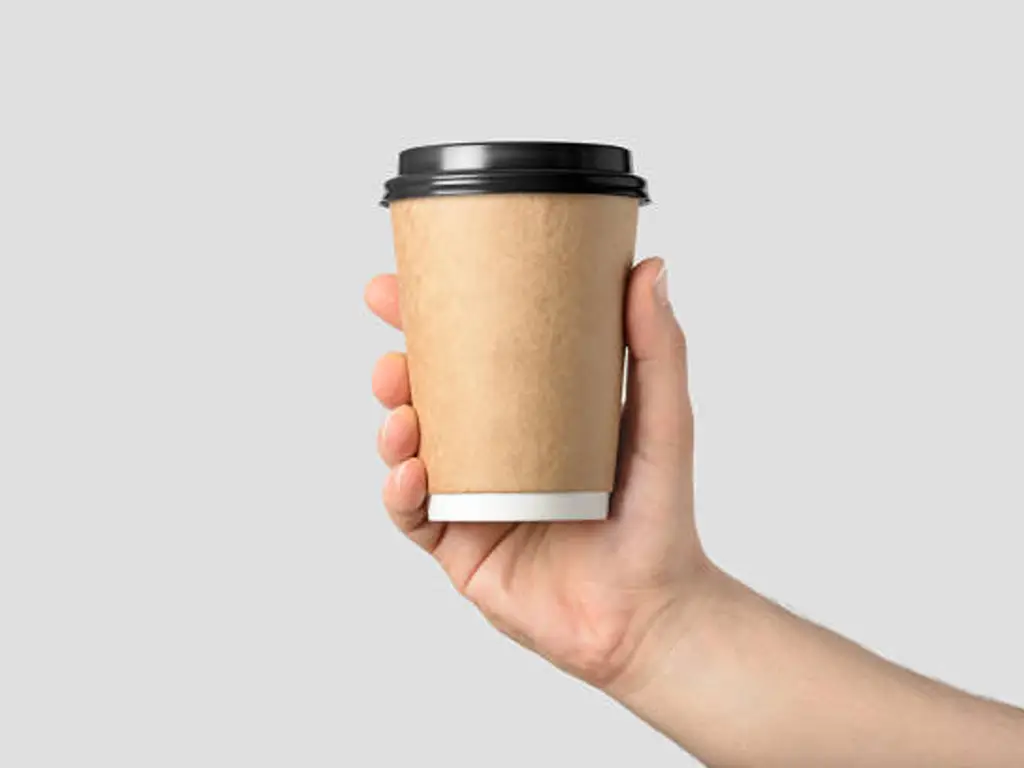
The crossover is not a magic number. Every “flexo is cheaper” claim you read comes from a vendor selling one process. Ask for a quote with the plate line item shown — the cost structure will tell you which process your order profile actually favors.
Ask your converter to route your order across both lines and show the plate line item — that quote is your crossover math.
Get a process-matched quoteA Practical Decision Matrix for Custom Cup Printing
Read the matrix like a filter: find your order profile in the left column, check the boundary, then act on the “confirm first” column before approving artwork.
| Method | Fits when | Breaks down when | Confirm first |
|---|---|---|---|
| Flexo | 1–3 spot colors; long recurring runs; full-coverage artwork; aqueous-coated paper; kraft paper | Plate cost wasted on one-off trials <10k; very fine reverses and high-detail gradients | Plate quote per color; reorder schedule; anilox/press condition for fine work |
| Offset | Trial and short runs; detailed cartons; low plate budget; white paper with controlled coverage | Very long runs (speed); full-coverage nested cups (transfer risk); roll-fed lines | Drying setup; color-transfer history on full-coverage jobs; sheet size vs cup fan |
| Digital | Personalization, variable data, ultra-short runs, proofs | High unit cost at volume; limited to suitable cup stock | Whether stock is digital-print compatible; per-unit cost at your volume |
| Gravure | Extreme volume, repeating designs (rare for cups) | Engraved cylinders only pay back at millions; slow changeover | Cylinder cost per color vs run length |
Three notes before you over-filter. Digital is the honest answer for proofs and for personalization, but its unit cost makes it a niche at wholesale volumes. Screen printing appears on specialty cups, mostly transparent or unusual materials, and is a one-line note for most buyers. And the matrix’s most important row is the last column: the way to fail this decision is to approve a design before confirming the coating, the color count, and the coverage with the converter.
What to Look For in a Paper Cup Printing Supplier
By this point you know what you need to buy. The harder question is who you should buy it from. Three checks cover most of the risk.
The capability checklist
1. Process-line composition. The single most important line on your audit list. A supplier running only one process will always recommend that process — that is how every contradictory blog post above got written. A supplier with both flexo and offset lines can route each order to the process that actually fits it. Big color-heavy runs go to offset, high-volume simple runs go to flexo, and reorders go wherever the amortization lands best. It is the difference between buying a process and buying a solution.
Two lines, one factory
Order structure decides the line — not the other way around.
2. Color consistency process. Any supplier can claim accurate color. What matters is the system behind it. Look for hourly in-production quality checks, a defect policy that rejects everything produced since the last successful test (not just the bad batch), and traceability — printed production date, time, and serial number on the bottom of every cup. Food-safe inks (soy- or water-based) and a dual color system (CMYK for process work, Pantone for spot colors) should be confirmed in writing.
3. Certification coverage — and its limits. ISO 9001 and ISO 14001 for systems, BRC for food safety, FDA and LFGB for food contact, FSC for paper sourcing — these are the industry’s standard stack. One caveat worth repeating: certification is not the same as coverage. A certified factory may still route your specific cup through a process or a material that is not certified. Ask which certification applies to your exact cup, coating, and ink combination, not which certifications the factory owns.
A full-cycle setup matters here too: when printing, drying, die-cutting, and forming happen under one roof, color consistency survives the handoffs that break it between subcontractors, and the hourly inspection is checking the final cup, not an intermediate sheet.
Fourth, ask the supplier these five questions. How fast is the digital proof (working days, not weeks)? How fast is a physical sample, and is it free? What are the MOQ tiers for my exact configuration (single-item vs multi-item changes the math)? What is the color-tolerance standard for acceptance — agree a Delta-E or Pantone range before production, not after? And what is the claim process if a defect ships — do I return product, or is video/photo evidence enough?
The supplier checklist
Supplier runs both flexo and offset lines
Hourly QC with batch rejection since last successful test
Date/time/serial traceability on cup bottoms
Food-safe soy/water inks confirmed in writing
Digital proof in ≤1 working day; physical sample in ≤48h
MOQ tiers quoted for your exact configuration
Color tolerance agreed before production
Claim process: video/photo evidence, no return needed
Certifications map to your specific cup, coating, and ink
At YoonPak, our printing floor runs six presses spanning flexo and offset lines, so every order is routed to the process its profile deserves — full-cycle from flat-sheet printing through drying, die-cutting, forming, and warehousing under one 16,000 m² facility, with hourly quality checks and a date/time/serial stamp on every cup bottom. Inks are food-grade soy- or water-based, and we work in both CMYK and Pantone color systems so spot-brand colors match their target. You can see the two lines side by side on our paper cup manufacturing page, and the ink systems we use are detailed on our sustainability page.
Print-Quality Problems to Catch Before You Commit
The failures in cup printing are rarely catastrophic; they are slow, expensive disappointments. Three are worth knowing before you sign anything.
Solids that come out grainy are the classic complaint. A converter running both processes describes the gap: flexo Pantone solids that look “full of grains” next to offset’s perfect finish. If your brand identity is a big solid block of color, ask how the flexo line handles solid density — surface patterning of the plate can lift flexo solid density by 5–30% — and demand a physical sample before committing.
Reverse type and fine detail are the second trap. Small reversed-out text inside a spot color is routine on offset and a known struggle on flexo. If your design has fine text, your artwork may need to be redrawn for the chosen process — a conversation to have before plates are made, not after.
The order-size reality check comes third. A coffee-brand owner’s first quote for custom cups — 100 cases of 1,000 cups at $0.07 per cup — came to $7,700 for the first order. On a $0.07 cup, $7,700 of upfront commitment, before any reorder, is the true price of entry. Shop owners in the same threads report that competitive pricing starts around 100,000 cups per order. The lesson is not that custom cups are unaffordable; it is that MOQ tiers and plate/setup costs are the real numbers to negotiate, and they should be laid out line by line in the quote.
Agree the color standard before production, not after. Color difference is not the same as a defect — Pantone tolerances are ranges, not points. Put the acceptance standard (light source, Delta-E range, or Pantone target) into the order confirmation, so “slightly off” is measured, not argued.
The prevention flow has three checkpoints. At proof stage, review the digital proof (delivered within one working day by any serious supplier) and order a physical sample — a proper converter ships one within 48 hours. At production stage, confirm the hourly QC cadence and the batch-rejection rule, and rely on the cup-bottom serial for traceability. At arrival, do a random check of artwork position, cup dimensions, lid fit, and carton condition — a proper AQL-based outgoing inspection covers appearance, size, material, and drop-test performance.
The Wholesale Math: Why Process Choice Sets Your Cost Ceiling
Step back and the whole picture reduces to one business fact. Your cost structure as a buyer is capped by your supplier’s process lines — not by your order size.
If your supplier runs one process, every order you place pays that process’s cost structure, whether it fits or not. Your big color-heavy run pays flexo’s plate premium. Your long simple run pays offset’s speed penalty. Your reorder pays the same wrong economics again. The contradictory advice from the blogs above is not noise; it is the sound of single-process suppliers describing their own constraints.
A supplier with both lines changes the math. Big, color-rich runs route to offset where plate cost is trivial and detail is best. High-volume, simple, full-coverage runs route to flexo where the plate investment amortizes across hundreds of thousands of cups. Reorders route wherever the amortization lands best. The same factory, the same quality system, different cost curves per order — which is exactly how a wholesale buyer should think: stock standard items for volume, run custom printing for margin, and never let a single process dictate either.
So when you vet a supplier, put the process-line composition at the top of the checklist — above samples, above price. It is the one line item that decides every other number on the quote.
If you are evaluating a paper cup printer for your next order, YoonPak runs both flexo and offset lines from a single facility — trusted by global chains including Burger King, Tim Hortons, ILLY, and Coffee Planet, with standard lead times of 25–35 days and samples shipped within 48 hours. See our manufacturing credentials or request samples and a quote.
Spec your cups against a real dual-line quote
Compare flexo and offset pricing on your exact artwork, coating, and quantity — samples ship within 48 hours.
Request samples & a quote


 English
  German
  Spanish
  Italian
  Dutch
Dutch  French
  Portuguese
  Russian
  Arabic
  Korean