

Beyond Aesthetics: The Ultimate Coffee Packaging Design & Sourcing Strategy
You have exactly three seconds. In the hyper-competitive world of modern coffee retail, that is the maximum amount of time your packaging has to arrest a consumer's attention, communicate your brand's value proposition, and secure a spot in their shopping cart. This is the "First Moment of Truth" (FMOT). Yet, a fatal misconception plagues the industry: the belief that coffee packaging design is purely an exercise in graphic aesthetics. It is not. True packaging design is a high-stakes, multi-disciplinary battlefield where materials science, thermodynamic engineering, and global supply chain logistics intersect. A stunning watercolor illustration means absolutely nothing if a faulty degassing valve allows your premium roast to oxidize within a week, or if an unrealistic structural choice forces your automatic filling machine to jam, destroying your profit margins. This ultimate sourcing strategy guide will strip away the artistic fluff. We are going to deconstruct the exact physical structures, hidden logistical costs, and minimum order quantity (MOQ) realities that dictate the survival of both retail bean brands and global cafe franchises.
The Psychology of Coffee Packaging Design: More Than Just Aesthetics
To understand the psychology of coffee packaging, we must first break the illusion that buyers make purely rational decisions. Packaging serves a dual identity: it is simultaneously the ultimate silent salesman on the shelf and the uncompromising guardian of your coffee's volatile flavor compounds. Every curve, texture, and font weight is a calculated psychological trigger aimed at specific consumer demographics.
Consider a fascinating, counter-intuitive phenomenon in the specialty coffee market. Have you ever noticed that a $150 half-pound bag of ultra-premium Panamanian Geisha often comes in a stark, minimalist white pouch with a simple, almost clinical typography label? Meanwhile, a $10 supermarket commercial espresso blend is often covered in glossy, hyper-saturated graphics of steaming mugs, golden beans, and vibrant landscapes. This is not an accident; it is precision psychological targeting. The minimalist design signals exclusivity, purity, and supreme confidence to the coffee connoisseur—it implies the beans are so extraordinary they require no visual shouting. The commercial blend, conversely, must shout to be heard in a crowded, low-attention aisle. Designing your packaging is, therefore, an act of precise demographic calculation. However, visual psychology is merely the surface. Beneath the ink lies the critical architecture that determines whether that beautiful package delivers a fresh product or a stale disappointment.
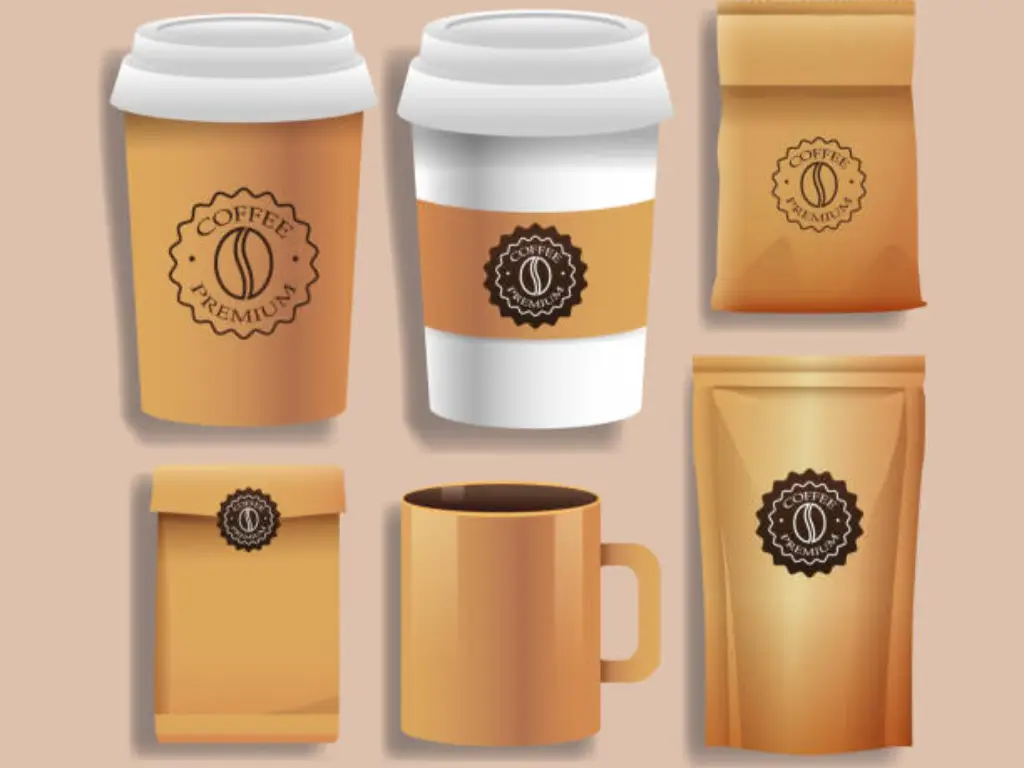
Retail & Wholesale Coffee Bag Structures: Preserving the Roast
With the materials defined, we must engineer the physical form. Selecting a bag shape is not merely an aesthetic choice; it dictates your shelf presence, shipping volume, and compatibility with automated filling machinery. A beautiful bag that jams your co-packer’s doser will bleed your operational budget dry. We must evaluate packaging through the lens of retail display and B2B wholesale logistics.
The Structural Matrix: Stand-Up, Flat Bottom, and Quad Seal Pouches
The physical architecture of your bag fundamentally alters the consumer's perception of value and your operational efficiency. Here is the definitive breakdown of the core retail and mid-weight structures:
| Packaging Structure | Optimal Volume | Shelf Presence & Stability | Cost & Filling Tolerance |
|---|---|---|---|
| Stand-Up Pouch (Doypack) | 250g – 500g | Good. Stands well when full, but the bottom gusset can look messy if under-filled. Two main print panels. | Highly cost-effective. Excellent tolerance on semi-automatic filling lines. The undisputed choice for startups and micro-roasters. |
| Flat Bottom (Box Pouch) | 250g – 1kg | Exceptional. Mimics a rigid box, offering 5 distinct printable panels. The gold standard for premium retail display. | Premium cost. Requires highly precise bag-making machinery. Can be temperamental on older automatic weigh-fill lines due to rigid corners. |
| Quad Seal (Side Gusset) | 500g – 2kg | Excellent structural integrity. Four crisp edges prevent bulging, maintaining a sleek profile even when packed tight. | Highly efficient material-to-volume ratio. The absolute workhorse for medium-to-large retail formats and early-stage B2B. |
B2B Wholesale Logistics: 5kg Bulk Bags & Corrugated Mailers
A critical blind spot in many packaging discussions is the B2B wholesale transfer. When a commercial roastery is shipping 500 kilograms of a proprietary espresso blend to 50 franchise cafe locations weekly, the delicate aesthetics of a Flat Bottom bag are utterly irrelevant. What matters here is brutal efficiency, cost-per-gram ratios, and structural survivability.
For 5kg to 10kg bulk scenarios, the industry standard shifts entirely to heavy-duty, multi-ply Aluminum foil Side Gusset bags with industrial-grade one-way valves. The primary metric for these bags is not visual design, but performance in Drop Testing. A 5kg bag dropped from a warehouse shelf or mishandled by a courier must not rupture at the seams. Furthermore, these bulk bags do not exist in isolation; they are part of a secondary packaging system. They must be precisely dimensioned to nest perfectly inside custom-fitted corrugated mailers (cardboard outer boxes). If the bag dimensions leave too much void space in the box, the bags will shift during transit, repeatedly striking the box walls and eventually causing micro-fractures in the aluminum barrier, leading to mass spoilage.

The Anatomy of Freshness: Degassing Valves, Zippers & Tin Ties
The external shape is the body; the internal components are the respiratory system. You cannot discuss coffee packaging without addressing the volatile chemistry of freshly roasted beans. Upon leaving the cooling tray, roasted coffee begins an aggressive period of off-gassing. A single kilogram of dark roasted coffee can release upwards of 10 liters of carbon dioxide (CO&sub2;), with the vast majority expelled within the first 48 hours.
If you seal this coffee in an airtight barrier bag without ventilation, you are effectively creating a slow-motion bomb. The pressure will build until the bag balloons and inevitably bursts at its weakest seam. To prevent this, every bag holding freshly roasted whole beans requires a One-way Degassing Valve. This microscopic piece of engineering features a rubber membrane coated in a specialized sealant fluid. When internal CO&sub2; pressure rises above a specific threshold (usually a few millibars), the membrane lifts, burping the gas out. Crucially, as soon as the pressure equalizes, atmospheric pressure forces the membrane shut tight, preventing a single molecule of oxygen from entering and oxidizing the coffee lipids.
Equally important is how the consumer or barista interacts with the bag after opening. However, we must correct a common industry misapplication regarding closures. For 250g to 500g retail bags, high-quality Resealable Zippers (like pocket zippers or standard press-to-close) are mandatory to ensure the consumer can maintain freshness over a two-week consumption period. But as we scale up to 1kg+ B2B Quad Seal or Side Gusset bags, zippers become structurally incompatible. The folded side gussets make it nearly impossible for a standard zipper track to create a perfect, airtight seal across the entire width. Therefore, large B2B bags must utilize a permanent Heat Seal for transit security, paired with Tin Ties (wire closure tabs) allowing the barista to roll the bag down tightly as the volume depletes in the cafe hopper.
The Cafe Ecosystem: Designing Takeaway Cups & Sleeves
While the retail shelf focuses on the bean bag, the actual physical interface where 80% of brand interaction occurs in a brick-and-mortar cafe is the takeaway cup. A paper cup is not merely a vessel for hot liquid; it is a high-frequency consumable and a hyper-mobile, walking billboard for your brand on city streets.
Walking Billboards: Paper Cup Design & Brand Consistency
Designing for a cup presents a unique geometric challenge: curvature distortion. Unlike a flat bag, a graphic wrapped around a conical paper cup will warp. A perfect circle designed in flat 2D software will look like an elongated egg when printed on the cup if the designer does not pre-warp the artwork. It is absolutely critical to insist on 3D mockups and physical proofs before signing off on a massive production run.
Visually, we see a divergence between full-wrap, highly illustrative prints and stark minimalism. Take the iconic Blue Bottle Coffee as an example. Instead of covering the cup in text and patterns, they utilize a pristine white background with a singular, perfectly proportioned blue bottle logo on one side. This mastery of negative space ensures that even from 30 feet away, across a busy intersection, the brand is instantly recognizable in a pedestrian's hand. The cup design must optimize for this "pedestrian visual capture rate."
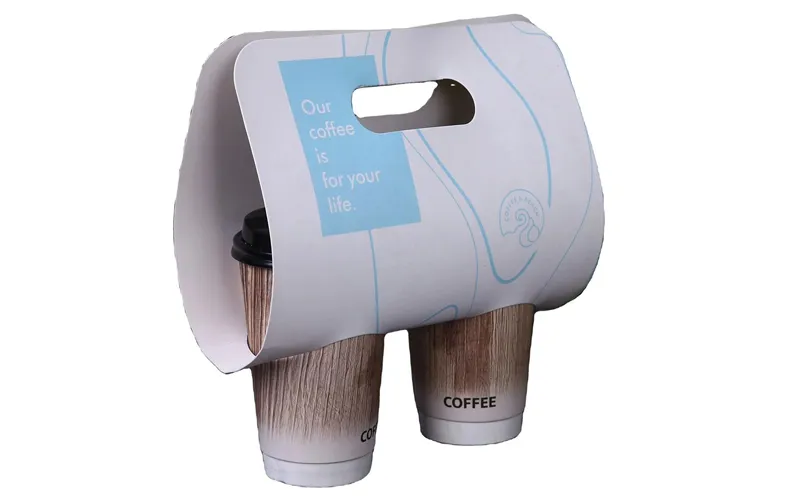
The TCO Temperature Spectrum: Single, Double, Ripple-Wall & Cold Cups
The decision of which types of coffee cups to utilize is arguably one of the most critical operational choices a cafe owner makes. It is a decision that extends far beyond aesthetics, directly impacting thermal dynamics, logistics, and labor efficiency. Let us deconstruct the complete temperature spectrum.
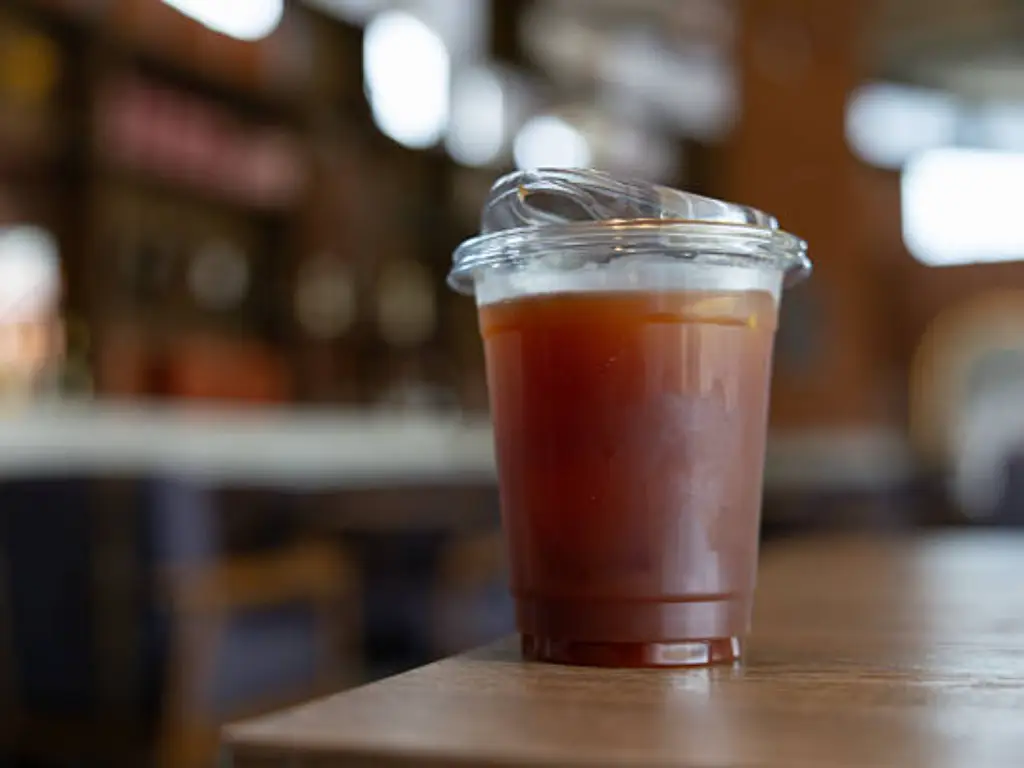
At the entry level, we have the Single-Wall Cup. It is cheap to produce, but it offers zero thermal protection for hot beverages like Americanos or drip coffee. It absolutely requires a secondary corrugated cardboard cup sleeve. Next is the Ripple-Wall (Corrugated) Cup, which provides extreme heat insulation and grip, but its heavily textured outer layer severely restricts high-fidelity CMYK flexographic printing, limiting designs to very basic logos or stamps. Finally, there is the Clear Cold Cup (PET/PLA), essential for iced lattes and cold brew, where high clarity is required to show off the visual layering of the drink. Flimsy PP plastics fail here; premium PET or eco-friendly PLA is required to provide a rigid, premium hand-feel.
The Strategic Insight: A common, yet devastating mistake made by purchasing managers at expanding chains is evaluating cup choices purely on the “Factory Unit Price.” They see that a Single-Wall cup is cheaper than a premium Double-Wall cup and make their choice. This is a catastrophic failure to calculate Total Cost of Ownership (TCO).
Let's do the real math. When a procurement team chooses the “cheaper” Single-Wall route, the true TCO equation looks like this: (Cost of Single-Wall Cup + Cost of Custom Printed Sleeve) + (The wages of a barista spending an extra 3 seconds per transaction manually forcing sleeves onto cups during the chaotic morning rush) + (The massive cost of dedicating double the warehouse space to store two separate inventory items).
Furthermore, let us look at the brutal reality of sea freight logistics. Volume is money. A standard 40'HQ shipping container can hold approximately 1,000 cartons of standard Single-Wall cups. If you switch to bulky Ripple-Wall cups to solve the heat issue, that container capacity plummets to roughly 450 cartons. Your freight cost per cup just doubled.
This is exactly why top-tier global chains—operating at the scale of a Burger King or a Tim Hortons—abandon this fragmented approach. The ultimate operational paradigm shift is adopting high-end Double-Wall Cups from a unified, full-spectrum manufacturer. By utilizing a manufacturer like Yoonpak, brands unlock a structural masterpiece: a cup that features an integrated insulating air gap, eliminating the need for sleeves entirely. This slashes barista handling time, halves inventory SKUs, and provides a smooth outer surface capable of flawless, high-definition CMYK printing using food-grade soy inks.
More critically, when you consolidate your hot cups (ultrasonically sealed for 100% leak-proof performance) and your cold cups (FDA/LFGB certified PLA) with a supplier possessing a 16-billion cup annual capacity, you achieve massive economies of scale. You can fill 40'HQ containers with mixed SKUs, drastically lowering unit shipping costs, while resting easy on a “zero-defect” quality control system that executes hourly traceability checks, insulating your brand from the nightmare of customer leak complaints.


 English
  German
  Spanish
  Italian
  Dutch
Dutch  French
  Portuguese
  Russian
  Arabic
  Korean