

Are Paper Bowls Microwave Safe? What the Coating Under the Label Really Decides
What Actually Decides Whether a Paper Bowl Is Microwave-Safe
Short answer: yes, most paper bowls can go in the microwave, but only under conditions set by something you cannot see: the thin film lining the inside of the bowl. “Paper bowl” is shorthand. What you are actually heating is paper plus a waterproof barrier, and the barrier decides whether the bowl comes out the way it went in.
Microwave ovens heat food by vibrating water molecules, not by heating the container. Paper fiber absorbs almost no microwave energy, which is why plain paper behaves so well in the oven. The USDA’s food-safety service puts plain paper products (wax paper, parchment paper, and white paper towels) on its microwave-safe list and says nothing about coated plates or bowls (USDA FSIS, “Cooking Safely in the Microwave Oven”). That silence is the whole story in miniature: the paper is fine, and the coating is the open question.
So “are paper bowls microwave safe” has an honest answer and a practical one. The honest answer is “it depends on the coating.” The practical answer is “check it the way this article shows you.” The barrier comes in two families: plastic linings, which most disposable bowls use, and plastic-free coatings or molded fiber bodies, which are growing fast in takeout. Each has a different heat ceiling, a different failure mode, and a different answer to the label question, which is why the rest of this guide is organized around the coating, not the paper.
One number to hold onto before the types: water in a microwave routinely hits its boiling point, around 100°C (212°F). Whatever your bowl’s lining is made of has to survive soup at that temperature. That single fact does most of the sorting work below.
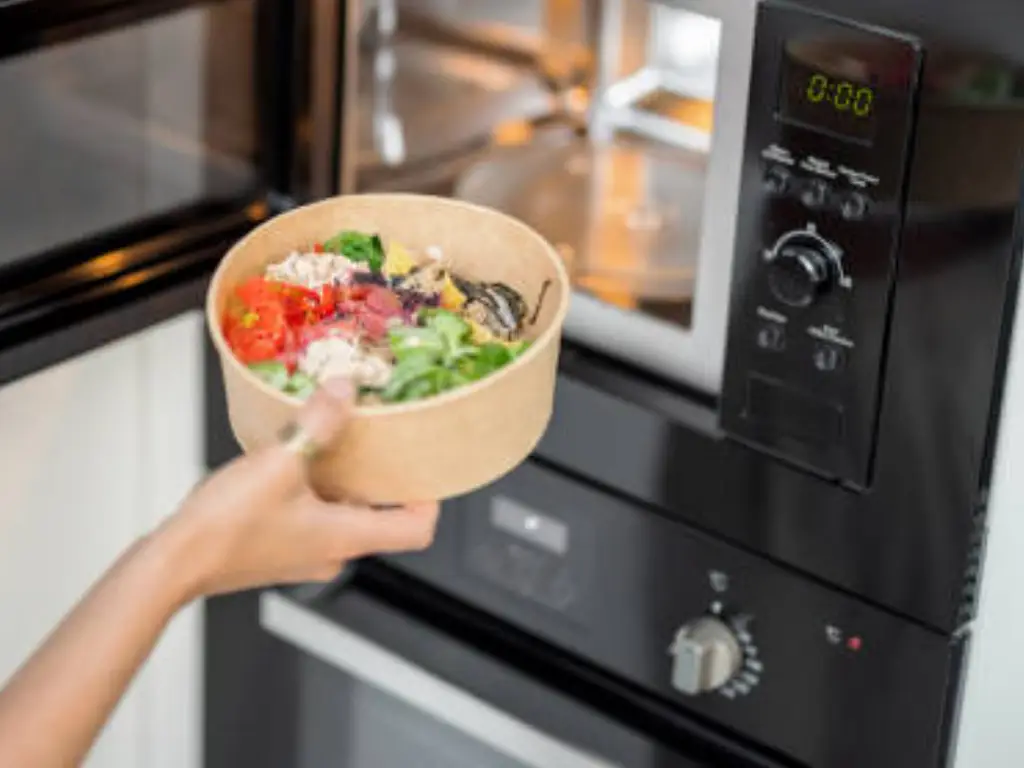
The Coating Under the Label: Every Type of Paper Bowl, by Heat Tolerance
Look at what people actually search for: “paper bowl microwave safe” usually comes from someone holding a specific bowl and wanting a yes or no. The reason nobody can give a clean yes is that the market sorts into several lining types with different heat ceilings. Here is the full map.
Uncoated Paper Bowls and Wax-Coated Bowls
A genuinely uncoated paper bowl is rare: paper without a barrier turns to wet mush within minutes of touching soup, so uncoated bowls are for dry snacks and short holding times. Wax-coated bowls are the traditional budget option. Food-safe wax melts at temperatures far below boiling, and a wax bowl in the microwave weeps wax into the food while the paper underneath softens. Treat both as “not for reheating.”
Plastic-Lined Bowls: PE and PLA
Polyethylene (PE) is the standard lining across disposable tableware: cheap, fully waterproof, and the reason most paper bowls survive contact with cold drinks and room-temperature meals. Its heat tolerance is the catch. Supplier-published specifications put PE softening around 80°C (176°F), a full 20°C below the boiling point of the soup inside it (GMZ Packaging, “Which Types of Disposable Paper Bowls Are Microwave-Safe?”). That is why careful guides say short bursts only, and why PE bowls are the ones that leak or warp on a long reheat.
Polylactic acid (PLA) linings are the compostable alternative: corn-starch-based, industrially compostable, better in heat, with supplier figures around 110–120°C (230–248°F). Here is where you should notice something. Two suppliers in the same market disagree about PLA. One documents it as a solid choice for short microwave sessions; another cautions that it may soften under higher heat (Bioleader, “Is It OK to Microwave Paper Bowls?”). Neither is lying. PLA’s behavior depends on the specific formulation and the load, which is exactly why the label on the bowl, not the category name, is what you should trust. Labels get their own section below.
Your soup is ~100°C (212°F) before a PE-lined bowl has even reached its softening point of ~80°C (176°F).
PLA-lined bowls hold ~110–120°C (230–248°F); PP-lined bowls hold ~130–140°C (266–284°F). The coating sets the limit, not the paper.
PP-Lined and Water-Based Coated Bowls
Polypropylene (PP) is the current heat champion among plastic linings: 130–140°C (266–284°F) per the same supplier data, which is why PP-lined bowls are marketed as microwave-safe for hot soup and saucy meals. PP also survives repeated short reheats without the softening that eventually catches up with PE.
Water-based (aqueous) coatings are the interesting newcomer. Instead of laminating a plastic film onto the paper, the manufacturer applies a water-based polymer dispersion that behaves more like a paint layer. The coating is plastic-free, and it does not need peeling off at the recycling plant: aqueous-coated paper is repulpable in standard paper mills, which is why the category is positioned as the next-generation, regulation-proof option in Europe. In the microwave, aqueous-coated bowls track closer to paper than to plastic: short reheats are fine, and the failure mode is the paper structure’s, not the coating’s. The trade-off is that performance depends heavily on the formulation, so “aqueous” alone is not a guarantee. The supplier’s test data is.
Molded Fiber Bowls and Structure
Sugarcane bagasse bowls, molded fiber with no lamination at all, take heat the way fiber always has. They are formed under heat and pressure, and their walls are thick enough to shrug off a reheat that would buckle a single-wall paper bowl. Bamboo fiber and other molded constructions behave the same way. This is the type most likely to be genuinely labeled microwave-safe out of the box.
Structure matters alongside the coating. A single-wall bowl, roughly 95% paper and 5% film by weight in typical constructions, has nothing between the soup and your hand except that one film. Double-wall bowls add an air gap that slows heat transfer and buys minutes of stability a single wall does not have. If you have ever watched a bowl go soft at the base and then pour soup down your wrist, you were watching the structure give out, not the coating.
Here is the full comparison, with the numbers side by side:
| Type | Heat tolerance | Microwave behavior | Main failure mode | One-line verdict |
|---|---|---|---|---|
| Uncoated / wax | Below boiling (wax melts ~60–70°C) | Not for reheating | Wax migrates into food; paper softens | Reheat in something else |
| Uncoated molded fiber (bagasse/bamboo) | High (formed under heat) | Generally the strongest pick | Rigid walls can crack if overheated dry | Best default for soup |
| PE-lined | ≈80°C softening | Safe for short bursts only | Leak or warp on long reheat | Reheat ≤1 min, check after |
| PLA-lined | ≈110–120°C | Short sessions fine; supplier views split | Softening under high heat / oily loads | Good for warm-food reheats |
| PP-lined | ≈130–140°C | Most heat-tolerant plastic lining | None reported in normal use | The plastic “microwave-safe” workhorse |
| Water-based (aqueous) coating | Paper-limited (no plastic to soften) | Short reheats track paper behavior | Structure failure, not coating | Best plastic-free choice; verify formulation |
One caveat about the table: the temperature figures are supplier-published specifications, not a regulatory grading. Use them for relative ordering, not as absolute limits, and check the specific bowl’s own data before you rely on any single number.
Compostable is not microwave-safe.
BPI or DIN compostability certificates say nothing about heat tolerance: they certify what happens to the bowl in a composting facility, not in your microwave. Check heat behavior separately from eco credentials.
How to Check Your Bowl in 60 Seconds (and What the Label Really Means)
Knowing the types only helps if you can identify which type you are holding. Most kitchen drawers contain an unlabeled mystery bowl or three, so here is the check sequence. It takes about a minute and it works on any bowl, brand name or not.
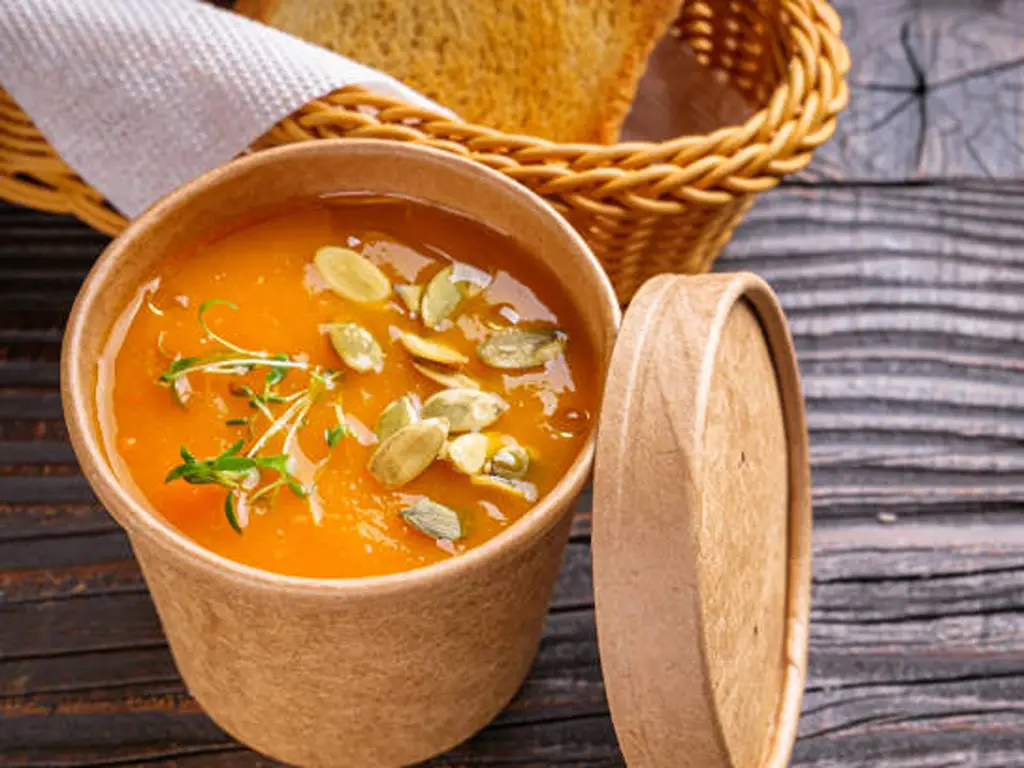
Step 1: Read the Mark, Then Read It Again
Look for the mark on the base or the sidewall. “Microwave safe” printed on the bowl is a statement about reheating; “microwave safe only” is a statement about heating prepared food, a stricter and more conservative claim. If the bowl says either one and you are reheating something already cooked, the label is giving you permission. If it says nothing, proceed to the test below. If it says “not for microwave” or shows a crossed-out microwave icon, that is a hard no, not a suggestion.
Step 2: The 60-Second Water Test
No label? Run the water test: fill the bowl about halfway with water, microwave on full power for 60 seconds, then inspect. A bowl that comes out unchanged, with no warping, no leaking, no base softening, and no chemical smell, has survived its first real heat event and is probably fine for short reheats. A bowl that flexes, seeps, or smells has just shown you its limit. Two rules: never run the test empty (an empty bowl heats itself, distorts the result, and can scorch the paper), and never test the same bowl twice. The first pass is the test; every pass after that is a meal.
The three-step check, in one line
① mark says microwave-safe, use it in short bursts; ② no mark, run the 60-second water test; ③ after the test, reheat at 50–70% power in 1–2 minute bursts, stirring between. The “how long” answers you see online disagree because there is no universal standard, so the bowl’s behavior, not the timer, is the rule.
What “Microwave Safe” on a Label Actually Means
The uncomfortable part: there is no universal testing standard behind the phrase “microwave safe,” and no agency stamps it. The U.S. Food and Drug Administration regulates what food-contact substances, including packaging and its components, are allowed to touch food, but that clearance covers suitability for contact, not performance in a microwave (FDA, “Food Packaging & Other Substances that Come in Contact with Food — Information for Consumers”, updated 2024). In Europe the same distinction holds: EU food-contact rules govern migration of substances into food, and they are not a microwave-use certificate either.
In practice, a “microwave safe” mark is a claim the manufacturer makes about its own product, sometimes backed by an internal or third-party heat test and sometimes not. That is why two otherwise similar bowls can behave in opposite ways, and why brand names do not rescue you. The coating chemistry inside a brand’s bowl is proprietary, and label wording such as “food-contact compliant” tells you nothing about heat survival. The same check sequence applies to Dixie, Solo, or a no-name convenience-store bowl: mark, test, short bursts.
This is also where the online contradictions come from. One source says a minute, another says three, another says 50% power. All of them describe the same reality from different bowls. There is no one number because there is no one coating. The check sequence above is the portable answer; any fixed time limit is one supplier’s recommendation for one bowl.
Why the Label Is Getting Heavier
One trend worth knowing, because it changes how you read labels going forward: the biggest suppliers in this category now publish buyer guides telling customers to request food-contact test reports, microwave-use documentation, and coating information before bulk-ordering (Bioleader, buyer guidance section). The label is quietly being upgraded from a claim into a document trail. If you are a consumer, that is good news: the same competition that produced vague labels is now producing verifiable ones. If you buy bowls in volume, it changes your supplier checklist, which is exactly where this article is heading.
Which Bowl for Which Meal: Soup, Rice, Oil — and the Lid Question
Once you know how to check a bowl, the remaining question is matching the bowl to the meal. The food matters more than most people think, because the food determines how hot the container gets and how fast.
| Meal | What the bowl faces | Best bowl type | Watch out |
|---|---|---|---|
| Hot soup / noodle broth | ~100°C liquid, long contact | Molded fiber or double-wall | PE bowls leak or warp, the classic takeout complaint |
| Rice / curry / grain bowls | Medium heat, short contact | PLA- or PP-lined single wall | Check the base for softening between reheats |
| Oily dishes | Oil absorbs microwaves and heats faster than water | Halve your normal time; PP preferred | Oil is the hidden failure accelerator |
| Multiple reheats across a day | Repeated heat cycles | PP-lined or molded fiber | Inspect each time; discard at first softness |
The lid deserves its own paragraph, because it is the most commonly skipped step. Clear plastic lids are usually PET, which deforms at around 60°C (140°F): the lid on a bowl of soup will fail before the bowl does, warping, puckering, or dropping into the food. A microwave-safe lid is either paper, PP, or explicitly labeled, and it should be vented or loose. A tight, unvented seal turns the bowl into a pressure vessel, and the steam will find its own way out, usually by popping the lid or the bowl open. When in doubt: remove the lid, reheat, and cover loosely with a paper towel. That towel, incidentally, is on the USDA safe list cited earlier, and it doubles as a splatter guard.
If you are buying bowls in volume, whether restaurant, food truck, or caterer, this section is where your spec sheet gets written: coating type, structure (single- or double-wall), and lid pairing belong in the same line item, because they only work as a system. That three-part spec is the heart of the next section.
What Actually Goes Wrong: Collapse, Warp, Smoke — and the Line Before Fire
Failure in a paper bowl is not random. It follows a predictable spectrum, from the harmless to the genuinely dangerous, and each stage has a distinct look and a distinct action.
The first stage is wet collapse: the base or sidewall goes soft and the whole thing sags, the “wet paper way” one home cook described after reheating soup in a paper cup and watching the plastic lining give way. The bowl often does not leak at this point; it just stops being a bowl. Transfer it to a second container before it tips.
The second stage is structural warp: single-wall bowls develop a bulged base or a curling rim as steam pressure builds inside the paperboard. This is the stage behind the foodservice complaint every supplier hears: bowls collapse, soup spills, customers complain (GMZ, failure scenarios). The rim curl matters more than it looks. A rolled rim that unrolls means the paperboard delaminated, and the bowl’s strength is gone even if it looks intact.
The third stage is smoke and scorching, the first one you must treat as an emergency. Dry food, an empty bowl, or a long timer pushes the paper toward its char point, and the first wisp of smoke is the last warning before fire. When you smell scorched paper or see smoke: stop the microwave immediately, leave the door closed for a moment, and ventilate the kitchen. Paper does not spontaneously ignite in a microwave, but it can, and the sequence is always the same, dry, long, and unattended, and always preventable.
The fourth stage is the one nobody mentions in listicles: the sealed lid. A bowl with a tight-fitting plastic lid, microwaved sealed, does not fail gradually. It bursts, loudly, spraying hot contents across the microwave. Every supplier’s FAQ carries this warning for a reason.
The discard rule
Any bowl that has warped, leaked, softened, or smelled during heating is done. Reheating in a compromised bowl multiplies the risk, so throw it out instead of “watching it more carefully” next time.
Where Bulk Buyers Get Bowls That Hold Up to Reheating
If you buy paper bowls by the case, whether restaurant, delivery kitchen, catering company, or retailer, the check sequence from earlier scales up into a procurement checklist. The consumer version is a 60-second test; the bulk version is three questions in the request for quotation.
First, the spec must be written down. Coating type (PE, PLA, PP, aqueous, or uncoated fiber), structure (single- or double-wall), and lid pairing are the three line items. A supplier who cannot state all three from a spec sheet is telling you they do not track them, which means you cannot rely on consistency between batches. Second, ask for the verification documents: a third-party heat-resistance or migration test report, a food-contact statement appropriate to your target market (FDA for the U.S., EU food-contact compliance for Europe), and the manufacturer’s microwave-use guidance. These documents exist for exactly the products that are genuinely tested, and their absence is the fastest screening tool you have. Third, run a pilot: order samples, run the 60-second water test from this article, then test with the actual food you serve, the same soup, the same lid, the same holding time, because oil and salt change packaging behavior in ways water tests miss.
The boundary to keep in mind: microwave safety belongs in the specification, not in a phone conversation. A verbal “yeah, they’re fine in the microwave” is a promise with no test behind it; a written coating spec plus a test report is the same claim with evidence. In the current market, the suppliers who can produce that evidence are exactly the ones who will still be around when the label rules tighten, which is the business reality the next section closes with.
Put the verification checklist to work on your next bowl order
Send us your menu and target markets — we confirm coating, structure and food-contact documentation with every quotation, and free standard samples ship within 48 hours.
Request bowl samples & a quoteThe Business Read: “Microwave-Safe” Is Becoming a Verification Market
For importers, distributors, and brand owners, the material above reads differently than it does for a home cook, and the difference is the point of this section.
Start with the contradiction you saw in the coating overview. One supplier documents PE as unsuitable for microwave use; another says PE bowls are fine if you check the label. Both statements circulate in the same market, and a distributor who has to pick one is effectively vouching for one side to the customer. Every case of collapsed soup bowls a restaurant chain blames on its supplier started as exactly this kind of unspecified guess. The first business lesson: when you resell a bowl’s microwave behavior, you are reselling a coating specification you have not verified, and the person holding the risk is you, not the factory.
Second lesson, from the label discussion: because “microwave safe” has no universal standard, downstream buyers, from restaurants to delivery platforms to retailers, have started demanding evidence instead of claims. The leading suppliers already publish buyer guides instructing customers to request food-contact test reports and microwave-use documentation before ordering. That is the market signaling a shift: verification is becoming the entry ticket. For a distributor or importer, the cheapest way to get ahead of that shift is to make test reports and coating specs a default part of your quotation, not an upsell and not something you chase when a customer asks, but a line item that ships with the quote. It costs you nothing to attach a document that already exists, and it removes the entire class of “can you prove it?” objections.
Third lesson, on inventory: the same verification logic suggests where stocking effort should go. Verified heat-tolerant options (PP-lined, PLA-lined, aqueous-coated, and molded fiber bowls) carry documentation and match what the market is asking for; unverified standard PE stock does neither, and sits in the awkward position of being priced like a hot-food bowl while behaving like a cold-food one. The cleanest inventory position is to carry PE as the explicitly cold-use tier, labeled as such, and put the reheat-capable demand on the documented lines. The category’s real dividing line, in other words, is no longer paper versus plastic. It is verification versus claim.
If you are sourcing bowls your customers will reheat, food-contact certification is the starting point, not the end: YoonPak manufactures paper bowls under FDA- and LFGB-compliant food-contact systems and documents the coating and structure on every product sheet, the spec, not just the label. Our range and certification documentation are available on our paper bowl manufacturer page.
Spec a bowl range your customers can reheat with confidence
Talk to our packaging team about coatings, lid pairing and certification for your target markets — we respond within one working day.
Contact our packaging teamReferences
- U.S. Department of Agriculture, Food Safety and Inspection Service. “Cooking Safely in the Microwave Oven.” http://www.fsis.usda.gov/node/3355
- U.S. Food and Drug Administration. “Food Packaging & Other Substances that Come in Contact with Food — Information for Consumers.” Updated 2024. https://www.fda.gov/food/food-ingredients-packaging/food-packaging-other-substances-come-contact-food-information-consumers
- GMZ Packaging. “Which Types of Disposable Paper Bowls Are Microwave-Safe?” (supplier heat-tolerance specifications: PE ≈80°C, PLA ≈110–120°C, PP ≈130–140°C, PET lids ≈60°C). https://gmz.ltd/are-paper-bowls-microwave-safe/
- Bioleader. “Is It OK to Microwave Paper Bowls?” (buyer guidance; PLA caution). https://www.bioleaderpack.com/is-it-ok-to-microwave-paper-bowls/
- YoonPak. “The Best Paper Bowls Manufacturer | YOON.” https://www.yoonpak.com/paper-bowl-manufacturer/
- YoonPak. “Home.” https://www.yoonpak.com/

 English
  German
  Spanish
  Italian
  Dutch
Dutch  French
  Portuguese
  Russian
  Arabic
  Korean