

Disposable Cup Sizes: Rim, Fill and Fit Beyond the Oz Label
Two cups can both say 12oz and still take different lids. Set a 12oz cup from one supplier next to a 12oz cup from another and you may find an 80mm rim on one and a 90mm rim on the other. The lids are not interchangeable, the brim capacity differs by about 30ml, and neither cup holds exactly 12oz of liquid. That gap between the number printed on the bottom and what the cup actually does is where sizing decisions go wrong. Lids pop off mid-delivery, cash gets locked into sizes that barely move, and customers complain their medium looks small.
This guide walks the full distance from “what does oz even measure” to the questions an importer asks before signing a purchase order. Each part speaks to a deeper level of the same decision, so stop wherever your role stops.

What a Disposable Cup Size Actually Measures
First, a quick boundary so nobody reads the wrong article. Cup sizes here means foodservice cups: the paper and plastic cups cafes, milk tea shops, ice cream counters and restaurants order by the case. It is not bra cup sizes, and it is not only the red party cups people buy for home events. That consumer range gets a mention later where it belongs.
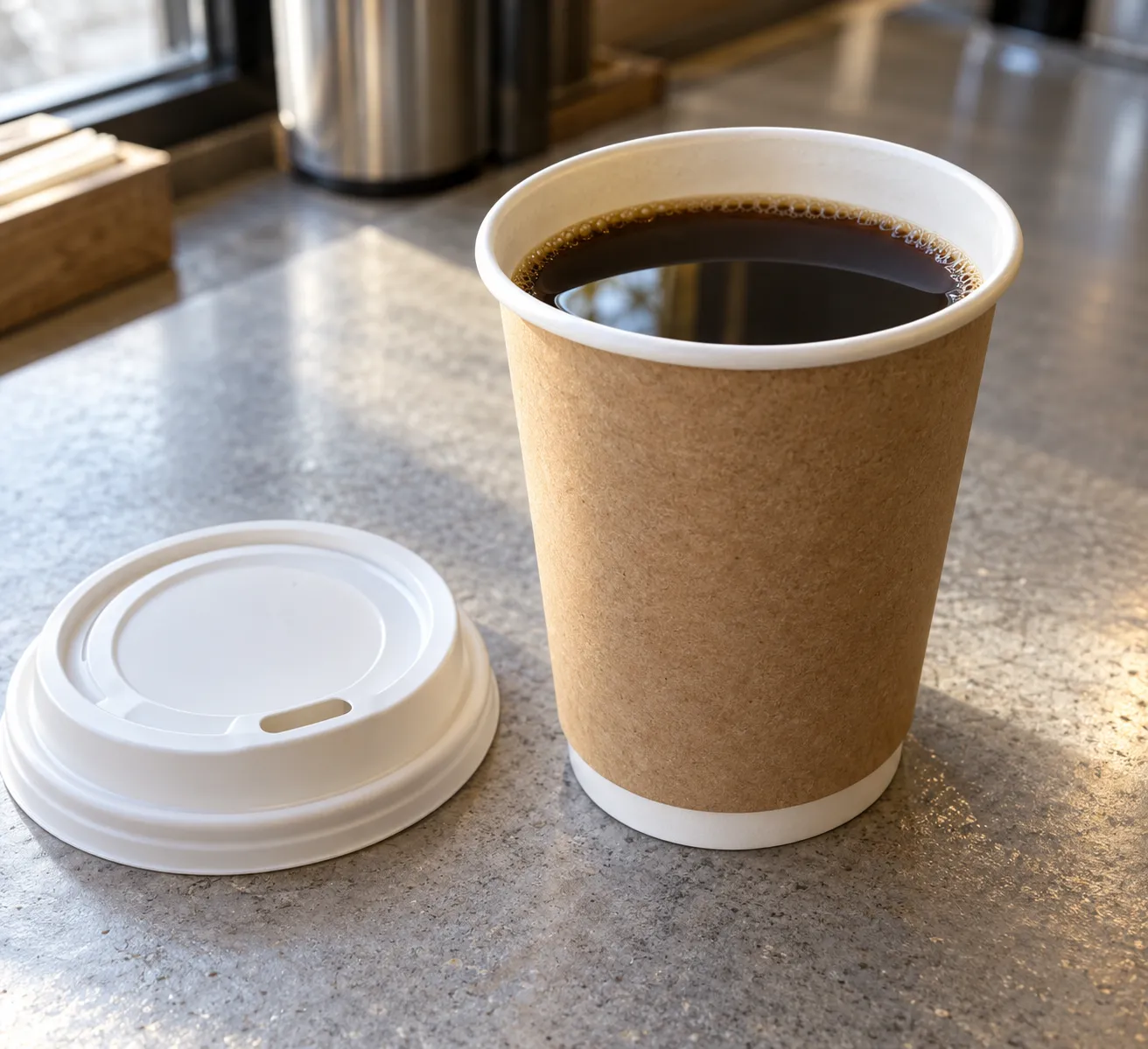
With that settled, the number itself deserves suspicion. An ounce label is a market name, not a measurement promise. One US fluid ounce equals 29.5735 milliliters (NIST), so a true 12 fluid ounces is 354.9ml, yet cups labeled 12oz are conventionally described as 360ml. The label rounds, and different suppliers round differently.
Under the label sit three different numbers, and buyers who confuse them order the wrong product.
Three capacities hide behind one oz label
| Capacity term | What it measures | Who quotes it | 12oz example |
|---|---|---|---|
| Nominal label | The market name on the box | Everyone, always | 360ml |
| Brim capacity | Liquid to the absolute rim | Spec sheets | 360ml on an 80mm-rim cup, 390ml on a 90mm-rim version |
| Practical fill | What you actually serve with headroom for the lid | Foodservice distributors | Roughly 10 to 10.5oz of liquid |
The brim row is the one that surprises people. BioPak’s own spec pages list 360ml for a 12oz cup with an 80mm rim and 390ml for their 12oz cup with a 90mm rim. That is a 30ml difference inside one nominal size (Papacko, 2026). Practical fill adds another layer: distributors like WebstaurantStore distinguish flush fill from practical fill precisely because a brim-full cup cannot take a lid without spilling (WebstaurantStore).
So when you buy cups, ask for two numbers the label will never give you: brim capacity in milliliters, and the practical fill the supplier recommends for your lid. The oz label answers neither.
Cup Sizes by Drink: The Menu Logic
Walk into any cafe and the menu has already picked the cup sizes for you. The industry has converged on a loose ladder, and drinks sort onto it by recipe.
Drink-to-size mapping on a standard menu
| Cup size | Typical drinks | Why this size |
|---|---|---|
| 4oz | Espresso, cortado, tasting samples | A double shot plus a little milk; bigger wastes paper and looks wrong |
| 8oz | Short coffee, flat white, kids’ hot chocolate | Traditional cappuccino volume with foam headroom |
| 10 to 12oz | Drip coffee, latte, tea: the daily workhorse | Standard medium across most markets |
| 16oz | Large latte, iced coffee, iced tea | Where the hot menu usually tops out and the cold menu starts |
| 20oz and up | XL iced drinks, smoothies, bubble tea | Cold formats where ice, not liquid, fills the gap |
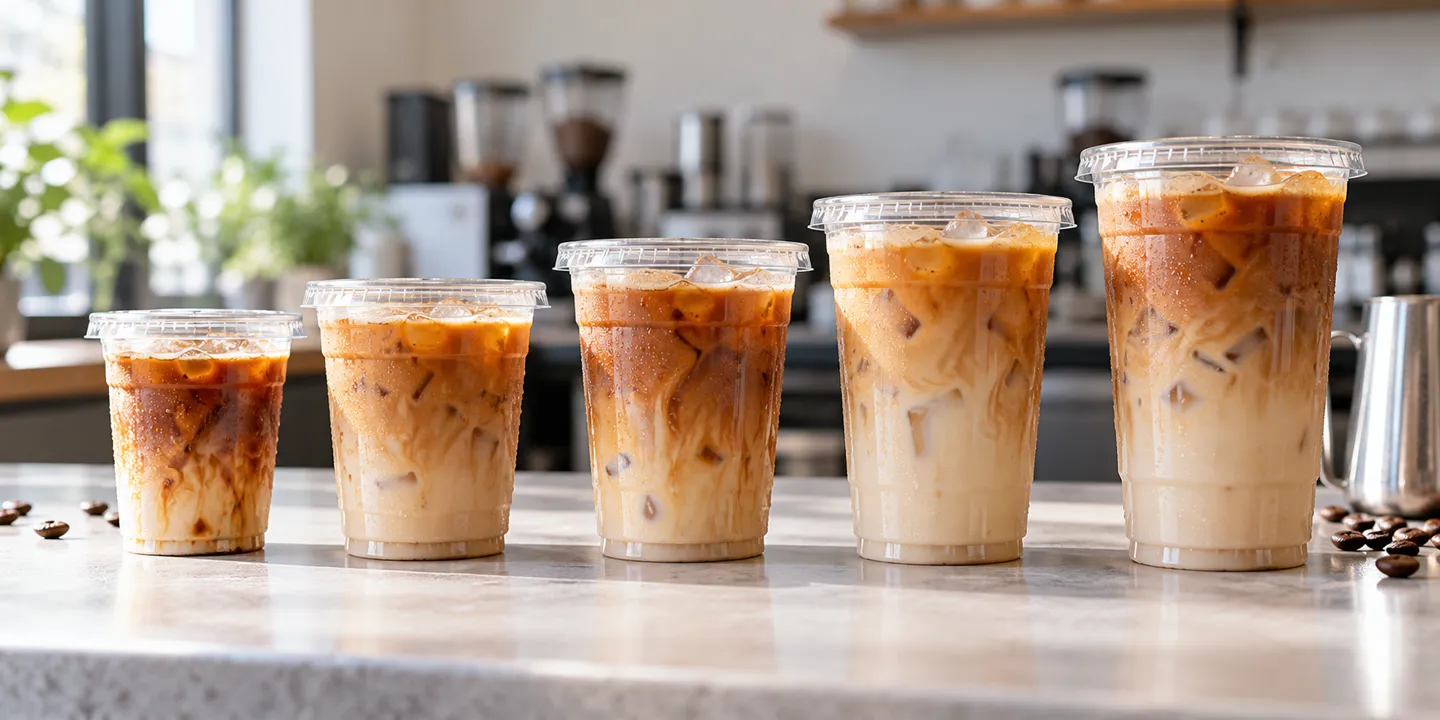
Iced drinks are the step most people miss. Ice is a solid taking up space in the cup, so the same liquid portion needs a bigger vessel cold than hot. Baristas describe the habit directly: a small hot is usually 12oz while a small iced is 16oz, because ice displaces roughly 4oz in a 16oz cup. Suppliers’ arithmetic examples run the same direction: a 16oz cup filled with ice delivers about 8 to 10oz of liquid (Papacko, 2026). If you want an iced drink to feel like your 12oz hot, you are buying a 16oz cup to get it.
There is also a ceiling built into recipes. Espresso-based drinks carry a fixed coffee-to-milk ratio, which is why a “large cappuccino” keeps annoying baristas on craft forums: past 8oz, you are mostly selling warm milk. Size stretches with the drink, not the other way around.
One line on naming: small, medium and large plus the printed ounce covers 95% of what customers need. Branded names like tall or grande are a marketing choice with a training cost, not an operations requirement.
Choosing Sizes to Stock: The 12oz Trap
A Starting Mix That Covers a Real Menu
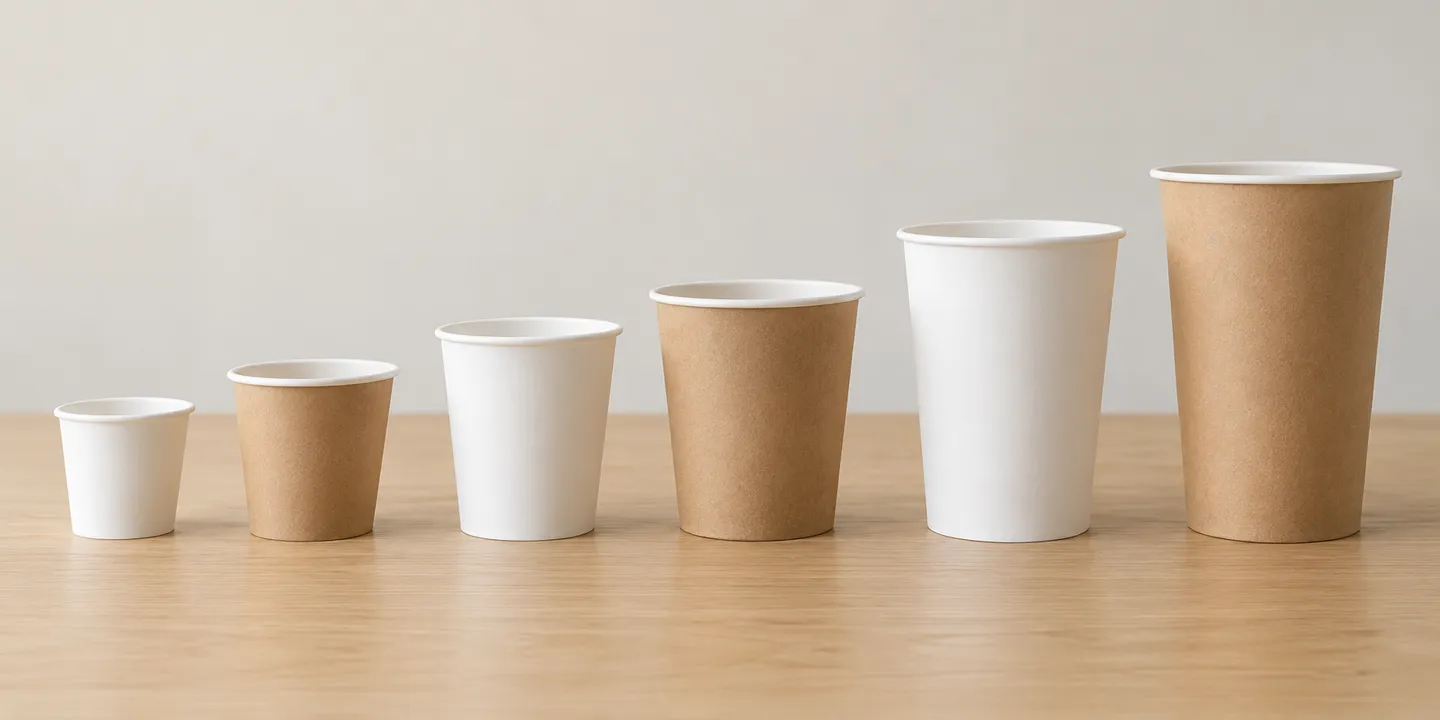
The starting mix that survives contact with real sales data is three hot sizes plus one cold size. Take 8oz for the short and traditional drinks, 12oz as the volume workhorse, 16oz for large and iced, and 20oz where the smoothie and XL iced business justifies it. The 8/12/16 trio mirrors what baristas report their shops actually run, and it keeps lid families to two rim sizes.
Weight the order toward the size that sells daily. A common planning pattern splits the buy roughly 40% to the 12oz, 35% to the 16oz, and the remainder to the short size and the cold top size (Papacko, 2026). Estimate total volume as daily cups times weeks of cover times a buffer, then apply the split. Every extra size on the list costs twice: once in its own minimum order quantity, once in the lids and storage it drags along.
The Rim Diameter Trap: One 12oz, Two Lids
Here is the fact this whole article leans on, so it gets its own sentence. The same nominal 12oz cup exists in an 80mm rim version and a 90mm rim version, and their lids do not interchange.
The 12oz trap
80mm
12oz brim: 360ml
no shared lid
90mm
12oz brim: 390ml
An 80mm lid will not seal on a 90mm rim: it slides, tilts and leaks. A 90mm lid on an 80mm rim grips nothing and falls off at the first bump. Two suppliers’ “12oz” cups can sit on opposite sides of this line, and the brim capacity differs by about 30ml between the two versions.
The trap exists because rim families are a supplier tradition, not a standard. Some series build 8oz and 12oz on an 80mm rim; others put 8oz through 22oz on a 90mm rim to share lids across the range. The 4oz size usually steps down to its own smaller lid around 62mm, so it never shares anyway. Rim mismatch is not a rare defect, it is the documented everyday failure: industry write-ups list lid pop-off as the top complaint pattern in cup-and-lid programs (CupsChina, 2026).
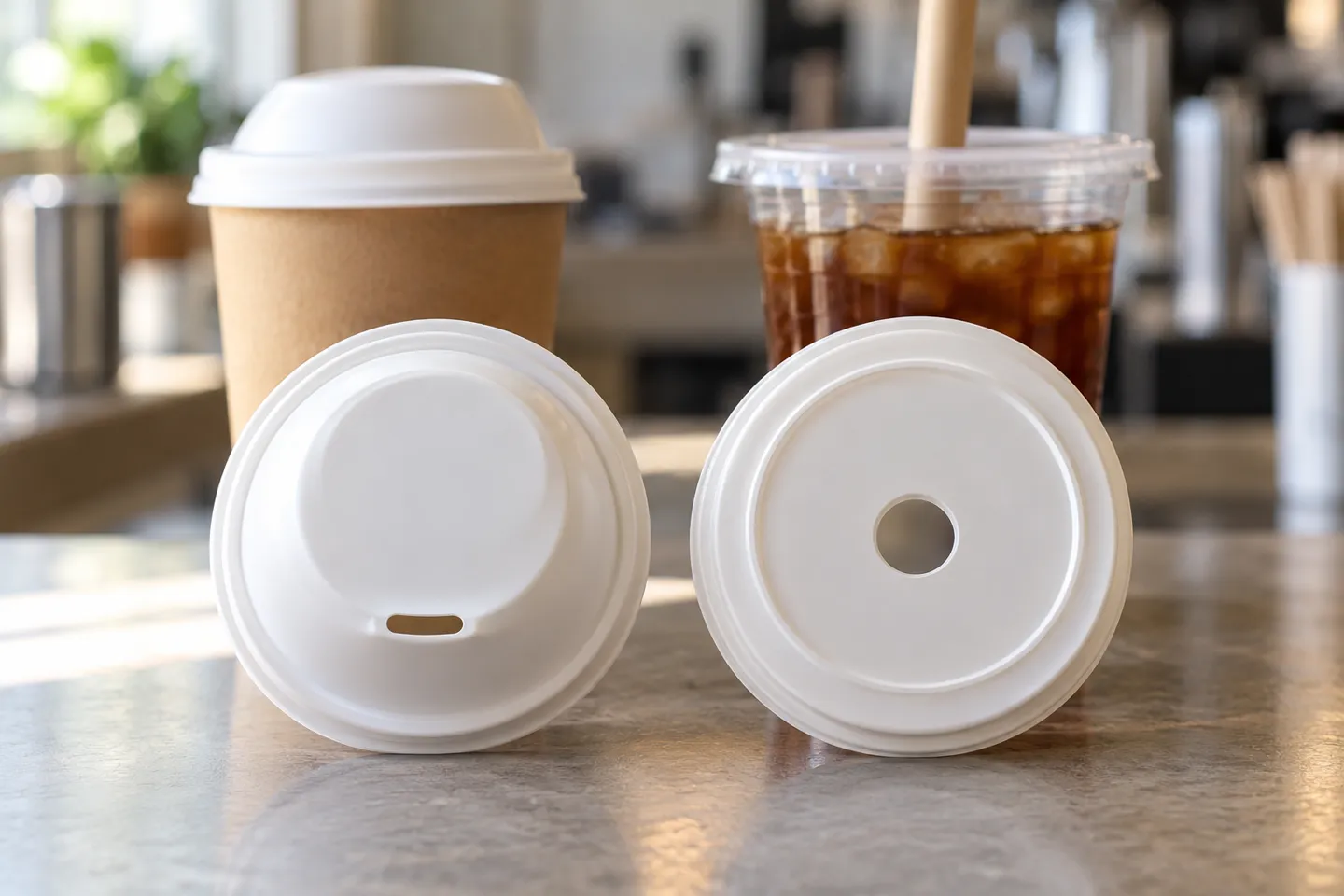
There is a second trap inside the first. Hot and cold lids are different products even at the same diameter: a hot lid vents, a cold lid seals flat around a straw slot. Ordering “80mm lids” without saying which drink they seal is how a fully compatible-looking order still fails in service.
Before You Order: The Four-Step Check
Turn the trap into a checklist and the risk mostly disappears:
- 1Ask for the spec sheet’s rim field in millimeters: “80mm or 90mm top?” Capacity alone is not an answer.
- 2Request cup and lid samples from the same production batch.
- 3Test the pair: press the lid on, invert the cup, give it a gentle shake over a sink.
- 4Only after a written confirmation of rim, brim capacity and lid type, release the bulk order.
Two commercial facts belong in step 4. Per-size minimum order quantities are real and they stack. Published supplier tiers commonly run from about 10,000 pieces for stock-color items up to 50,000 or 100,000 for custom print runs, so confirm the number per size, not per project (one openly published example of the tiers: supplier FAQ). And a digital proof turnaround inside one business day is a reasonable thing to demand before samples ship.
The Full Size Spectrum, Line by Line
A single cafe menu touches three or four sizes. An importer’s catalog has to cover the whole map, and the map is wider than the hot-coffee corner that most size charts draw. Each product line runs its own capacity range, its own rim family and its own failure conditions.
Hot Paper Cups: The 4oz-26oz Ladder
The single-wall hot line is the deepest ladder in the category, from 1oz sauce portions through 4oz espresso up to 26oz cold-paper formats, roughly fifteen steps. What charts rarely show is that paperboard weight climbs with capacity. It runs about 160gsm at 1oz, 190gsm at 4oz, 230gsm around 7oz, 260gsm at 8oz, 300gsm at 12oz and 16oz, and 320gsm at 20oz, where single-side lamination gives way to double-sided PE coating. The logic is mechanical. Taller cups hold taller liquid columns, carry more grip torque when full, and leak first at the seam, so the material has to grow with the size.
Single-wall gsm by cup size
1oz
160 gsm
4oz
190 gsm
7oz
230 gsm
8oz
260 gsm
12-16oz
300 gsm
20oz+
320 gsm
Structure options layer on top for the 8oz to 20oz band. Double wall traps an air pocket so the cup needs no sleeve. Ripple wall adds grip. Embossed double wall adds stiffness and a printable textured surface at the cost of a slightly higher board weight.
That table is from our own catalog: YoonPak publishes the single-wall ladder and the weight steps behind it. The same logic runs through our other lines, from a 2-32oz ice cream cup range to PET and PP cold cups with published temperature windows. Everything in the range is food-contact certified to FDA and LFGB out of BRC-audited production. The rim, gsm and capacity numbers you just read are verifiable before you quote: see the single-wall paper cup spec sheets and the ice cream cup range.
Cold Lines: PET, PP and the oz/ml Split
Cold cups split into two material families with two naming systems. PET cups run roughly 10oz to 24oz, usually in square or U shapes for iced coffee and fruit tea, and they live inside a temperature window of about -10°C to 50°C. PP injection cups are measured in milliliters, 360ml to 700ml, and cost more per unit. They survive -20°C to 120°C and dominate bubble tea because a 90mm rim takes the fat straws boba needs.
The split itself is a trap for mixed-market buyers. An American buyer thinks in ounces, a Gulf or Southeast Asian buyer thinks in milliliters. A 500ml PP cup is not a “16oz cup” even though the numbers sit close. Convert and confirm in one system on the spec sheet, not in an email thread.
Ice Cream, Soup and Sauce: The Other Diameter Families
Dessert and food lines run their own maps. Paper ice cream cups step from 2oz tasting portions through 8oz singles to 32oz family tubs, fourteen steps in one family, usually double-coated because frozen and then melting is a condensation machine. Soup cups run 8oz to 32oz with rim diameters of 90mm, 98mm and 117mm, taller and narrower than coffee cups of the same volume. That is exactly why their lids are a separate stock item.
The map edges, for completeness: kraft bowls and noodle buckets run 16oz to 32oz. Popcorn buckets reach 24oz to 170oz for cinema volumes. Cup carriers fit 8oz to 22oz four at a time. Vending operators buy the small 4oz to 7oz end that cafes never touch. Fill lines that dose by volume also care about rim tolerance, not just nominal capacity.
Where Each Line Fails: The Boundary Matrix
Every line fails on a different condition, which is why the boundary belongs in one matrix rather than scattered caveats.
Size lines: what they hold, where they fail, what to confirm
| Size line | Holds this condition | Fails when | Confirm before ordering |
|---|---|---|---|
| PET cold cups 10-24oz | Cold drinks to ~50°C | Hot fill: softens and deforms above the window | Temperature rating and lid style (flat vs dome) |
| PP injection 360-700ml | Freezer to near-boiling, fat straws | Prolonged >120°C or open flame | ml-vs-oz conversion and straw-slot diameter |
| Single wall 4-16oz | Standard hot service | No sleeve on very hot serve: grip comfort fails first | gsm weight and sleeve policy |
| Single wall 20oz+ | Large hot drinks | Single-side lamination: seam leak risk grows with liquid column | Double-sided coating confirmation |
| Double/ripple wall 8-20oz | Hot drinks without sleeves | Cost per cup vs budget lines | Wall structure and rim family |
| Any cross-family mix | Shared lids within one rim family | 80mm lid on 90mm rim or reverse | Rim diameter in writing, batch-matched samples |
Read the matrix as a purchase filter. Pick the line by drink and temperature first. Then pick by rim family for lid logistics, and by structure for insulation. Let capacity be the last cut rather than the first.
How Cup Sourcing Fails in Practice
The failures repeat across buyers with boring regularity, and each has a specific trigger you can check for.
Lid fit failure
Switching cup suppliers without re-matching rim diameters; lids pop off or leak in service
Fill expectation failure
Customers cry short-pour: “I ordered 12oz and got 10oz”, because brim capacity and practical fill were never explained
Quantity variance
Custom printed orders commonly deliver ±10% over or under the ordered quantity, an industry trade practice, not a defect
The lid column is the expensive one. Community threads full of buyers hunting “reliable paper lids for 80/90mm cups” show how it starts: the fit was never tested before the bulk order. The fill column is a menu-wording problem: print the ounce on the board and price by liquid content, and the complaint evaporates (Papacko, 2026). The quantity column is contract hygiene. A published supplier FAQ states the ±10% practice openly (supplier FAQ), so order volume should already include the buffer you need after a 10% undershoot.
Each failure converts to the same three moves: batch-matched samples, rim in writing, buffer in the order.
Reading Your Size List Like a Buyer
Everything above lands on one inventory decision. The facts, restated: one nominal size hides two rim versions; each product line keeps its own rim family; lids are the stock item where mismatch becomes visible to customers.
For an importer or wholesale buyer, that means an oz-sorted catalog is sorted on the wrong key. Group your SKUs by rim family first: the 80mm family, the 90mm family, the 98mm and 117mm soup family, the cold-lid families. Inside each family, carry two or three capacity steps, because cups within one family share lids, and shared lids halve the accessory inventory and the mis-shipment rate. The 3+1 starting mix from the stocking section is the family logic in miniature: three hot sizes sharing two rims, plus one cold line.
Cash follows the same key. Per-size minimums are the real barrier in this category. Consolidate sizes before you add them, and consolidate the order into full container loads of mixed sizes where the supplier allows it. One 20-foot container of four coordinated sizes beats four separate production runs on both freight and minimums. Test cup and lid as one batch, confirm rim and brim in writing, and your size list stops being a list of numbers and starts being a system.
If you are weighing which sizes to commit to, YoonPak sends cup and lid samples together and returns a digital proof within one business day. The fit test in this article can start before any cash ties up in stock. See the sample and proof turnaround for details.
Size Your Next Order With YoonPak
Send your drink menu and target sizes; the rim family, brim capacity and lid type for every line get confirmed on the spec sheet before you commit.
Request a Size-List QuoteReferences
- NIST. “Guide for the Use of the International System of Units (SI), Appendix B8: Conversion Factors.” https://www.nist.gov/pml/special-publication-811/nist-guide-si-appendix-b-conversion-factors/nist-guide-si-appendix-b8
- WebstaurantStore. “Plastic Cup Sizes Guide.” https://www.webstaurantstore.com/guide/1287/plastic-cup-sizes.html



 English
 German
 Spanish
 Italian
 Dutch
 French
 Portuguese
 Russian
 Arabic
 Korean