

Iced Coffee Cup Sizes: oz and ml Charts, Lid Fit, and Lineup Math
Two shops on the same street both sell a “large iced coffee.” One pours it into a 16 oz cold cup, the other into a 20 oz. Neither is wrong. The label on the menu says large, but the cup on the counter was chosen by whoever built that shop’s lineup. The two lineups were built on different assumptions about how much liquid a large should actually deliver.
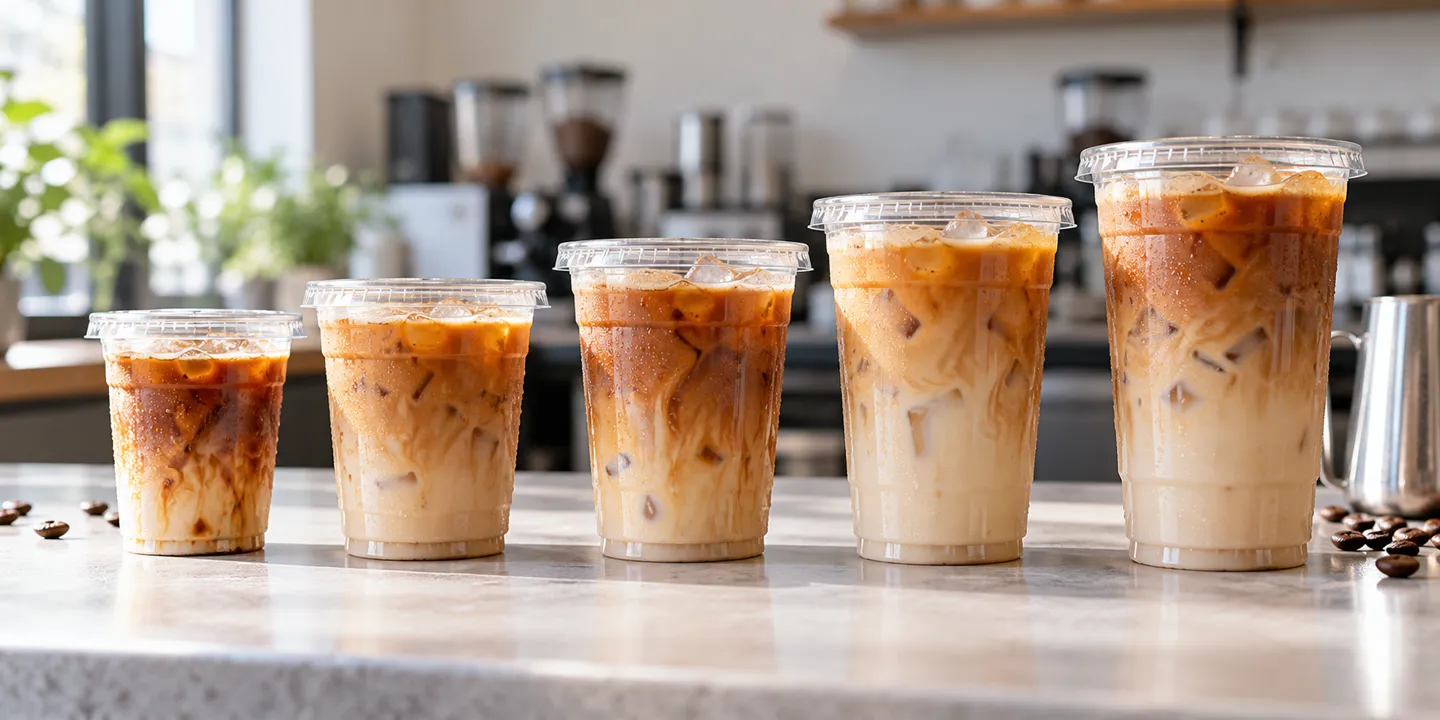
This article is about disposable foodservice cups, the kind a cafe stocks by the case, not the reusable tumblers people carry around. The chart below covers the sizes that show up on almost every iced menu.
| Cup size | ml (approx.) | Typical role on an iced menu |
|---|---|---|
| 8 oz | 237 ml | Small iced latte, kids portion, tasting flights |
| 12 oz | 355 ml | Small iced drink at independent shops |
| 16 oz | 473 ml | The standard starting point for iced coffee |
| 20 oz | 591 ml | Mid-chain large, cold brew |
| 24 oz | 710 ml | Large at big chains, iced venti |
| 32 oz | 946 ml | Trenta territory, gas-station and convenience cold cups |
Chain naming adds a second layer. At Starbucks, Tall is 12 oz and Grande is 16 oz. Venti runs 20 oz for hot drinks but 24 oz for cold, and Trenta, at 30 oz, is cold-only (Taste of Home, 2023). That hot-versus-cold gap inside a single name is the first hint that iced sizing follows different physics. Quick-service chains such as Chick-fil-A publish their cup capacities on nutrition pages. When a menu says small or large, the published ounce list is the ground truth, not the word on the board.
Same name, two sizes
One more thing worth noticing in the chart: hot drinks top out around 16 oz at most independents, while iced lineups commonly run to 20 or 24 oz. Cold cups are sized bigger on purpose, and the next section explains why the bigger number on the label does not mean bigger coffee in your hand.
Nominal vs Actual: What a 16 oz Cold Cup Really Delivers
A cup’s stated size is a capacity ceiling, not a promise about liquid. Three numbers live on or around every cold cup, and confusing them is where most size arguments start.
Ice Displacement: The 40 to 50 Percent Problem
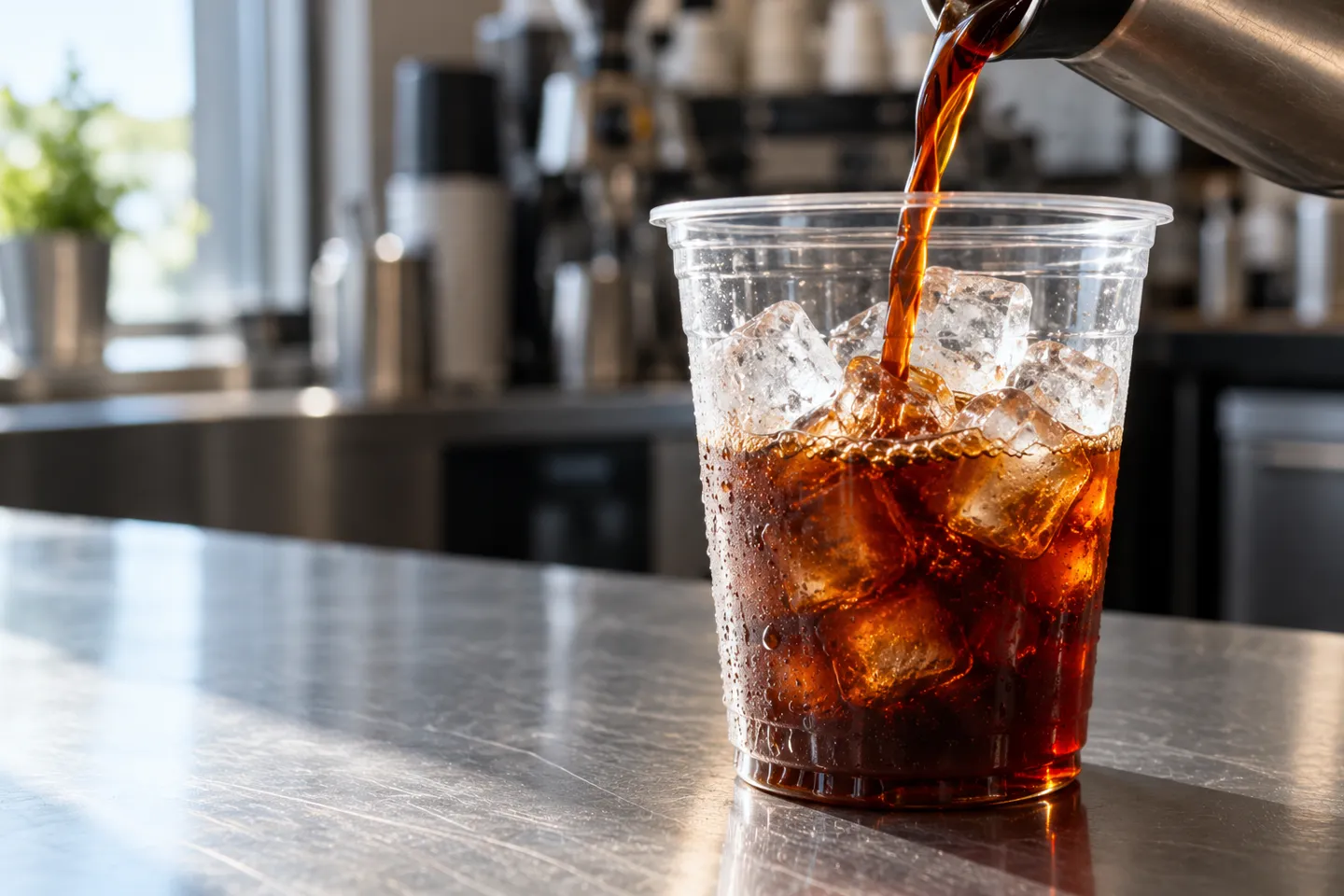
Fill a 16 oz cup halfway with ice, then pour coffee to the fill line.
| Number in play | What it measures | The 16 oz example |
|---|---|---|
| Nominal capacity | Liquid to the fill line, lid seated | 16 oz, about 473 ml |
| Overflow (brimful) | Liquid to the absolute brim | a few points above nominal |
| Delivered drink | Liquid after ice at your ratio | roughly 8-10 oz |
What lands in the cup is nowhere near 16 oz of drinkable coffee. Ice displaces roughly 40 to 50 percent of a cup’s nominal volume. That means a 16 oz iced coffee often delivers less actual liquid than a 12 oz hot one (Font Coffee Roasters, 2026).
Nominal vs delivered
A 16 oz iced coffee can hand the customer less actual liquid than a 12 oz hot one.
It is arithmetic, not a scandal. Ice is why cold cups run bigger than hot cups across the industry.
Chains internalized this long ago. Caribou Coffee’s own sizing runs 12, 16, and 20 oz for hot drinks but 16, 20, and 24 for iced (Caribou Coffee, n.d.). The whole lineup shifts up one size when ice enters the recipe. Customers sense the shift even when they cannot name it, and a shop that serves iced drinks in its hot lineup sizes will hear about it at the register.
The pattern fails at the extremes. Push ice past half the cup and the delivered volume collapses; a 12 oz cold cup with a heavy scoop can end up delivering closer to 6 oz of drink. A customer who orders a medium expects roughly the same liquid whether it is iced or hot. Getting that math wrong is the fastest way to generate complaints about short pours (Font Coffee Roasters, 2026).
Rule of thumb
Size an iced drink one cup tier above its hot equivalent. If your hot large is 16 oz, your iced large should be 20 oz or more.
Overflow Capacity and the Fill Line
The second number hiding behind every stated size is overflow capacity, sometimes labeled brimful. Nominal capacity assumes a sealed lid sitting on a filled-to-the-line cup. Overflow capacity measures how much the cup holds filled literally to the brim. Supplier charts list both figures side by side, and the gap between them is the headroom that absorbs foam, ice, and the seal a lid needs (example: a typical cold cup range).
That headroom is not wasted space. Train staff to fill to a marked line below the rim rather than to the top. A cup filled flush to the brim is a spill waiting for the first speed bump. The fill line is also your honest menu spec: whatever liquid volume sits at that line, after ice, is what the customer actually gets. Decide it deliberately, write it on the recipe card, and the number on the cup stops being a controversy.
How Many Cup Sizes Should Your Shop Stock?
Walk into five shops and you will find three working answers to the lineup question. None of them is universal, because each was built for a different kind of customer.
Three Real-World Iced Lineups
| Lineup model | Iced sizes | Who it fits | Why it works |
|---|---|---|---|
| Big-chain pattern | 16/20/24 oz | High walk-in volume, takeout heavy | Matches customer expectations set by national chains; Caribou’s published iced sizes are 16, 20, 24 |
| Independent two-size | 12/16 oz | Small menu, dine-in leaning | Lower inventory, simpler service; owners accept smaller delivery volume |
| Roaster core-plus | 8/12/16 oz core + 20 oz iced | Full espresso menu plus cold program | One hot spine, one iced add-on; expansion only when orders justify it |
Sources: Dilworth Coffee cafe guide 2025; Caribou Coffee official sizing; r/Coffee_Shop owner thread 2026
The independent pattern is a real deliberation, not a compromise. One shop owner asked publicly whether 12 oz as a medium and 16 oz as a large were too small for cold drinks. Ice eats a good share of nominal volume, after all (r/Coffee_Shop, 2026). That question is the lineup decision in miniature: every size you skip saves shelf space and lid SKUs, and every size you skip also caps what a drink can deliver.
Drink type still drives the mapping. Espresso lives in 3-4 oz, cappuccino in 6-8, latte in 12-16, and iced drinks plus cold brew want 16-24 with room to spare (Dilworth Coffee, 2025). A three-size core covers most orders at most shops; the two additions that earn their keep most often are an espresso sample cup and a dedicated 20 oz iced size. Before adding a fourth or fifth size, track which sizes actually move by drink type, because each addition multiplies lids, sleeves, and shelf space.
When the lineup turns into a purchase order, put nominal, overflow, and rim numbers in front of a supplier who publishes all three.
Ask for the spec sheetsReading the Spec Sheet: Material, Lid Diameter, Overflow
Choosing the number of sizes is the strategy. Choosing which cup in each size is the procurement, and that happens on the spec sheet, where three fields cause nearly all the trouble.
PET vs Paper: Where Each Wins for Iced Drinks
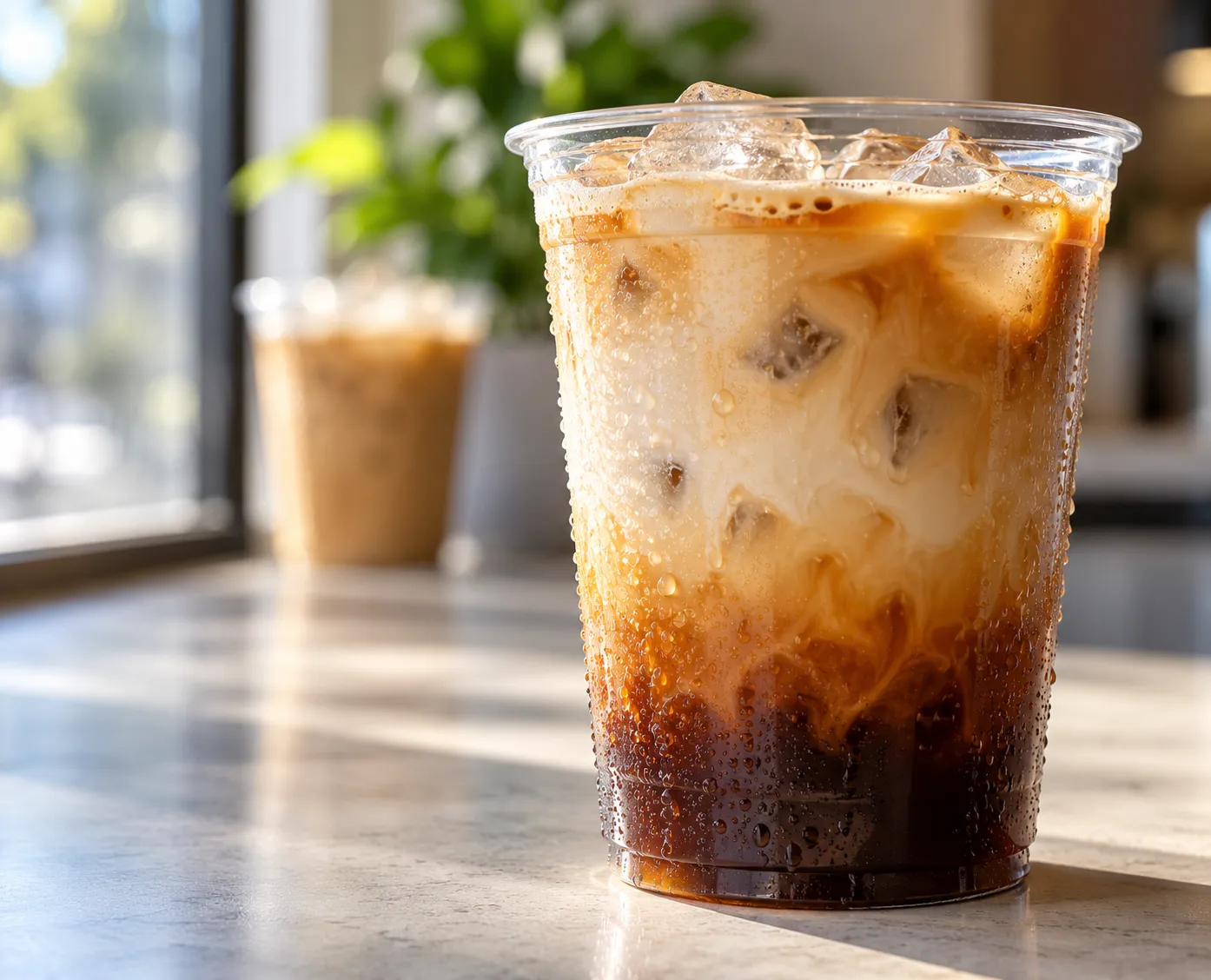
Clear PET owns the presentation game for iced coffee. It shows off layered milk pours, shrugs off condensation, and carries its own temperature window: food-grade PET cold cups are typically rated from -10°C to 50°C, BPA-free, and recyclable. On one supplier’s published chart, the cold cup range spans 36 sizes from 0.75 oz dessert cups up to 32 oz (clear PET cold cup specifications).
Lined paper cups win on different fronts. A PE or PLA lining keeps the paper sealed, kraft and white options print beautifully, and compostable PLA-lined versions give eco programs a real path. Paper also feels more “coffee” to customers who associate clear plastic with soda or bubble tea. For hot-weather iced programs, the decision usually comes down to brand presentation: clear when the drink itself is the visual, paper when the printed brand is.
One clarification while we are on materials: double-wall and ripple structures exist for heat insulation on hot drinks. They have no role in an iced program, so a supplier pitching insulated walls for cold cups is selling you something you do not need.
Lid Diameters: The 80mm vs 90mm Trap
Volume gets the attention, but diameter is what breaks orders. Disposable cup rims cluster around two standards, roughly 80mm and 90mm, and they do not interchange. The trap: nominal size does not determine diameter. Some 12 oz cups run an 80mm rim, others 90mm, so a lid that fit your last order may not fit the next batch from a different supplier (Font Coffee Roasters, 2026).
The practical rule is to read the rim column before the volume column. On a typical U-shape cold cup chart, 12 oz runs an 88mm rim, 16 oz a 95mm rim, and 20 and 24 oz share a 98mm rim. Those two sizes can pool one lid SKU (cold cup dimensional specs). Rim families like that are free savings: two cup sizes, one lid. Lid styles also branch at the rim, flat with a straw slot, dome, sipper, or strawless, so the same rim can still spawn several lid variants. Lock the rim first, then decide how many lid styles each rim really needs.
Rim diameters on a typical cold cup chart
Reading a Spec Sheet Line by Line
A cold cup line on a supplier sheet usually carries: nominal capacity in oz and ml; overflow or brimful capacity; top, bottom, and wall height in millimeters; material and lining; case pack quantity; temperature rating; and relevant certifications such as FDA or LFGB for food contact and FSC for fiber sourcing. Read it in that order and three questions answer themselves. What does the customer actually get (nominal versus overflow, then your ice ratio)? Will the lid from your current stock fit (top diameter)? How many cases fill a pallet (case pack)?
The matrix below puts the common iced sizes side by side as a working selection tool.
Iced Cup Selection Matrix: Size, Fit, and Failure Points
| Cup | Material options | Delivered liquid after typical ice | Best for | Fails when |
|---|---|---|---|---|
| 12 oz cold | PET or lined paper | roughly 6-8 oz | Small iced latte, flat-white drinkers going cold | Heavy ice push; customer expects a medium’s liquid |
| 16 oz cold | PET (95mm rim) or paper | roughly 8-10 oz | Entry iced and cold brew at independents | Sized up from hot without ice-ratio check |
| 20 oz cold | PET (98mm rim) | roughly 10-12 oz | Chain-style large, cold brew | Lid pooled with 24 oz without verifying rim match |
| 24 oz cold | PET (98mm rim) | roughly 12-14 oz | Venti-class iced, blended drinks | Gross margin cannot carry the ice cost per unit |
Sources: Published supplier cold cup charts; Font Coffee Roasters 2026 displacement data
Sourcing Cups for an Iced Program: What to Verify First
An iced lineup lives or dies on buying discipline more than on taste. Five checks, in order, catch almost every bad order.
First, source cups and lids from the same supplier and confirm the rim diameters match your existing stock before the PO goes out. Diameter, not volume, decides whether your current lids still work (Dilworth Coffee, 2025). Second, order a sample pack even when the spec sheet looks identical, and test lids, fill lines, and condensation on real drinks. Third, match the MOQ to your actual sales pace rather than to the discount tier you wish you were. Fourth, ask for the food-contact paperwork by name: FDA or LFGB declarations, plus FSC chain-of-custody if your brand claims sustainability. Fifth, confirm lead time and restock stability, because a size that stocks out silently converts your menu board into a lie.
Pre-order verification
- Rim diameters matched against current lids
- Sample pack tested with real ice ratios
- MOQ matched to monthly velocity
- FDA/LFGB and FSC documentation requested
- Lead time and restock terms confirmed in writing
Run the list before every new size, not just the first order. Most cup failures are imported, not invented: they arrive in a carton that looked right on the spec sheet.
When Cup Sizes Fail: Spills, Complaints, and Watered-Down Drinks
Three failure patterns account for nearly every cup-related incident a shop sees, and all three telegraph themselves before they go public.
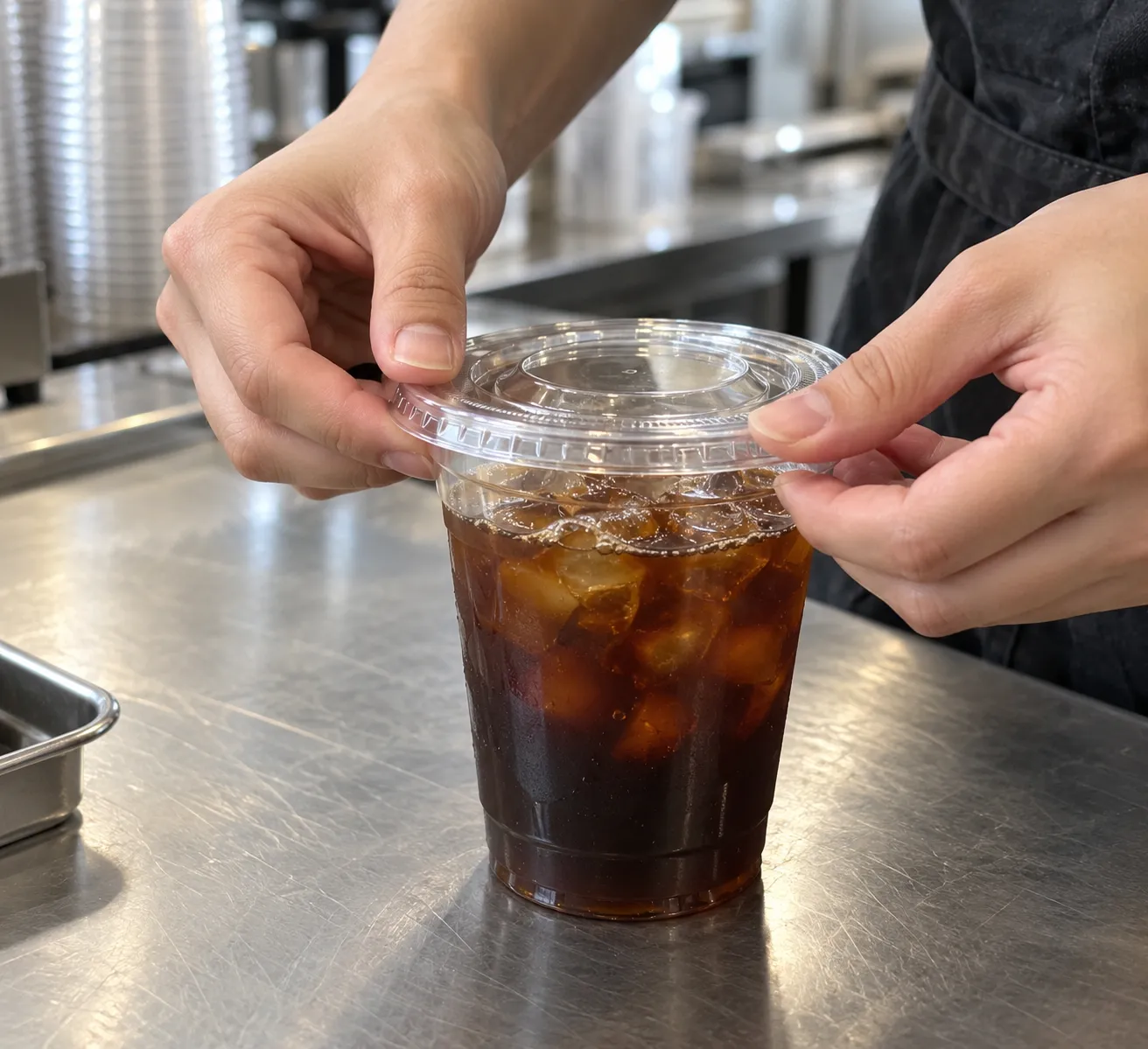
The first is the lid mismatch. A 90mm lid rocked onto an 80mm rim survives until the first jolt, then hands the drink to your counter, your customer’s car seat, or both. The failure is detectable at receiving: press a lid from current stock onto a sample from the new batch before accepting the delivery.
The second is the capacity complaint. A customer pays for a 24 oz iced latte, sees a cup that looks half ice, and reads the menu as false advertising. The grievance plays out publicly in exactly those terms (Quora, n.d.). The preemptive fix is transparency: publish the liquid volume per size, train fill lines, and let the recipe card, not the cup mold, make the promise.
The third is melt dilution. Ice keeps working after the handoff, and by the bottom third of the drink it has watered the coffee. Thicker-wall PET and colder pour temperatures buy time. Honest sizing buys repeat customers. A drink that tastes weak at the end gets blamed on the espresso, but the root cause sits in the cup decision.
Before a new size goes live
Test-fit a lid from current stock, publish the liquid volume for every menu size, and set the ice ratio per drink. All three checks happen before the customer does.
The Business Math Behind Your Cup Lineup
Strip the iced program down and every cup decision lands on three ledgers at once. The inventory ledger: each extra size carries its own lid SKU, its own shelf footprint, and its own forecasting error, which is why every supplier guide warns against size sprawl. The incident ledger: rim mismatches and overfills become refunds and remakes, and occasionally a stained reputation, all traceable to a specification nobody verified. The repeat-purchase ledger: customers build expectations from delivered liquid, not printed ounces. A size scheme that games the label wins the first sale and loses the second.
The stance that falls out of the arithmetic is simple. Size the iced lineup one tier above the hot lineup and run a cold cup core of three sizes. Lock one rim diameter per size, source cups and lids together, and let gross margin decide whether a 24 oz earns its slot. The shops that treat cup sizes as menu decoration pay for all three ledgers; the shops that treat them as operations pay once, at ordering time.
When it is time to lock a lineup into an actual order, we make that part easier to verify than to get wrong here at YoonPak. Our clear PET cold cup range prints in up to six colors. Printed biodegradable cups start at 1,000 pieces, standard custom runs at 10,000, and fully bespoke programs at 50,000. Digital proofs land within one working day, and samples ship within 48 hours (clear PET cold cup range). Confirm the rim diameters against the chart, match the MOQ tier to your velocity, and the rest of the math from this article holds.
Lock your iced lineup with a rim-matched sample
Bring your rim diameters and drink menu; the cup, lid, and MOQ tiers get matched to the lineup math above.
Start a sample requestReferences
- Taste of Home. “Starbucks Coffee Sizes, Explained.” 2023. https://www.tasteofhome.com/article/starbucks-coffee-sizes/
- Font Coffee Roasters. “3 Coffee Cup Sizes for Cafes and Home Baristas: 8, 12, 16 oz.” 2026. https://font-mag.com/blogs/news/coffee-cup-sizes
- Caribou Coffee. “Caribou Coffee Cold Beverages.” Official video, n.d. https://www.facebook.com/cariboucoffee/videos/caribou-coffee-cold-beverages/10156317440530953/
- Dilworth Coffee. “Coffee Shop Cup Sizes 101: Find the Perfect Fit for Every Drink.” 2025. https://pro.dilworthcoffee.com/blogs/news/coffee-shop-cup-sizes-101-find-the-perfect-fit-for-every-drink
- r/Coffee_Shop. “Cold drinks: are 16oz and 20oz the standard?” 2026. https://www.reddit.com/r/Coffee_Shop/comments/1spt589/cold_drinks_are_16oz_and_20oz_the_standard/
- Quora. “If a coffee shop offers 24oz Grande Iced coffee, shouldn’t you get 24oz of coffee, not including the cupful of ice? Isn’t this false advertising?” n.d. https://www.quora.com/If-a-coffee-shop-offers-24oz-Grande-Iced-coffee-shouldnt-you-get-24oz-of-coffee-not-including-the-cupful-of-ice-Isnt-this-false-advertising





 English
 German
 Spanish
 Italian
 Dutch
 French
 Portuguese
 Russian
 Arabic
 Korean