

Dunkin’ Coffee Sizes Explained: Hot vs Iced Ounces and What You Actually Get
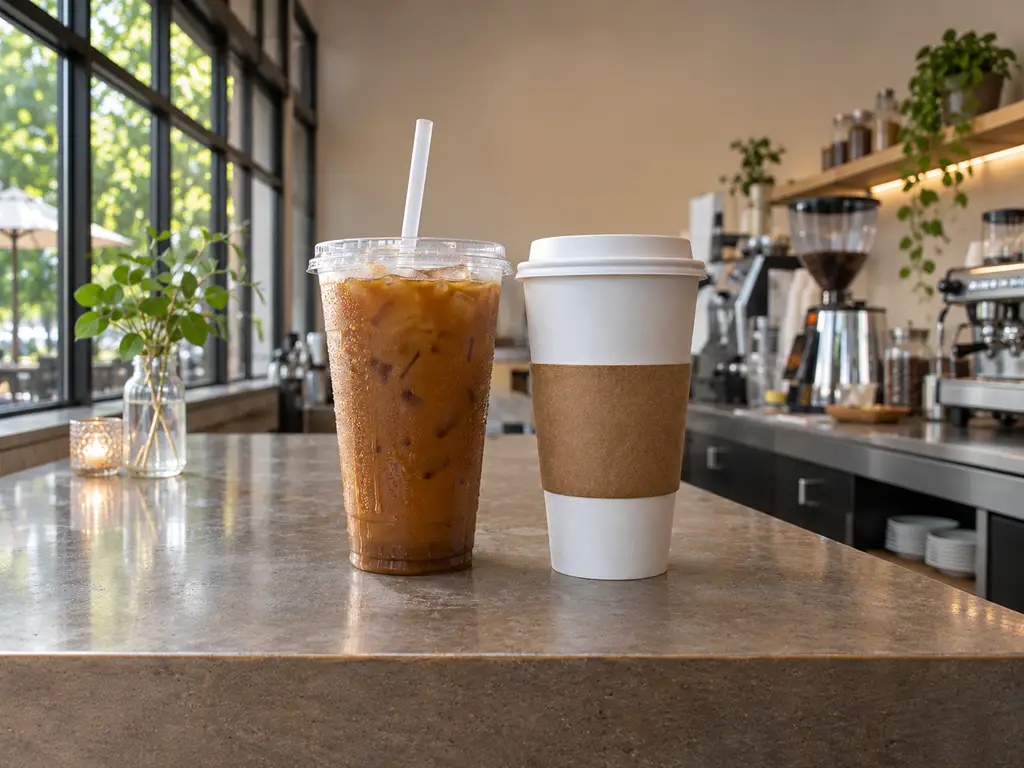
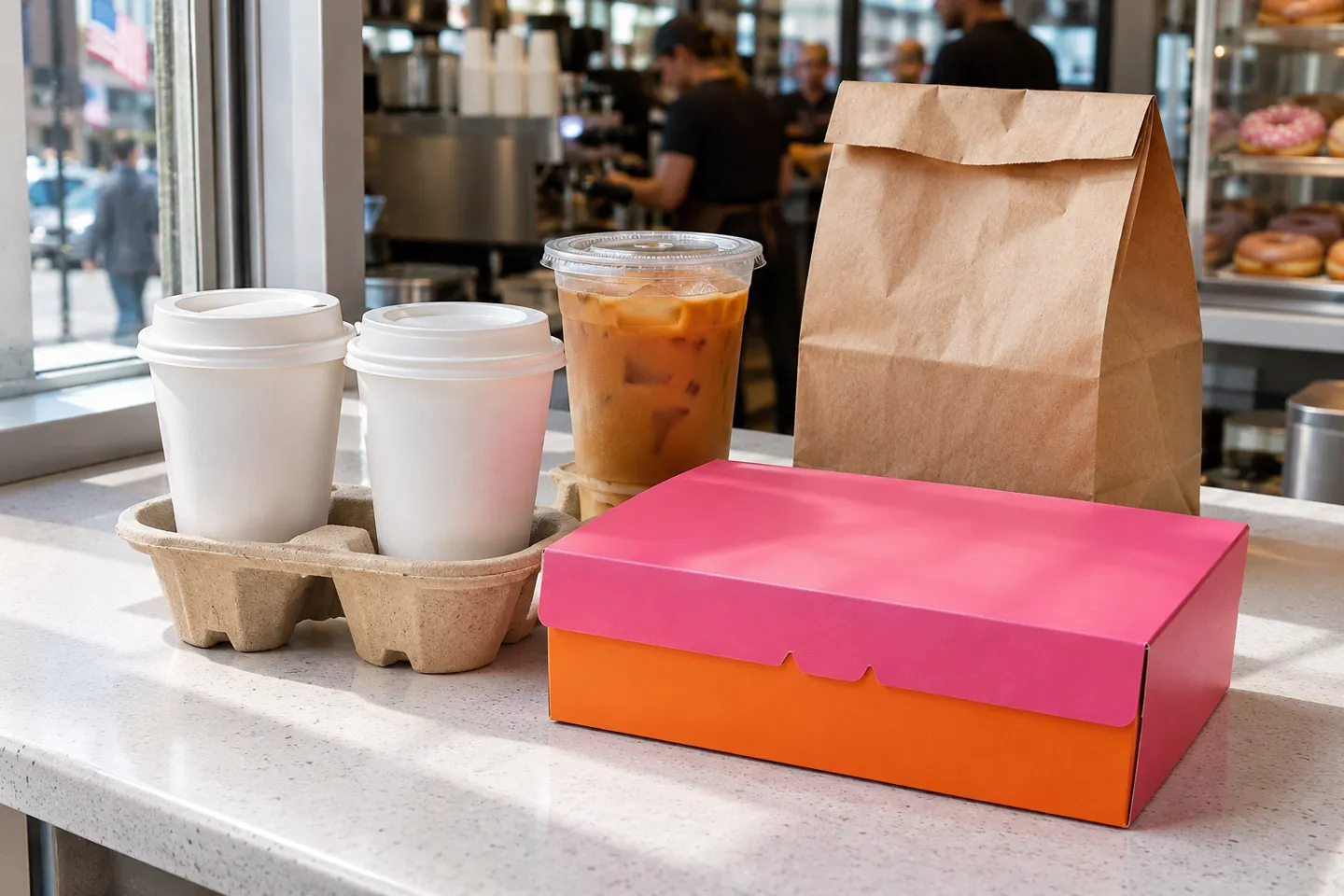
The medium iced coffee sweating on the counter holds 24 ounces. The extra-large hot coffee next to it holds 24 ounces too. Same number, different cups, two different drinks. That is the whole problem with Dunkin’ sizes in one sentence: the size names are shared between hot and cold menus, but the numbers behind them are not. Before you order, buy a travel mug, or compare prices, you need the actual ounce counts for both ladders, and you need to know why they refuse to line up.
Dunkin’ Coffee Sizes: The Full Chart
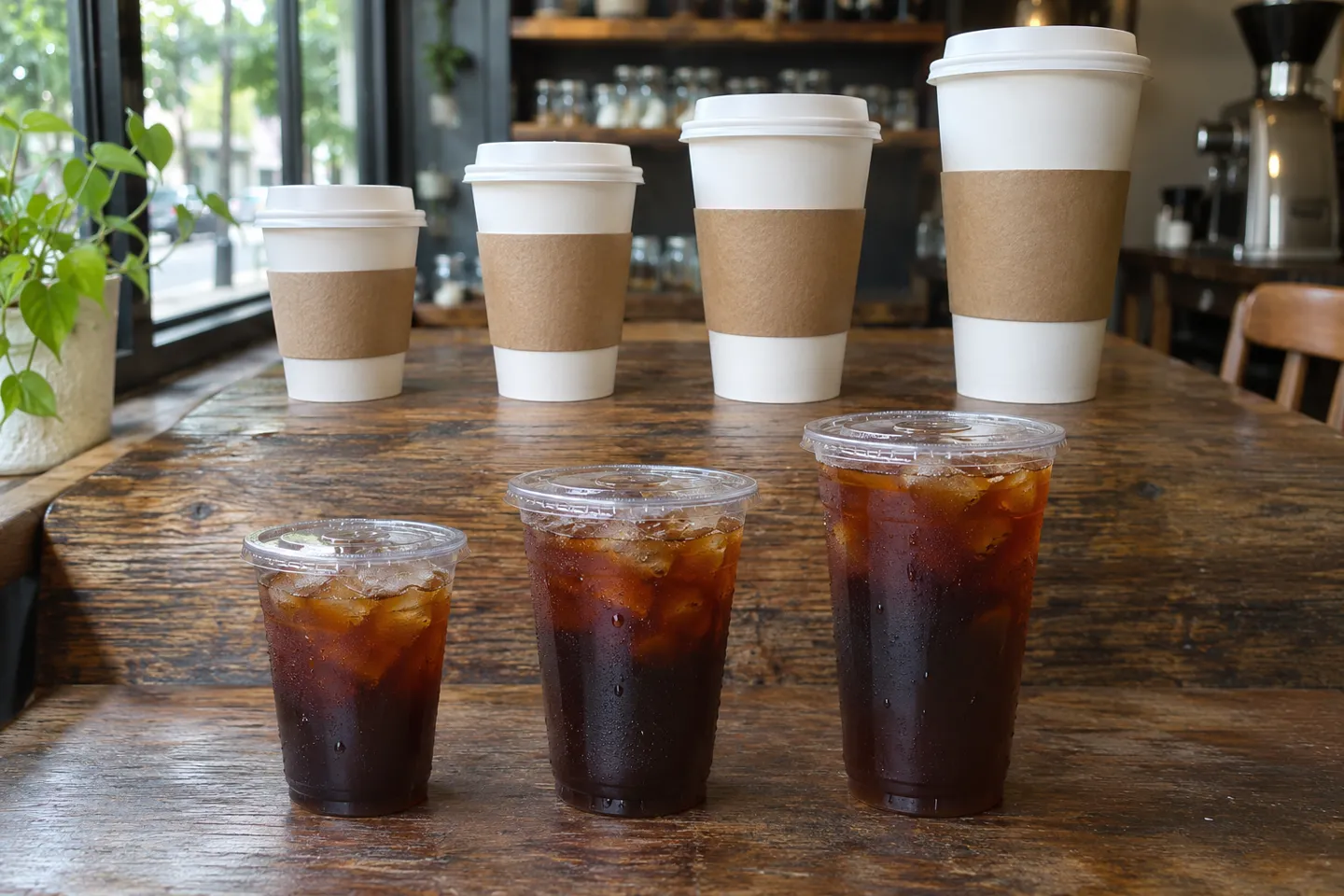
Here are the numbers as they stand on the current US menu. Hot drinks run on a four-step ladder and cold drinks run on a three-step ladder, and the two only overlap at 24 ounces.
Dunkin’ Coffee Sizes at a Glance
| Size Name | Hot Drinks | Cold Drinks | What It Roughly Matches |
|---|---|---|---|
| Small | 10 oz | 16 oz | A pint |
| Medium | 14 oz | 24 oz | The most-ordered iced size |
| Large | 20 oz | 32 oz | The biggest cold cup |
| Extra-Large | 24 oz | No XL iced cup | Hot cups only |
Two details in that table matter more than the rest. First, cold drinks have no extra-large: 32 ounces is the end of the iced ladder, and the XL name belongs to hot cups alone. Second, every ounce figure is the nominal capacity of the cup, meaning filled to the brim or to its designed line. The coffee that ends up in your stomach is a different, smaller number, and a later section deals with exactly that gap. (Lifeboost Coffee, 2025)
Why One Size Name Hides Two Numbers
Ordering confusion at Dunkin’ is not a memory problem. It is a naming problem. Dunkin’ uses one set of size words for two separate cup families. Paper cups carry the hot drinks and clear plastic cups carry the cold ones, and the two families follow different volume logic.
Same name, two numbers
14 oz
Hot medium
10 oz
The gap
24 oz
Cold medium
Same size name, 10 ounces apart. The number depends on the cup, not the word.
The Two Ladders Side by Side
| Cup Family | Sizes in Ounces | Cup Material | Filling Logic |
|---|---|---|---|
| Hot ladder | Small 10, Medium 14, Large 20, XL 24 | Paper, often double-wall or sleeved | Hot liquid to the fill line, headspace for safety |
| Cold ladder | Small 16, Medium 24, Large 32 | Clear plastic | Ice first, then coffee, milk and flavorings over the ice |
The Hot Ladder: 10, 14, 20, and 24 Ounces
Hot coffee gets served as liquid with a little room left at the top for safety, so the hot ladder climbs in gentle steps. A small at 10 ounces suits a quick espresso-and-milk order, and the 14 ounce medium is the everyday workhorse. The 20 ounce large covers a long morning. On the days one large will not cut it, there is the 24 ounce extra-large. Those steps stay compact: 4, 6, and 4 ounces between rungs. That compactness is deliberate. Big jumps in hot cup size mean longer exposure to a scalding beverage and more heat loss in the extra volume, so the ladder stretches conservatively. (Lifeboost Coffee, 2025)
The Cold Ladder: 16, 24, and 32 Ounces
Iced drinks obey different physics. Ice occupies real volume, so the cup must start bigger to end up with the same amount of drinkable coffee. That is why the iced small at 16 ounces holds more capacity than the hot small at 10. Each step also stretches wider: 8 ounces from small to medium, another 8 from medium to large. When someone insists “a medium iced is really 16 ounces,” they are usually remembering the small iced cup, 16 ounces, and attaching it to the wrong rung. Such confusion runs deep that a single Facebook thread asking whether a 24 iced coffee is a medium or a large collected more than forty comments without reaching agreement. (Lifeboost Coffee, 2025)
Where Extra-Large Ends and Box O’ Joe Fits
No Dunkin’ cup holds 48 ounces. Rumors of one giant cup keep resurfacing in search suggestions, yet nothing close exists on the menu. A hot XL tops out at 24 ounces, and the iced ladder ends at 32. Coffee in bulk lives in a different product, the Box O’ Joe, a carry box holding ten 10 ounce servings that the chain describes as equivalent to ten small cups. That works out to roughly 100 ounces in total, sized for a meeting rather than a mug. If someone quotes you a 48 ounce Dunkin’ coffee, they are either adding two XL hot cups together or repeating a number that belongs to some other chain’s cup. (Dunkin’, 2026)
One number, two cups: 24 ounces
On the hot ladder
Extra-Large
On the cold ladder
Medium
Same size word, two different rungs. This pairing is where most size arguments start.
Cup Ounces vs the Coffee You Actually Get
The number printed on the cup is a capacity claim, not a delivery promise. Several ordinary things happen between the brewer and your hand that quietly shrink the drink, and knowing them turns vague suspicion into a specific check.
Full Capacity vs Fill Line
Hot cups are engineered with headspace. Liquid near the rim transfers heat to the lid and to your fingers. Any bump at that fill height ends the commute badly. Staff therefore stop at a line below the theoretical maximum. Community reports put the gap at a couple of ounces on a large hot coffee. One recent thread notes a large that “is still 20 ounces” on the label but arrives holding visibly less. That observation matches how fill lines work, not evidence of a shrinking cup. Cold cups hide a different deduction: ice. A medium iced coffee does not contain 24 ounces of liquid, because a solid chunk of that volume is frozen water that melts down over the first twenty minutes. If you want to estimate the coffee itself, picture the ice line, then read the liquid level against it.
The printed ounce count is the cup’s total capacity. Your actual pour is: capacity minus headspace (hot drinks) or minus ice displacement (cold drinks). Neither deduction is a secret, both are engineered.
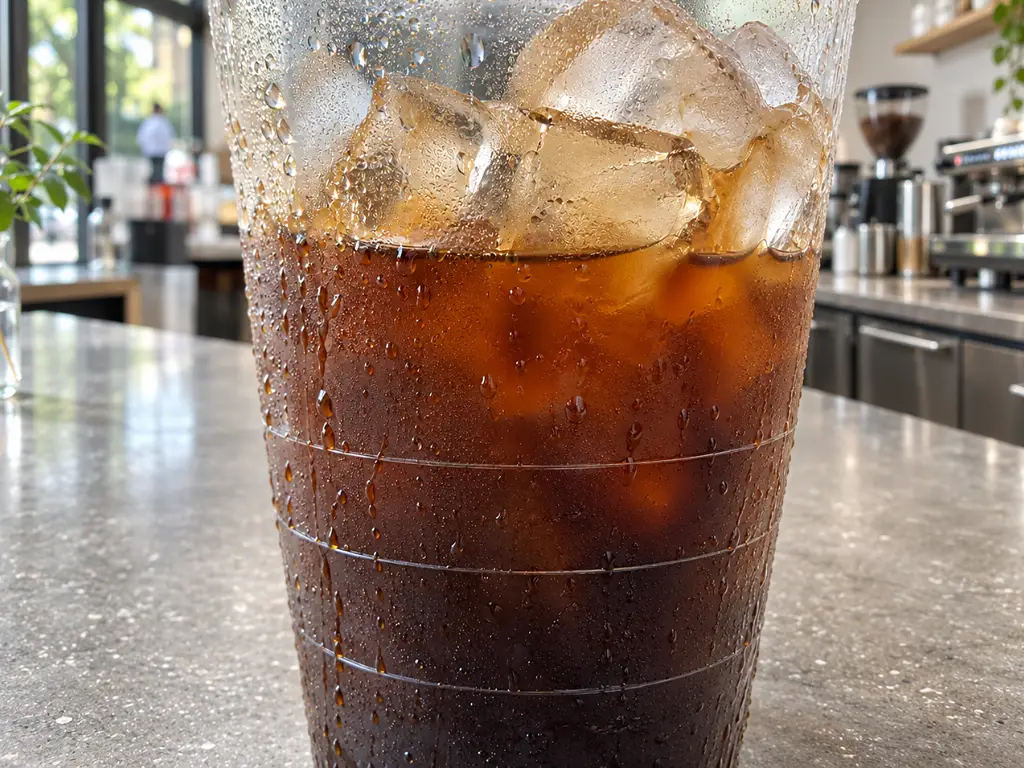
What the Lines on a Cold Cup Mean
Clear cold cups often carry printed lines near the bottom, and buyers keep asking what they mark. They are build lines, not drinking milestones. Staff use them to portion a drink consistently: ice to one line, coffee to another, milk or flavoring up to a third. The same order then tastes the same across shifts. If you reuse a cup or buy a tumbler, treat those lines as recipe references, not as a measure of what you were served. The same logic applies when buying an insulated tumbler for your usual order. So match the tumbler to the cup’s actual dimensions, rim diameter first and height second, not the ounce number alone. A “32 ounce” tumbler built for a wide smoothie cup may still reject a slim tall iced coffee lid.
When the Chart Doesn’t Match Your Cup
Sometimes the numbers above will genuinely disagree with the cup in your hand, and not every mismatch means you misremembered. Size systems drift over time, and community records on r/DunkinDonuts even disagree with each other. One older thread describes a hot ladder of 12, 14, 18, and 22 ounces. Other users and current menu guides describe 10, 14, 20, and 24. Both may reflect real cup generations rather than bad memory. So the first step is identifying which kind of mismatch you have hit.
Why the Numbers Sometimes Disagree
| What You Noticed | When the Standard Chart Holds | What Is Probably Happening |
|---|---|---|
| Your large hot coffee looks underfilled | Chart holds | Fill-line headspace, not a smaller cup |
| A 24 oz iced coffee feels like a medium | Chart holds | 24 oz IS the iced medium, the name tricks you |
| Old posts quote 12, 18 or 22 oz hot cups | Chart holds for current cups | Older cup generations still circulating in posts |
| Your large iced cup looks slimmer than last year | Nominal sizes unchanged | Cup design updates, shape changed before capacity did |
| A test or regional item sizes oddly | Chart may not hold | Franchise tests and regional specs live outside the standard menu |
One reported change deserves its own mention. Multiple threads in 2025 claimed the large iced cup “just shrank,” describing a slimmer body that is slightly taller. Cup designs do get updated, and a redesign can change the silhouette while leaving nominal capacity in place. The honest answer sits in the middle. So yes, the cups have changed shape, and the ounce counts to trust are the ones on the current official menu, not the ones memory or old photos suggest.
Three checks before you distrust the chart
- Read the printed capacity on the cup itself.
- Read the liquid level against the fill lines, not against the ounce number.
- Confirm the current official menu before trusting old posts or photos.
Choosing Your Size Without Paying for Air
Per ounce, the bigger cup is almost always the cheaper one, and that arithmetic pushes people toward the large as the default smart choice. But air and ice count against you differently depending on the drink, so the best value depends on what you actually finish.
Match the Size to the Situation
| Your Situation | Sensible Pick | Why |
|---|---|---|
| Quick caffeine hit on a short break | Small hot or an espresso drink | Smallest liquid volume, least waste |
| Long morning at a desk | Large hot (20 oz) | Fills the window between refills without going cold |
| Afternoon iced habit | Medium iced (24 oz) | The most popular iced size for a reason, ice displacement already priced in |
| Sharing a meeting | Box O’ Joe | Ten 10 oz servings beat four separate XL cups on cost and logistics |
Two honest caveats keep that table accurate. Price varies by region and franchise, so treat the per-ounce trend as directional rather than a quote. A large iced coffee only wins its arithmetic if you finish it. That last third of a watered, melted iced coffee is the priciest coffee you will drink all day, ounce for ounce. If you keep a tumbler in the car, pick it to match the cup you order most, and the size decision stops being a daily negotiation.
What This Ladder Means for Your Own Café Menu
If you run a café or buy cups for one, this ladder reads differently than it does for a customer. Over the years, these sizes have become a reference point in the US market. Millions of customers now carry an instinct for what “medium iced” should mean, and a menu that ignores that instinct creates friction at the counter. For an independent operator, the lesson is not to copy the full ladder. A large chain supports five cup SKUs with central warehousing; an independent café rarely does. Three hot sizes around the 10, 14, and 20 ounce marks cover almost every real order a neighborhood shop receives. Two or three cold sizes starting near 16 and 24 ounces complete the picture, and every extra size is inventory that has to earn its shelf space. When you brief a supplier, anchor the conversation in three parameters instead of one: nominal ounce capacity, liquid volume to the fill line, and the lid seating diameter. Lids and sleeves are matched to specific ounce sizes, and a mismatch there is the invisible cost that shows up as leaks. Paper hot cups in the 4 to 20 ounce range, with lids and sleeves sized for 12, 16, and 20 ounce cups, form the standard procurement envelope for this ladder. Any supplier worth the order will confirm those numbers in writing before quoting.
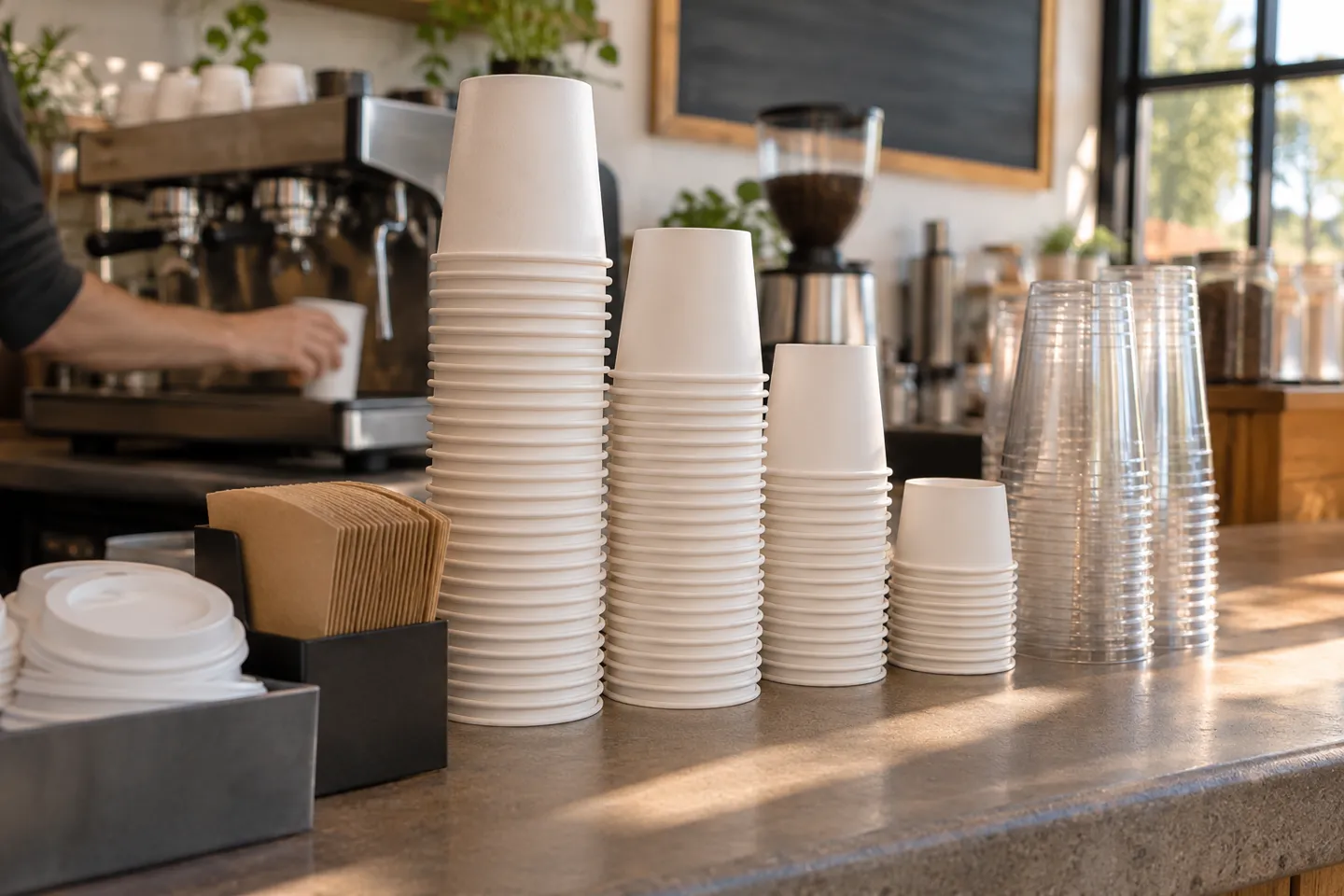
YoonPak builds its custom paper coffee cup line around exactly this ladder: 4 to 20 oz hot sizes, clear PET cups for the cold menu, and sleeves and lids matched per cup. The full range sits on our custom paper coffee cup sizes page.
Size a Custom Cup Line the Way Dunkin’ Sizes Its Menu
Tell YoonPak your hot and cold ounce marks and we will match cups, lids and sleeves to each rung, then quote the full set.
Start a Custom Cup QuoteReferences
- Dunkin’. “Box O’ Joe(R) Coffee.” 2026.
https://www.dunkindonuts.com/menu/categories/hot-drinks/coffee/box-o-joe-coffee/ - Lifeboost Coffee. “Dunkin’ Cup Sizes: How to Choose the Right One for You.” 2025.
https://lifeboostcoffee.com/blogs/lifeboost/dunkin-cup-sizes-how-to-choose-the-right-one-for-you - Reddit r/DunkinDonuts. “How many ounces are each size coffee cup?” 2024.
https://www.reddit.com/r/DunkinDonuts/comments/1ezo52e/how_many_ounces_are_each_size_coffee_cup/ - Reddit r/DunkinDonuts. “Dunkin Hot/Iced sizes.” 2021.
https://www.reddit.com/r/DunkinDonuts/comments/pcct6i/dunkin_hoticed_sizes/ - Reddit r/DunkinDonuts. “Hot coffee size change.” 2026.
https://www.reddit.com/r/DunkinDonuts/comments/1rj4qcj/hot_coffee_size_change/ - Reddit r/DunkinDonuts. “Dunkin Iced Coffee Large Just Shrank?” 2026.
https://www.reddit.com/r/DunkinDonuts/comments/1qmnuwb/dunkin_iced_coffee_large_just_shrank/ - Reddit r/DunkinDonuts. “Cup size shrinkflation?” 2024.
https://www.reddit.com/r/DunkinDonuts/comments/1h9qbzu/cup_size_shrinkflation/ - Reddit r/DunkinDonuts. “is this a medium or a large.” 2026.
https://www.reddit.com/r/DunkinDonuts/comments/1spu5pd/is_this_a_medium_or_a_large/ - Facebook, Dunkin’ World group. “Is a 24oz iced coffee a medium or large at Dunkin’.” 2025.
https://www.facebook.com/groups/dunkinworld/posts/28383093371278940/

 English
 German
 Spanish
 Italian
 Dutch
 French
 Portuguese
 Russian
 Arabic
 Korean